
recent reading :
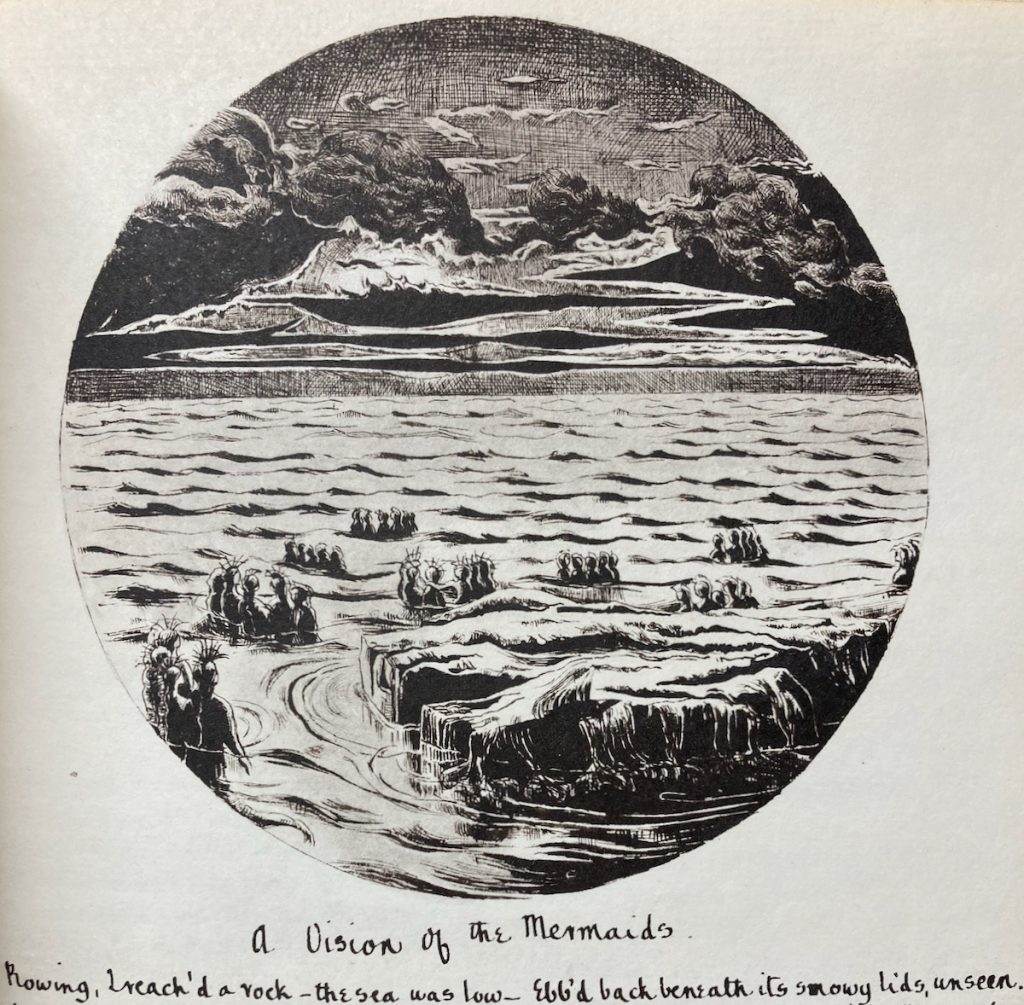
‘I know the sadness but the cause know not’
— Hopkins, Gerard Manley. A Vision of the Mermaids. A prize poem dated Christmas 1862 [. . .] and now for the first time printed in full. [Oxford: Oxford University Press], 1929. Decorated boards, one of 250 copies. [Gift of MLM].
Finely printed facsimile of Hopkins’ manuscript.
/ file under : what song the sirens sang
‘Art has the tendency to materialize metaphors’ — Bruno Schulz
— Jerzy Ficowski. Regions of the Great Heresy. Bruno Schulz. A Biographical Portrait. Translated and edited by Theodosia Robinson. W. W. Norton, [2002].
“No metamorphosis appears as a deus ex machina, as an abrupt and inexplicable decree of some unknown power as in the case of Kafka’s student, Gregor Samsa. In Schulz’s fiction every change is a consequence of some inner tension that has reached its culmination. At that point, a new quality emerges and new dynamics are revealed.”
— W. Somerset Maugham. Cakes and Ale or the Skeleton in the Cupboard. William Heinemann, [1930].
His most malicious and, also, his funniest book, memorable for the portraits of Driffield, grand old man of letters (Thomas Hardy), and the rising writer-on-the-make Alroy Kear (Hugh Walpole). Maugham wrote, “The book I like best is Cakes and Ale. It was an amusing book to write”.
In The Book Blinders, John Clute notes that the dust jacket flap copy identifies the narrator of the novel as Ashenden, evocative of Maugham’s key spy novel Ashenden (1928), although only on page 81 does the narrator identify himself, with a hint at autobiographical elements. “Master Willie” articulates a profound distaste for Victorian hypocrisies, which also seems to signal roots in autobiography.
— Tana French. The Keeper. Viking, [2026].
— — —
Howard A. Rodman is author of two novels , Destiny Express (1990) and The Great Eastern (2019), a distinguished screenwriter, and an old friend whom I have known since his first book appeared. The novels have been released in paperback by Rare Bird Books of Los Angeles. Howard came to New York City for a conversation with Robert Polito on Wednesday evening 8 July, at the Coffee House Club in the Salmagundi. The room was packed, the conversation was witty and candid, and it was a delight to find other friends in the audience.
— — —
This year marked the centenary of Lud-in-the-Mist by Hope Mirrlees. I regret that I will not be attending Readercon this year, where this afternoon (10 July) a panel discussed the work : 100 Years of Lud-in-the-Mist , with Casella Brookins, Graham Sleight, Greer Gilman, Lila Garrott (moderator), Sonya Taaffe, and The joey Zone.
— — —
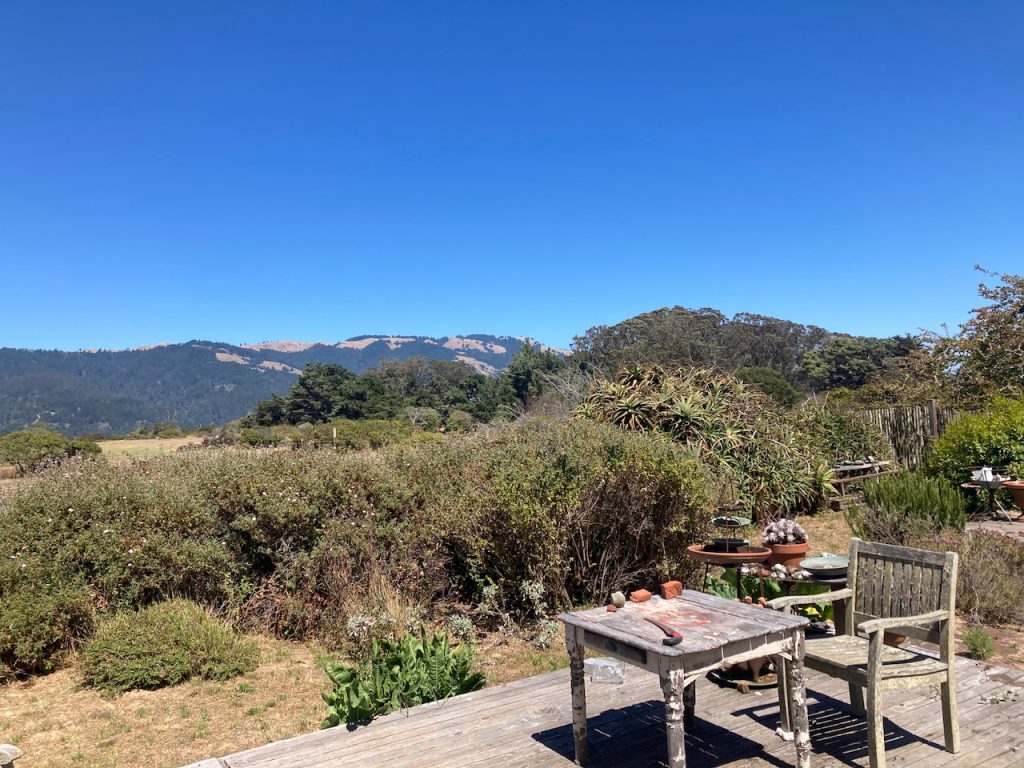
Your correspondent will be away next week, offline in a pleasant place, doing some work on the work-in-progress, and perhaps going for a walk in the woods.
[updated 16 July : from an undisclosed location]
— — —