news & notes, late May & early June

news & notes

the view from the hammock

— — —

— Michael Swanwick. Basil, Pepper, Salt, and Garlic Greens : A Year in a Witch’s Kitchen. Dragonstairs Press, 2026. Edition of 80.
A cheery mediaeval fantasy of “Auld Agnes” (twice a widow and not yet thirty) and celebration of the seasonal bounty of the land,  a novel in miniature that swiftly turns very dark.
——. Twenty-Three Reasons to Attend ICFA. Dragonstairs Press, 2026. Edition of 40.
A brief history of the convivial gathering that is the International Conference on the Fantastic in the Arts, issued to mark the 47th iteration.

— — —

IX XI. A documentary by Sean Wilsey.

I caught one of the screenings of IX XI in its premiere at the Tribeca film festival. I was impressed by the collage of small moments to tell a big story ; the events of 11 September 2001 in New York City are one of the defining events in my lifetime. The film is built upon interviews with a dozen people “from all walks of life”, including some fabulous cameos, and good archival moments. I especially dug the footage of skateboarding the plaza, and the art on the beach segments from earliest days of the World Trade Center. Director Sean Wilsey is a good listener. Roz Chast is every bit as compelling in her tales of parental anxiety as in her cartoons. The TV cameraman communicated his impulse to get right down there and interview people on the spot : the dread and the excitement are equally palpable. And his memory of waking the next day with concrete tears in the corners of his eyes was moving. There were even some laughs. In the Q&A after the film, Wilsey noted that his own account of his experiences on the day was the first to be cut. The interviews are recorded (without any prompts or questions) in a set that alludes to Yamazaki’s soaring façades and to rippling waters of memory and memorial pools. The film is limited to the days before and the day itself, no politics or exploration of aftermaths, an intention, and a choice, I can respect.

— — —

current reading :
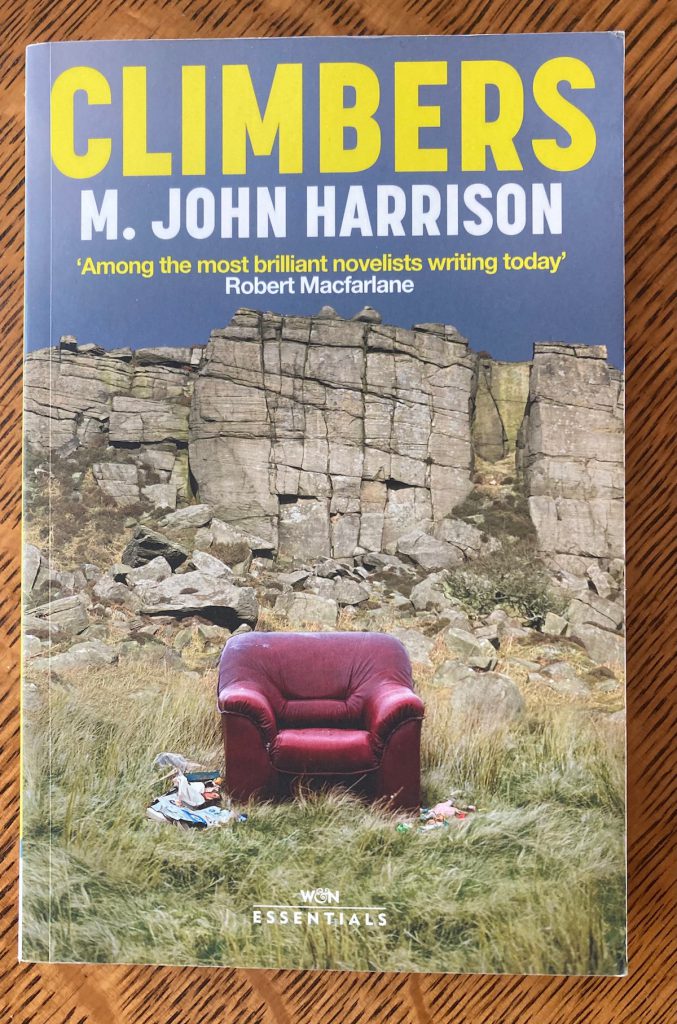
— M. John Harrison. Climbers [1989]. W&N Essentials, [2022, 7th printing].
Somehow I had never read this wonderful book. If one of the characters appears to suffer from “a kind of nostalgia, but for a place you’ve never been”, Harrison’s tricky prose reads like a memoir of events that never happened and it is no less true for that.

— — —
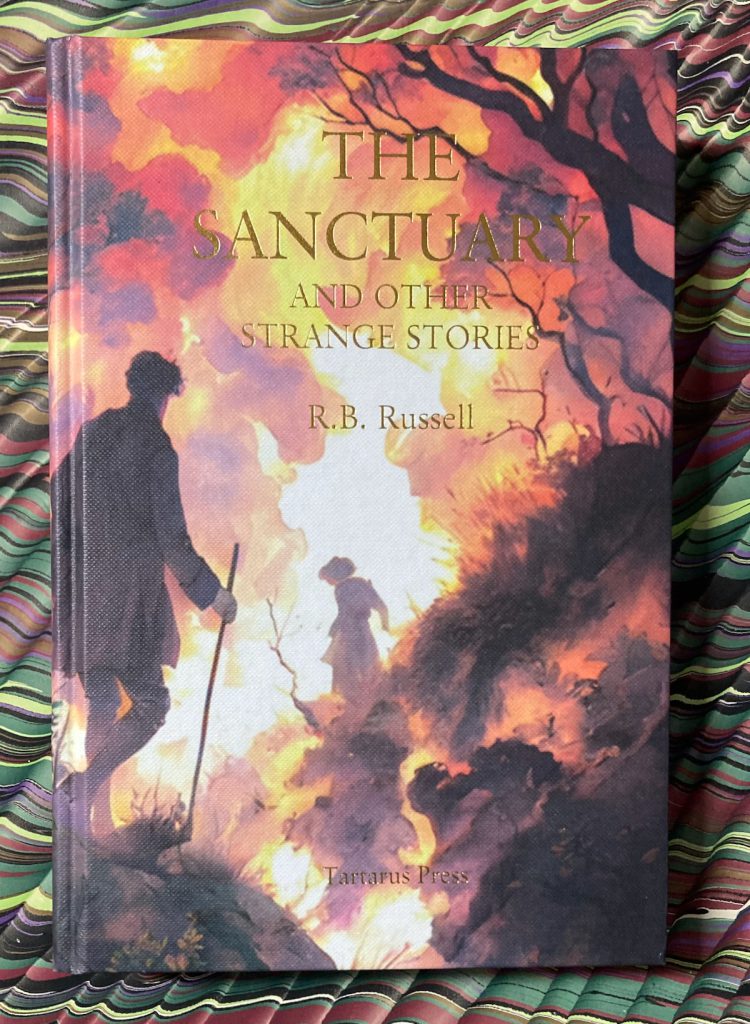
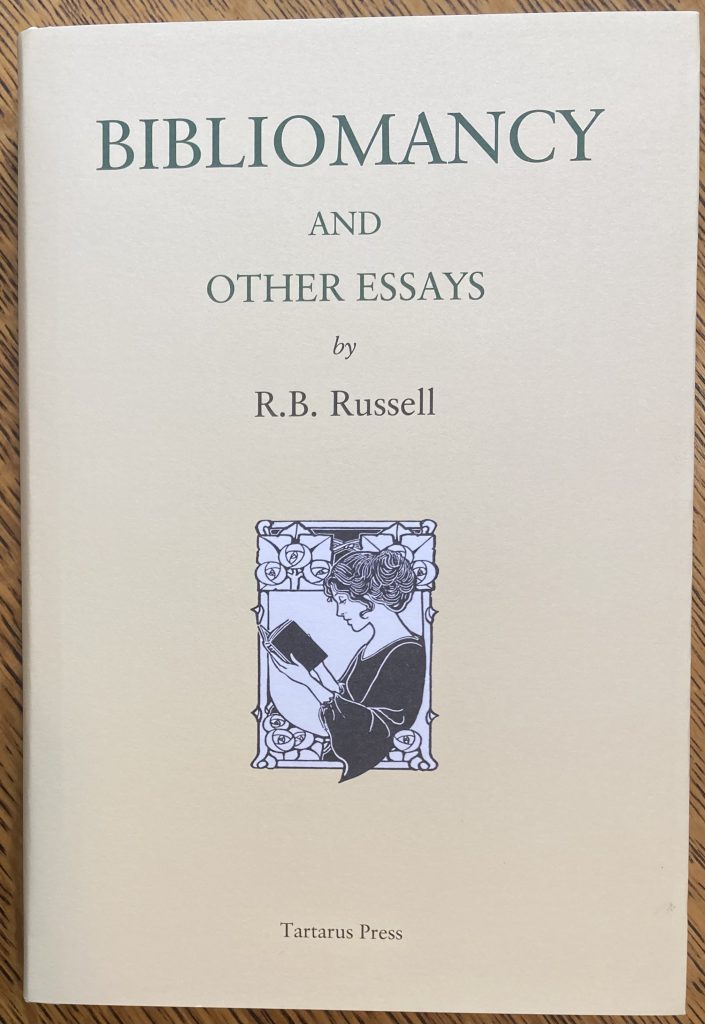
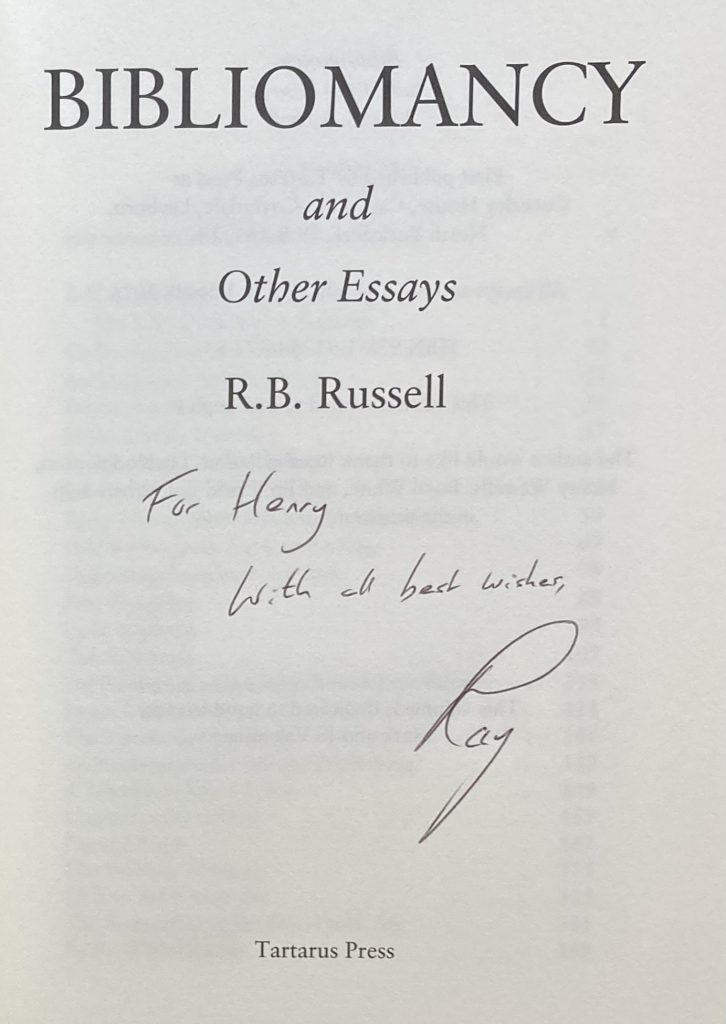
— R. B. Russell. The Sanctuary and Other Strange Stories. Tartarus Press, [2026]. Pictorial boards, dust jacket, from a painting by the author.
Collection of 28 stories, written over a period of some two decades.
Am really looking forward to reading this.

— — —

recent reading :

‘an inventory of silent nothings’
— (LAWRENCE, T. E.) Colin Sackett. The      . A Concordance. Uniformbooks, 2026. [Gift of MV].
Bibliographical concordance to the expurgations in the published edition of The Mint, A day-book of the R.A.F. Depot between August and December 1922 with later notes by 352087 A/c Ross (1955). T. E. Lawrence wrote an account of his time in the R.AF. and in March 1928 “he sent a clean copy of the revised text to Edward Garnett [who] had copies typed which were circulated to a small circle, among them Air Marshal Trenchard. Trenchard’s concerned response led Lawrenceto guarantee that it would not be published at least until 1950.” When Lawrence died following a motorcycle crash, his brother made arrangements with Doubleday, Doran, American publishers of Seven Pillars of Wisdom, to produce 50 copies of a copyright edition of The Mint in 1936 (O’Brien A166), ten copies of which were nominally for sale at the prohibitive price of $500,000 per copy. When The Mint was published in 1955, the censored content (“all objectionable words”) was not “conventionally redacted — by substituting asterisks, or emphatic black overprinting — but rather, made absent” :  as blank spaces. The vocabulary is rather limited and predictable : in his editorial note, Sackett helpfully provides an inventory. (In 1973 a definitive edition, edited with a preface by J. M. Wilson, and including the objectionable words and names as they appeared in the manuscript, was published by Cape).

— — —

— Richard K. Morgan. No Man’s Land. Del Rey,  [2026].
Violent collision of notions of Faerie with the dislocations in the aftermath of the first world war : memories of trench warfare, sexy witchcraft, and the Forest resurgent and threatening, in a hard-boiled detective mode, with mockery of the political and intelligence establishment (and the Order of the Golden Dawn). Relations between humans and “the Huldu” are largely gladiatorial in nature and the encounters are deftly choreographed. While Dunsany is named from the first page, and one of the book’s sectional epigrams cites Raymond Chandler (“It is not a very fragrant world, but it is the world you live in.”), the narrative tone is much more Mike Hammer or Carroll John Daly than Hammett or Chandler. An intense book.

— — —

— Charles E. Gould, J, Jnr. The Toad at Harrow. P. G. Wodehouse in Perspective. London: [Printed by the John Roberts Press for James H. Heineman], 1982.

— — —

An Englishman in New York. A Selection from the Library of Stephen C. Massey. Illustrated. 112 pp. (220 items). Peter Harrington, 2026.
An interesting and wide-ranging catalogue with numerous dedication copies and interesting rarities, such as Melmoth the Wanderer (1820) in rose muslin over boards (right at the dawn of modern cloth bookbinding), and a beautiful pair of Norwich textile sample books from the same period. As an auctioneer with Christie’s Mr. Massey sold a Gutenberg Bible in 1978 and the Codex Hammer of Leonardo da Vinci in 1994 (now known as the Codex Leicester).

— — —

Madly Singing in the Mountains. An Appreciation and Anthology of Arthur Waley. Edited with a preface by Ivan Morris. George Allen & Unwin, [1970]. Recollections of the great translator and poet Arthur Waley, whose A Hundred and Seventy Chinese Poems (1918) is one of the great texts of English modernist poetry ; he also translated Japanese poetry, The Pillow Book of Sei Shonagon, The Tale of Genji, The Poetry and Career of Li Po, and Monkey. With a miscellany of extracts from his other works.

If there is but a seed
On the face of the rock
A pine will grow ;
And shall not love worth calling love
Find always a way to meet ?

— — —

— John Blackburn. The Blue Octavo. Jonathan Cape, [1963].

— Colin Dexter. The Way through the Woods. Crown Publishers, [1992].

— Bernard J. Farmer. Death of a Bookseller [1956]. Poisoned Pen [in association with the British Library, 2023].

— Henry Wade. The Hanging Captain. Constable, [1932].

— — —

 

news & notes : mid-May

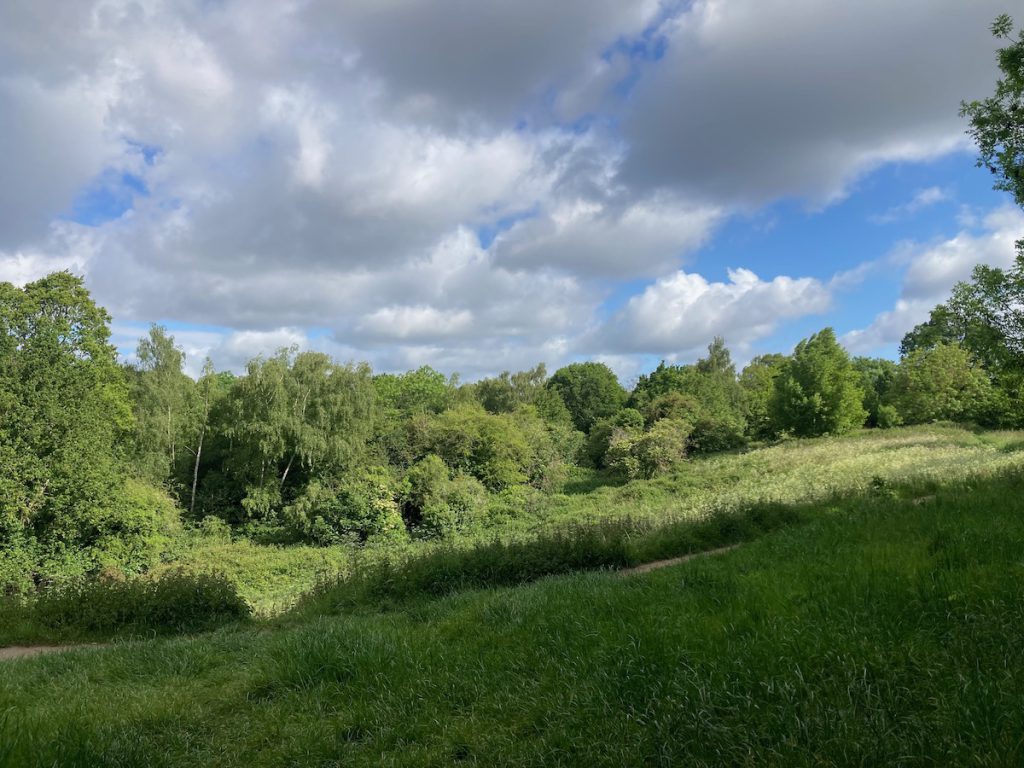
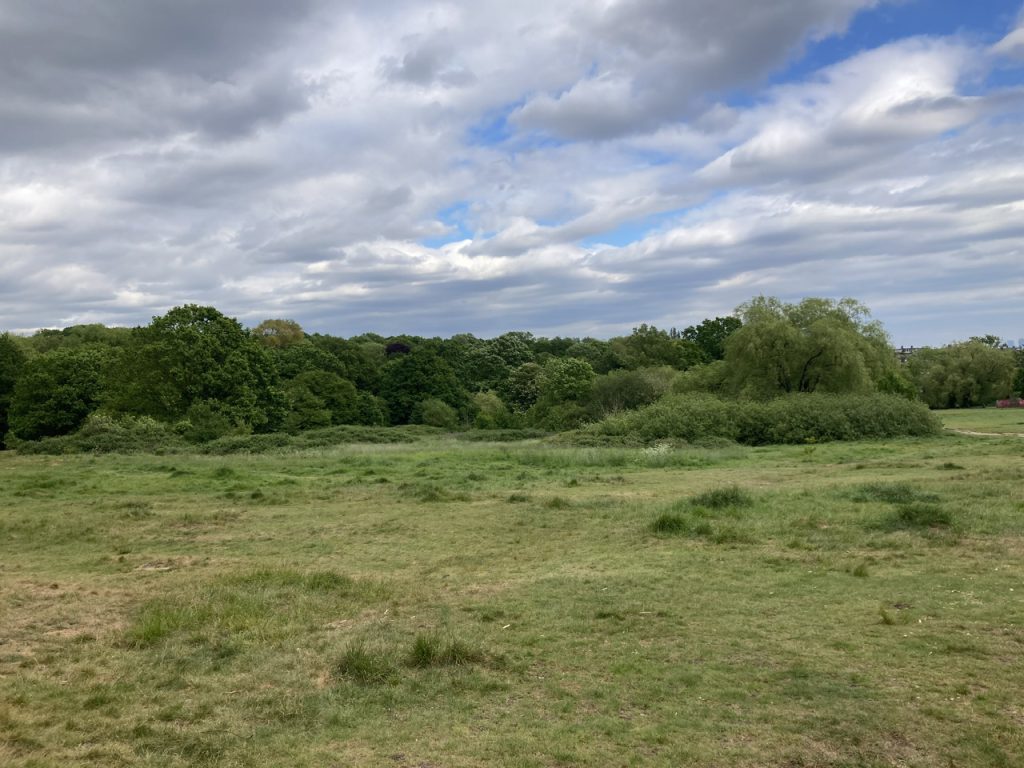
on Hampstead Heath, May 2026

— — —

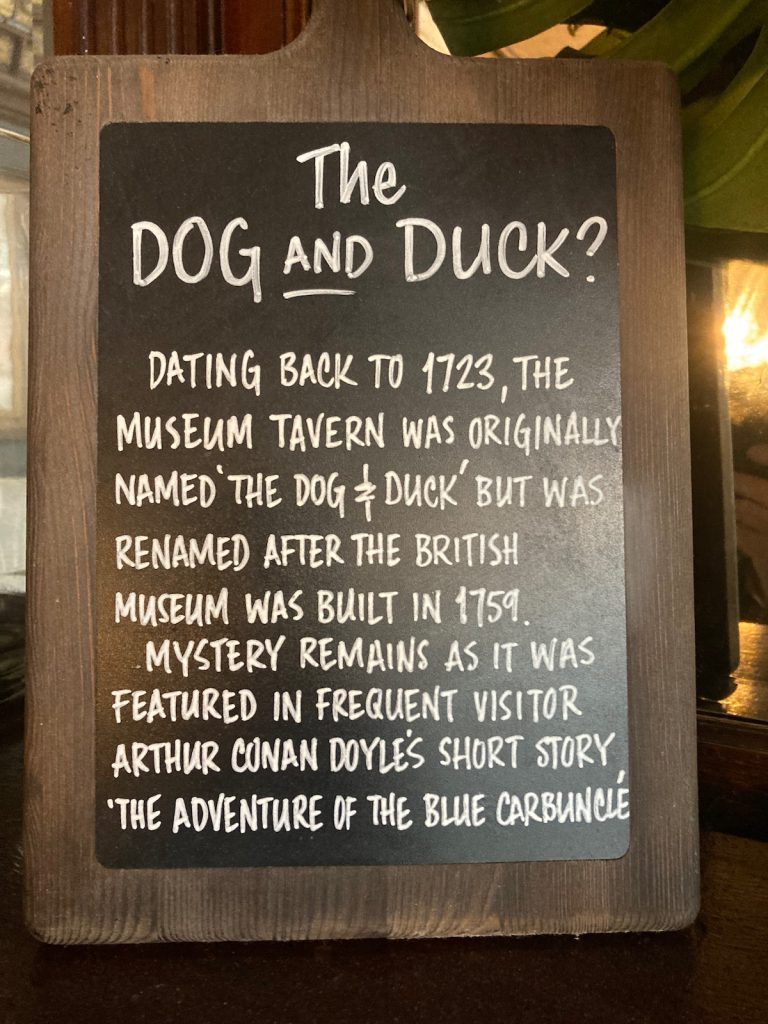
This sign, suggestive of Arthur Machen, seen in the Museum Tavern.

— — —

Blue plaque for Robert Aickman in Gower Street.
/ seen along the way but not shown : John Galsworthy, Dorothy L. Sayers, Ottoline Mortell, D. H. Lawrence, Leigh Hunt, Constable, and others

— — —

on Hampstead Heath, May 2026

In London for the Firsts antiquarian book fair at the Saatchi Gallery (14-17 May). Come say hello (Cummins booth A10).
https://www.firstslondon.com/

— — —

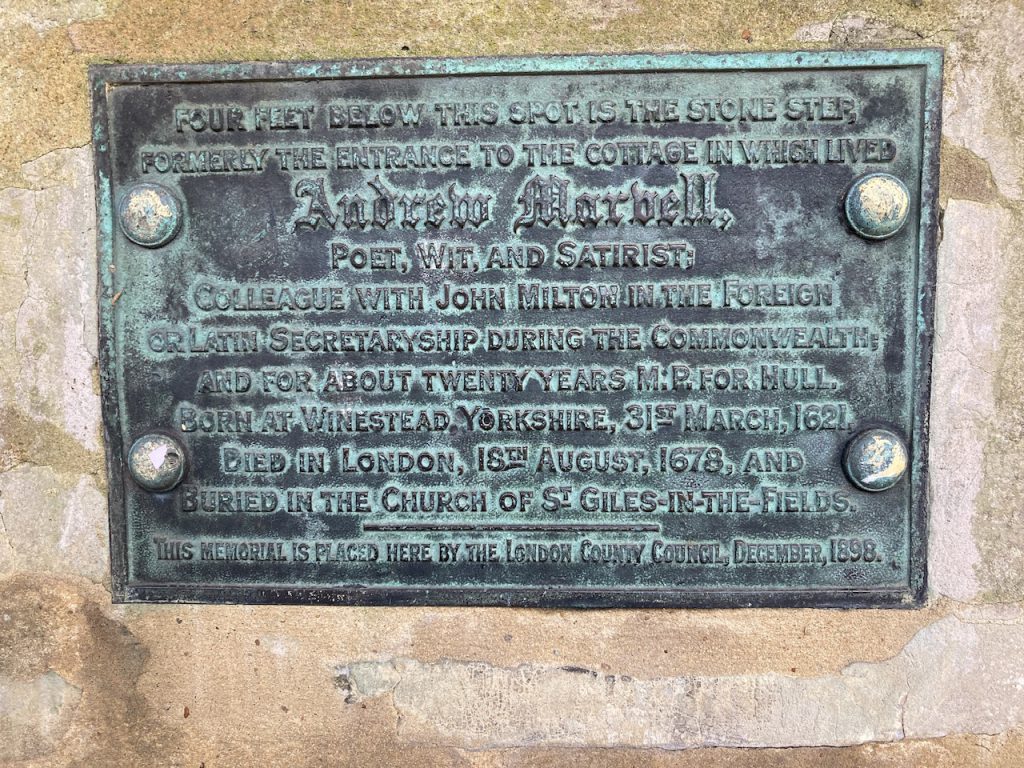
bronze plaque for Andrew Marvell (1621-78), on a wall in Highgate

— — —

current reading :

— Jean-Paul Sartre. Les Mots [1964]. Gallimard / Folio, [January 2026].

After the young Jean-Paul’s mother falls asleep while reading to him :

. . . c’était le livre qui parlait. Des phrases en sortaient qui me faisaient peur : c’étaient de vrais mille-pattes, elles grouillaient de syllabes et de lettres, étiraient leurs diphtongues, faisaient vibrer les doubles consonnes ; chantantes, nasales, coupées de pauses et de soupirs, riches en mots inconnus, elles s’enchan-taient d’elles-mêmes et de leurs méandres sans se soucier de moi : quelquefois elles disparaissaient avant que j’eusse pu les comprendre, d’autres fois j’avais compris d’avance et elles continuaient de rouler noblement vers leur fin sans me faire grâce d’une virgule.

/ file under : boys and their mothers

— — —

— Camille de Toledo. L’internationale des rivières. Un recit de l’avenir. Verdier, [février 2026].


current reading : late march / early april


BOOKBINDING & POLITICS
On the afternoon of Thursday 9 April I will be giving a talk at Oberlin College in connection with a program and workshop on bookbinding and politics at the library, We hold these Truths . . . to be Binding! Austin binder Jace Graf will be leading the workshop.  Information on the event can be found here :  https://oberlin.libcal.com/event/16363787
My talk is open to the public and is entitled Reading the Structure of the World : Bookbinding, Artificial Intelligence, and Life
I am looking forward to this, and to the idea of a bookbinding project that is not an all-consuming thrust to meet the deadline for an edition binding.
— — —

recent reading :

— Larry McMurtry. Lonesome Dove. A Novel [1985]. Foreword by Taylor Sheridan. [2], 858 pp. Simon & Schuster Paperbacks, [2025].

A spectacular book, every sentence and every chapter, from the Rio Grande up to the northern reaches of Montana. Engaging, devastating, even horrifying, and compelling at every level. This is a work of fiction so richly imagined that the reader walks, rides, listens, all the way. I cite a very few passages of interest :

“I ain’t a natural bachelor,” Augustus said. “There’s days when a little bit of talk with a female is worth any price. I figure the reason you don’t have much to say is that you probably never met a man who liked to hear a woman talk. Listening to women ain’t the fashion in this part of the country. But I expect you got a life story like everybody else. If you’d like to tell it, I’m the one that’d like to hear it.”

“The Earth is mostly just a boneyard. But pretty in the sunlight,” he added.

“Jake just mostly drifts. Any wind can blow him.”

“Ride with an outlaw, die with him.”

I though that slavery was the Matter of America, but McMurtry makes a pretty good case for the cattle drive and shoot-out and massacre as the vernacular Odyssey at the heart of the heart of the country.

(I read Lonesome Dove because David Streitfeld’s book Western Star sparked my curiosity.)

— — —

— John Masefield. ODTAA. A novel. William Heinemann, 1926. One of 275 copies signed by the author.
Picaresque account of a revolution in a tinpot Latin American dictatorship.  Prequel, of sorts, to Sard Harker (1924).
For an essay that will appear on Wormwoodiana.

— — —

Michael Swanwick has published a brief, funny, and opinionated account of the New Wave in science fiction, The New Wave Explained

He followed with A Box Full of Controversy, a look at the origins of his 1986 essay A User’s Guide to the Postmoderns, Including the Battle for the Future, Unbridled Ambition, the Fate of the Children in the Starship, the Cyberpunk-Humanist Wars, Blood under the Banquet Tables, Metaphors Run Amok, and the Destruction of Atlantis !

— — —

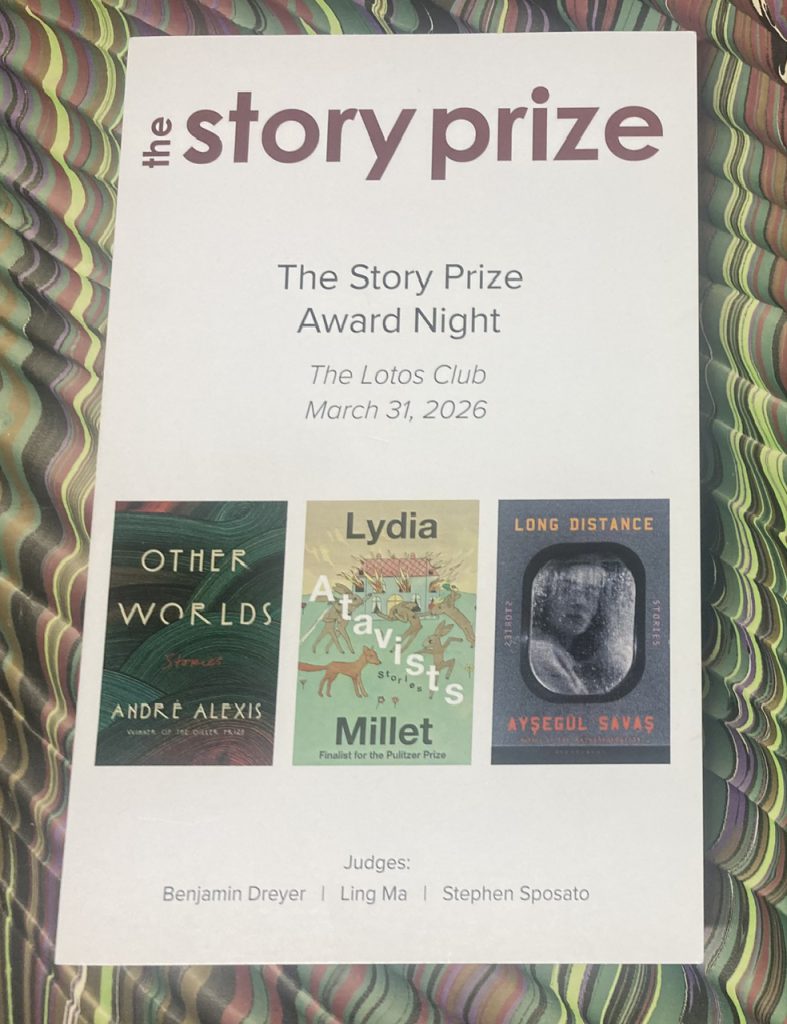
the Story Prize 2026

the winner of the 22nd annual Story Prize award is André Alexis, author of Other Worlds. Stories (FSG Originals. Farrar, Straus & Giroux, 2025).

— — —

current reading :

— Marcel Proust. A la recherche du temps perdu. I. [Du côté de chez Swann. À l’ombre des jeunes filles en fleurs]. NRF Gallimard, [2019]. Bibliothèque de la Pléiade.
/ I am back into it.

The Supernatural Omnibus. Being a collection of Stories of Appraitions, Witchcraft, Werewolves, Diabolism, Necromancy, Satanism, Divination, Sorcery, Poetry. Voodoo, Possession, Occult Doom and Destiny. Edited, with an Introduction, by Montague Summers. Gollancz, 1931.

commonplace book : late february & early march

current reading

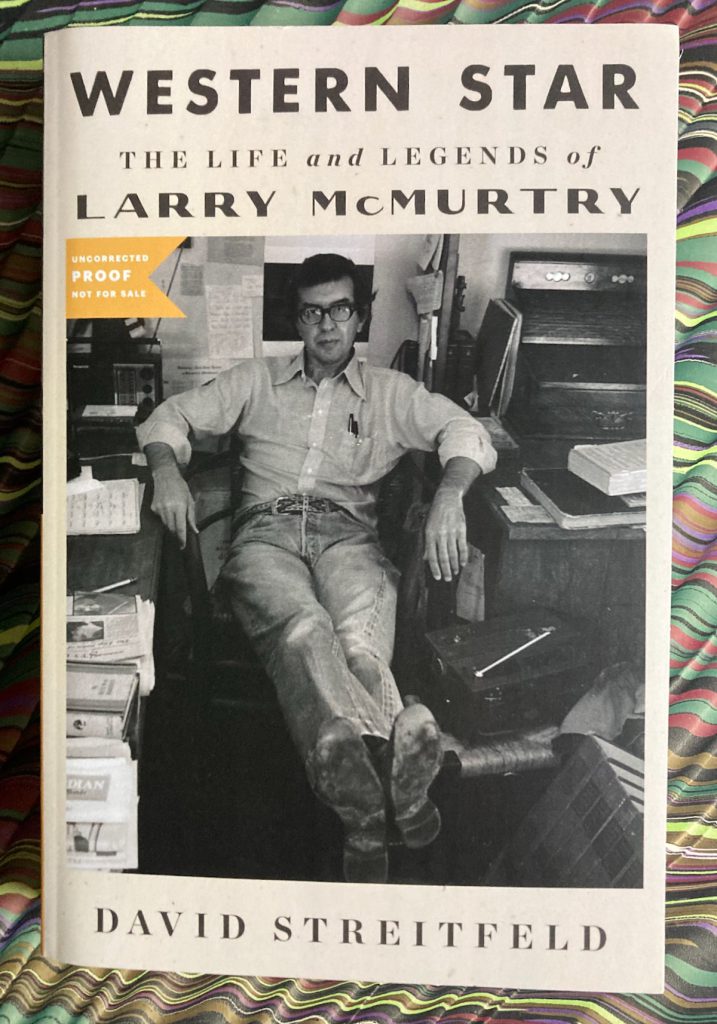
— David Streitfeld. Western Star. The Life and Legends of Larry McMurtry. Mariner Books, [forthcoming March 2026].

Even the worst events in America, such as the slaughter of Native Americans, are soon repackaged as entertainment. [27]

There were, he calculated with the help of a detective he hired, at least five Larry McMurtrys operating throughout the Southwest and Mexico. [282]

Larry took the opposite approach. He never complained about any of those who appropriated the Lonesome Dove name for their ranch or saloon, much less sued them. He would tell interviewers that the story was an American version of the Arthurian legends. It overflowed single ownership and had been set loose in the national psyche. [295]

Western Star is an engaging book about an American writer — who once had a sweatshirt reading Minor Regional Novelist — and a fascinating study of obsession, book collecting, and the old ecosystems of the used and rare book trade.

— — —

a title is not a book

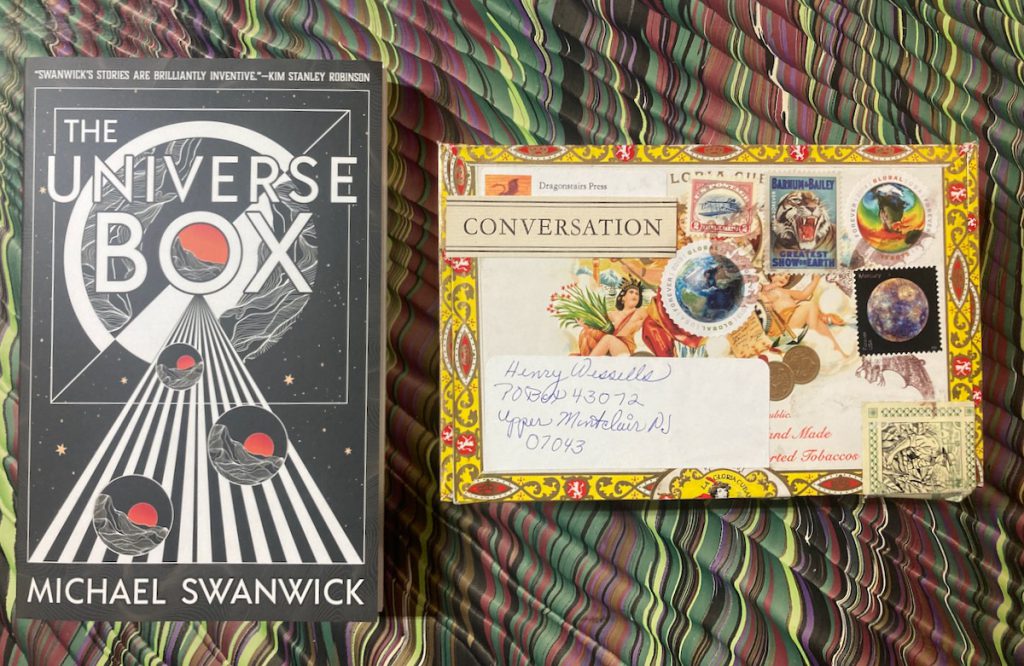
— Michael Swanwick. The Universe Box. Tachyon, [2026].
This is another fabulous Swanwick collection ! “Starlight Express” and “Ghost Ships” are subtle ghost stories ; and “The Star-Bear” is a very tricky story to read in the centenary year of Lud-in-the-Mist and The Book of the Bear.
Swanwick must just light up with glee when he decides to take up a literary challenge : what chutzpah to write an interplanetary science fiction story with the title “The Warm Equations” ! And to pull off the critique unspoken but ever-present ! And that is barely scratching the surface of this box of delights.

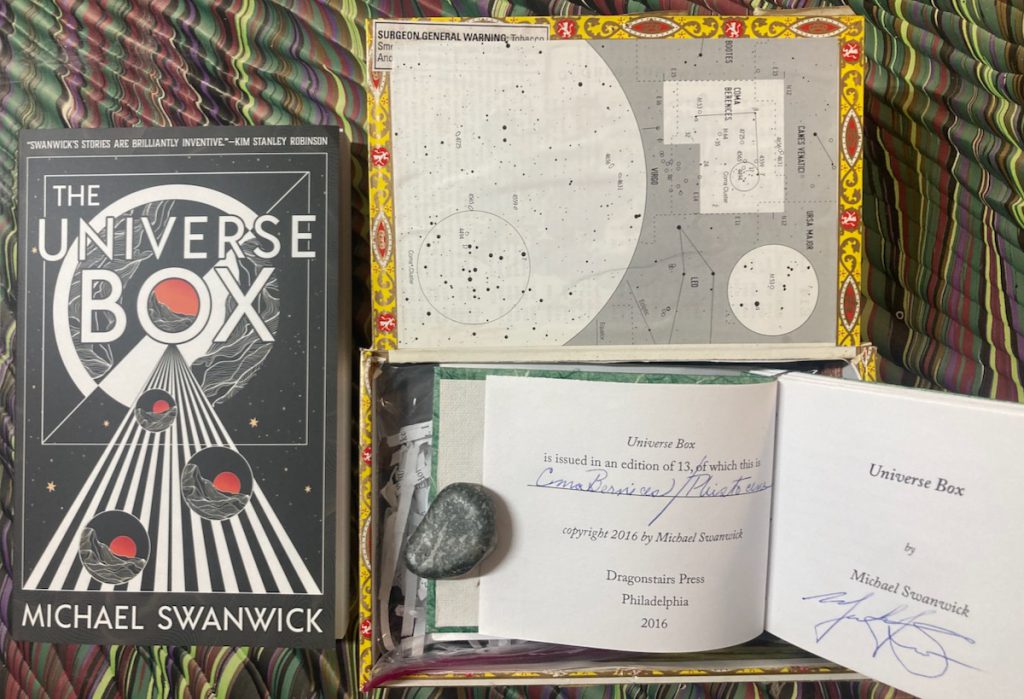
In the first month of the Endless Bookshelf, a chance comment by a reader prompted me to observe that “a title is not a book” ; and this newest collection  from Tachyon prompts me to note (with glee) the occasional significance of the definite article ; and I can talk the talk, for I am one of the few to have a Universe Box and The Universe Box upon my shelf :

Wait. The cigar box you were carrying around contains the universe ?

The 2016 edition of Universe Box was issued by Dragonstairs Press in an edition of 13, in a cigar box containing the printed book, a shredded printout, celestial map, taxidermy eye, calling cards, and other secret treasures.

— — —

The Library at Melmerby

https://wormwoodiana.blogspot.com/2026/03/a-telephone-box-library-guest-post-by.html

— — —

Friends of the Library Sale

by Ernest Hilbert

‘The world still new, the journey not begun’

https://thesonneteer.substack.com/p/friends-of-the-library-sale

— — —

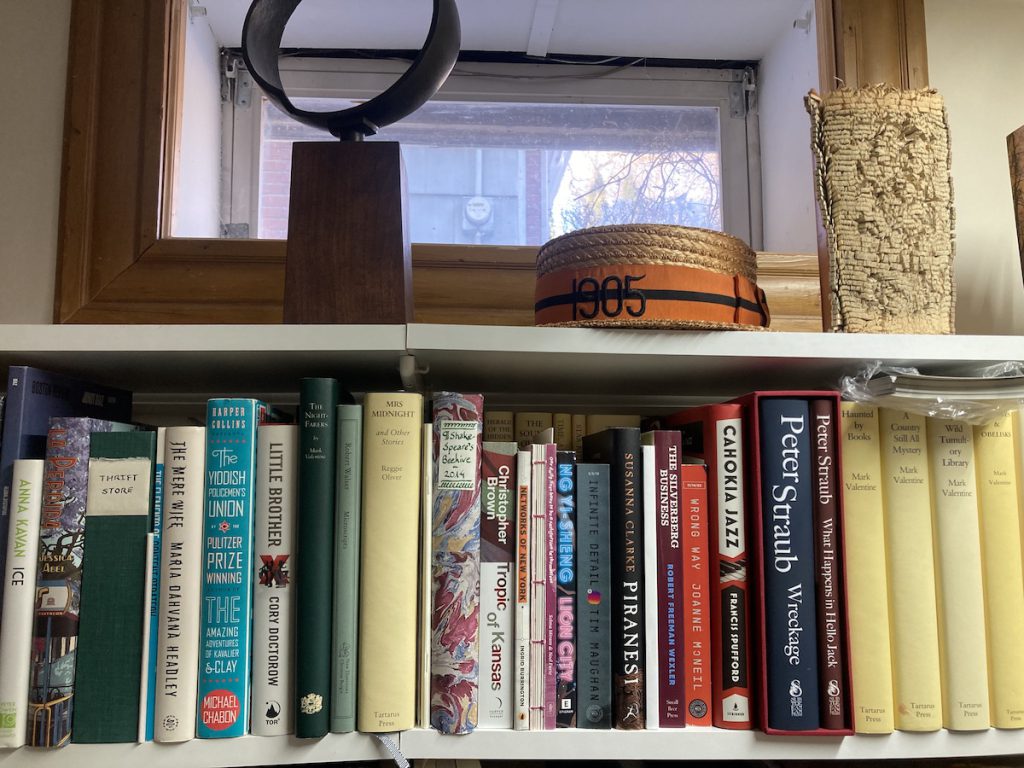
a picture and short essay here at the weekly Shelfies edited by Lavie Tidhar and Jared Shurin

https://shelfies.beehiiv.com/p/shelfies-78-henry-wessells

— — —

[February]

not the first book fair

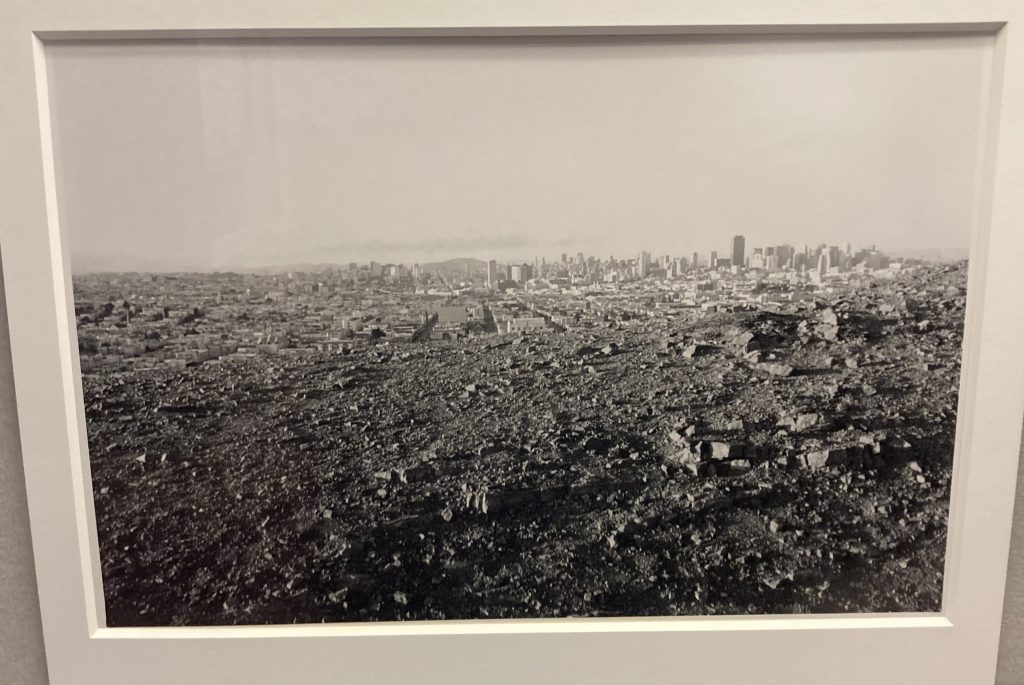
in San Francisco for the 57th California International Antiquarian Book Fair, 27 February through 1 March at the Cruise Terminal building, pier 27 on the Embarcadero. I will be in booth 117 (Cummins).
It would have been 1997, I think, that I first came to the book fair at the Brannan Center (long gone). Come say hello if you are here, and write if you would like a pass.

— — —

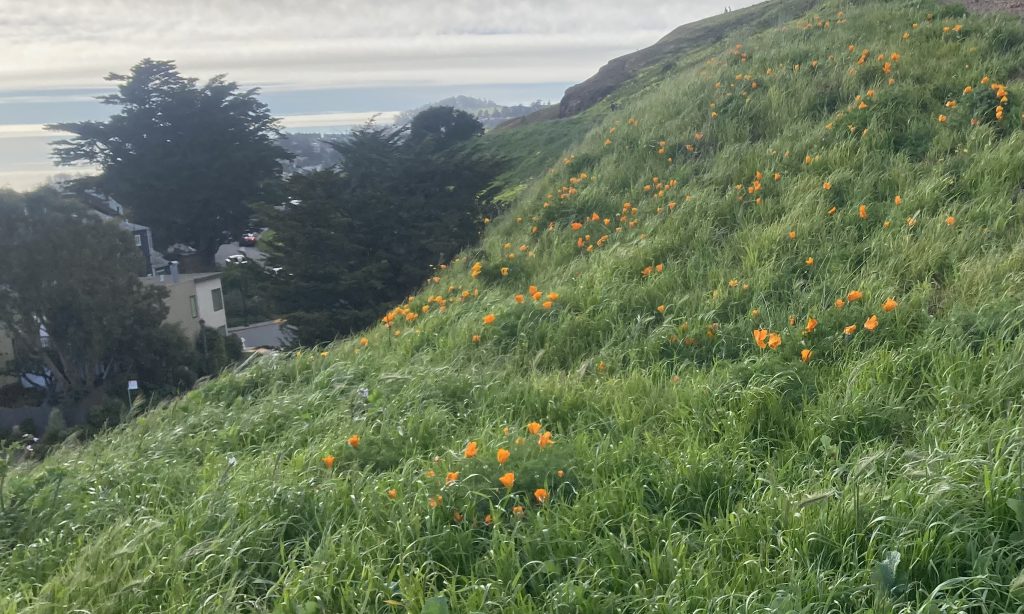
California poppies

— — —

meanwhile, back at the ranch

— — —

recent reading

— Anthony Powell. The Military Philosophers [1968]. Fontana Books, [1971].
My favorite of the ‘Dance’ novels, a pleasure to re-read.

— Fletcher Pratt. The Blue Star [1953]. Introduction by Lin Carter. Ballantine Books, [1969].


re-reading in winter

commonplace book :

From Tatlin !  Six stories by Guy Davenport (1974) :

Our sense of the old is always modern. Starlight is hundreds of years old. We live in the phoenix time of antiquity.
[from “1830”]

Perhaps only in the awful light of the extraordinary was there real calm in human action. Nothing he might do was superfluous to the moment.
[from “The Airplanes at Brescia”]

an everlasting fire, dying and flaring up again
[from “Herakleitos”]

— — —

recent reading :

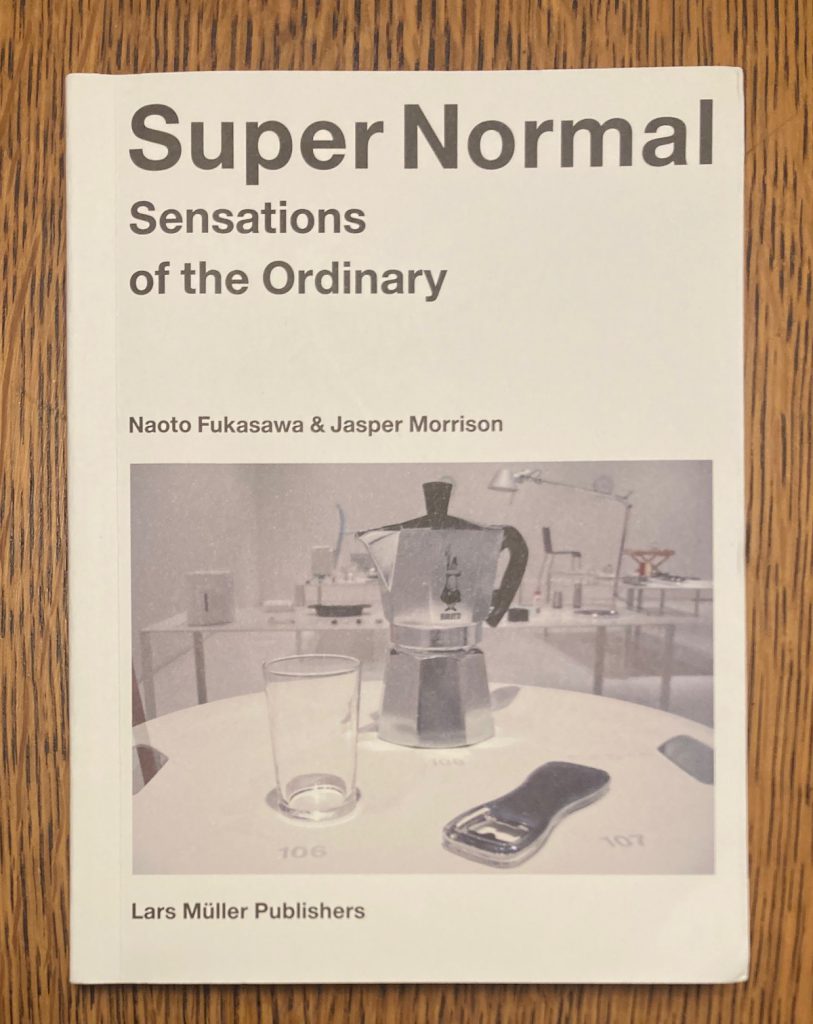
— Naoto Fukasawa and Jasper Morrison. Super Normal. Sensations of the Ordinary [2007]. Lars Müller Publishers, [2024].
Fascinating exhibition of objects from daily life, Tokyo and London 2006 ; Trienniale di Milano 2007.

— Anthony Powell. At Lady Molly’s [1957] and The Kindly Ones [1962].
I picked up At Lady Molly’s and was drawn in, and then on to another . . . An earlier reader of the copy of The Kindly Ones has noted a few passages  : not always ones I might have marked, but I like these :

Moreland could never get used to the fact that most people — in this case, Templer — lead lives in which the arts play no part whatsoever. That is perhaps an exaggeration of Moreland’s attitude. All the same, he always found difficulty in accustoming himself to complete aesthetic indifference.

It was like trying to shake hands with Ophelia while she was strewing flowers.

One passes through the world knowing few, if any, of the important things about even the people with whom one has been from time to time in the closest intimacy.

I have read the complete cycle, out of sequence, and several of the novels more than once or twice ; with the Dance I don’t think it matters whether or not one reads the books in any particular order, for Powell’s prose moves across time within each book and sometimes within a single paragraph, always with such clarity that there is  no doubt (indirection and obliqueness, yes : muddiness, no). Once one has the work as a whole in one’s head, the characters and incidents and phrases play out in memory and recreation. My favorite remains The Military Philosophers, with At Lady Molly’s close on its heels.
The most interesting parts of Hilary Spurling’s Invitation were the indices of literary or musical references and places, to tease out subtle allusions that slipped by unnoticed ;  the index of persons with biographical summaries and concordance of appearances gives a doleful feeling : a litany of all the facts with none of the pleasure of the text.

— — —

nineteen years of the Endless Bookshelf

Friends,

today marks nineteen years of the Endless Bookshelf website. It was sunny and bitterly cold outside (the rhododendron leaves were tightly rolled) : a good day to be indoors with a book. I looked into Sir Thomas Browne’s Pseudodoxia Epidemica (sixth ed., 1672), and dug around in the chapters on the basilisk, bears, mermaids, dolphins, wolves, the phoenix (some of these I can see as touchstones for Avram Davidson). A pleasure to taste again Browne’s leisurely examination of delusions and sloppy thinking.

I have never been what they call a numbers driven person, so I don’t know what sort of “traffic” the ’shelf attracts (the newsletter list hovers around six hundred, and some recipients anyway may read theirs). But I do see occasional remarks or notes from readers, and on this occasion I reprint one which arrived by post last week :

I saw your post “Very Few Letters” and figured that was a good prompt for me to write you this short note.
There is no other site or place on ye olde internet that has provided me with as much continued enjoyment as the Endless Bookshelf. I continually return to the archives to discover new books or authors, and to read your good words.
My TBR pile/list always grows and I always somehow feel better after a visit. Weird, I know, but thought that a letter expressing my thanks might be welcomed.

— — —

Comments arrive at the Endless Bookshelf in many forms : a reader from California has just sent more than two dozen Seville oranges (pronounced in Shakespeare’s day as “civil as an orange” as Much Ado about Nothing reminds us). These will soon be transmuted into marmalade.

I will be in San Francisco at the end of February for the California International Antiquarian Book Fair, 27 February through 1 March at the Cruise Terminal building on the Embarcadero. I will be in booth 117 (Cummins). Say hello if you are there, and write if you would like a pass.

— — —

‘Lolly Willowes’ at 100

I wrote a centenary celebration of Sylvia Townsend Warner’s Lolly Willowes or the Loving Huntsman for Wormwoodiana (published earlier this week) :

http://wormwoodiana.blogspot.com/2026/01/sylvia-townsend-warners-lolly-willowes.html

— — —

recent reading

— Howard Waldrop. Masters of Science Fiction. Introduction by Paul Di Filippo. 1048 pp. Centipede Press, [2026]. Edition of 500 copies signed by Paul Di Filippo. Just began reading this giant compendium of stories from 1972 to 2005 : many familiar tales and some I haven’t seen before.

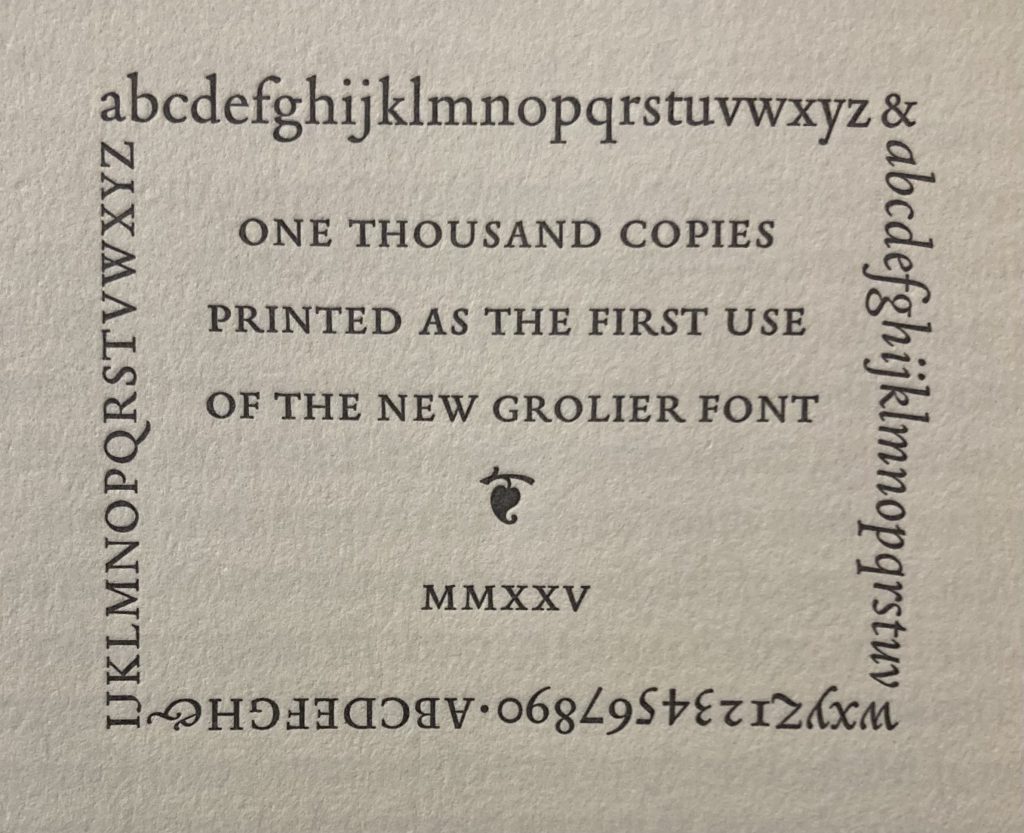
— [Charlotte Adams]. Jean Grolier [1884]. [Grolier Club, 2025]. Re-issue of an essay on collector Jean Grolier (1476-1565) from the earliest days of the club, designed by Jerry Kelly and the first use of his new Grolier typeface, based on the earliest roman and italic type cut by Francesco Griffo for Aldus Manutius. The colophon serves as a type specimen (though it does not show the tiny flourishes or extenders which also echo the early type forms).

— Tom La Farge. The Crimson Bears. Part One. A Hundred Doors. Part Two. Tough Poets Press, [2025]. I pulled the new edition from the shelf, started reading, and just kept going on from there. (I re-read the original edition last summer.) What a playful, sophisticated book.

— Ngaio Marsh. Artists in Crime [1938]. Penguin Books, [1957].

— — —

Thank you to all the readers. As always, send me your news or tell me about books I have overlooked.

— — —

commonplace book : december 2025

far fetch :

— Mark Tewfik. Two Weeks in Ecuador and the Galapagos [drop title]. [8] pp. Santa Cruz, Galapagos Islands : Lanterne Rouge Press, 2025. Printed self wrapper with ornamental headpiece.
Fun travelogue with a truly exotic imprint, even for this peripatetic press.

and at the foot of the last page, the imprint, below :

— — —

farewell to an old friend :

— Raymond Chandler. Killer in the Rain. With an introduction by Philip Durham. [1964]. Ballantine Books, [1972].
This book collects eight early pulp stories Chandler which had refused to reprint in his lifetime, because he had “cannibalized” them and transformed the raw material into the substance of three novels : The Big Sleep ; Farewell, My Lovely ; and The Lady in the Lake. Reading it was an education and single dose corrective to prose excesses rooted in obsessive teenage readings of H. P. Lovecraft. This copy, bought for 50 cents at the State Street Book Mart, a paper back exchange shop in New Orleans, has stuck with me for many years.

After re-reading parts of MacShane’s Life of Chandler, I pulled down Killer in the Rain to look at some of the stories, and it will not survive this reading. I will save the browned flyleaf and title page for a bookmark in a copy of the original Houghton Mifflin printing I bought last month : so I still havea copy of  Killer in the Rain ; and I will wait for a stormy day to say farewell to Killer in the Rain in the rain ; but the small gap on the paperback shelf will stay open for a time.

— — —

from the Epigrammata of Martialis (Epigrams of Martial)

Lucanus
Sint quidam qui me dicunt non esse poetam :
Sed qui me vendit bibliopola putat.

Lucan
[Some say I am no poet : but the bibliopole* sells me as one]


* – bookseller, for you moderns, sez Old ’Pole

— — —

Sonnet 151 with initial L by Edward Johnston, in the Doves Press edition of Shakespeare’s Sonnets, 1909.

— — —

— — —

‘Pardon this intrusion’

The first words the monster speaks, in vol. II of Frankenstein; or, The Modern Prometheus. Philadelphia : Carey, Lea & Blanchard, 1833.

— — —

recent reading :

— J. I. M. Stewart. Myself and Michael Innes. A Memoir. W. W. Norton, [1988].

— Charles Willeford. Everybody’s Metamorphosis. Dennis McMillan, 1988. Edition of 426 copies signed by the author.

— Dorothy L. Sayers. Whose Body ? A Lord Peter Wimsey Novel [1923]. Harper & Row, [n.d., ca. mid-1950s]. Dust jacket design by Shirley Smith.

— Hilary Spurling. Invitation to the Dance. A Guide to Anthony Powell’s Dance to the Music of Time. Little, Brown, [1977].

— Margery Allingham. The Case of the Late Pig [1937]. Penguin Books, [1957].

— — —

Cat and Girl in Oz

Dorothy Gambrell’s Cat and Girl are somewhere in Oz. They started on the yellow brick road here :

https://catandgirl.com/were-off-to-see-the-boss-class/

— — —

read this

Erin Kissane’s remarkable essay on the geophyics of the 1964 tsunami at Valdez, Alaska, and her extrapolations to articulate a brilliant, useful metaphor for the post-information age :

https://www.wrecka.ge/landslide-a-ghost-story/

— — —

“Two sculptural titans are thus now fittingly face-to-face, Rodin the culminating figure of an ancient representational tradition that was revived during the Renaissance and Calder the initiating figure of a modernist reconception that took the medium off its pedestal.”

— Martin Filler, from his review of the Calder Foundation gardens in Philadelphia, in the New York Review of Books .

[what a sentence ! 2,500 years of art history in a single swoop]


— — —

Andromeda
Now Time’s Andromeda on this rock rude,
With not her either beauty’s equal or
Her injury’s, looks off by both horns of shore,
Her flower, her piece of being, doomed dragon’s food.
     Time past she has been attempted and pursued
By many blows and banes ; but now hears roar
A wilder beast from West than all were, more
Rife in her wrongs, more lawless, and more lewd.

     Her Perseus linger and leave her tó her extremes ? —
Pillowy air he treads a time and hangs
His thoughts on her, forsaken that she seems,
     All while her patience, morselled into pangs,
Mounts ; then to alight disarming, no one dreams,
With Gorgon’s gear and barebill, thongs and fangs.

from : Gerard Manley Hopkins. Poems (Oxford, 1918).

— — —


George D. Smith, rare book dealer

Book Bloggers before the internet
(an irregular series)
— Charles F. Heartman. George D. Smith. G. D. S. 1870-1920. A Memorial Tribute to the Greatest Bookseller the World has Ever Known. Written by a Very Small One. [Cover title : George D. Smith Gentleman Bookseller]. With two plates from photographs. [2], 31 pp.  Privately Printed as a Yuletide Greeting for Charles F. Heartman. From the Book Farm in Beauvoir Community, Mississippi, 1945.
Among antiquarian booksellers, the name George D. Smith is somewhat legendary. he bought for Henry Huntington, so those books rarely come back in circulation, but he also bought for other major collectors in the gold age. Two spectacular books from the Bixby library that I have seen both came from Smith. So it was a pleasant surprise to find this excellent memoir by German-born Americana dealer Charles F. Heartman, a prolific writer on a variety of subjects, including the New-England Primer. His bibliography of Phillis Wheatley (1915) is a reminder that certain booksellers have always been far in advance of the academy.
George D. Smith started age thirteen as an untrained stockboy and bookseller’s apprentice at Wiley and Son, for a little while at Dodd and Mead. Smith followed Walter Benjamin who set up his own business in 1885. Smith had a retentive memory and with Benjamin, who dealt not only in rare books but also in prints and autographs, “Young Smith’s horizon was not only widened but his intellect was called upon to observe and assimilate many diverse elements.” By 1889, Smith had set up his own shop, with a meager capital of sixty-three dollars. “Of course his capital was not sixty-three dollars. It was his incomparable knowledge of the principles of what constituted a rare book and the value of such material. It was his acquaintanceship with the sources of supply, his indefatigable energy, and the assurance of having the good wishes of many generous collectors.” Heartman charts Smith’s career with verve and interesting detail. He was well placed to write this memoir, for in late 1919 Smith offered him a long-term job. Their discussions were well advanced when Smith died suddenly. The decline and extinction of the George D. Smith Company is also noted. Heartman was going to put up money to buy the remains with another bookseller. The junior partner instead borrowed money from Jerome Kern, cut Heartman out of the deal, and quickly steering the ship onto the rocks.
— — —

recent reading : mid- and late november 2025

recent reading :

Mélissa Bonin, Un jardin après la mousson, 2011

journey into metaphor
— Mélissa Bonin. Lorsque les Bayous Parlent. When Bayous Speak. Poésies et Peintures. [2023]. Bilingual illustrated collection of evocative « voyages» into the bayou as “métaphore de la vie et du féminin”.

— — —

— Thomas Pynchon. Shadow Ticket. Penguin Press, 2025.

‘an outward and visible expression of paths not taken, personal and historical’

The first hundred so pages are dazzling paranoid fun set in end of Prohibition Milwaukee, with zany incidents and songs and gross-out confections and drinks. After Hicks McTaggart is encouraged to leave town for New York City and then fed a Mickey Finn and loaded aboard a transatlantic steamer, the pyrotechnics continue. The transition from Tangier to a Budapest-bound train is abrupt and, a bit cheesy at times, the book wobbles for a few a pages before returning to the deftly choreographed espionage play of language and fashion and color along the Danube. Plus a Moto Guzzi with a side-car, vacuum tubes, a theremin sextet, paranormal  incidents, philately, Versailles-compliant golems, atrocious acronyms, and more.

— — —

— Frank Macshane. The Life of Raymond Chandler [1976].  Hamish Hamilton, [1986].
Excellent and sympathetic chronicle of Chandler and his struggle to get his novels written to his satisfaction. Plucked off the shelf to look up a date, gripped immediately and anew by the way MacShane allows Chandler’s own words (letters, essays, etc.) to tell the story. Chandler on style is not that far removed from Ruskin.

— John Ruskin. Letters on Art and Literature. Edited by T. J. Wise. Privately printed, 1894.
To  J. J. Laing, 1854 : “If you are to do anything that is really glorious, and for which men will for ever wonder at you, you will do it as a duck quacks — because it is your nature to quack — when it rains.”

Suave Mechanicals. Essays on the History of Bookbinding. Volume 9. Julia Miller, editor. Legacy Press, 2025.

— Patti Smith. Bread of Angels. Random House, [2025].

— Ellen Datlow, editor. Night. Dreadful Dark : Tales of Nighttime Horror [bound dos à dos with] Day. Merciless Sun : Tales of Daylight Horror. Saga Press, [2025].

— Paul Muldoon. Rising to the Rising. Gallery Books, [2016].

Now the world’s been brought low. The wind’s heavy with soot.
Alexander and Caesar. All their retinue.
We’ve seen Tara buried in grass, Troy trampled underfoot.
The English ? Their days are numbered, too.

— — —

— Margery Allingham. The Beckoning Lady [1955]. Penguin Books, [1961].

— Edmund Crispin. Buried for Pleasure [1948]. Penguin Books, [ca. 1980].
——. Love Lies Bleeding [1948]. Penguin Books, [1954].

— — —

commonplace book :

from The Deep Blue Good-By (1964) by John D. MacDonald, a list poem, with attitude (line breaks added) :

And I do not function too well on emotional motivations. I am wary of them. And I am wary of a lot of other things, such as

plastic credit cards,
payroll deductions,
insurance programs,
retirement benefits,
savings accounts,
Green Stamps,
time clocks,
newspapers,
mortgages,
sermons,
miracle fabrics,
deodorants,
check lists,
time payments,
political parties,
lending libraries,
television,
actresses,
junior chambers of commerce,
pageants,
progress,
and manifest destiny.

I am wary of the whole dreary deadening structured mess we have built into such a glittering top-heavy structure that there is nothing left to see but the glitter, and the brute routines of maintaining it.

— — —

commonplace book : autumn 2025

Poetry and the materials of poetry are interchangeable terms. Wallace Stevens

/ inscription in a copy of The Man with the Blue Guitar, 1937.

— — —

I collect only words : the books on the shelves are forests and mountains, pathways and tools and ore and tailings

— — —

What is a book but the record of the struggle of a story to tell itself ?
— Henry Wessells on the writings of Peter Straub

/ from the archives

— — —

Il représentait en ce siècle, et contre l’Histoire, l’héritier actuel de cette longue lignée de moralistes dont les oeuvres constituent peut-être ce qu’il y a de plus original dans les lettres françaises. Son humanisme têtu, étroit et pur, austère et sensuel, livrait un combat douloureux contre les événements massifs et difformes de ce temps. Mais, inversement, par l’opiniâtreté de ses refus, il réaffirmait, au coeur de notre époque, contre les machiavéliens, contre le veau d’or du réalisme, l’existence du fait moral.
— Jean Paul Sartre, on Camus after his death in 1960

— — —

“It feels extraordinary to be reviewing now, in 2025, a new book of ten poems by Charlotte — astounding not only that they have not been published before, but also that they have never been transcribed or photographed.  [. . .]

“But they make their own argument for publication. It’s not just that they are good, but that it is amazing to read a young writer loudly, exultingly, exploring her ideas on the page. [. . .] perhaps Charlotte’s book has been rediscovered just when it is needed — as a reminder of what can happen when children are allowed to write headlong and with joy, spelling everything wrong, but getting everything that’s most important right.”
— Samantha Ellis, reviewing A Book of Ryhmes by Charlotte Brontë in the TLS

— — —