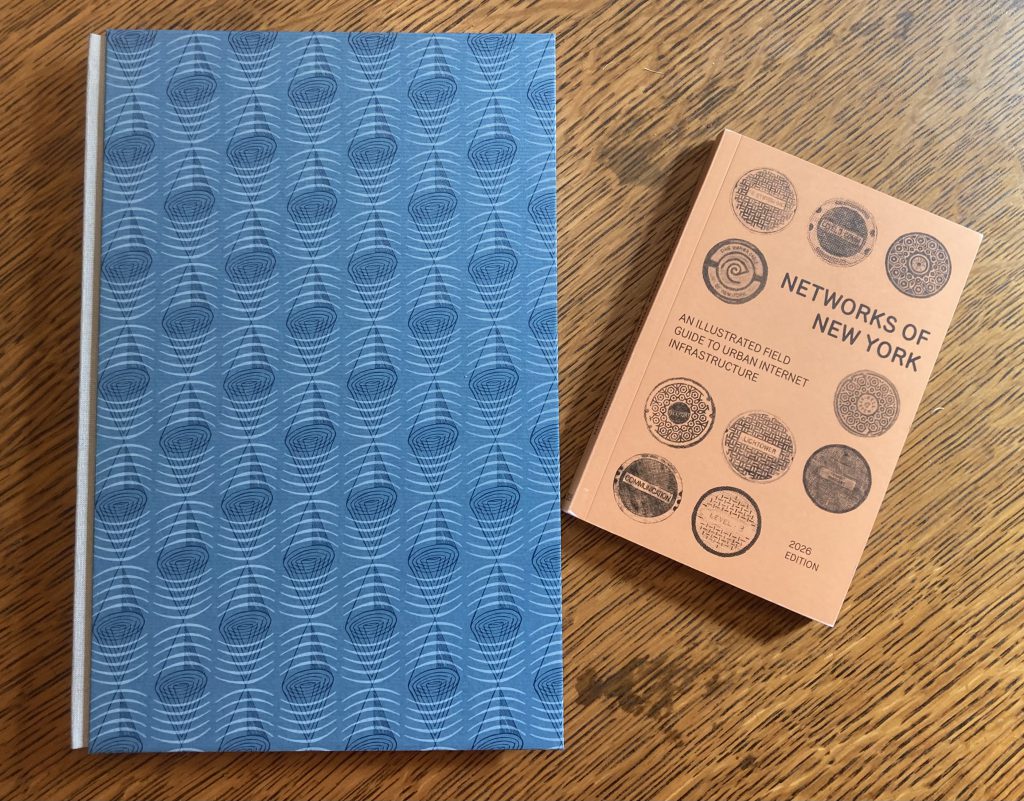
— Ingrid Burrington. Networks of New York. An Illustrated Field Guide to Urban Internet Infrastructure. 2026 Edition. [vi], 136, [2] pp. [Brooklyn : printed in Minneapolis by Shapco Printing, for the author, 2026].
The 2016 edition was the Endless Bookshelf best book of the year, praised for challenging the reader to see the familiar anew and providing the necessary tools. “Urban internet infrastructure has metastasized over the past decade and here are the tools for observation, diagnosis, and resistance.
— Chad Oness. A Private Matter. Ten Essays by C. Mikal Oness. Text printed in blue and black. [Photographs and afterword by Griffin Gonzalez]. [Portland] : Manually printed and bound at No Reply, 2026. Edition of 130 copies on Arches Johannot and Zerkall Ingres papers. Cloth spine, patterned paper boards.
“printing books by hand is not all fun and games”
Perhaps not, but this book is a delight to hold in the hand and I look forward to reading the text.
— — —
Michael Swanwick, master of concision and the unexpected turn, is scattering the leaves of another autumnal tale all the month of October, “Autumn’s End”. It’s worth taking a walk in the woods with him.
— — —
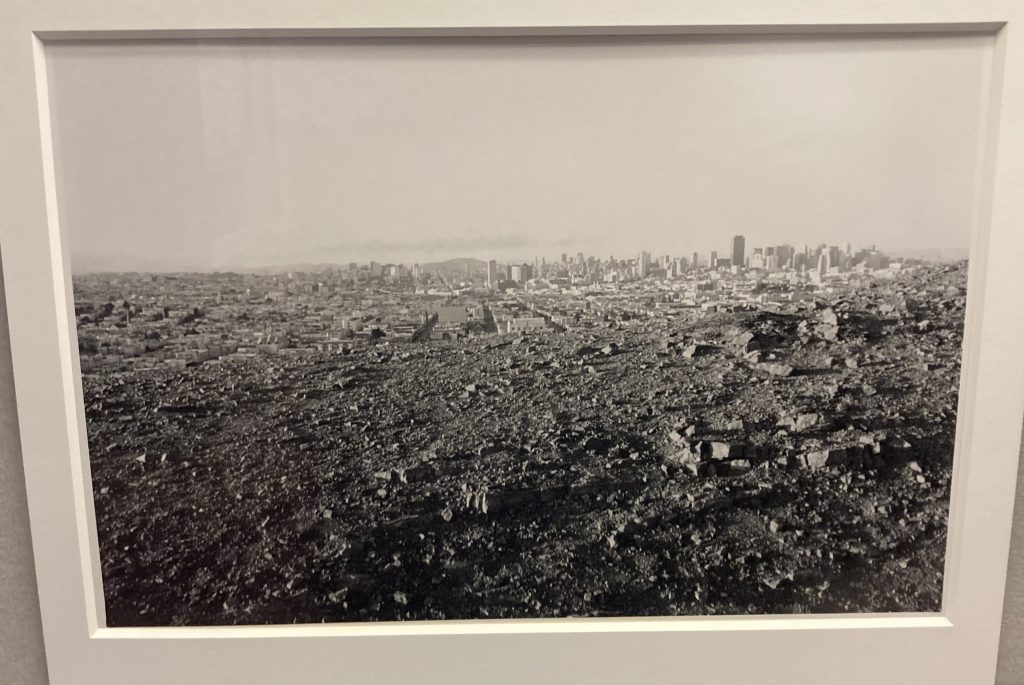
Photographer Henry Wessel at the Grolier Club
Jack Gray’s exhibition of books and original prints by American photographer Henry Wessel (1941-2018) is on view at the Grolier Club in New York City, through 14 November.
(above : San Francisco, 1993 ; incongruous detail)
N.B. : no relation.
— — —
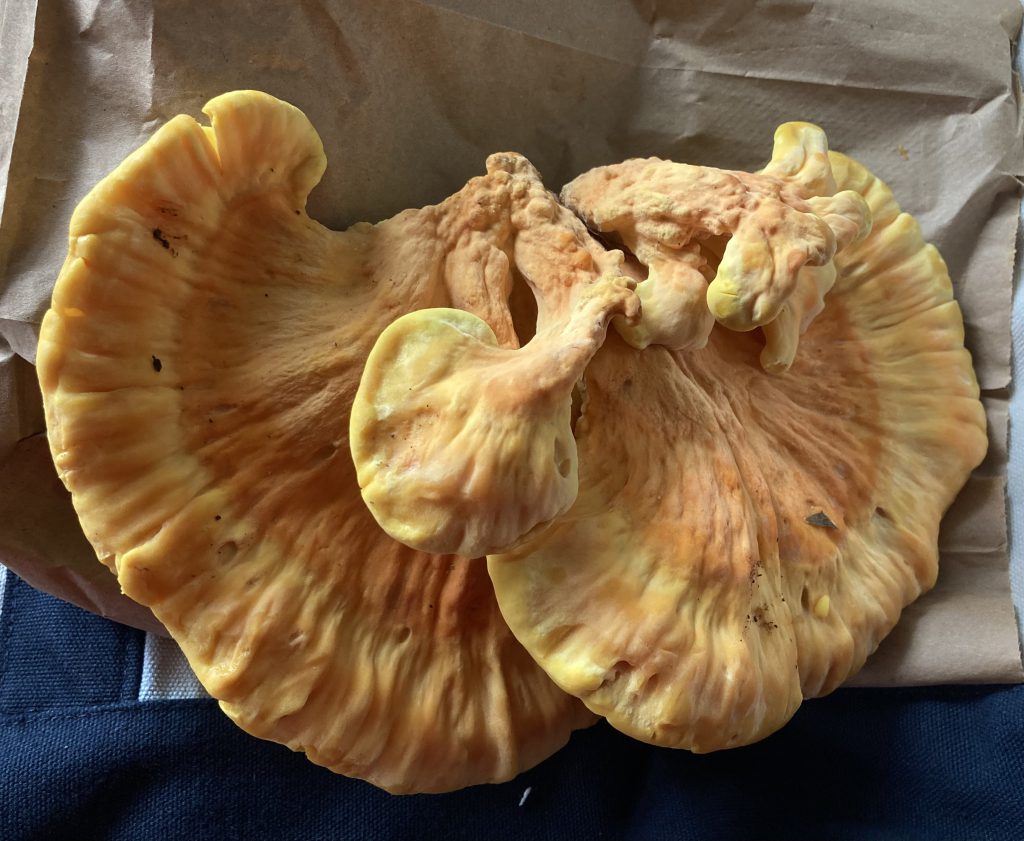
a few steps away
part of a very fresh sulfur shelf, from this morning’s walk
recent reading :
‘But ruin is particular, tragedy local.’
— Larry McMurtry. Sacagawea’s Nickname. Essays on the American West. New York Review Books, [2001].
These essays are great stuff : facts, attitudes, opinions, clearly stated. The closing paragraphs of “The West without Chili” are deft and funny and true. {For some reason I kept seeing the title as Sacagawea’s Necklace.]
— —. Roads.Driving America’s great Highways. Simon & Schuster [2000].
Exhausting, though McMurtry reaches a fascinating space at the end of the book.
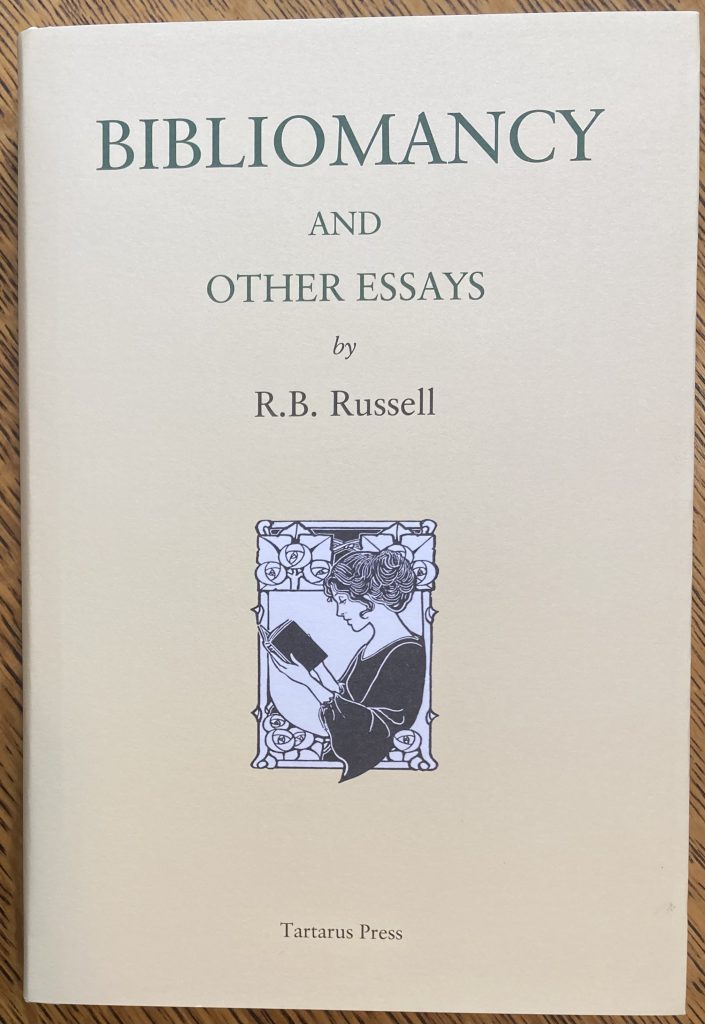
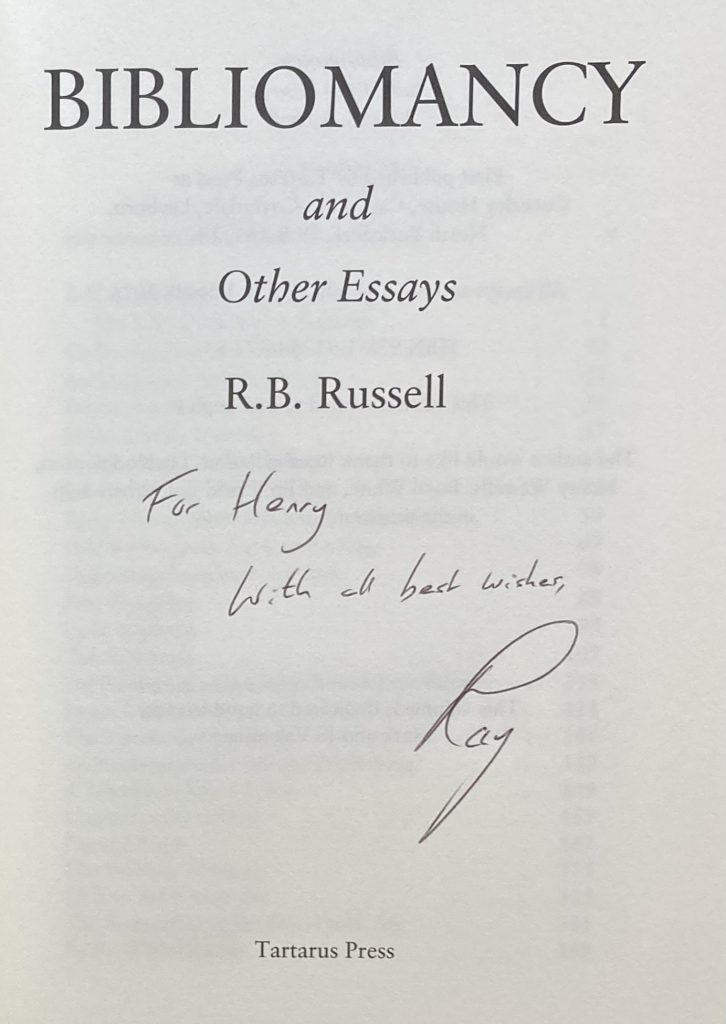
— R. B. Russell. Bibliomancy and Other Essays. Illustrated. [xii], 369 pp. Tartarus Press, [2026].
Collection of essays and reminiscences about books and writers and collecting, including Arthur Machen, Robert Aickman, the Sarban papers, on publishing the first edition of a work by Charlotte Brontë, and Barry Humphries.
— — —
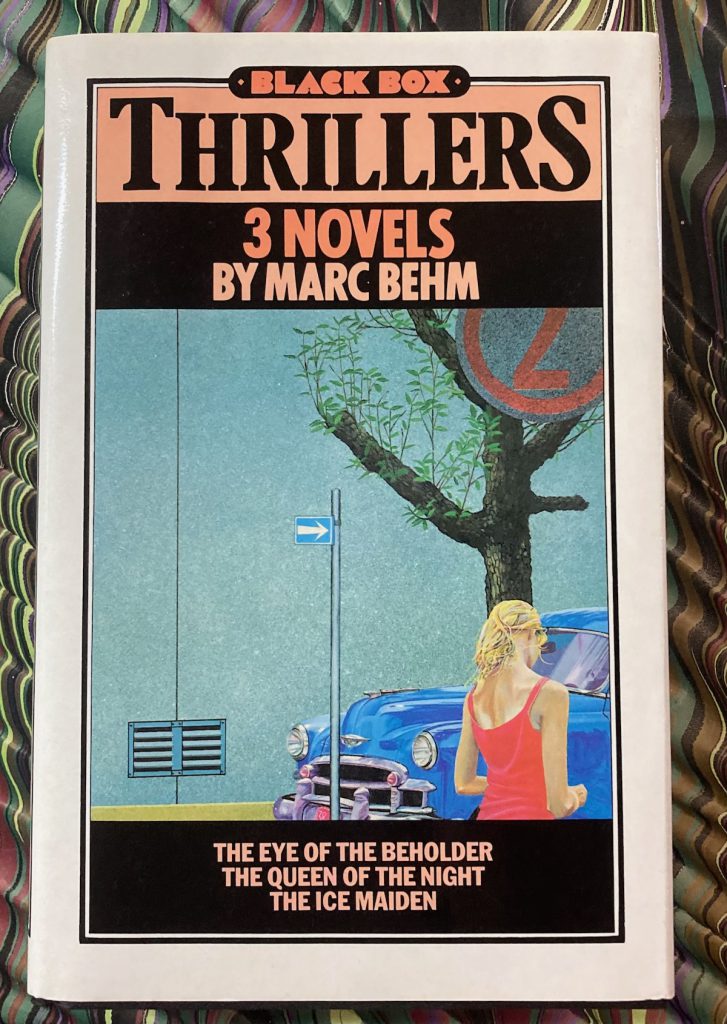
—Mark Behm. The Eye of the Beholder. The Queen of the Night. The Ice Maiden. Zomba Books, [1983]. A Black Box Thriller. The Ice Maiden is an inventive twist on the vampire novel, enacting a hilarious collision of Old World tropes (and the Anne Rice novels) with the exigencies of the American economic system. Gangsters, vampires, religious fanatics, history infodumps, and greed ! The Zomba Black Box books were good stuff in the early 1980s revival of American noir : I had several (Jim Thompson, Horace McCoy, Fredric Brown, and Cornell Woolrich), but hadn’t seen the Marc Behm collection until now. The first two novels were published in 1980 and 1977 ; this is the first (and perhaps only) publication of The Ice Maiden. The proofreading and copy editing are sloppy, but the action never lets up.
— — —
recent reading :
— Larry McMurtry. Walter Benjamin at the Dairy Queen. Reflections at Sixty and Beyond. Simon and Schuster, [1999].
But the problem with reading lists, even one as intelligent as Cyril Connolly’s The Modern Movement, is that they are all in a sense dead letters, guides for the unadventurous, those without the time or the ambition to hunt around and make discoveries for themselves. The great readers will always know about books that neither the marketplace nor the academy has got around to.
McMurtry, novelist and screenwriter whose writing career was sustained by his other life as book scout and antiquarian bookman, here expresses ever so clearly the unvoiced contempt some booksellers have for their customers. In 1999, McMurtry opened Booked Up in Archer City, Texas. It was his book town, a contrarian and rearguard enterprise in defiance of the internet that endured for several years. I have few regrets, but one of them is that I never made it to Archer City, or to the auction when the books were dispersed. This is the punchiest of his memoirs.
——. Books. A Memoir. Simon and Schuster, [2008].
——. Literary Life. A Second Memoir. Simon and Schuster, [2009].
——. Hollywood. A Third Memoir. Simon and Schuster, [2010].
These three entertaining memoirs cover some of the same ground as the earlier book, in chapters short enough to be aphorisms, and there is some inevitable tangling when the lines of his life refuse to conform with categories (and some repetition). McMurtry’s forebears were cattle ranchers ; his clear-eyed recognition of himself as a rancher of words and books is an excellent metaphor.
— J. I. M. Stewart. My Aunt Christina and other stories. Gollancz, 1983.
Collection of stories, several with academic settings, by scholar and author Stewart, whose highly accomplished Appleby novels appeared under his pseudonym Michael Innes. “The Doctor’s Son” is savage about academic politics; and “Variations on a Theme of Oscar Wilde’s” considers a painter whose works capture events in the future.
— George Sims. The Terrible Door. The Bodley Head, [1964].
An engaging novel of death and the antiquarian bookseller, with plot devices suggestive of the trade in Baron Corvo. The death is an antiquarian bookseller run down by a motorcycle in suspicious circumstances ; his inventory (some letters he once owned) is, for a time, the plot engine. Sims was a very good writer.
—Robert Jackson Bennett. The Tainted Cup. Shadow of the Leviathan : Book 1 [2024]. Del Rey paperback.
An eccentric genius criminal investigator in a fantasy world of Imperial hierarchies and body modifications : the murder has ramifications into the corridors of power.
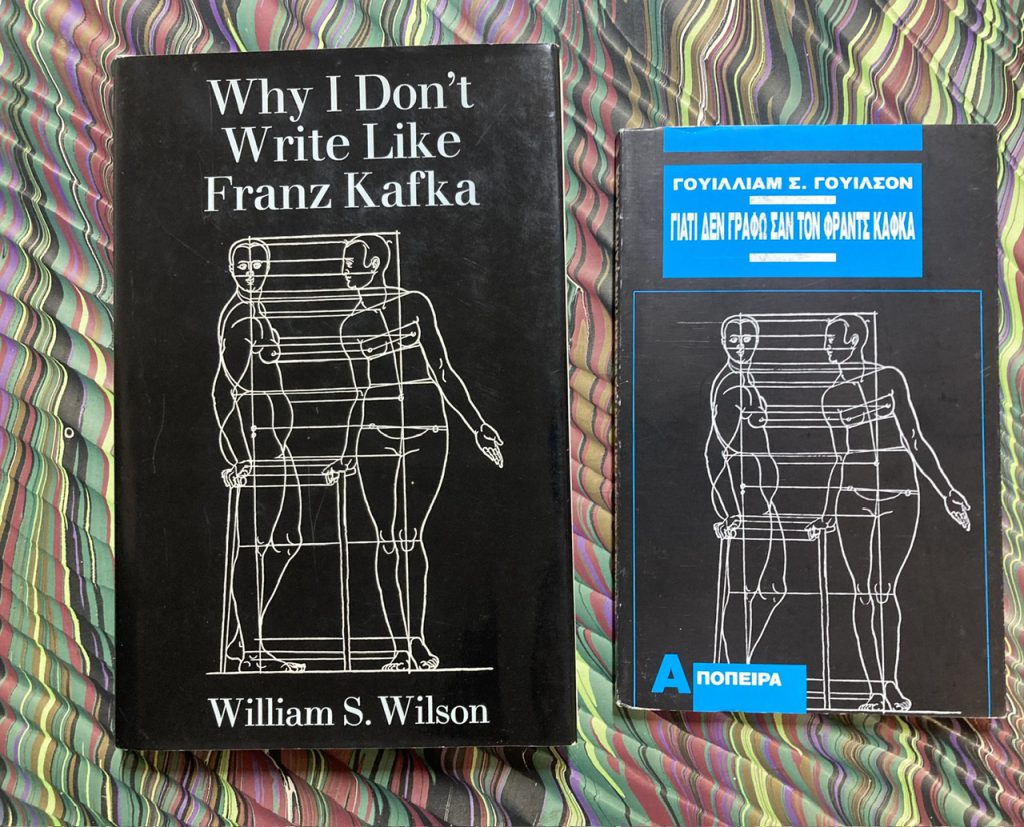
— —. Γιατι Δεν Γραφω Σαν Τον Φραντς Καφκα. Athens : Ekdoseis Apopeira, 1994. Translated by Sonia Salimpha, Stratos Kakadellēs. OCLC: 610587751 (Johns Hopkins).
William S. Wilson (1932–2016) was a friend for more than twenty-five years. I esteem his collection of stories and included it in my Grolier Club show for the beauty and clarity of his prose : and because several of the stories push at the boundaries of what we understand as science fiction in the same way that some of the work of Borges does. “Desire” is a (quietly) spectacular example of what the short story can accomplish.
Bill was not a prolific writer. He published one novel, Birthplace, and a long stream of essays on art, literature, and philosophical topics. He was an exacting writer whose work demands of the reader the same rigor and sheer energy of attention with which he wrote and thought. And because of where and when he lived in Chelsea, he knew everyone in the New York art scene of the Sixties and Seventies, not as a celebrity hanger-on but as an intelligent observer. There is a fascinating transcript of Jonathan D. Katz’s 2012 interviews with Bill at the Smithsonian Archives of American Art.
One sparkling memory from 1994 stands out among all our exchanges. I dropped in to visit him on 25th street and he said, I too have been published in Athens. He showed me a copy of his story collection, and all the history of philosophy was contained in his smile.
I remembered this some months ago, and now I have a copy of the book, thanks to a friend who set a family member on a quest through all the bookshops of Athens. It is locally scarce in the U.S., too. I don’t read Greek (ancient or modern) beyond the alphabet, but I am gratified to have this additional reminder of my friend Bill Wilson.
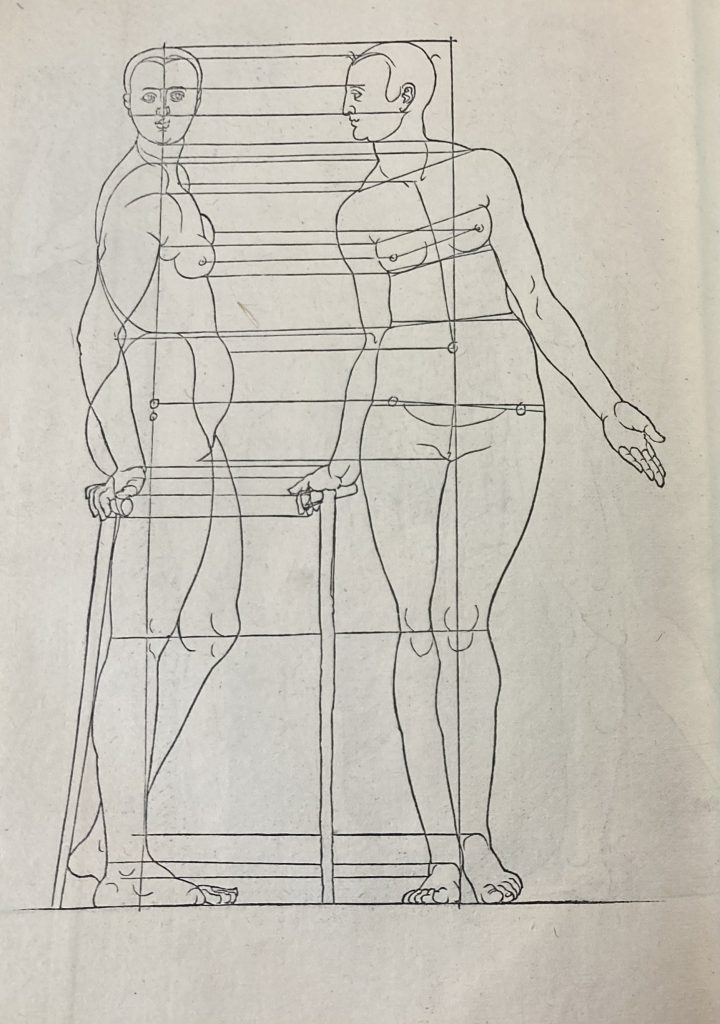
And this just on my desk : the 1528 Vier Bücher, Dürer’s four books on proportions of the human form.
— Paul McAuley. A Very British History. The Best Science Fiction Stories of Paul McAuley, 1985-2011 [and:] . . . (Additional Stories). 2 vols. PS, 2013. Cover art by Jim Burns. Edition of 200 copies, signed by the author.
What a range of tone and subject, from far future urban sass and space drama to life in the ruins ; and McAuley’s hard science fiction as often engages political as scientific speculation. “Second Skin” (1997) and “Rocket Boy” (2007) are excellent hard tales; and “Cross Road Blues” (1991) and “The Two Dicks” (2001) are choice entries in the line of subversive British literary pastiches of American popular culture — I am thinking of “The Big Fish” or Back in the USSR by Byrne and Newman, and similar delights — indisputably, Howard Waldrop was read over there east of the Atlantic ocean.
“How We Lost the Moon, A True Story by Frank W. Allen” (1999) is great, Nevil Shute in space, with a fine ending. [This is high praise, not a dig : Jack Vance made a whole late career cycle of Wodehouse in space.] “A Very British History”, published in Interzone in 2000, is a review of an imaginary book worthy of Lem, but only a tricky Brit could have rung this particularly bell so clearly.
The world-building in the stories is sly and integral. As in the novels, the dance of ideas includes gestures or flourishes that would be infodumps in other hands : McAuley knows when to let an idea go as a flash or hint. I had read Fairyland and a few other novels ; reading War of the Maps earlier in the month prompted me to look at the short stories.
— Michael Swanwick. [Singular Interviews] S1ngular 1nterv1ews. Dragonstairs Press, 2025. Edition of 60 copies signed by the author. Stitched in Indian paper wrappers of various hues, with title label.
Michael Swanwick is the originator of the Singular Interview (many were published in the New York Review of Science Fiction). When he asks a single question, people answer: John Crowley, Tom Purdom (a witty joke), Eileen Gunn, Gregory Frost, Paul Park, Mike Resnick, Samuel R. Delany, Karl Schoeder, David Hartwell, Henry Wessells, Greer Gilman, Spider Robinson, Fran Wilde, Tom Purdom (a serious answer this time), and Michael Moorcock.
[It is a useful conceit, and I have borrowed it on several occasions). The edition sold out almost immediately, as usual with this press (see me after class if you need a copy)].
— Conjunctions 83. Revenants : The Ghost Issue. Edited by Bradford Morrow and Joyce Carol Oates. Bard College, 2024.
a big issue, with “An Incident in Monte Carlo”, a fragment or outtake from the forthcoming Wreckage by Peter Straub, new work by Elizabeth Hand, James Morrow, Timothy J. Jarvis, Mark Valentine, Reggie Oliver, and many others.
“Fern’s Room” by Liz Hand is pitch perfect, deftly moving from a gentle rom-com American anglophile country house idyll to a very dark endgame, with clues scattered all along the way.
“Plunged in the Years” by Jeffrey Ford, with a few steps off the path in the woods, gets right to the heart of the American ghost story : time and memory (and childhood).
— — —
recent reading
— Len Deighton. Faith [1994]. Grove Press, [2024].
— Nathan Ballingrud. Crypt of the Moon Spider. Nightfire, [2024].
— Avram Davidson. The Adventures of Doctor Eszterhazy. Owlswick Press, 1990.
— — —
books wait for their readers
All antiquarian booksellers have a shelf of what Bill Reese called ‘intractables’ : things that sit on a shelf and seem unsaleable, or just beyond the grasp of one’s understanding, or, indeed, actively resist the efforts of the cataloguer with what M. R. James called the ‘malice of inanimate objects’. And then, suddenly, one finds a new perspective, or works with someone who has the key, and the door unlocks. I am fortunate to have experienced this a few times in my career. To watch this phenomenon in real time is one of the delights of the profession.
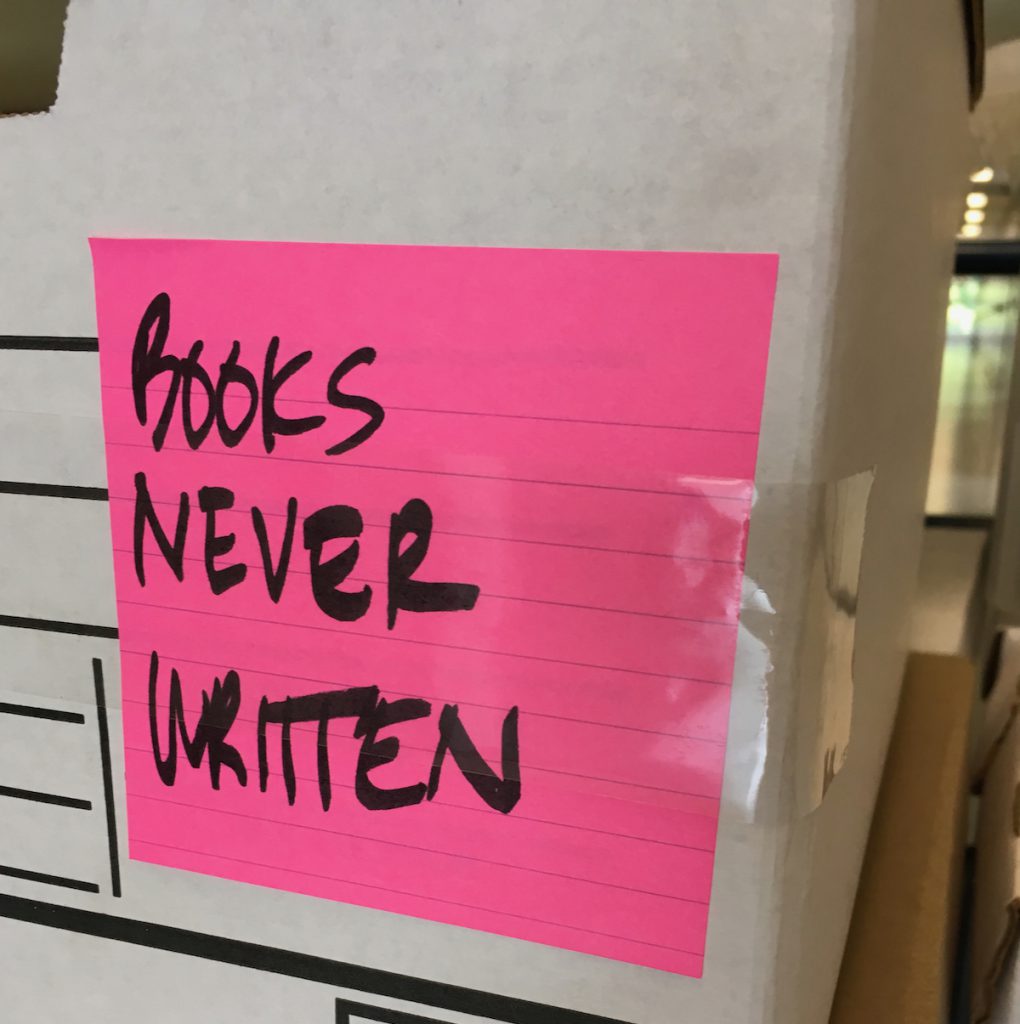
The question of whether or not books wait for their writers is trickier to answer. This is a question of a different order. I would say yes, on balance, but one feels the clock ticking, and the list of books not written is very long.
Books Never Written, label on a box from the literary archive of George Plimpton.
— — —
‘to escape the straitjacket that had been science fiction’ — Paul Kincaid
an excellent essay by a clear-eyed critic ringing the changes on Harlan Ellison’s Dangerous Visions anthologies then and now :
Last week marked eighteen years of ‘simply messing around in books’ and reporting the pleasures on this website. It is still fun and so I will continue to note interesting books, curious passages, announcements, occasional snapshots, and digressions.
— — —
an Endless Bookshelf quiz
Who is the Widmerpool ?
— from your year(s) at school or university
— of your chosen field or profession
— observed recurringly elsewhere
/ wrong answers accepted
/ bonus points for naming your favorite book in ‘A Dance to the Music of Time’
— — —
4 January 2025
early in January, and it is already a good year in books, having just received two long-awaited titles in this week’s mailbag
Billy Budd at 100 (continued)
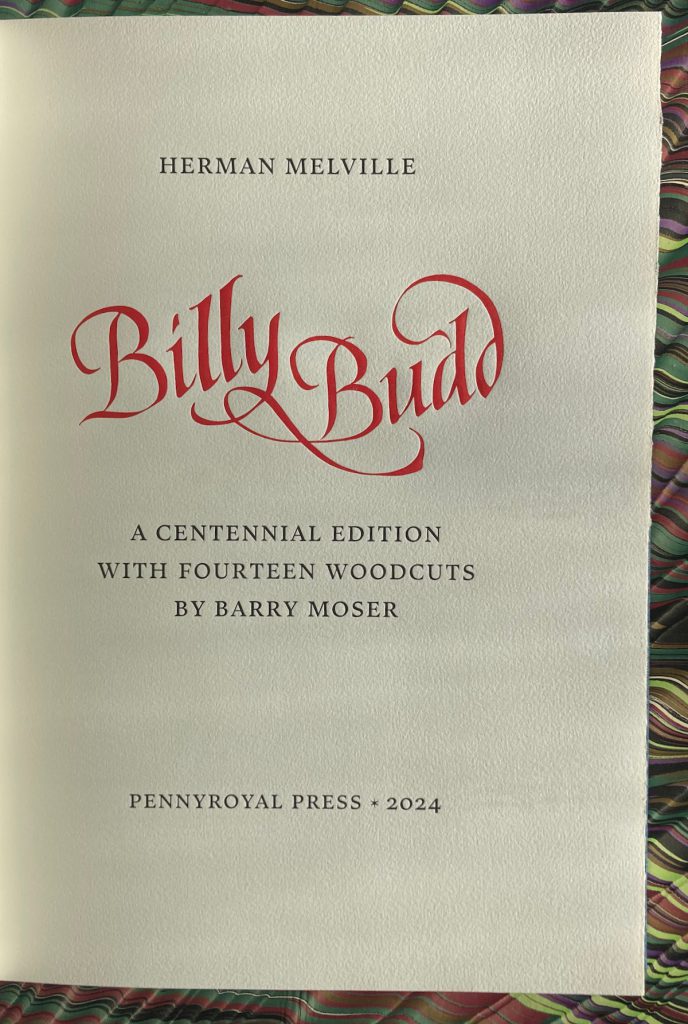
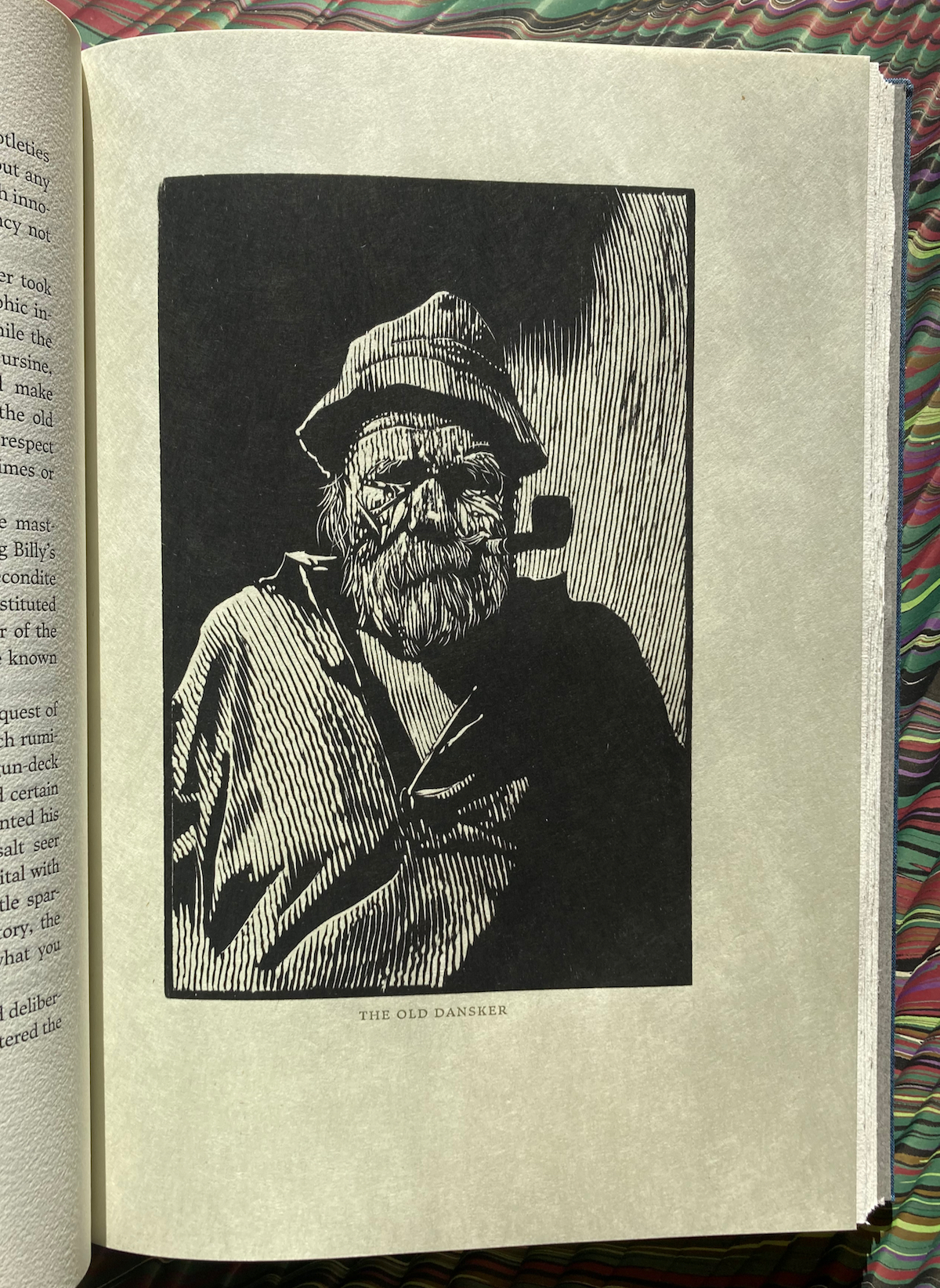
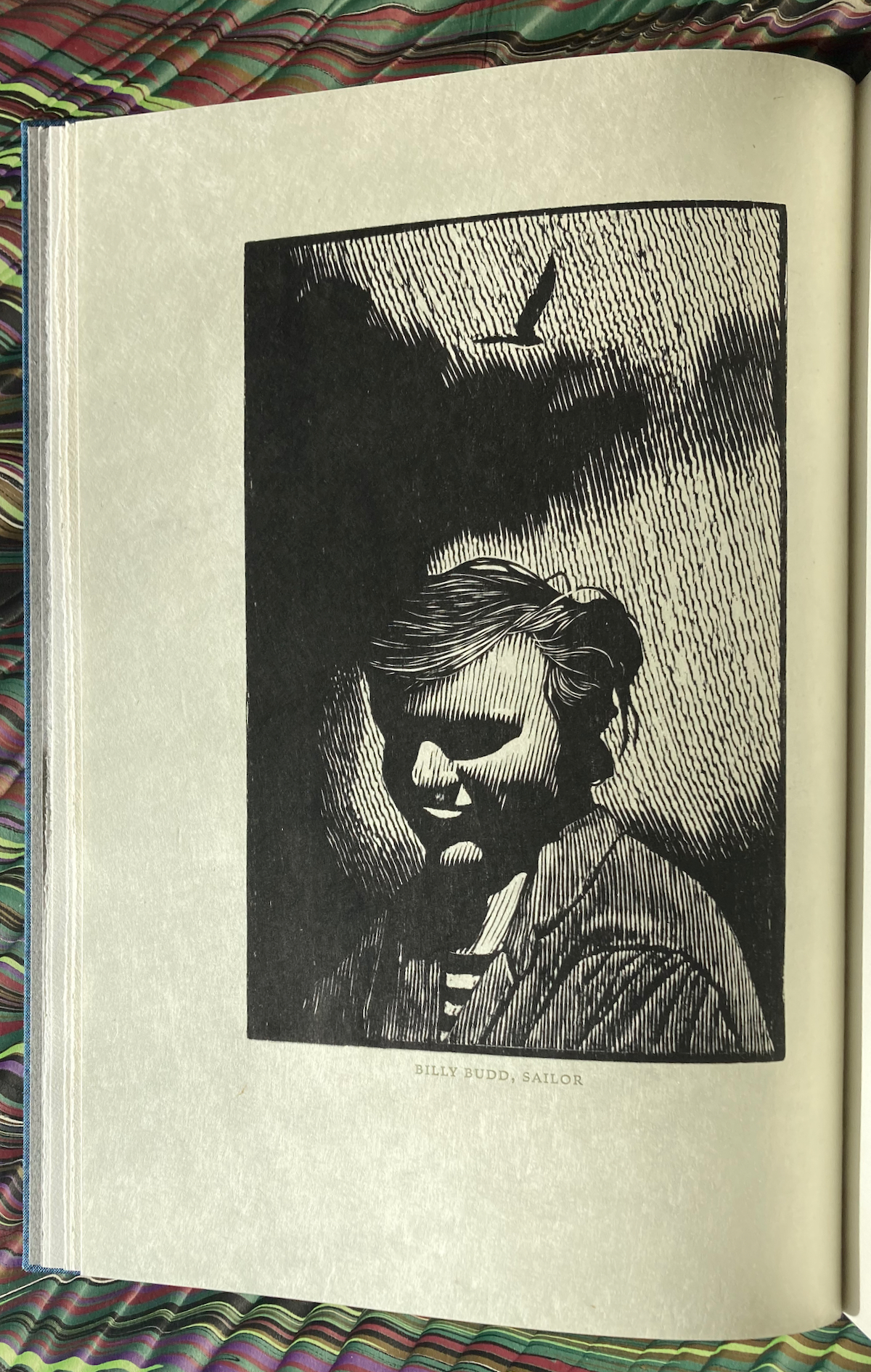
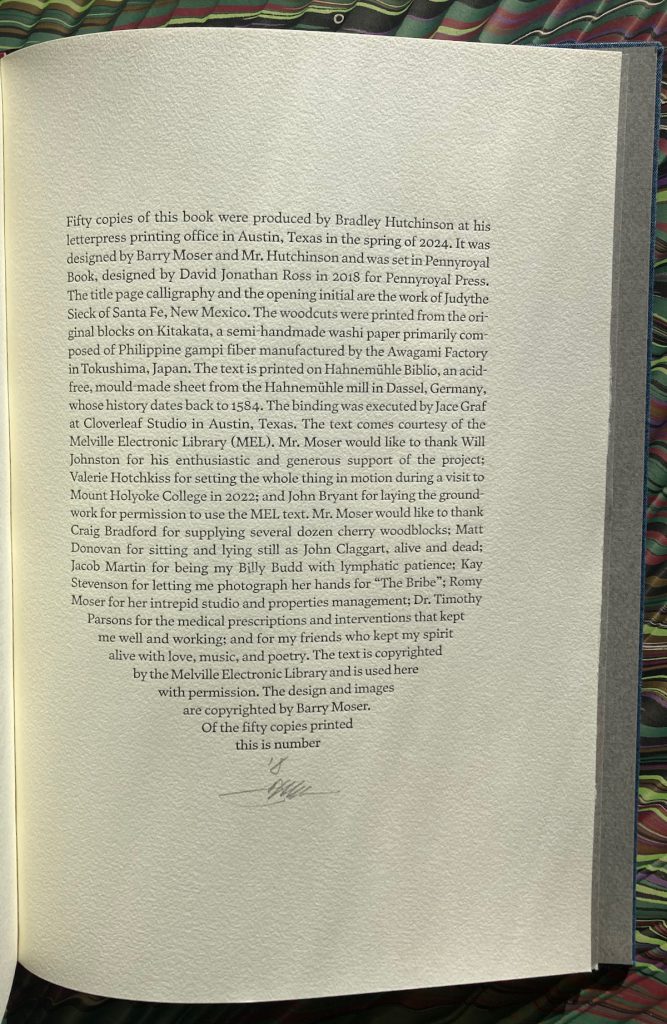
— Herman Melville. Billy Budd. A Centennial Edition with Fourteen Illustrations Cut in Wood by Barry Moser. Pennyroyal Press, 2024. Edition of 50 copies signed by the artist.
A spectacular new large format edition of Billy Budd Sailor (An Inside Narrative) — as the half-title names the book. The text of the novella is set from the Melville Electronic Library, with original woodcuts by American master Barry Moser.
— — —
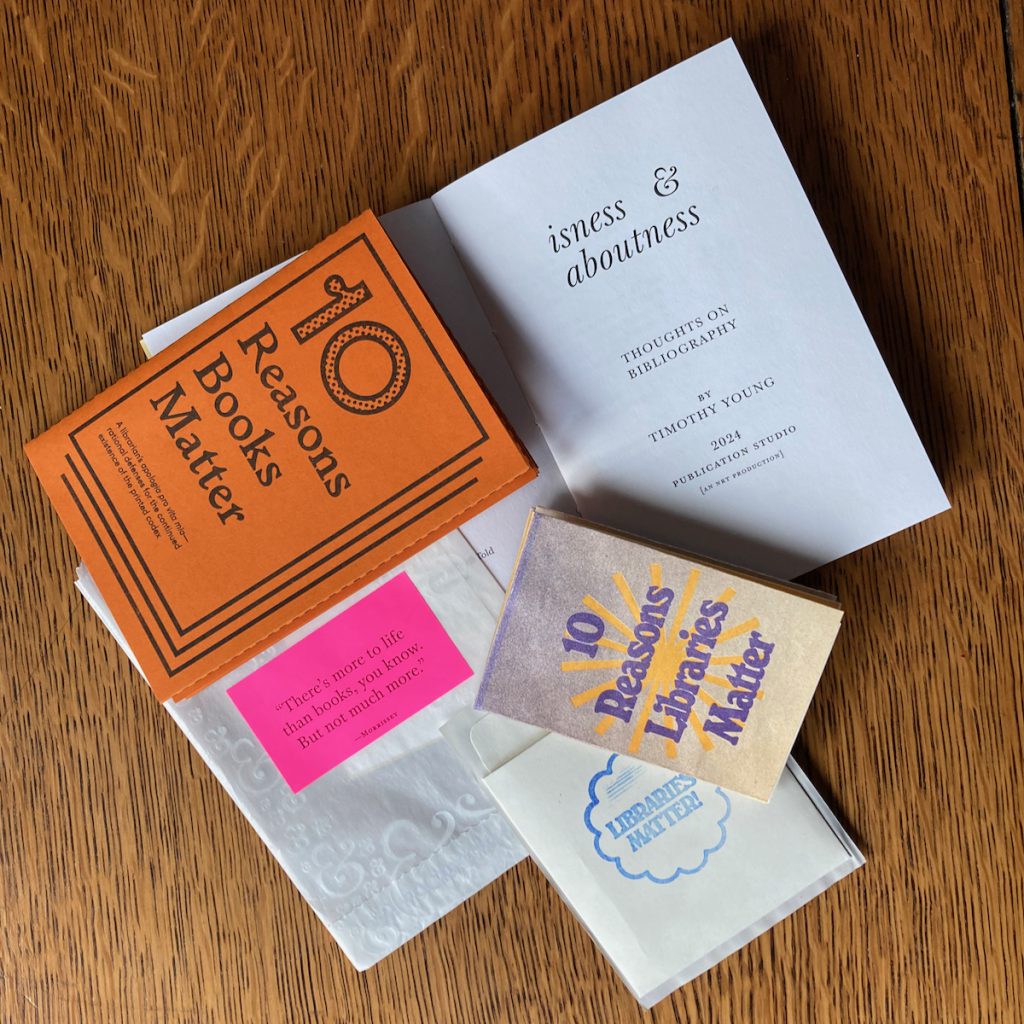
a Tim Young trifecta
— Timothy Young. Isness & Aboutness. Thoughts on Bibliography. Publication Studio, 2024.
With two single sheet ’zines, printed rectos only :
— 10 Reasons Libraries Matter, 2021.
— 10 Reasons Books Matter, [2015].
Isness & Aboutness is a really great essay on thinking about books and thinking about the world (it is the text of Tim’s Sandars lecture at Cambridge University in November). He cites Donald McKenzie to good effect, on bibliography as
the only discipline which has consistently studied the composition, formal design, and transmission of texts by writers, printers, and publishers; their distribution through different communities by wholesalers, retailers, and teachers; their collection and classification by librarians; their meaning for, and — I must add — their creative regeneration by, readers [. . .] no part of that series of human and institutional interactions is alien to bibliography
His essay moves beyond McKenzie’s assertion to identify new modes of bibliography and to assert the primacy of bibliography as a means of uncovering what books are and what they do in the world. Highly recommended.
— — —
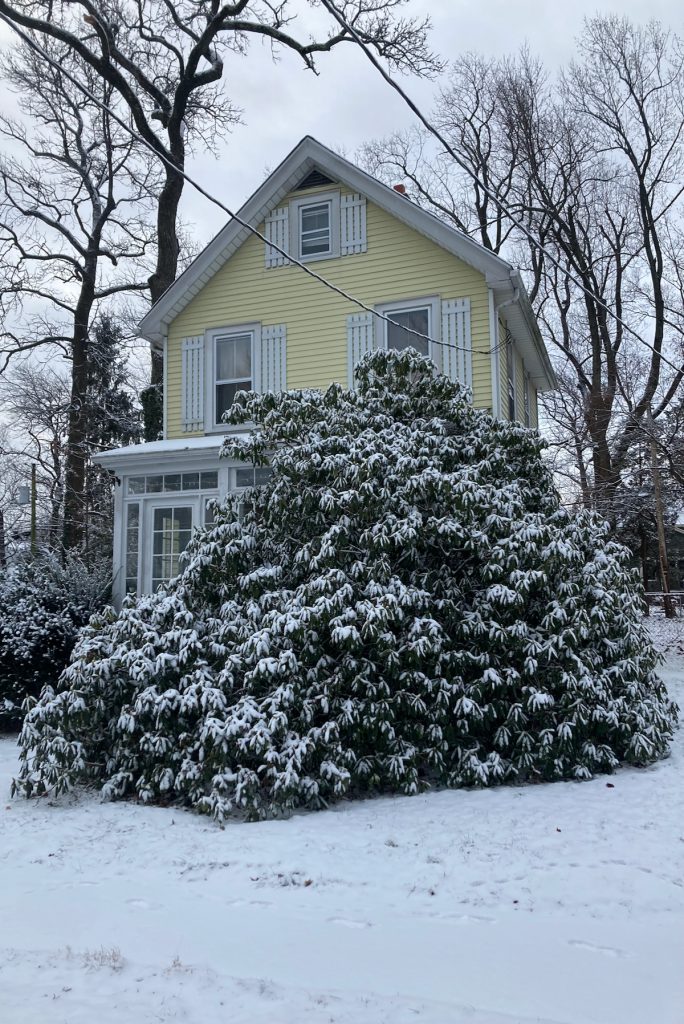
snow day, 11 January 2025
— — —
great blue heron flying low over the silvered mere
alighting on the ice beside a stand of reeds
in the distance, the pulaski skyway
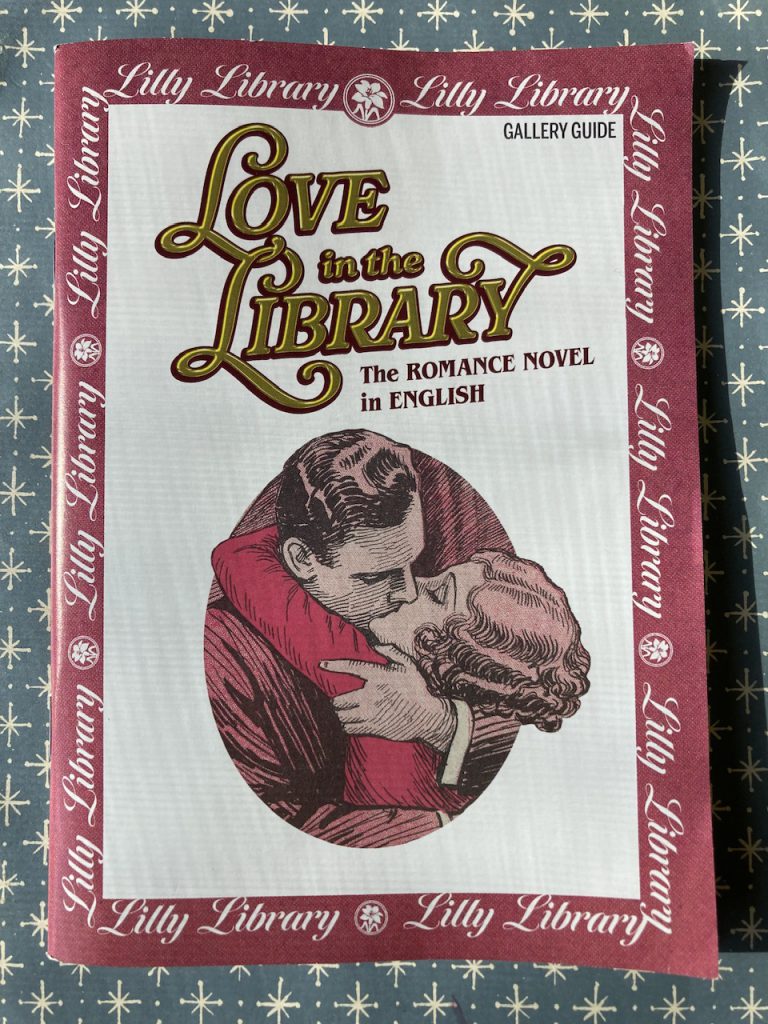
— Romance in the Library. The Romance Novel in English. Gallery Guide. [Cover title]. Illustrated. [64] pp. The Lilly Library, [2024].
Curated by Rebecca Baumann, this remarkable exhibition, Romance in the Library, likely the first of its kind, charts a revisionist history of English literature, with emphasis on women as readers of novels from the eighteenth century to the present, and claims an oft-scorned modern-day marketing genre construct — the romance novel — as a badge of honor. In the heyday of the gothic, which included the sentimental as well as the historical and supernatural, writing novels was an economic activity open to women even while the reading of them by women (especially young women) was viewed as unsuitable. Baumann’s retrospective claim is an assertion that works pretty well, but one has to abandon one’s preconceptions to find more than superficial kinship between The Wild Irish Girl or Pride and Prejudice and modern formula fiction. The shift from novels aimed at a genteel readership to a vast popular appetite for novels of romantic entertainment is rooted in greater educational opportunities for women at all economic levels and the nineteenth-century achievement of near universal literacy. A welcome and provocative exhibition.
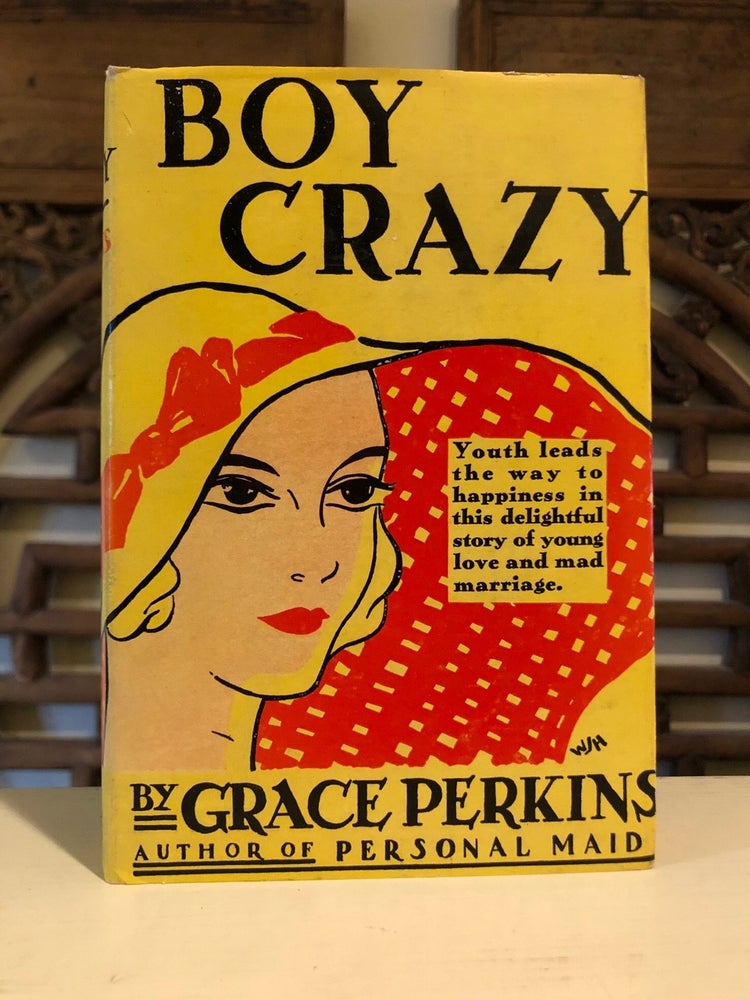
Jane Austen’s Pride and Prejudice (1813) is in original boards, untrimmed. The stylish yellow and red dust jacket* for Boy Crazy by Grace Perkins (1931) is spectacular (and it’s inscribed to Upton Sinclair)! I wish I had taken a picture.
[lightly edited for clarity 16 Nov.]
* here’s an image of another copy of the book :
Grace Perkins. Boy Crazy, 1931. Dust jacket by WJH. Courtesy of Long Bros., Seattle.
— — —
— Kasper van Ommen. Joseph Scaliger. His Oriental library, and the meaning of scholarship. [Cover title]. Illustrated. Brill, [n.d.].
——. Josephus Justus Scaliger. Sieerad van de Academie. Ornament of the Academy. [Cover title]. Text in Dutch and English. Illustrated. [Universiteit Leiden, 2020].
Two illustrated monographs on the great sixteenth-century polyglot and polymath Joseph Scaliger (1540-1609).
— — —
— The Dagon Collection. Auction Catalogue of Items Recovered in the Federal Raid on Innsmouth, Mass. Edited by Nate Pedersen. Cataloguing by Rebecca Baumann, with assistance from Jonathan Kearns. Illustrations by Liv Rainey-Smith and Eduardo Valdés-Hevia. Layout and Design by Andrew Leman. [PS Publishing, January 2024].
A catalogue of imaginary objects, rigorously described, with their history in vignettes by a wide variety post-Lovecraftian authors. Lot 13, The Geometry of Nowhere, is a dizzying book ; and lot 33, the Tiffany Lamp, is an unsettling piece.
— — —
— Michael Connelly. City of Bones. Dennis McMillan, 2002.
It feels like the end of summer here in Montclair, with the hop cones turning, and the tables at the farmers’ market asprawl with the last of the bulbous heirloom tomatoes and an abundance of pawpaws. And some interesting books in the the mail recently :
— Peter Bell. Two Weird Tales. Zagava, 2024. Collects “On the Apparitions at Gray’s Court”, a ghost story and haunted house in York, and “Labyrinth”, an uncanny tale set in one of the northern dales.
— John Crowley. Le Parlement des Fées. Traduit de l’américain par Doug Headline. 2 vols., Paris : Rivages / Fantasy, [1994, 1995]. The French edition of Little, Big (the pseudonym of the translator is a jest, for he is the son of crime novelist J. P. Manchette, hard-boiled trail blazer in the Gallimard Série noire, whose surname translates as : headline).
— Mark Valentine. The Thunderstorm Collectors. Tartarus Press, [2024]. Collection of twenty-nine essays and vignettes, including pieces on Arthur Machen, A. J. A. Symons, M. R. James, and lesser known figures from the “curious alleys and byways” of literature and folklore.
— David R. Gillham. Shadows of Berlin. Sourcebooks Landmark, [2022].
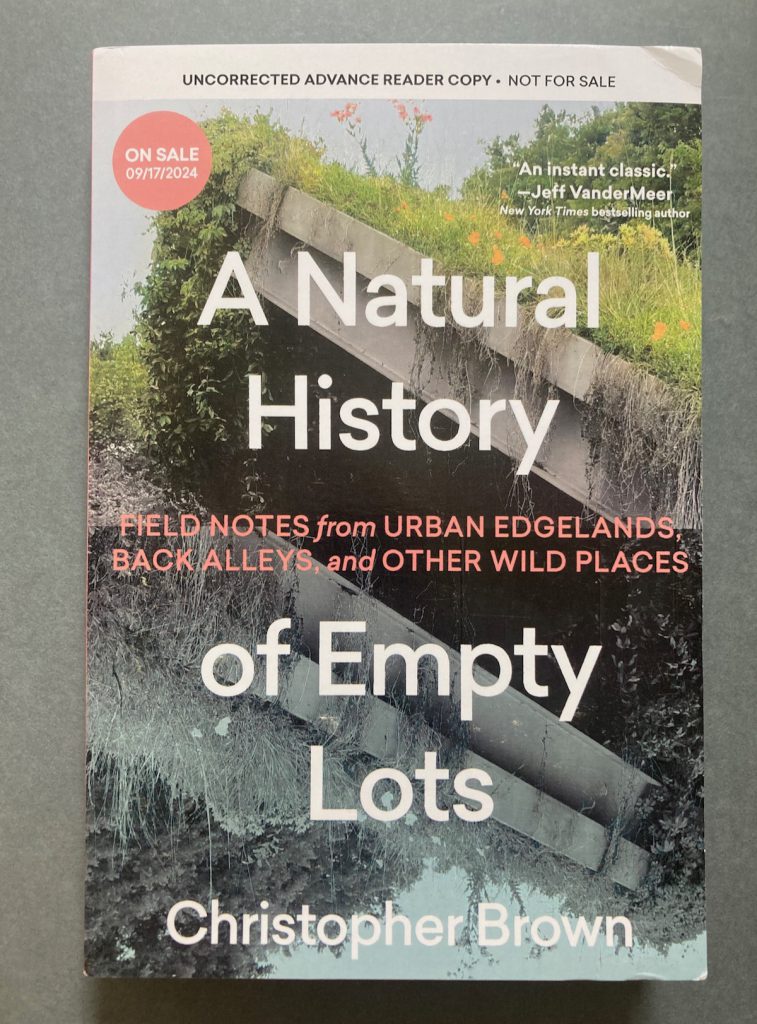
— Christopher Brown. A Natural History of Empty Lots. Field Notes from Urban Edgelands, Back Alleys, and Other Wild Places.
Forthcoming from Timber Press, September, 2024.
So excited to have this to read, from an excellent writer (and friend!) whose explorations forming the core of this book have been chronicled in his Field Notes, and whose Tropic of Kansas was an Endless Bookshelf Book of the Year, “dark, nimble, hilarious, deeply alarming, truly American”. That’s it for now. There will be more about this book.
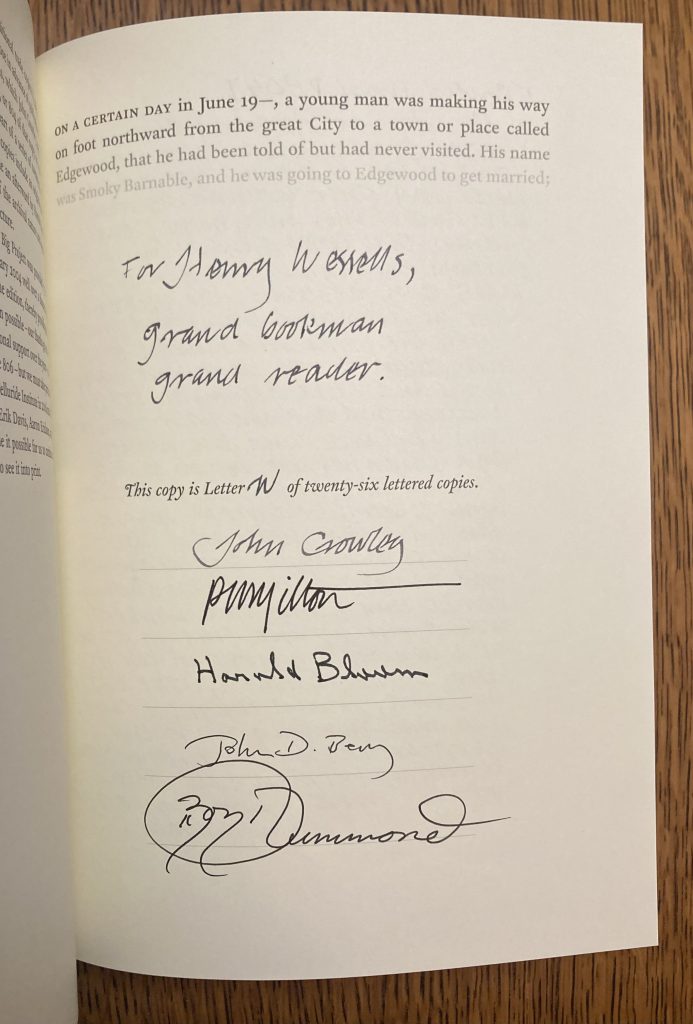
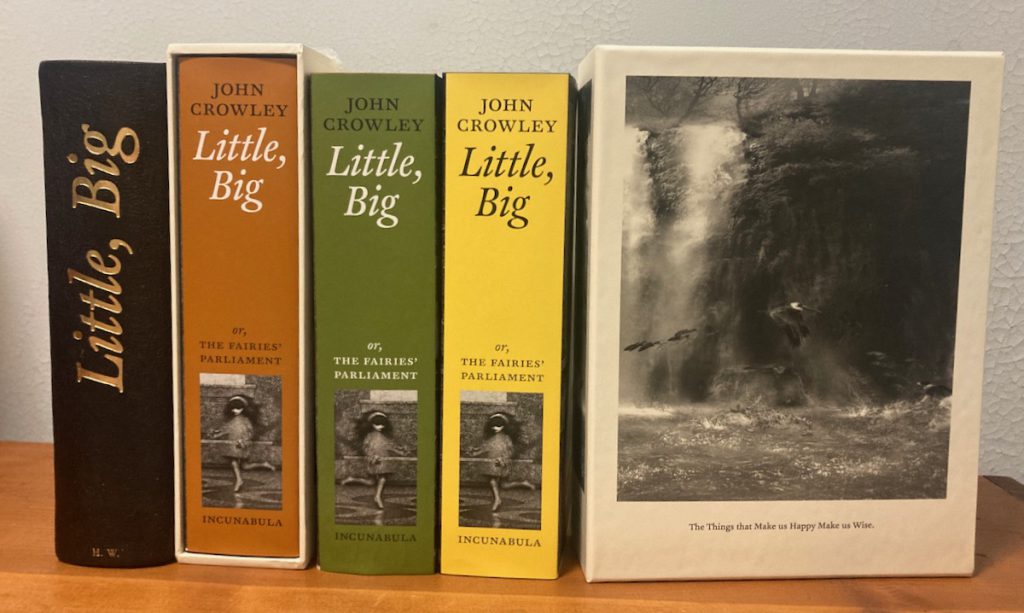
— John Crowley. Little, Big, or The Fairies’ Parliament … Art Peter Milton. Afterword Harold Bloom. Incunabula, 2021 [i.e., 2024]. Anniversary edition, copy W of 26 copies, specially bound, inscribed by John Crowley and signed by all. Violet cloth, brown pictorial dust jacket with illustrations after Peter Milton, and with an essay by Elizabeth Hand on the flaps. Pictorial slipcase.
This book has taken a while to reach my shelves : the edition was announced in 2005 and I subscribed for this lettered copy as an immediate reflex ; for Little, Big is, as Tom Disch wrote : “the best fantasy novel I’ve ever read. Period.”
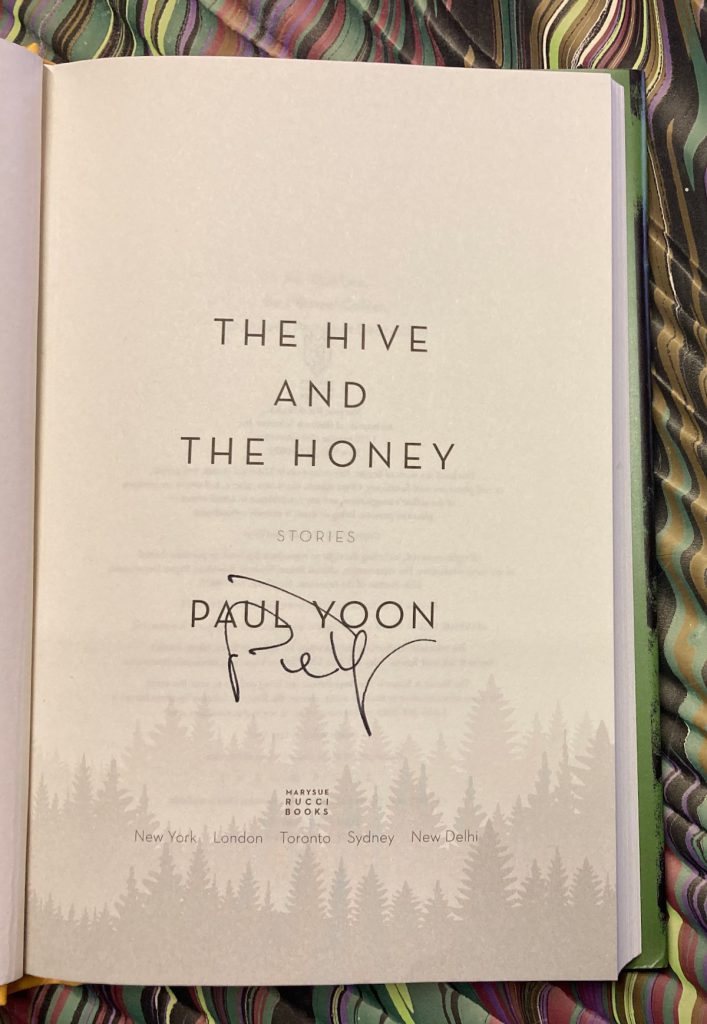
— Paul Yoon. The Hive and the Honey. Stories. Marysue Rucci Books, [2024].
Just back from the twentieth annual Story Prize award ceremony honoring the author of a short story collection published in the U.S. in the receding year. It was an excellent literary evening of readings by the three finalists with interviews by director Larry Dark. The winner of the Story Prize this year is Paul Yoon, for The Hive and the Honey. Stories (Marysue Rucci Books, 2023). The other two finalists were Yiyun Li, for Wednesday’s Child. Stories (Farrar, Straus and Giroux, 2023); and Bennett Sims, for Other Minds and Other Stories (Two Dollar Radio, 2023).
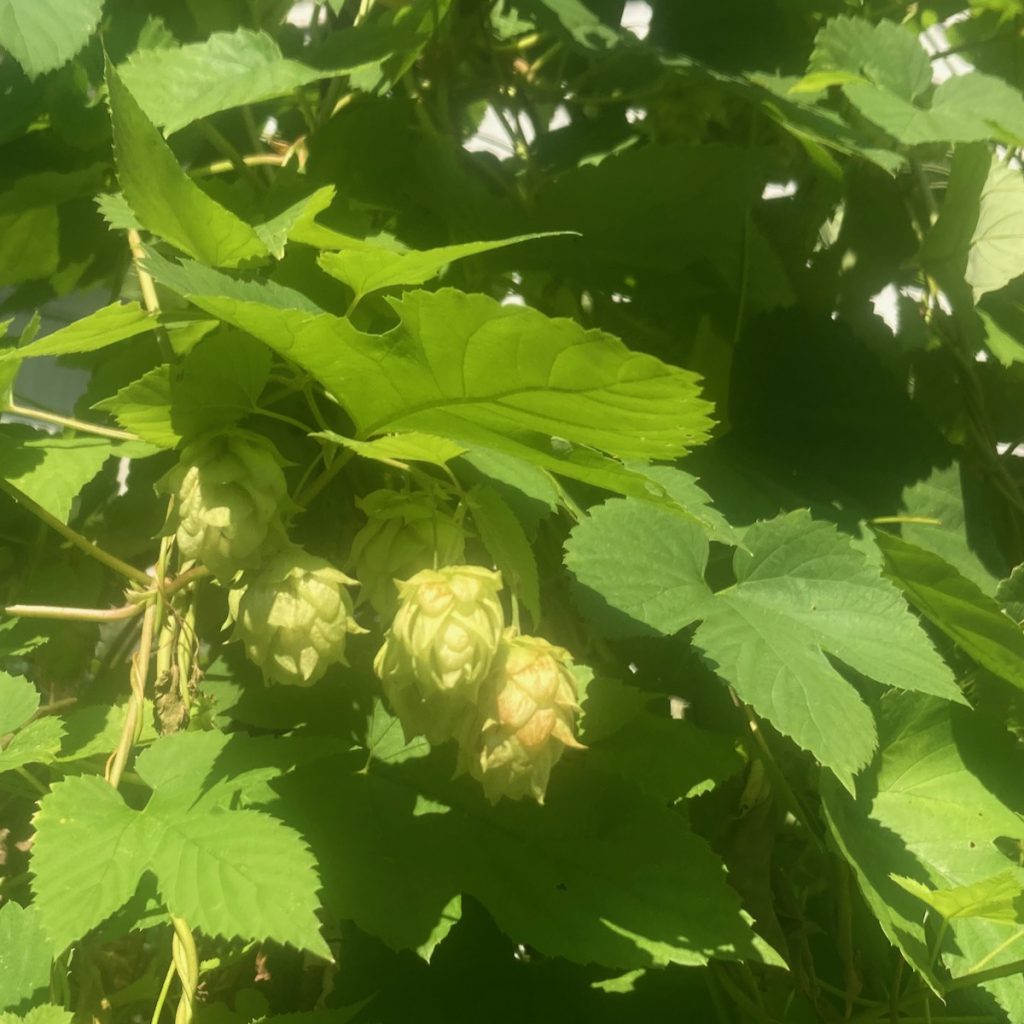 It feels like the end of summer here in Montclair, with the hop cones turning, and the tables at the farmers’ market asprawl with the last of the bulbous heirloom tomatoes and an abundance of pawpaws. And some interesting books in the the mail recently :