current reading :
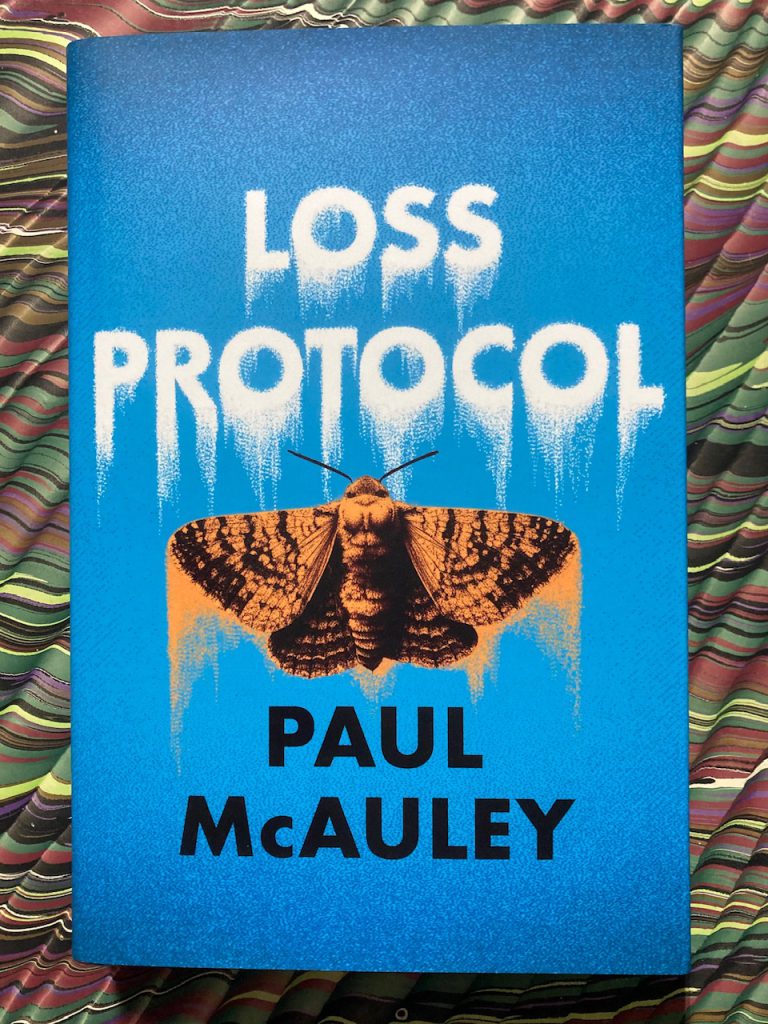
— Paul McAuley. Loss Protocol. Gollancz, [2026].
Near future novel of an England that seems almost familiar and yet the fundamentals have changed after political and climate shocks. Winters is warden of a nature reserve on the estuarine island of Cynsea, sociable enough but with his own reasons to seek solitude. McAuley is good at constructing alien worlds, never better ; and the deep dreamers, ecological activists whom government agencies would gladly classify as terrorists, are suitably creepy. I can’t find the island in my 1955 3 Miles to 1 Inch Road Atlas, but I know it’s there, somewhere downriver from Maldon.
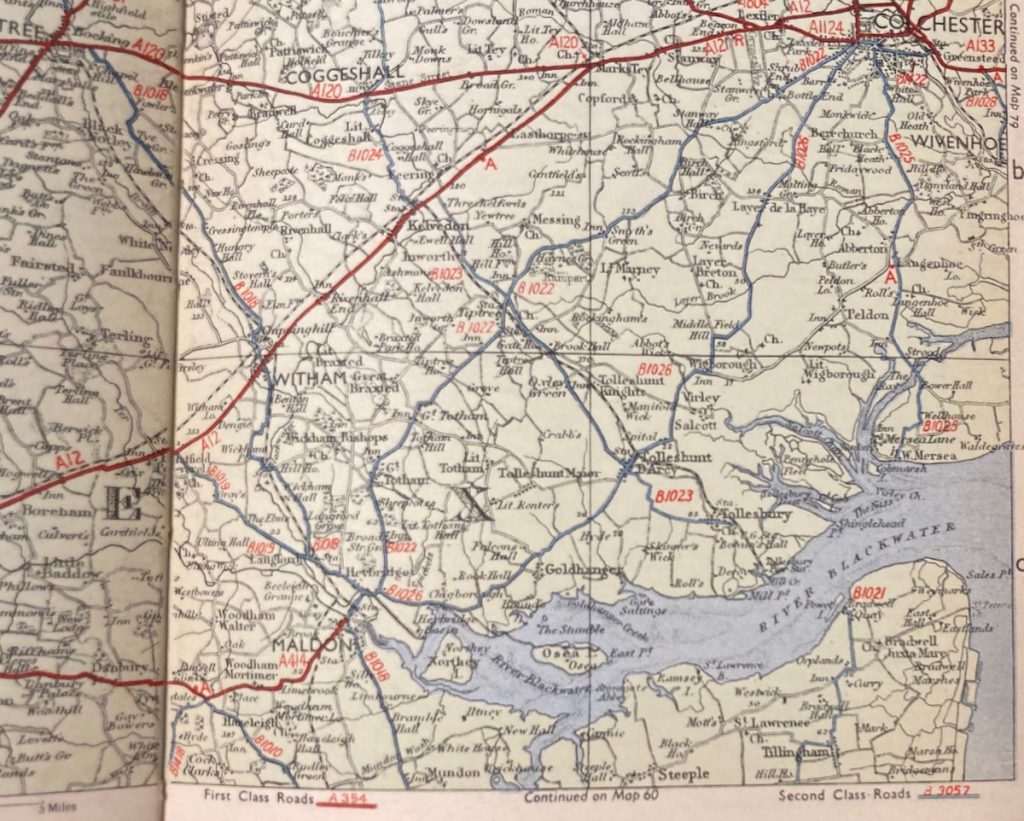
(One afternoon twenty years ago I went cycling, along the peninsula between the Blackwater and the Crouch, through fields out to the primitive church of St. Peter at the sea.)
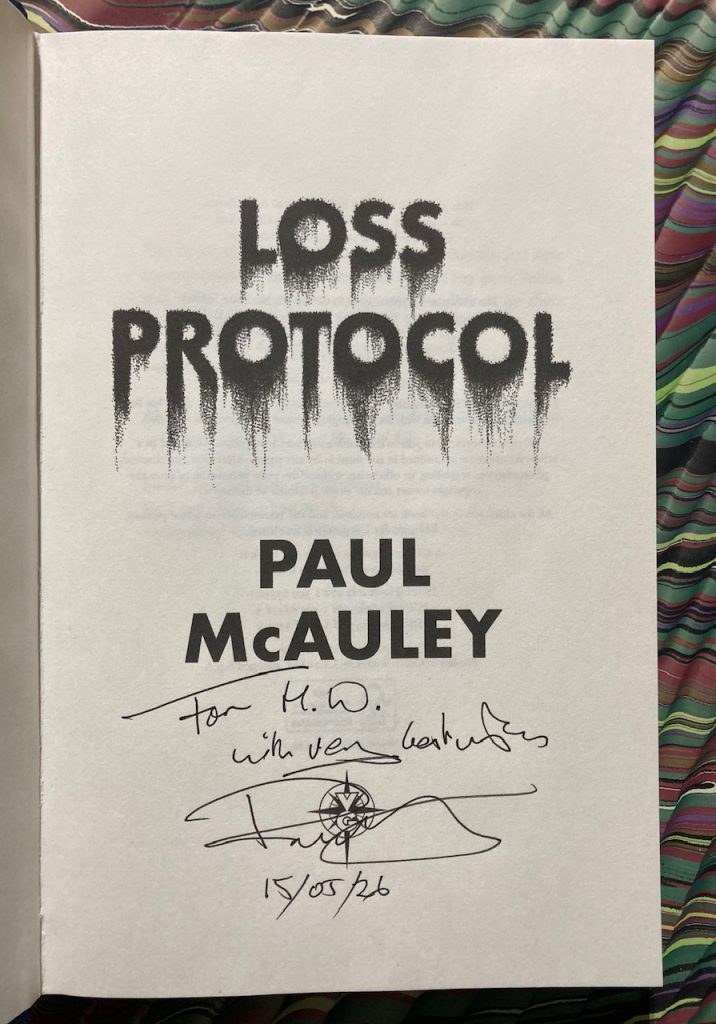
Books wait for the reader. I have had this since May but only now have I started in : not sure where this is going, happy to be going there.
— — —
My next book, forthcoming from Suntup Press (Fall ’27), is a new edition of two classic novellas by Arthur Machen, The Great God Pan & The White People, with an original essay as afterword. The book will be printed letterpress to the high standards of Suntup Press with original new illustrations, stone lithographs by Wales-based artist Flora McLachlan. The afterword will also include a reproduction of the original frontispiece by Machen’s friend Herbert Jones, intended for 1894 edition but never used by John Lane. This is exciting news, the book will be beautiful !
https://suntup.press/the-great-god-pan-the-white-people/
N.B. The book sold out upon announcement (17 October).
— — —
I have been enjoying Now Voyager, a new illustrated journal presenting international topics and some unusual perspectives, already in its fourth issue https://www.nowvoyager.com
— — —
And it’s October, which means that Michael Swanwick is scattering the leaves of another dark tale, Autumn’s End, at his website
http://floggingbabel.blogspot.com/2026/10/autumns-end-part-1-of-31.html
The other day, I received an envelope from Dragonstairs Press :
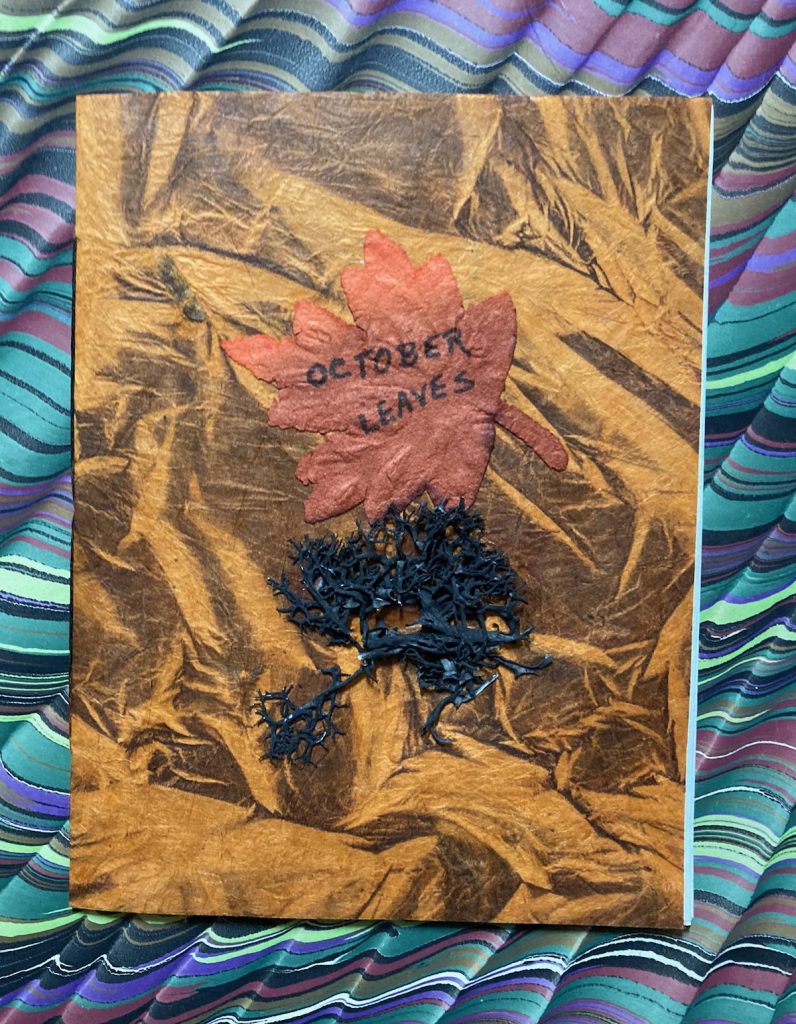
— Michael Swanwick. October Leaves [2010]. [Dragonstairs Press, 2026]. With a new afterword by the author. Edition of 48.
— — —
It’s October, and that means the the Boston Antiquarian Book Fair will be upon us before long : Friday 6 through Sunday 8 November at the Hynes Convention Center, 900 Boylston Street. Your correspondent will be in booth 413 (Cummins), so come say hello. And drop me a note if you would like a pass.
— — —
recent reading :
— Charles Olson. Call Me Ishmael. A Study of Herman Melville [1947]. City Lights, [n.d., ca. 1968].
Amazing book ! A poet’s intense account of climbing the pinnacle of nineteenth-century American prose fiction. Rigorous and visionary and compelling.
— Christopher Morley. Parnassus on Wheels. Garden City, New York : Doubleday, Page, 1917.
A whimsical classic of the used book trade, a tale of itinerant bookseller Mr. Mifflin and his horse-drawn bookshop, and how the sister of a distinguished author makes a snap decision to leave the farm and go on the open road as a bookseller. (There is a whisper of that brief chapter in The Wind in the Willows where, between boating and motor cars, Mr. Toad takes up a canary yellow horse caravan.) With a practical demonstration of the bookseller’s cost code system, with purchase prices in cents ! A nostalgic picture of a vanished world.