![]() |
||
Books are what I do : Write (very slowly), Read (rapidly or at leisure), Re-read (for pleasure or reference), Buy and Sell (my livelihood), Catalogue and Describe (ditto), Edit, Publish, Review (for The New York Review of Science Fiction and others), Recommend or Give away, Receive, and — unavoidably and repeatedly — Lift (whether singly or in boxes). I concede a fondness for private eye novels, equalled by my interest in the quirky, erudite, or obscure, and surpassed only by my love of the literature of the fantastic. — Henry Wessells |
|
|
4 February 10 |
links |
|
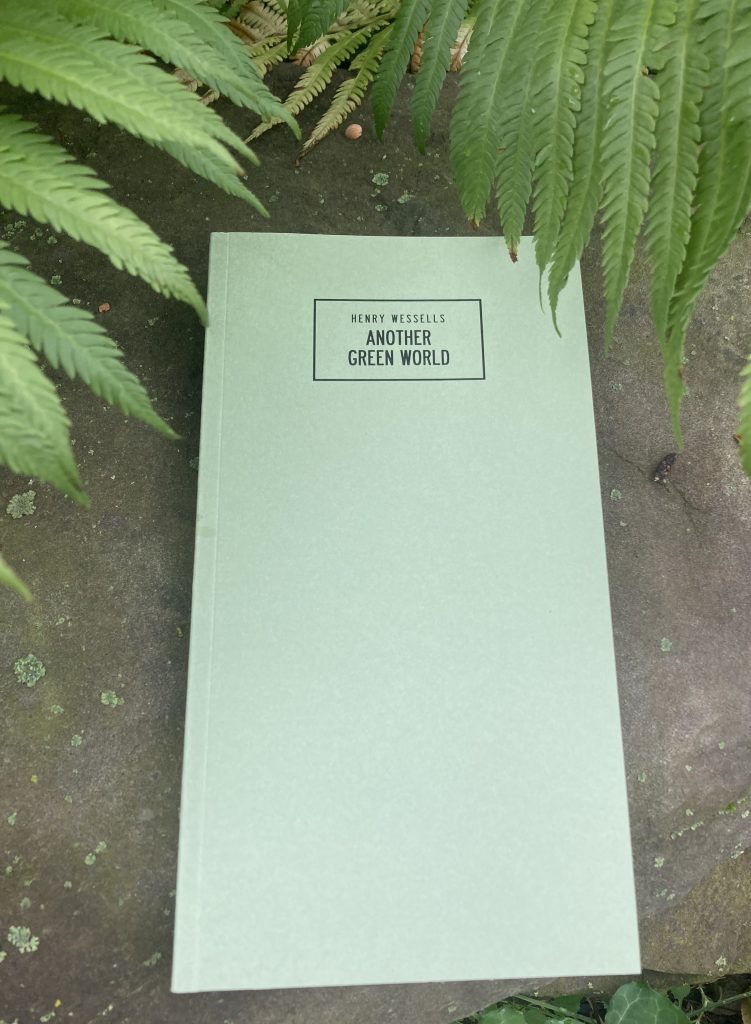
Imaginary books and libraries ![]() Obvious, when one sees it : of course there must be a subject category for Imaginary books and libraries, and prime inhabitatnts of this country include A Perfect Vacuum by Stanislaw Lem, translated from the Polish by Michael Kandel (1979) ; the four elegant volumes of the Tragara Press edition of Frederick Rolfe’s “ Reviews of Unwritten Books ” edited and with notes by Donald Weeks (1985-8) ; and the Catalogue d’une très-riche mais peu nombreuse collection de livres provenant de la bibliothèque de feu Mr. le comte J.-N.-A. de Fortsas. Dont la vente se fera à Binche, le 10 août 1840, à onze heures du matin, en l’étude et par le ministère de Me. Mourlon, notaire, rue de l’Église, no. 9 (1840), catalogue of a collection of unique books, with a brief biographical sketch of the late owner, Jean Nepomucène Auguste Pichauld, comte de Fortsas, otherwise known as the Fortsas catalogue, a bibliographic prank of the first order — boooks and owner being entirely imaginary ! I shall look for a copy of Imaginary Books and Libraries. An essay in lighter vein by John Webster Spargo, published by the Caxton Club in 1952, and work my way among other titles in this field. Your correspondent has no trace of jealousy and asks only, why is Another green world (2003) excluded from this select club ? (This question is directed toward librarians. Please note that the cognate classification, Literary forgeries and mystifications, holds no such appeal.) This is a good time to remind readers of the Endless Bookshelf of the following elements of a successful library search : “ Author, title, and the jewelly festival number — ” Kelly Link, Magic for Beginners (Small
Beer Press, 2005), p. 227 |
||
| — — — — | ||
| Your correspondent will be travelling to California, to catch the tail end of the February Weedwalk organized by A. Wessells and M. Swaine (not last year’s walk mentioned on the website) ; to attend to some personal matters ; and then to exhibit at the 43rd California International Antiquarian Book Fair in Los Angeles, booth 313, 12 through 14 February. | ||
| — — — — | ||
The Man with the Knives by Ellen Kushner Forthcoming on 3 May 2010 from Temporary Culture :
First publication of an original short story by Ellen Kushner, author of Swordspoint. A Melodrama of Manners (1987) and The Privilege of the Sword (2006). The book will include an original frontispiece illustration and decorations by World Fantasy Award winn ing artist Tom Canty. Details and ordering information here. The cover sketch above includes a detail of an anatomical plate from the 1579 Plantin Valverde-Vesalius. |
||
| — — — — | ||
Read with Horror and Enjoyment — Lee Israel. Can You Ever Forgive Me ? Memoirs of a Literary Forger (Simon & Schuster, 2008). Appalling and congenial account of how biographer Israel turned to forgery, producing bogus letters by Louise Brooks, Dorothy Parker, Noel Coward, and others, and then proceeded to steal from libraries before the deceit was uncovered. Gift of [GF] who predicted correctly that I would read it with horror, and also, perhaps, enjoyment. |
||
| — — — — | ||
(Re)-Reading
— Jedediah Berry. The Manual of Detection (Penguin paperback, 2010). Great cover that alludes to the key role of bicycles in this excellent detective novel, reviewed on the Endless Bookshelf on 4 Aug. 09. |
||
| — — — — | ||
![]() — Virginia F. Townsend. Only Girls (Lee and Shepard, 1876). |
||
| — — — — | ||
29 January 10 Recent Reading — Patti Smith. Just Kids . Ecco, [2010]. Intimate, compelling memoir of Smith’s life with Robert Mapplethorpe in New York in the late 1960s and early 1970s. |
||
| — — — — | ||
Hard Times
from the forthcoming Hard Times , from the collection of Michael Zinman (Annals of Collecting : 2) |
||
| — — — — | ||
|
25 January 10 How de we know ?
— Partick [Henry] Pearse. Short Stories . Translated from the original Irish by Joseph Campbell. Edited and introduced by Anne Markey. (University College Dublin Press, [2009], distributed in the U.S. by Dufour Editions). This new edition of Patrick Henry Pearse’s short stories collects two small but exceedingly influential books by one of the leaders of the Easter Rising. Pearse’s political activism and his prominence in the events of April 1916 have overshadowed his literary work. Pearse began learning Irish Gaelic in the 1890s and was an energetic member of the Gaelic League, and editor of its periodical, An Claidheamnh Soluis (The Sword of Light), from 1906 to 1909. The ten stories in this collection were written in Irish between 1905 and 1916, and are the fictional counterpart of Pearse’s critical advocacy of modern literary technique. Citing a 1906 essay, editor Anne Markey notes that “ Pearse’s insistence that twentieth-century Irish-language literature should engage with ‘ the mind of contemporary Europe ” and should be modern in ‘ texture, tone, and outlook ’ reflects his conviction that ‘a living modern literature cannot (and if it could, should not) be built up on the folktale ’. ” These stories are rooted in the speech of Irish village life — as Joyce’s stories are rooted in carefully observed urban life — and any tendency toward excessive cuteness is dispelled, sometimes deftly, sometimes brutally, by the constant presence of death and suffering. The kindness of children in “ The Thief ” may be touching, but “ The Dearg-Daol ”, narrated by a “ walking man ”, describes a trajectory of domestic misery as relentless and devastating as what Eugène Marais described as the “ pessimistic conviction, apparently borne out by every fact observed, that the oscillations of the pendulum are gradually lessening round the deadpoint. ”
“ Barbara ” is a story of a small girl and her two dolls. Brideen neglects Barbara, her treasured first doll after she is given Niamh Goldy-Head, but it is Barbara who falls from a dresser and alerts the child’s mother of imminent danger. A simple tale ; but the attentive reader cannot mistake the following passage :
— — — — “The Republic guarantees religious and civil liberty, equal rights and equal opportunities to all its citizens, and declares its resolve to pursue the happiness and prosperity of the whole nation and of all its parts, cherishing all the children of the nation equally, and oblivious of the differences carefully fostered by an alien government, which have divided a minority from the majority in the past.” These words by Patrick H. Pearse, in the proclamation of the Irish Republic, have undoubtedly gained a wider currency than the small clutch of short stories he wrote in the decade leading up to the events of the Easter Rising.
[from the essay by Stephen Ferguson for the An Post facsimile (2007) of the 1916 Proclamation, The Provisional Government of the Irish Republic to the People of Ireland, signed by Thomas J. Clarke, Sean Mac Diarmada, Thomas MacDonagh, P.H. Pearse, Eamonn Ceannt, James Connolly, and Joseph Plunkett.] The Rising, “ fruit of much careful, secret planning ”, had deep roots and derived its power from awareness of years of injustice. Pearse’s revolutionary impulse is inseparable from the modernist literary agenda and the preoccupation with death and sorrow that are at the dark, wonderful core of these stories. If “ Eioneen of the Birds ” is an Irish miniature of George Mac Donald’s At the Back of the North Wind , Pearse’s last story, “ The Keening Woman ”, a layered narrative, rich in nuance, was published in January 1916. It is an explicit picture of the terrible weight of English rule :
Patrick Pearse and his brother Willie were executed by the English on 3 May 1916. Pearse’s stories were swiftly translated into English by various hands, but several editions omitted notable stories. This translation of the stories, by Joseph Campbell of Belfast, was first published in 1917. Campbell’s direct links with Ezra Pound and the modernist movement ensured that this translator was in sympathy with Pearse’s literary aims. These tales, especially “The Keening Woman ” and “ The Dearg-Daol ”, demonstrate complexities of Pearse’s life and aspirations in ways that the biographical narrative cannot ; and the passage from “ Barbara ” noted above is something I am glad to have encountered. The editor’s introduction is richly informative ; the comentary on the text and notes on the geography of the stories are useful. — — — —
|
||
| — — — — | ||
Children’s Fantasy http://imgs.xkcd.com/comics/childrens_fantasy.png |
||
| — — — — | ||
22 January 10 Seaweed of Japan From Room 26, Beinecke Library, an image from a book of 121 mounted seaweed specimens from the Sea of Japan [collected, possibly by Lauriston B. Hardin, on the Perry Japan Expedition, 1853-55]. |
||
| — — — — | ||
Detectives and Dreams “ a splendid novel . . . a fun, flexible dance of a book ” The Endless Bookshelf has received word from Penguin Books that the paperback edition of The Manual of Detection is to be published on Tuesday 26 January, and that author Jedediah Berry will be in Brooklyn on that date to celebrate publication, at the Word Bookstore, 126 Franklin Street in Brooklyn, at 7:30 p.m. details, et.c, at : http://www.manualofdetection.com/ |
||
| — — — — | ||
Current Reading — Léo Malet. Nestor Burma. Dernières enquêtes . Edition établie et présentée par Nadia Dhoukor. (Bouquins. Robert Laffont, 2007). Paris noir by the master, the ancien surréaliste et poète Léo Malet (1909-1996). Collection of Nestor Burma novels and miscellaneous fragments and documents. I had read lots of Malet a decade ago, most of his early novels and the Nouveaux mystères de Paris series featuring Nestor Burma, and when this came into my hands I dove right in, to the exclusion of all other books. Malet never quite rises to the level of Chandler’s The Long Goodbye (1953), but the word-play — and rain and darkness (and sudden gunshots and sultry glances) — is deft and satisfying and tense. It might be impossible to translate the Nestor Burma novels — why should one translate Paris ? It is worth learning French to read them. |
||
| — — — — | ||
The Real Reason The real reason that Temporary Culture opted out of the proposed Google settlement and what it implies for digital books : I produce book objects to be held in the hand and read. [HWW] For a more detailed response, see Tom Purdom’s note, cited by Michael
Swanwick, here : A salient point : “ It seems to me Google is making a Grab, to use one of Damon [Knight]’s terms. ” — Tom Purdom |
||
| — — — — | ||
The Future of the Book At the symposium “ Current Challenges to Fine Printing and Book Design ” in the twenty-first century at the Grolier Club on 13 January, publisher David R. Godine sounded an optimistic note on the endurance and future of the printed book :
Designer and printer Luke Ives Pontifell expressed a useful metaphor for the book with printed pages that one holds in the hands : as the violin is an instrument to play composer’s music, the book is an instrument to perform (experience) author’s words. |
||
| — — — — | ||
Visitors Between August 2009 and January 2010, the Endless Bookshelf had more than 600 visitors from 57 countries, and more than 1,600 page views, and blah blah blah. Is that a good thing ? It is not statistics that are meaningful — but your responses. As the Endless Bookshelf aspires to be a collective enterprise, readers, your communications are needed. And as the website begins its fourth year, the invitation to contribute is renewed : pictures, words, links. Your correspondent has been working on several publishing projects, details of which — with pictures — will be announced in the near future. Your correspondent will be exhibiting at the annual California Antiquarian Book Fair, 12-14 February, in Los Angeles this year. See you there. [HWW] |
||
| — — — — | ||
12 January 10 Hope Mirrlees a Farewell (of sorts) With the entire print run of Hope-in-the-Mist by Michael Swanwick dispersed, and the aims of the project complete, it is pleasing to know that the predicted convergence of interest in Mirrlees from the fantasy and literary communities has come to pass. (Now if we could just get a decent edition of Lud-in-the-Mist in print in the U.S.) The torch has been passed : Sandeep Parmar, a Cambridge scholar, is at work on a full-scale biography ; and the stylish and detailed web resource on Hope Mirrlees curated by Erin Kissane at hopemirrlees.com is fully active. The photograph above, from the National Portrait Gallery, “ Lady Ottoline Morrell with friends, possibly by Philip Edward Morrell, late 1930 ” (NPG Ax143288), is quite a literary garden party : the sitters are identified as Georges Cattaui, Walter D’Arcy Cresswell, Jim Ede, Leila Faithful, Hope Mirrlees, Lady Ottoline Morrell, Lytton Strachey, Arthur Waley, and William Butler Yeats. NPG Ax143313 has a certain charm, too : Standing : Lytton Strachey, Georges Cattaui. Seated : Arthur Waley, Hope Mirrlees. |
||
| — — — — | ||
Recent reading — William Gibson. Spook Country (2007 ; Berkley Books paperback, 2008). A very satisfying collision of narrative arcs with some beautifully phrased, savage political commentary on trends in the U.S. I thought this was one of the funniest exchanges :
— Michael Dibdin. End Games (2007).
Read this on an airplane, where not long after I noticed the following in the Korean Air duty free catalogue : “ Gwen Stefani Harajuku Lovers Snow Bunnies Eau de toilette. ” Which I will take as Q.E.D. — Erik Larson. The Devil in the White City. Murder, Magic, and Madness at the Fair That Changed America (2003).
— Michael Connelly. The Last Coyote (1995 ; Grand Central Publishing paperback, 2005). Temper, temper, Harry Bosch. Connelly’s rejoinder to James Ellroy’s The Black Dahlia (1987). — Cory Dctorow. Makers (Tor, 2009). Dense with information, wildly satirical, with some very funny notions. Not so engaging a narrative as Little Brother and with a couple of conceptual gaps — the rides ; and the ecological impact of the endless extrusions of plastic — that had me picking at the metaphor a few times. The glee of madcap inventors/makers Lester and Perry, however, and the journalist Suzanne’s re-invention of herself, were compelling and rewarding. |
— — — — | |
Ed Sanders, Book-freak Bancroft Library, BANC MSS 92/788 |
||
| — — — — | ||
| The New Yorker for 18 January has a substantial and wide-ranging survey of works by modern Arab novelists, Found in Translation. The contemporary Arabic novel by Claudia Roth Pierpont. “ ‘ Politics and the novel are an indivisible case, ’ the Palestinian novelist Ghassan Kanafani wrote. ” I want to look for a copy of I‘jaam by Sinan Antoon, described as “ alert to the uses of language, in a closed political society, for both indoctrination and rebellion. ” These works seem to be dispatches from a zone where the consequences of words are potent, perilous, esteemed. | ||
| — — — — | ||
The Story Prize Now in its sixth year, The Story Prize, an
annual award for books of short fiction, is pleased to honor three outstanding
short story collections chosen from an exceptional group published in 2009.
The three finalists — all debut collections — are : |
||
| — — — — | ||
Wander in the Archives The Archives of the Endless Bookshelf have been swept and tidied and a guide has been prepared to assist wanderers. Index would be too strong a term : the headwords tend to be suggestive rather than directive. Start here. Have fun. |
||
— — — — |
||
This creaking and constantly evolving website of the endless bookshelf : I expect that some entries will be brief, others will take the form of more elaborate essays, and eventually I will become adept at incorporating photos or comments and interactivity. Right now you'll have to send links to me, dear readers. [HWW] |
||
electronym : wessells
at aol dot com |
||