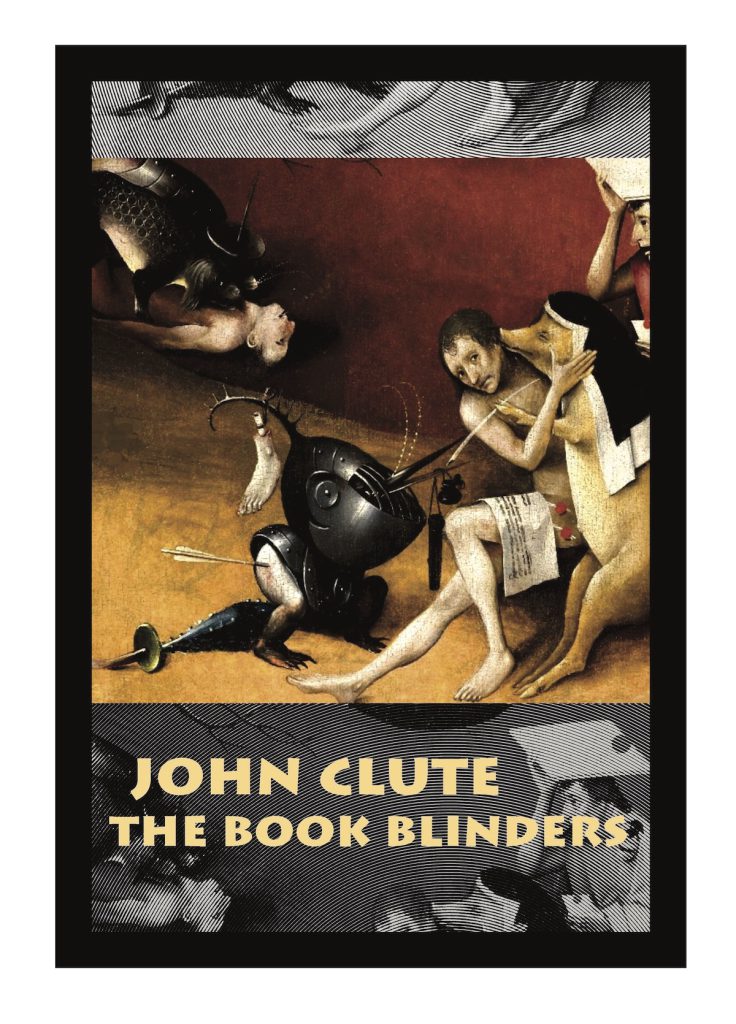
The Book Blinders by John Clute

Millions More Missing
— John Clute. The Book Blinders. Annals of Vandalism at the British Library: A Necrology. Illustrated throughout. 499, [1, errata] pp. Norstrilia Press, [2024].
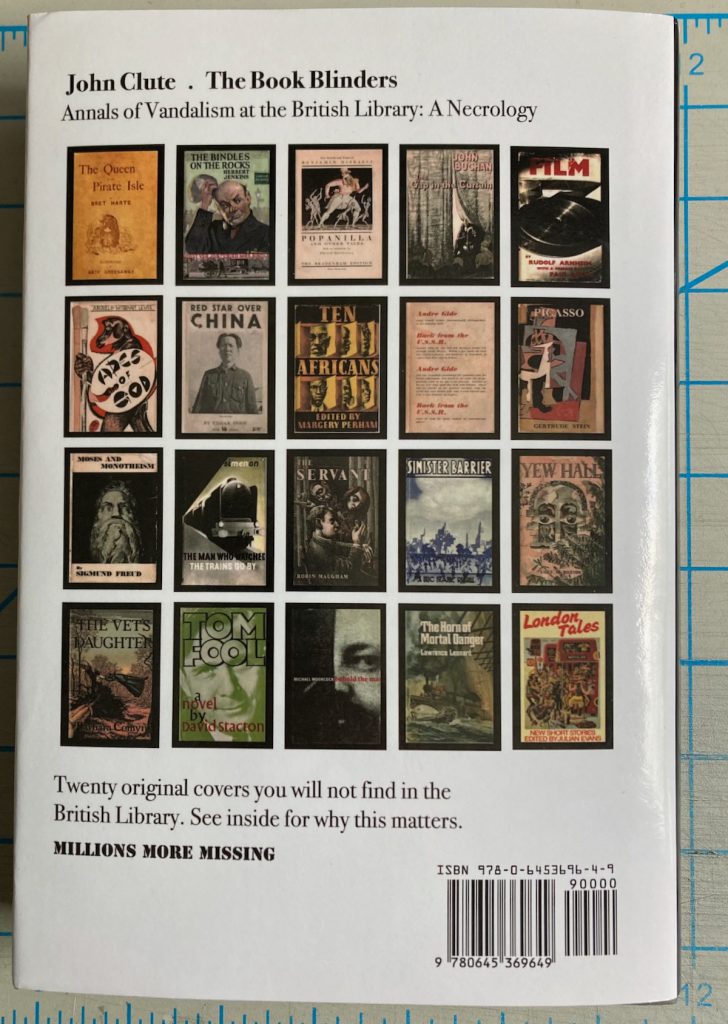
There has been a steady production of scholarship on the history of the publisher’s dust jacket in the past fifty years. These ephemeral pieces of paper encode all manner of information about the moment in time and both how publishers perceived their wares and how they wanted the reading and book-buying public to receive the newly published books. Much emphasis has been on nineteenth-century jackets in recent research, including in G. Thomas Tanselle’s Book-Jackets: Their History, Forms, and Use (2011), which updates work he first published in 1971, and Mark Godburn’s Nineteenth-Century Dust-Jackets (2016). And yet it is really in the early twentieth century that jackets proliferate and assume the form and function we now understand. Vast conceptual leaps in design and presentation of information occur in the interval between The Wind in the Willows (1908) and What Not (1918/1919) or In Our Time and The Great Gatsby (both 1925). And yet this is not solely the province of literary high spots. Across all types of literature, the dust jacket functions as the outer face of the book.  Clute’s title, The Book Blinders, is descriptive of the practical effect for the reader of a long-standing institutional policy of discarding dust jackets or separating the jacket from the book and storing them elsewhere, uncatalogued. This policy prevailed at the British Museum (later British Library) and at other depository libraries from the emergence of the dust jacket and continued for most of the twentieth century. With more than 100 examples of dust jackets not in BL (from the years of the first world war through 1990), John Clute documents the importance of the dust jacket and considers the implications of this vandalism from within. How about these three or four: Rose Macaulay, What Not (1918), a tale of eugenics and privilege, suppression of a libellous passage delaying actual publication until 1919 (Clute’s copy is Michael Sadleir’s own, saved from the memory hole); C. E. M. Joad, Priscilla and Charybdis (1924), “undeterred by the gruelling wordplay of the title, [I] took a look, and found found this this on pages 206-207; a seductive Joad-like protagonist is addressing a young woman on a train ride they are sharing: ‘Darling [he purrs], have you ever travelled without a ticket?’” (this one alone is worth the price of admission); or Ezra Pound, Make It New (1934):

Faber (which is to say Eliot) clearly thought it sagacious to wrap in sheep’s clothing the already notorious Ezra Pound’s new publication with its incendiary title: a ticking bomb that needed no bush. But the underlying message cannot be missed: Pound’s title, a modernist wake-up slogan he’d been using offhandedly since 1928, is manifestly inflammatory, once grasped; a challenge to his various enemies who (he maintains) clog the literature pews: an up-yours bombination clearly audible through the enfant-sauvage mask Pound wore until it was too late. This bomb needed to slip through the gates before exploding.

or Robert Graves, The White Goddess (1948), Tom Eliot again; or Lawrence Leonard, The Horn of Mortal Danger (1980); or London Tales (1983), edited by Julian Evans. Clute’s selections are fascinating testimony to the breadth of his reading and collecting and his critical range; the text sparkles with his crunchy and apt vocabulary. It seems almost a homoeopathic distillation: “I’d reckon that out of every 8,000 or so books to arrive at the British Library complete with dust-jacket, I’ve commented here on a maximum of one”. (Excessive candor moment: John Clute is a friend of more than twenty-five years; I am the source for the images of the only jacket not from his own collection.) This is an important book.

———

Addendum (3 May): I wrote the notice above after reading digital proofs of the book. Today I have a copy in hand (a print on demand product manufactured in Tennessee on 19 April), and it is nice to see the book in the wild. In the U.S. the book is available from bookshop.org and elsewhere. Oh, yes : The Book Blinders is issued with a dust jacket (designed by Judith Clute). Here is the back panel :

Peak Machen II : ‘I have not had to wait until I am dead !’

One hundred years ago, on 11 December 1923, Arthur Machen wrote a letter to a young American fan. The letter becomes more interesting with  a little context. In the autumn of 1923, New York bookseller Harry F. Marks issued his catalogue 11* and sent out invitations to a display of manuscripts and books of Arthur Machen. The background to this exhibition is notable. In 1922, Machen’s old friend and publisher Harry Spurr had brought manuscripts, proofs, and unpublished materials over to America and sold them to Harry F. Marks, who ran a well-established business for the New York carriage trade, and to Walter M. Hill of Chicago, another book dealer of national reputation. As John Gawsworth notes in The Life of Arthur Machen, “Marks who sold the pick of his collection by private treaty before issuing his 1923 catalogue still had some forty priced items to dispose of there at a total price of some $3,000. [. . .] the ‘boom’ was on”. **

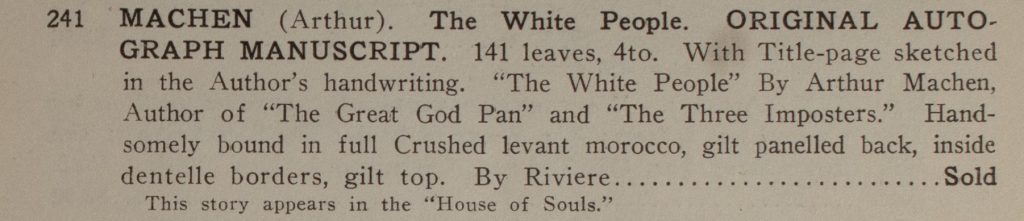
The Life of Arthur Machen transcribes a letter dated 15 October 1923 that had been reproduced as pages three and four of the invitation :

Dear Mr Marks,
You tell me that you are holding an Exhibition of my books and manuscripts at your place in Broadway, New York. I hope your citizens will be interested.
But I cannot help thinking of a visit that I paid this last summer to my old home Llanddewi Vach Rectory in Monmouthshire. I left in September 1887; and had not been there since. The orchards that my father planted had grown into a wood; nothing else was much changed. But the old place brought back to my mind the old days, the days when, quite unknown and solitary, I worked night after night at The Chronicle of Clemendy in the room that looked out on those orchards and above and beyond them to Bertholly on the slope of Wentwood.
It is a far cry from the room at Llanddewi Vach to the Broadway Exhi­bition.
Yours sincerely,
Arthur Machen
12, Melina Place
London N.W.8

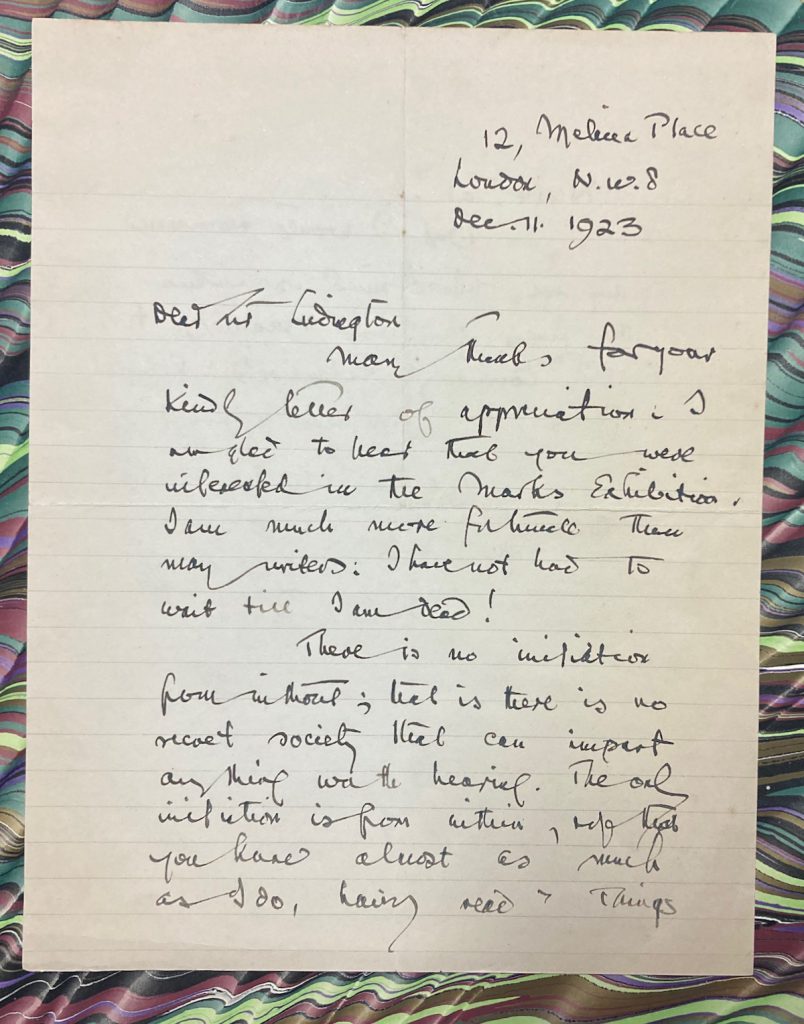
Machen was characteristically diffident about what New Yorkers would make of his work, but the letter from Machen illustrated above shows that the exhibition resonated with some visitors. The recipient of the letter was New York lawyer and bibliophile George Franklin Ludington (1895-1949, Johns Hopkins 1916, Harvard Law 1920), who had written a wistful fan letter to the author after his visit to “a little book dealer (but by no means an inconsequential one) of this city”.  Ludington retained a draft or fair copy of his letter, in which he mentions that in his youth in rural Maryland he had “climbed through the brambles that foot of the Hill of Dreams”, and then concludes with a supplication for the secrets bestowed upon Machen by A. E. Waite or others.

Machen’s response is gracious and tricky and illuminating, and then takes a curious meander into the literary undergrowth. I know the name Coventry Patmore, and so do perhaps a half a dozen others, too; but it is a curious recommendation :
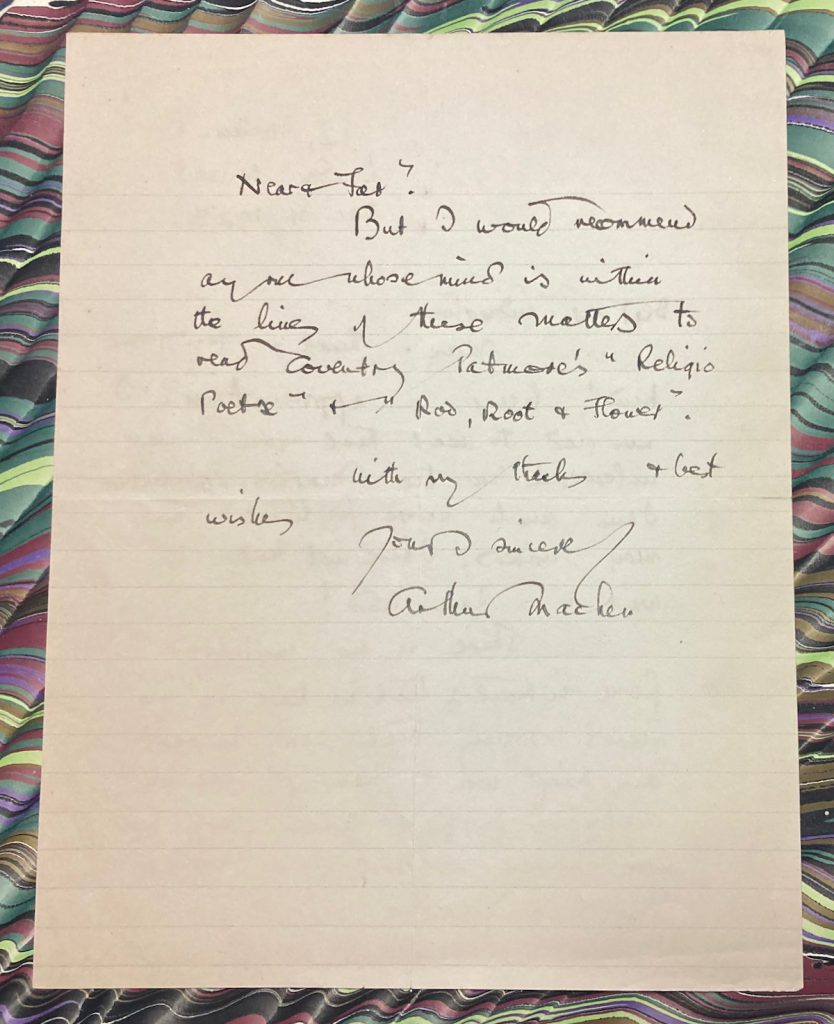
Transcribed in full:

12, Melina Place
London NW8
Dec. 11, 1923

Dear Mr Ludington

Many thanks for your kind letter of appreciation. I am glad to hear that you were interested in the Marks Exhibition. I am more fortunate than many writers. I have not had to wait until I am dead!
There is no initiation from without ; that is, there is no secret society that can impart anything worth hearing. The only initiation is from within, so that you have almost as much as I do, having read “Things Near & Far”.
But I would recommend to any one whose mind is within these lines to read Coventry Patmore’s “Religio Poetae” & “Rod, Root, & Flower”.
With my thanks & best wishes
Yours sincerely

Arthur Machen

“The only initiation is from within” is prime Machen, a generous and spontaneous response to a young worshipper. Ludington seems not to have attempted to continue the exchange and just this one glimpse remains from a century ago.


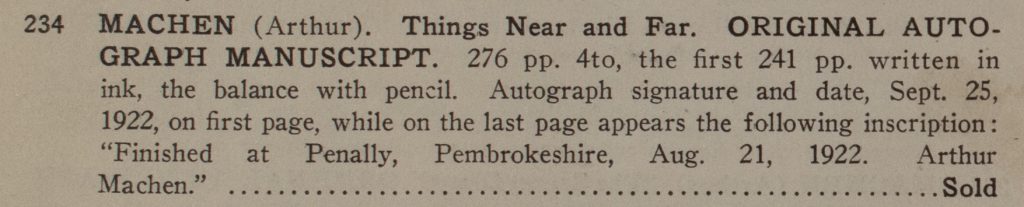
* Catalog of rare and choice books, first editions of modern authors, etc. Charles Dickens first editions including the renowned Lapham-Wallace copy of the Pickwick papers. Also the most important collection of first editions and original manuscripts of Arthur Machen ever offered. New York: Harry F. Marks, 1923. Goldstone & Sweetser 76b.
Not seen, but noted from the bibliographer’s copy held at HRC (Call no. Z 8230 H355 1923). The Machen items are nos. 202-248. [Images courtesy of HRC.]

** John Gawsworth. The Life of Arthur Machen. Edited by Roger Dobson. Friends of Arthur Machen / Reino de Redonda / Tartarus Press, 2005. Pp. 286, 300, 304.

The chapter endnotes record some of the prices in those far off days, including the manuscript of The Three Impostors at $775. By way of comparison, Marks Catalogue No. 4 (1919), presenting an abundance of curiosa, had listed a finely bound set of Casanova’s Memoirs, now for the first time translated into English (1894), at $250 without mention of Machen as the translator; a similarly bound set of the twelve volumes, with addition of the note [by Arthur Machen], appears in the 1923 catalogue at $200, where a fifteenth-century Flemish manuscript Book of Hours was priced $140. In 1925, Marks  moved from lower Broadway to west 47th street and was the U.S. agent or distributor for the Black Sun Press.

Thanks to William Hutcheson who offered me the letter earlier this year.


N.B. This account picks up some threads from an earlier post, Peak Machen : 1923.


Addendum, 14 December: sometimes serendipity brings forth new information. Here is a clipping from the New York Tribune for a Thursday in December 1923 (likely 6 December):
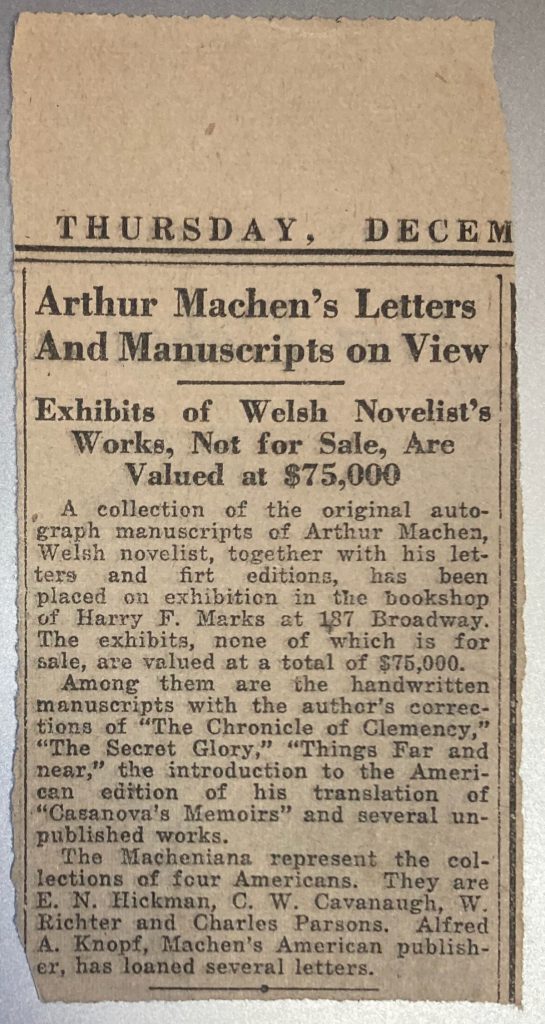
This is a report of the exhibition at the Marks bookshop that prompted Mr. Ludington to write Machen. One can infer that Marks had sold most of the Machen manuscripts by this date. The Charles Parsons collection is now at Yale : it includes the manuscript of “The Garden of Avallanius”, known to us as The Hill of Dreams (Beinecke GEN MSS 256, Series I).

Little, Bigs

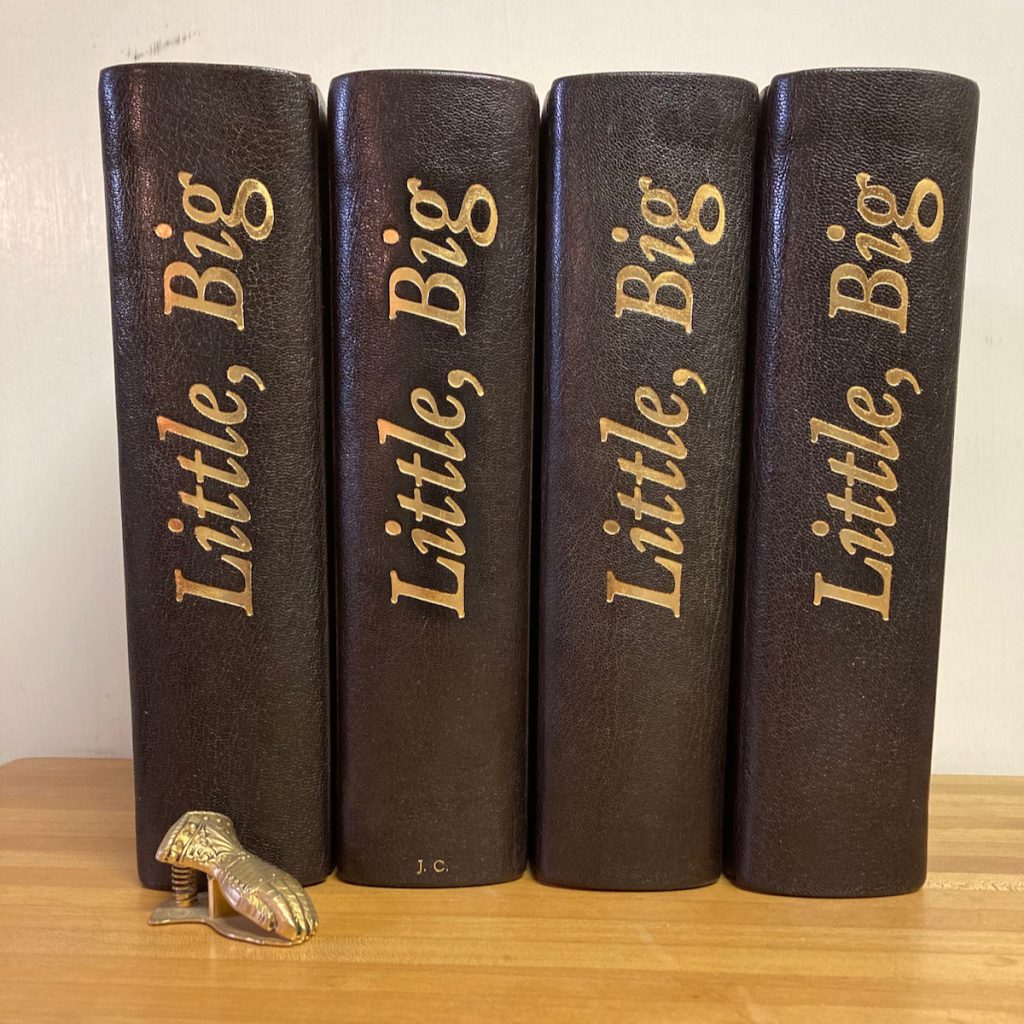
Four copies of the Incunabula edition of Little, Big by John Crowley, hand bound by an old friend for the author, artist, publisher, and one other. The special binding was commissioned to honor a pledge made long ago, and also as a gesture to mark the many hours of readerly delight that the book has given me (see here, 2001; here, 2007;  an entire chapter in my Conversation, 2018; or here, 2021). John Crowley is also a friend of many years, and so it is a pleasure to know that the author’s copy — note the discreet initials at the foot of the spine — had reached him well in advance of today, this his eighty-first birthday.

Happy Birthday and all good wishes to John Crowley !

recent reading : October & November 2023

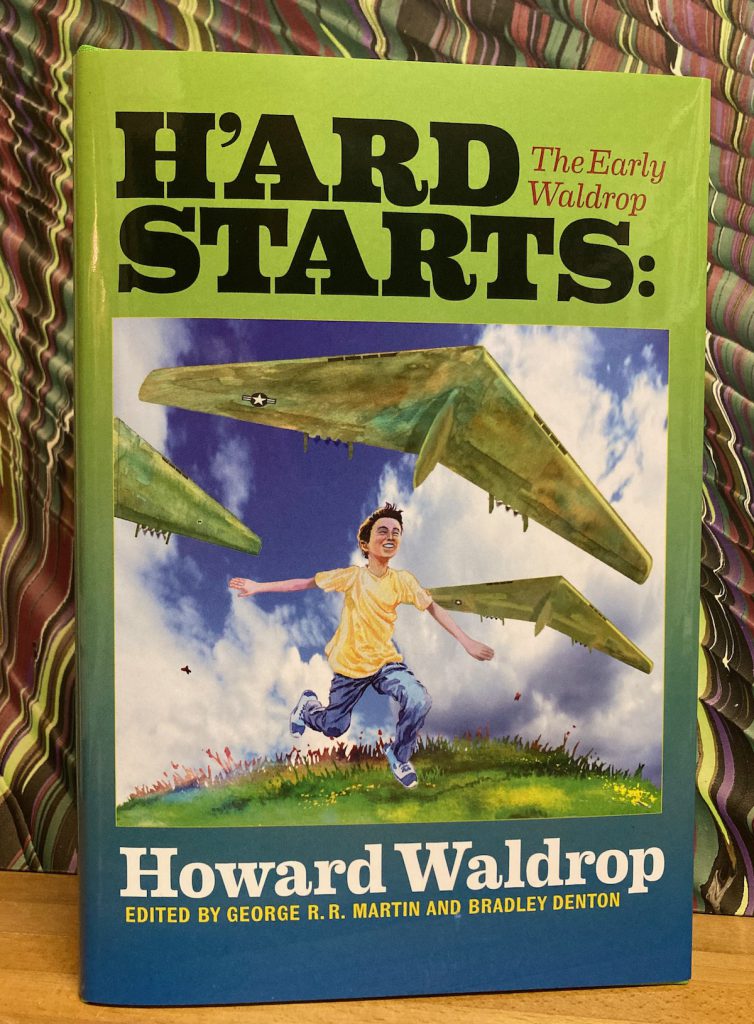
— Howard Waldrop. H’ard Starts. The Early Waldrop. Edited by George R. R. Martin and Bradley Denton. [Subterranean Press, 2023]. Edition of 750 copies.
Collects nearly two dozen pieces described by Waldrop as “What I Wrote Before I Could Write” which is of course nonsense. “Lunchbox” was his first professional fiction sale, a Mars landing. “Onions, Charles Ives, and the Rock Novel” (an early piece written for Crawdaddy!), extrapolates from the posthumous production of Ives’ Fourth Symphony what would later become known as the “rock opera”. The four-part interview by Bradley Denton is great fun.

— — —

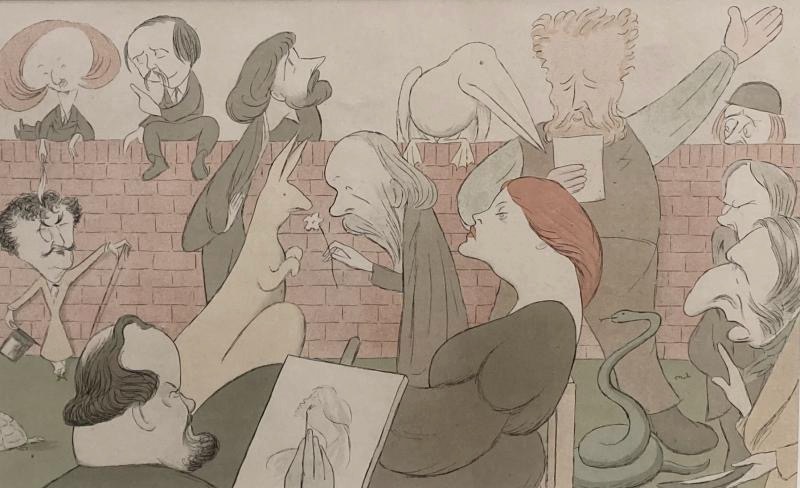
Max Beerbohm, ‘Dante Gabriel Rossetti in His Back Garden’

— Margaret D. Stetz and Mark Samuels Lasner. Max Beerbohm: The Price of Celebrity. New York Public Library, 2023.
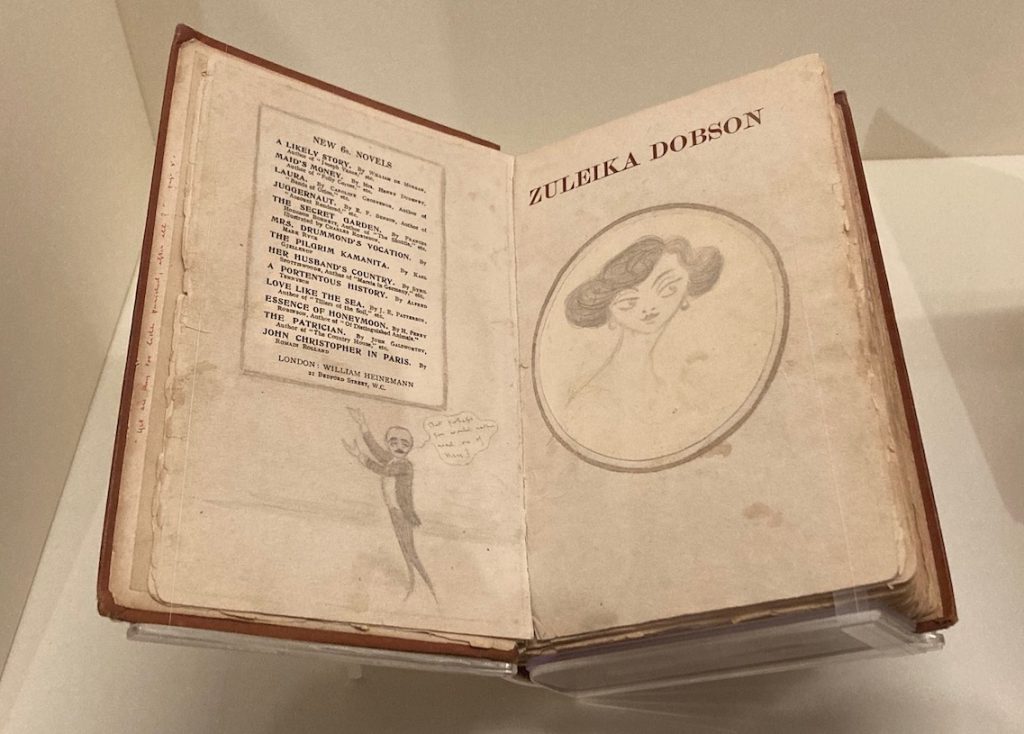
This handsome little book presents the exhibition labels for the Beerbohm show drawing on the NYPL collection, Lasner’s collection at the University of Delaware, and other lenders. The book (96 pp.) is rich and instructive, the exhibition is fabulous: Max’s drawing of the Devil proposing the bargain with Enoch Soames; a superb portrait of his wife Florence Kahn in six dancing poses like a Greek frieze; Rossetti’s courtship of Elizabeth Siddal; caricatures of Oscar Wilde, Rudyard Kipling, Henry James, and the red-headed Aubrey Beardsley; and “Mr. Beerbohm reading Mrs. Woolf”, a little sketch of himself falling asleep, in perfect imitation of the Vanessa Bell cover for her sister’s book; and more. The effect is a dense studio style hanging of drawings in a tiny room, and it works.

Max Beerbohm’s ‘improved’ copy of Zuleika Dobson

Go see it : https://www.nypl.org/events/exhibitions/max-beerbohm (through 28 January 2024)
The guide is available online: https://drupal.nypl.org/sites-drupal/default/files/2023-10/MaxBeerbohm_PrintedGuide.pdf

— — —

— Kenneth W. Rendell. Safeguarding History. Trailblazing Adventures inside the Worlds of Collecting and Forging History. Foreword by Doris Kearns Goodwin. Whitman Publishing, [2023].
Memoir by the eminent autograph expert and bookman, from humble origins to international success. The accounts of uncovering forgeries are case studies of self-delusion by those who wanted to believe, and of Rendell’s clear thinking and basic skepticism. To read the book is to hear the author’s cadences and manner of speaking, very nicely done. The chapter on forming the library of Bill and Melinda Gates (and the logistics of its installation) is really something.

— John Howard and Mark Valentine. Possessions and Pursuits. Sarob Press, 2023.
Short novel by Howard, Fallen Sun, and two short stories by Mark Valentine, “Masque and Anti Masque” and “The Prospero Machine”. Third volume of tributes to the metaphysical novels of “Inkling” Charles Williams.

— — —

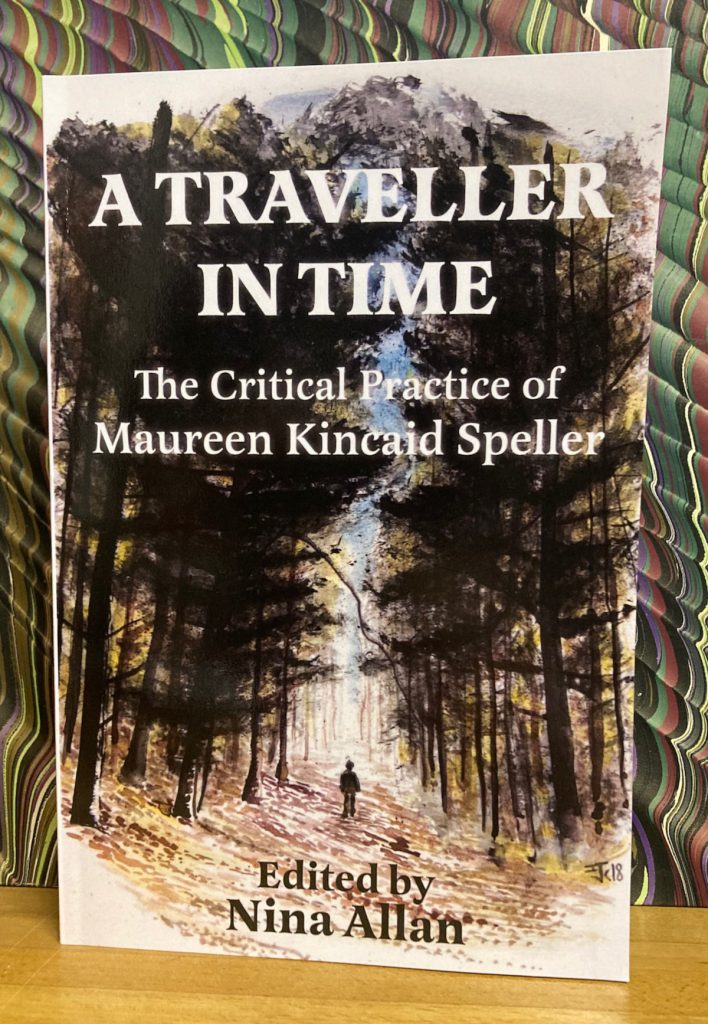
— Maureen Kincaid Spiller. A Traveller in Time. The Critical Practice of Maureen Kincaid Spiller. Edited and with an introduction by Nina Allan. [Foreword by Paul Kincaid]. Academia Lunare | Luna Press Publishing [i.e., POD printed in U.S.A., 8 September 2023].
An excellent memorial volume assembling essays and reviews from her website Paper Knife and from Strange Horizons (chiefly 2010-2022, with a handful of earlier pieces), arranged thematically. The section on British author Alan Garner is fascinating as it shows her thinking about his work over decades (the earliest is from 1987; and the most recent is the last piece she published, in 2022). From the preface: “It was this notion, I think, this sense that everything we read is part of an ongoing and unending exploration, that convinced her to start reviewing. It was certainly the guiding principle behind the criticism she did write.”

— Jean-Claude Izzo. Chourmo. Une enquête de Fabio Montale [1996]. Gallimard [Folio policier, 2022].
Marseille crime novel.

— Sarban. The Doll Maker and other tales of the uncanny. Peter Davies, [1953].

— Cyril Connolly. The Modern Movement. One Hundred Key Books from England, France and America 1880-1950. André Deutsch / Hamish Hamilton, [1965].

— Charles Renouvier. Uchronie (L’Utopie dans l’histoire). Esquisse historique apocryphe du développement de la civilisation européenne tel qu’il n’a pas été, qu’il aurait pu être. Bureau de Critique Philosophique, 1876.

— Alexander Ames and Mark Samuels Lasner. Grolier Club Bookplates Past & Present. With contributions by William E. Butler and Molly Dotson. Illustrated. The Grolier Club, 2023.

dateline : Paris

The Endless Bookshelf will be filing occasional despatches from Paris during annual congrès of the Association internationale de bibliophilie (AIB), and may lapse into French on occasion

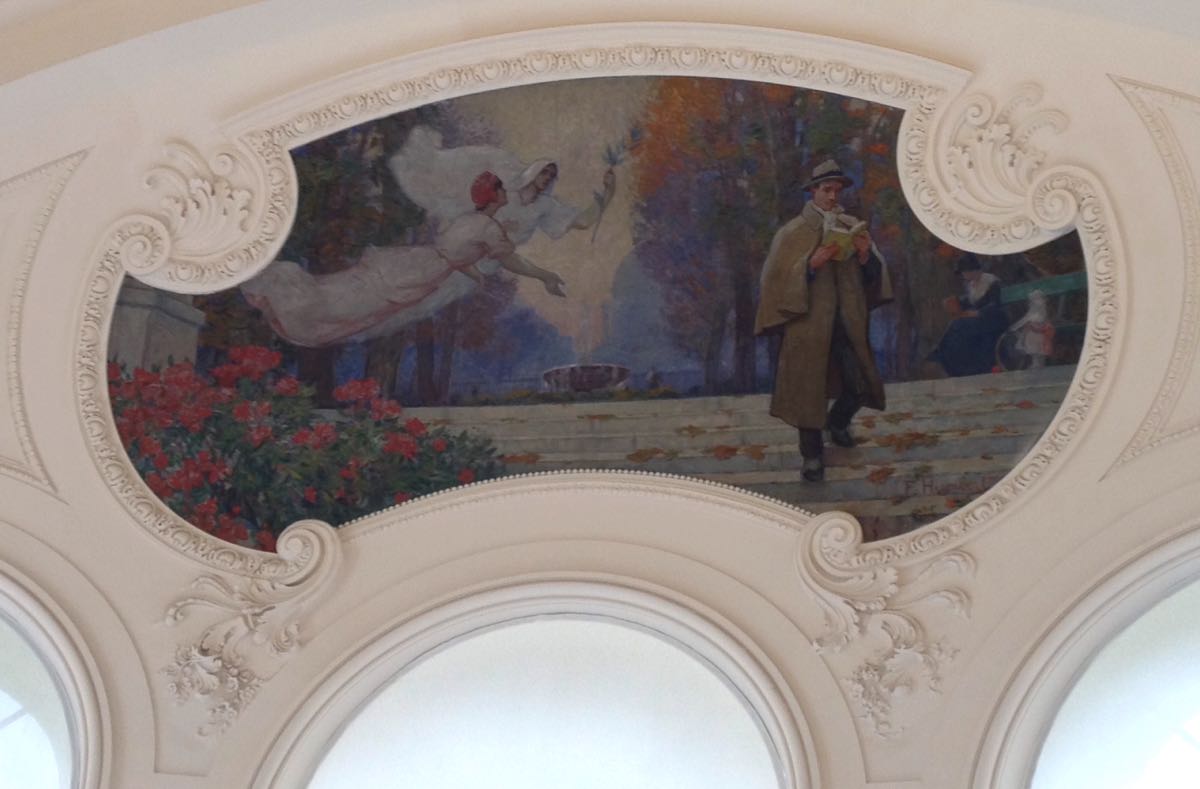
the reader

[from an earlier visit, the mural of the reader, by Ferdinand Humbert, in the Petit Palais]


— Charles Dantzig. Encyclopédie capricieuse du tout et du rien. Grasset, [2009].

And, soon after arriving in a rooftop apartment in the 4e, well, yes, of course I opened this book, to this page (252), in the Listes des personnes [list of persons]

Borges

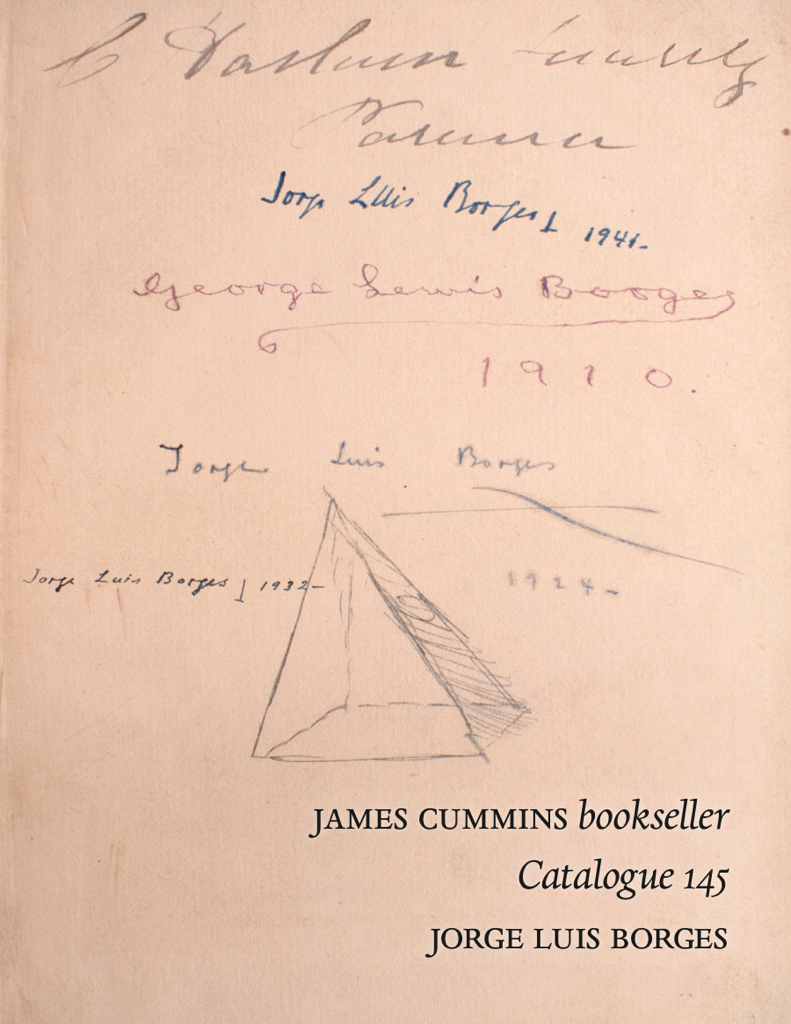
The work of Jorge Luis Borges has always been a touchstone for me: the concision and entanglement of his fictions and artifices and inquisitions are a source of great pleasure and inspiration. I am pleased to report that James Cummins Bookseller catalogue 145, Jorge Luis Borges, is ready, describing more than 400 items from the private collection of Gary Oleson, proprietor with Franny Ness of Waiting for Godot Books in Hadley, Massachusetts. Waiting for Godot were long- time specialists in twentieth century literature (among many other fields), including Latin American authors, and Oleson began buying Borges material in the late 1980s and early 1990s.

The collection includes books owned by Borges, manuscripts of essays and stories, autograph  notes, photographs, inscribed books, and a comprehensive group of books, periodical appearances, ephemera, and secondary literature. The cover illustrates a book by Capt. Marryat, signed by Borges at age 11, 25, 33, and 42, and with the ownership signature of his English-born great aunt, who taught him English

As with the writings of Borges, patterns and connections reveal themselves across the pages of the catalogue, which is published on the occasion of a Borges centenary, the hundredth anniversary of the publication of his first book of poems, Fervor de Buenos Aires (1923). [HWW]

Catalogue 145, Jorge Luis Borges is in two sections, an illustrated catalogue of 130 items, and a descriptive listing of 275 items. A printed catalogue is available, and many items will be on display at the New York Antiquarian Book Fair 27-30 April at the Park Avenue Armory, in the Cummins booth A1. Your correspondent will be there, come say hello.

recent reading : september to december 2022

current reading :

— Marcel Proust. Albertine disparue [1925]. Gallimard, Bibliothèque de la Pléiade.

James Joyce
James Joyce in the garden, 1904. Courtesy of UCD Special Collections, CUR P1.

— C. P. Curran. James Joyce Remembered. Edition 2022. With essays by H. Campbell, D. Ferriter, A. Fogarty, M. Kelleher, H. Solterer. Collection presented by E. Roche & E. Flanagan. Illustrated. x, 224 pp. UCD Press, 2022.

— — —

recent reading :

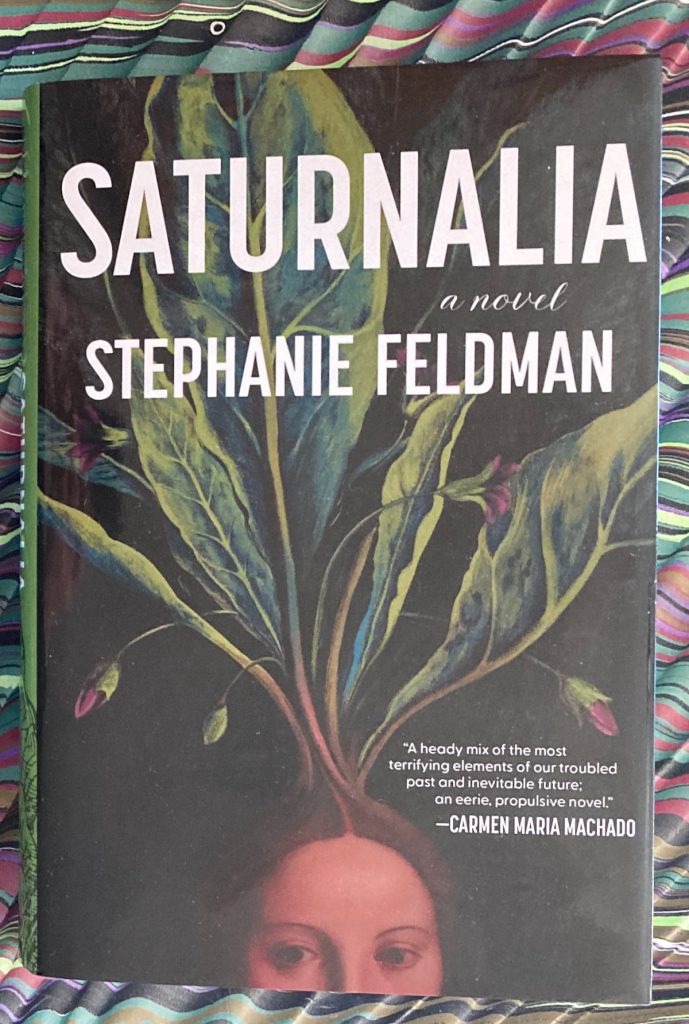
— Stephanie Feldman. Saturnalia. A Novel. Unnamed Press, [2022]. A dark celebration of the mysteries in the streets of a Philadelphia shattered by climate change, epidemics, and political manipulations. Not since In the Drift by Michael Swanwick has the threatening power of the city’s social clubs been summoned so palpably. Though the novel treats with matters of alchemy and magic, the narrative strategy is strongly anchored in mimetic realism.

— George Sims. The Rare Book Game. Holmes Publishing Company, 1985. Collection of essays by English bookseller and mystery novelist George Sims. With the companion volumes, More of the Rare Book Game (1988) and Last of the Rare Book Game (1990). Sims had remarkable access to archives of  A. J. A. Symons, Oscar Wilde, Eric Gill, and others, and his discussion of the authors and the materials he handled makes for fascinating reading.

— — —

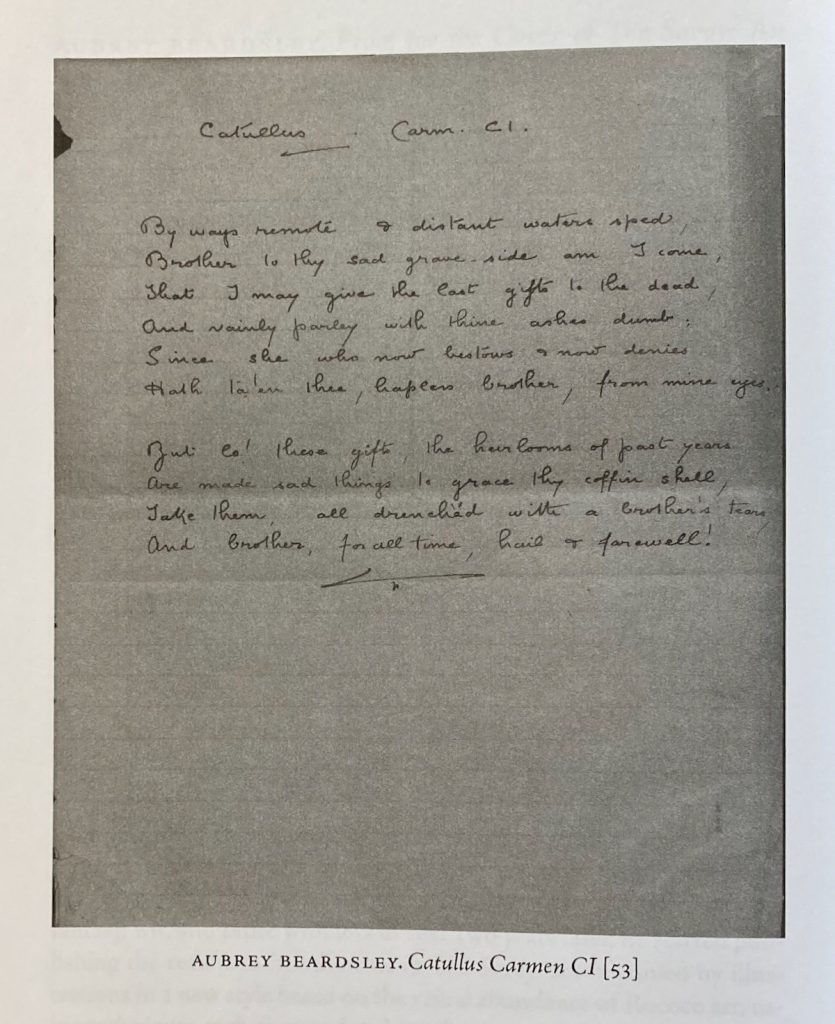
Beardsley translation of Catullus— Margaret D. Stetz. Aubrey Beardsley 150 Years Young. From the Mark Samuels Lasner Collection. 44 illustrations, 69 items. 85 pp. Grolier Club, 2022. Excellent record of the fabulous, witty, and nimbly erudite descriptive labels from the Beardsley exhibition (8 September to 12 November 2022). The translation from Catullus illustrated above suggests that a classical education was not without its rewards. Not being a Latinist, your correspondent is glad that Beardsley could knock out such a poem.
— Rick Moody. Surplus Value Books. Catalog Number 13. Illustrated by David Ford. Unpaginated, [40] pp. [Santa Monica]: Danger Books!, [2002]. Edition of 174 copies signed by the author. An acerbic jeu d’esprit, a pitch perfect catalogue of imaginary books  compiled by an obsessive romantic stalker. Originally published in wrappers in different format in 1999.
— Adam Roberts. The History of Science Fiction. Palgrave Macmillan, 2006.

— George Pelecanos. The Night Gardener. Dennis McMillan, 2006.

— Marcel Proust. La Prisonnière [1923]. Gallimard, Bibliothèque de la Pléiade. I have been reading my way through Proust for the last year, slowed down  but still going. One thing that has emerged, to my surprise, is how funny the narrator is at times.

— — —

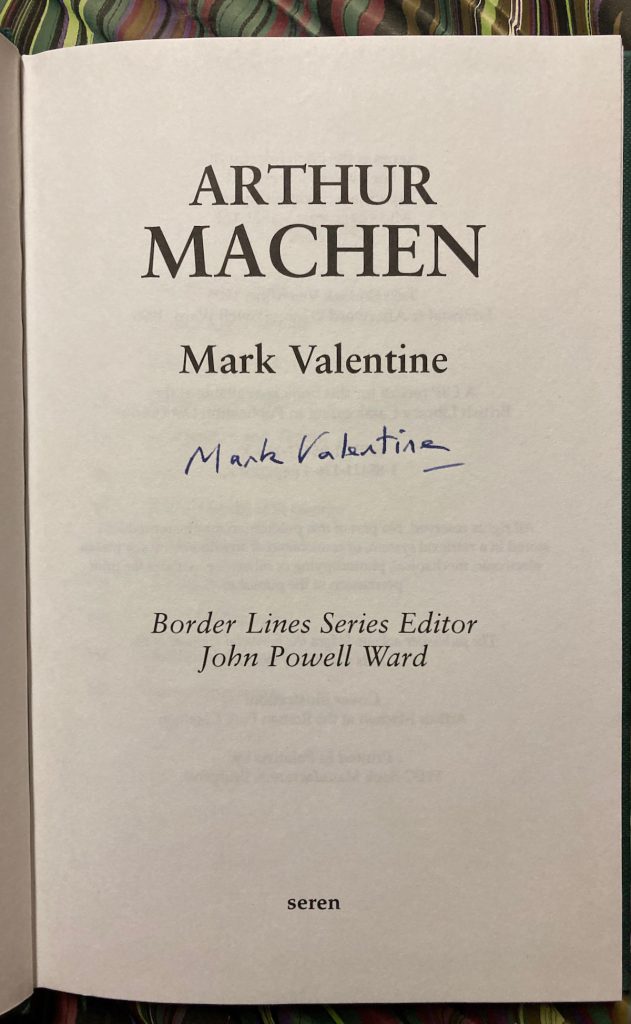
— Mark Valentine. Arthur Machen. Seren, [1995]. Concise biography with an excellent account of the Gwent landscapes of Machen’s youth and their influence upon him.

— Kij Johnson. The River Bank. A sequel to The Wind in the Willows. Illustrations by Kathleen Jennings. Small Beer Press, [2017].

— — —

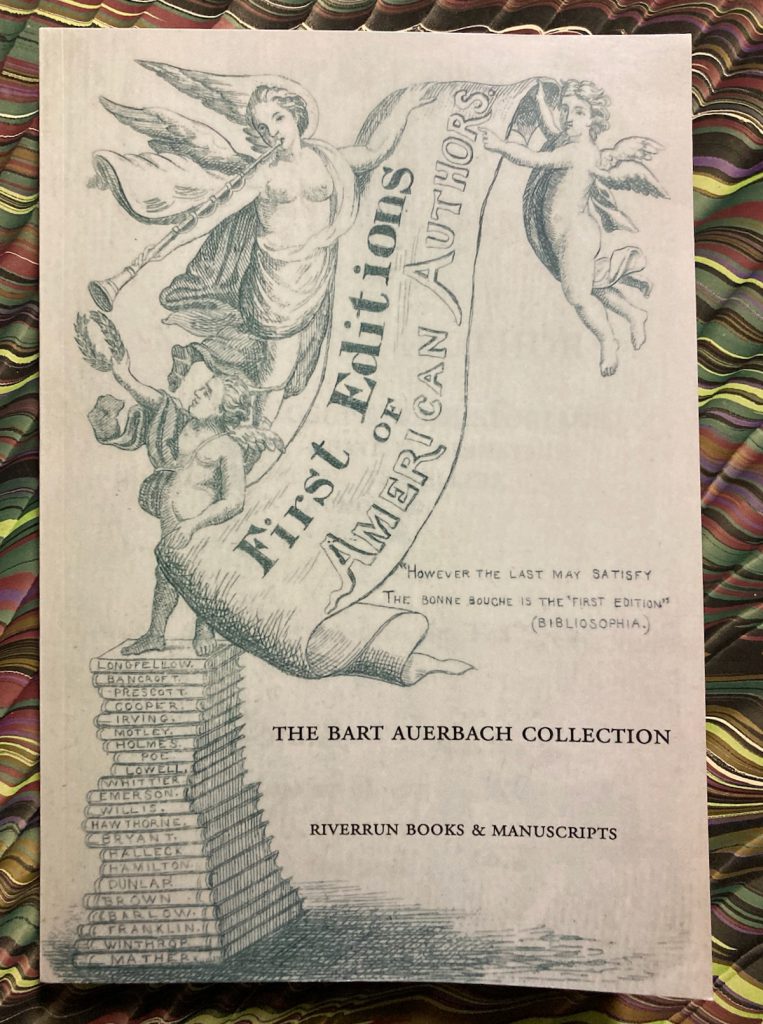
— The Bart Auerbach Collection. Dedication Copies; Books, Letters & Manuscripts; The Book Trade; Poets, Philosophers, Historians, Statesmen, Essayists, Dramatists, Novelists, Booksellers, Humorists, &c., &c., &c. Riverrun Books, [2022]. An illustrated memorial catalogue of the private collection [500 items] of the dean of New York antiquarian book appraisers.

— — —

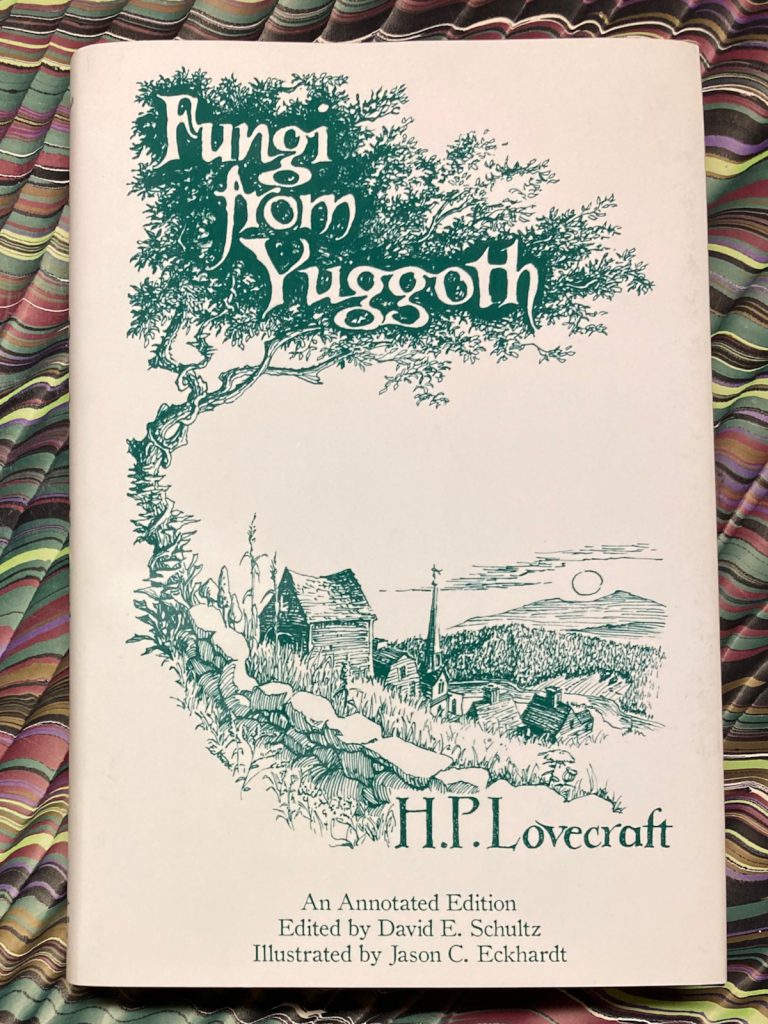
— H. P. Lovecraft. Fungi from Yuggoth. An Annotated Edition. Edited by David E. Schultz. Illustrated by Jason Eckhardt. Hippocampus Press, [2017]. [re-read].

— Francis Brett Young. Cold Harbour. Collins, [3rd ptg, 1926].

— Giuseppa Z. Zanichelli. I codici miniati del Museo Diocesano “San Matteo” di Salerno. Lavegliacarlone, 2019.

— Curzio Malaparte. The Skin. [La Pelle, 1949]. Translated from the Italian by David Moore. Introduction by Rachel Kushner. NYRB paperback.

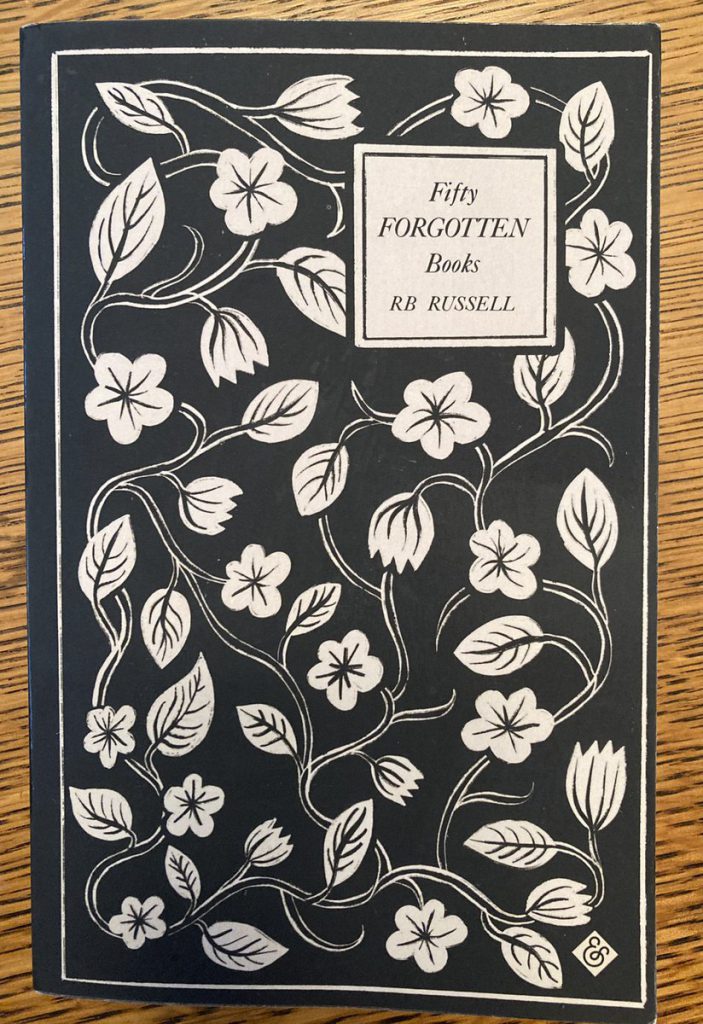
R. B. Russell, Fifty Forgotten Books

— R. B. Russell. Fifty Forgotten Books. With numerous illustrations. 255 pp. Sheffield : And Other Stories, 2022.

Sometimes, all it takes is one book. When Mr. Brookes, who kept a bookshop in Brighton, gave handsome young Ray Russell a Corgi paperback copy of Arthur Machen’s The Hill of Dreams (1907), how could Mr. Brookes have known where it would lead? Not perhaps where he thought. As proprietor (with Rosalie Parker) of Tartarus Press, Russell has championed and published Arthur Machen, Robert Aickman, Sarban, and other early authors of supernatural fiction, and developed a consistently excellent list of new authors in the field.  Fifty Forgotten Books is Russell’s engaging memoir of how that came to be, in a braided succession of chapters  (and discussing many more than 50 books).

The two best qualities of Ray Russell’s memoir are the eclectic nature of his list of titles and the delight a reader has in walking around in his library as the collector pulls volumes from shelves to tell stories of books, and of the booksellers, friends, and authors summoned in memory in the telling.  First things first: this is an eclectic chronicle of a curious reader from his teenage years to the present, so after a bit of second-hand existentialism by way of Colin Wilson, we get to it. The Hill of Dreams, “better written than anything I had previously read. [. . .] When I went back to Brighton two weeks later, it was to hunt for more Machen, but I was sorely disappointed. Machen’s books were hard to find at the time.” Another early stage in his reading was French literature in translation, with Baudelaire, André Gide, and Raymond Radiguet, and Le Grand Meaulnes (which Russell would himself translate from the original in 1999). Learning of Oscar Wilde and the 1890s led to Ernest Dowson’s Dilemmas (1895) and M. P. Shiel. Russell writes of his quests in used and antiquarian bookshops up and down England and Wales, on an architecture student’s budget. The intellectual generosity of some booksellers is sometimes exceeded by the wiliness of others, such as the late  George Locke.

It always comes back to Machen: a copy of the Knopf compendium, Tales of Horror and the Supernatural, bought on his American trip to see buildings and the manuscripts of H. P. Lovecraft, reaffirms his esteem for the Welsh author. Things really get going when Russell attends a meeting of the Arthur Machen Society and meets enthusiasts who become lifelong friends. The delight of Fifty Forgotten Books is in the stories of convivial encounters — a certain amount of drinking is sometimes involved — and in seeing the life of these communities of readers and writers described: books and friends* and landscapes to ramble in, what more could one ask?  Russell’s first publication was a stapled pamphlet, but two years toil in a dodgy local vanity press schooled him in the logistics of book production, and Tartarus books have since then had both a consistent design style and a pleasing feel in the hand.

Russells recounts the enthusiasms for Machen and Robert Aickman that shaped the early output of Tartarus, and how these led to other interests. Through Janet Machen, Russell became interested in the writings of Sylvia Townsend Warner, and eventually founded a literary society devoted to her. After his friend Mark Valentine, suggested reading Sarban, their researches led to a genuine rediscovery and to the preservation of that author’s archive. The accounts of visits to the author’s daughter are great fun.

Russell’s earlier collection of essays, Past Lives of Old Books (2020) touched upon many of the same authors, but here he is telling of his own life and his friends and the tone is different. I note that 13 of the 50 chapters in Russell’s memoir are about books by women authors. I mention this as the early history of the literature of the supernatural is pretty much a men’s club, but during the past several decades, editors in the supernatural (as in science fiction and fantasy), have opened up the field to a greater diversity of authors. In writing of The Old Knowledge  (2010) by Rosalie Parker, Russell makes it clear that his partner’s editorial vision has shaped the contemporary list published by Tartarus Press, which includes N. A. Subway’s Rupetta (2013) and Rebecca Lloyd’s The Child Cephalina (2019).

In Fifty Forgotten Books Russell is not defining a canon, rather issuing a good-natured challenge to the reader ‘to determine how many of these works they remember’. While you may have read many of these books, some of which are hardly forgotten (The Quest for Corvo, for example), you won’t have read all of them: my own tally was 16, with two or three more that I have handled but not read.  Like two other recent stellar examples, Godine at Fifty (2021), and Bill Reese’s Narratives of Personal Experience (2016), Russell’s memoir earns a place on the shelf and suggests future reading: I am looking forward to The Brontës Went to Woolworth’s (1931) by Rachel Ferguson, and several others. Pick up a copy of Fifty Forgotten Books and see for yourself.

——
* I first met Ray Russell and Rosalie Parker in person at the inaugural Halifax Ghost Story Festival in 2010, but I had known of their Tartarus Press ever since I came across an irresistible title,  The Smell of Telescopes, in Ev Bleiler’s essay on Rhys Hughes a decade before; I had bought a copy the Tartarus Press re-issue of The Hill of Dreams from an American specialty dealer’s list when it appeared. At that same festival, I met Mark Valentine, a longtime penpal, and several other of their friends.


how I spent my summer vacation (part two)

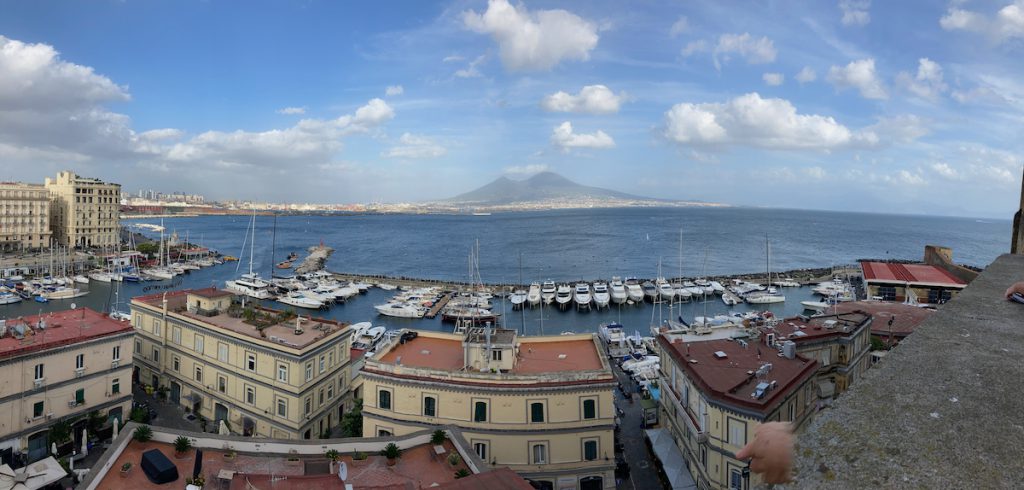
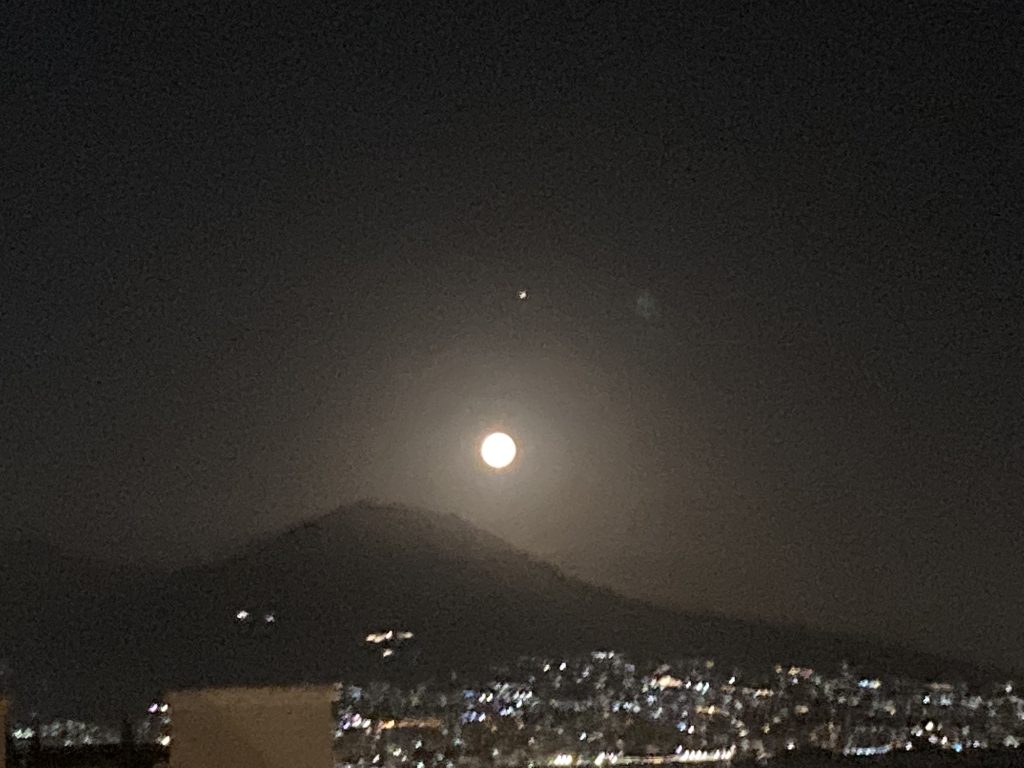
view of Vesuvius and the Golfo di Napoli from the walls of Castel del Ovo

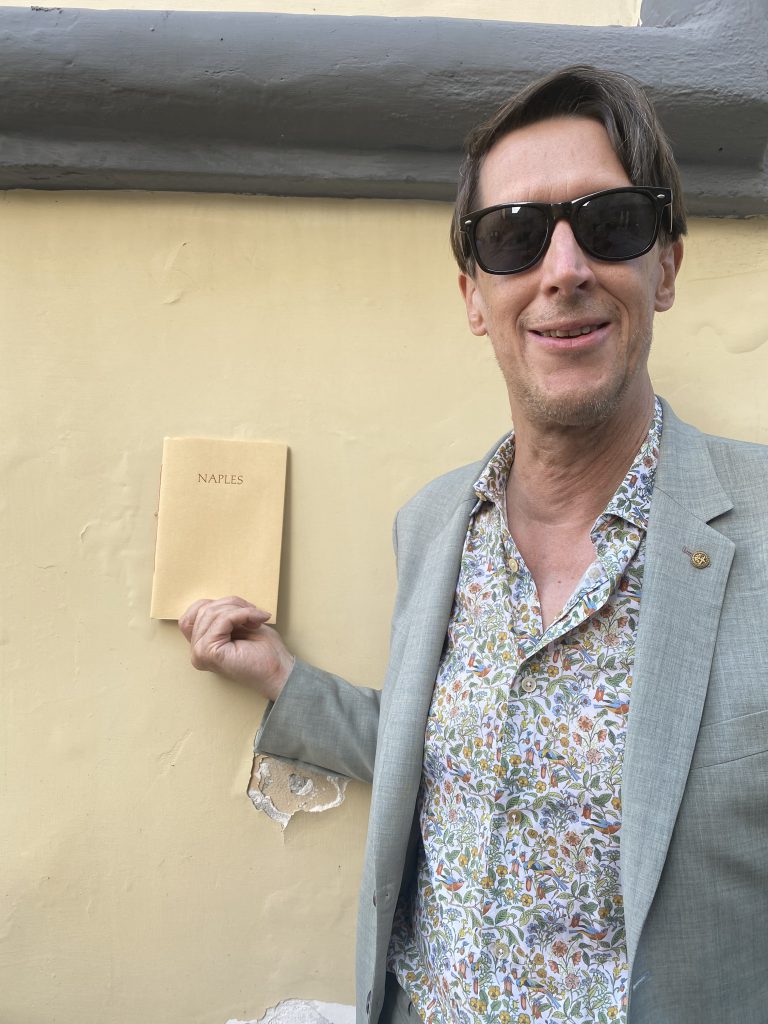
Publication day for NAPLES by Avram Davidson, 11 September in Castel del Ovo, Napoli

———

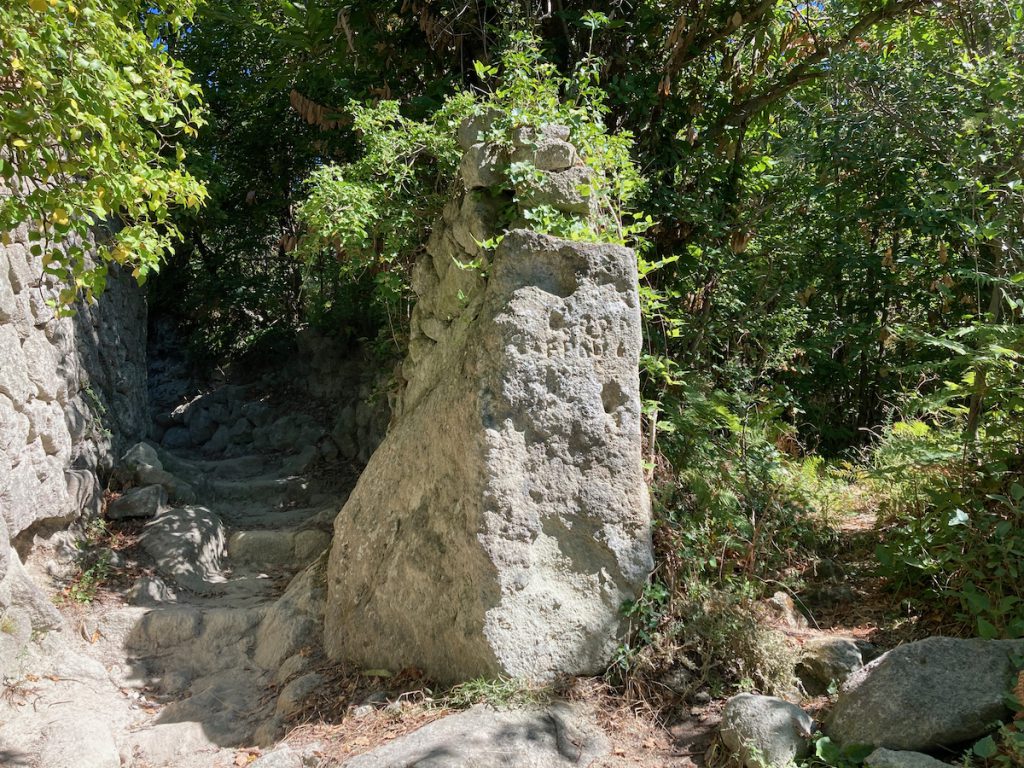
on the way up Monte Epomeo, Ischia
the view from the top : Vesuvius at far left horizon, Sorrento uplands, Capri (click for larger image)

———

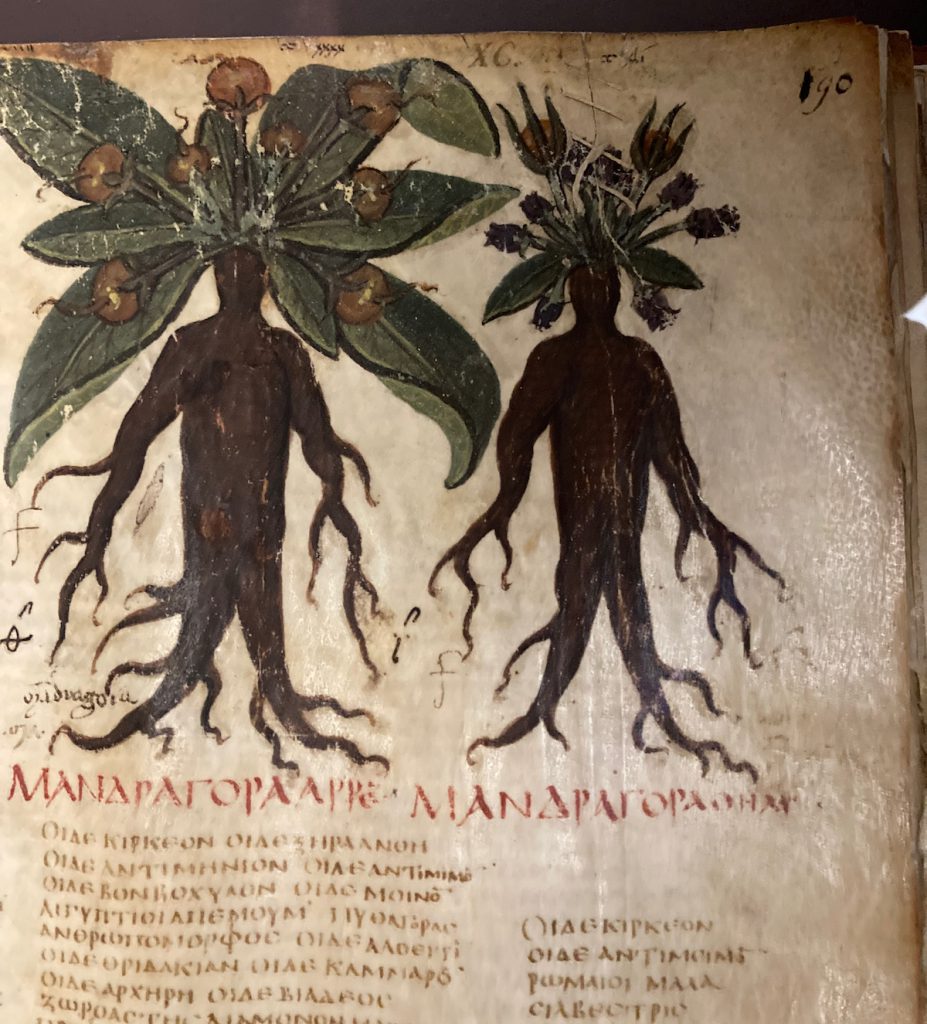
Mandrakes, in Dioscorides (ca. 590), Biblioteca Nazionale di Napoli, Ms. Vind. Gr. 1

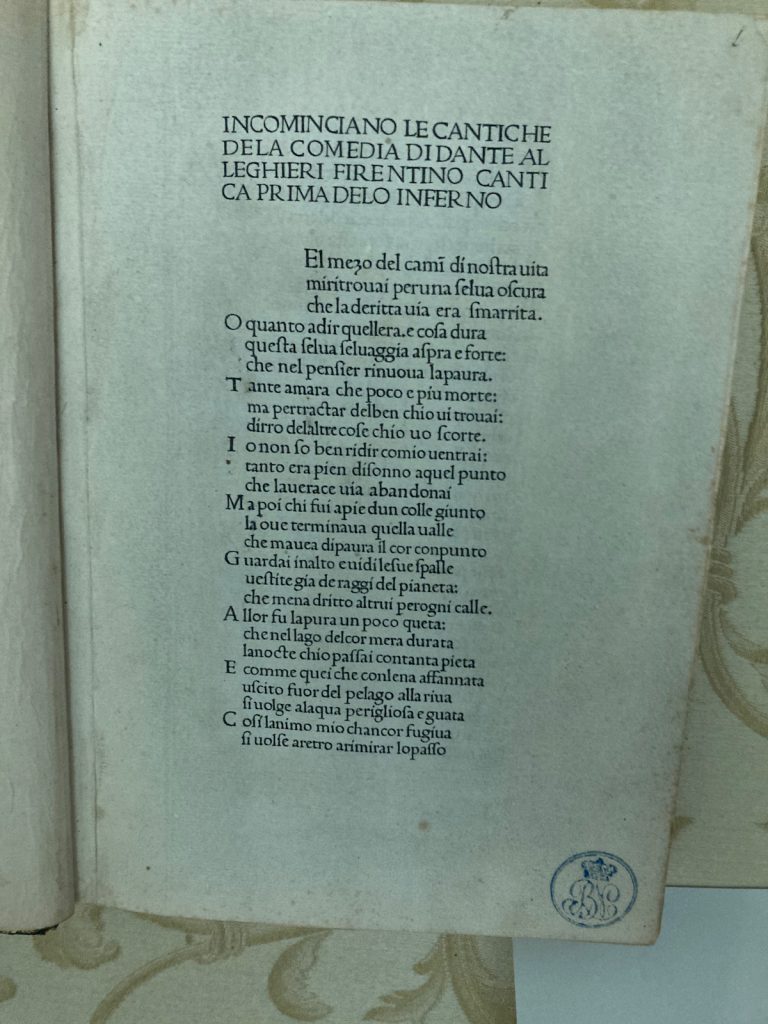
Dante Alighieri, La Commedia, [Napoli 12 IV 1477], Biblioteca Nazionale di Napoli
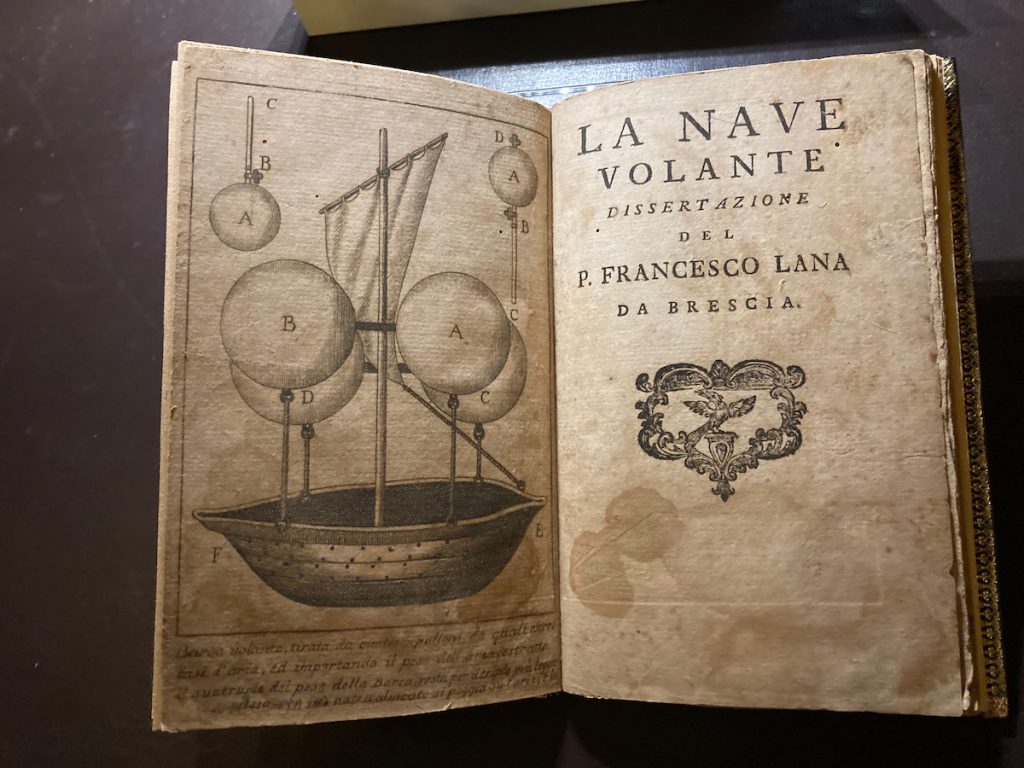
P. Francesco Lana, La Nave volante, dissertazione, [S.l., s.d., post 1470], Biblioteca dei Girolamini Coll. C F 3 19

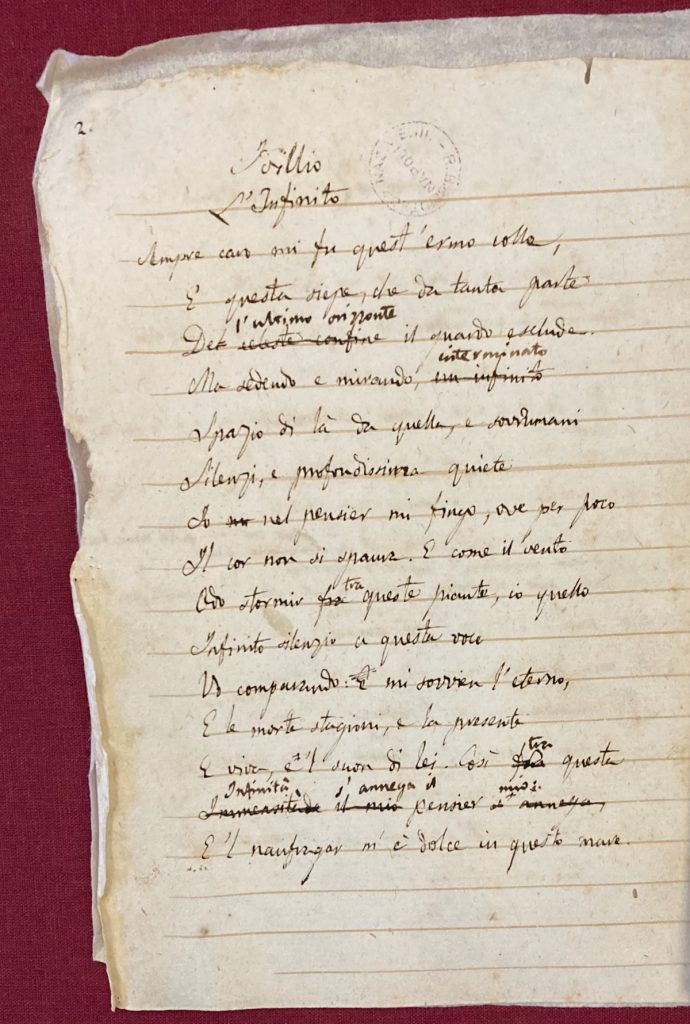
Giacomo Leopardi, manuscript poem, L’Infinito, (1819), Biblioteca Nazionale di Napoli, M.S. C.L. XIII.22
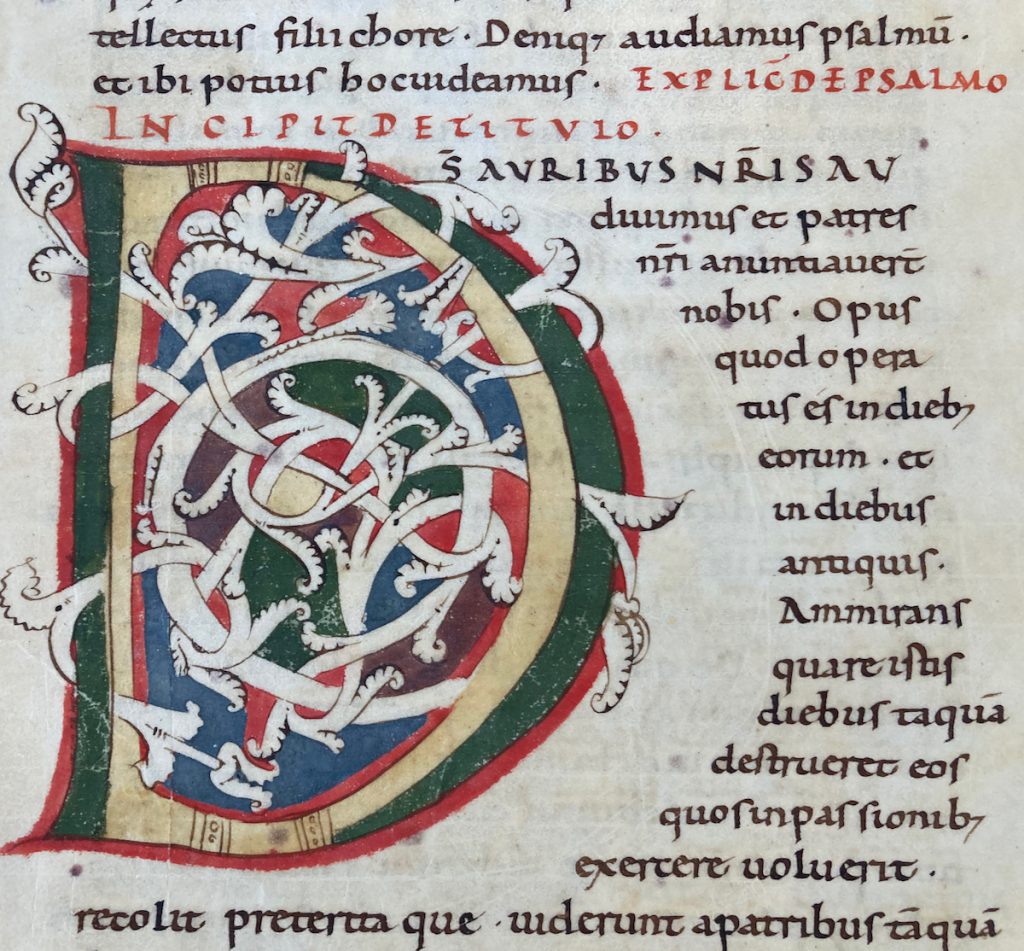
decorative initial (white vine), in Museo Diocesano Salerno MS.9

———

Vico room, Biblioteca dei Girolamini
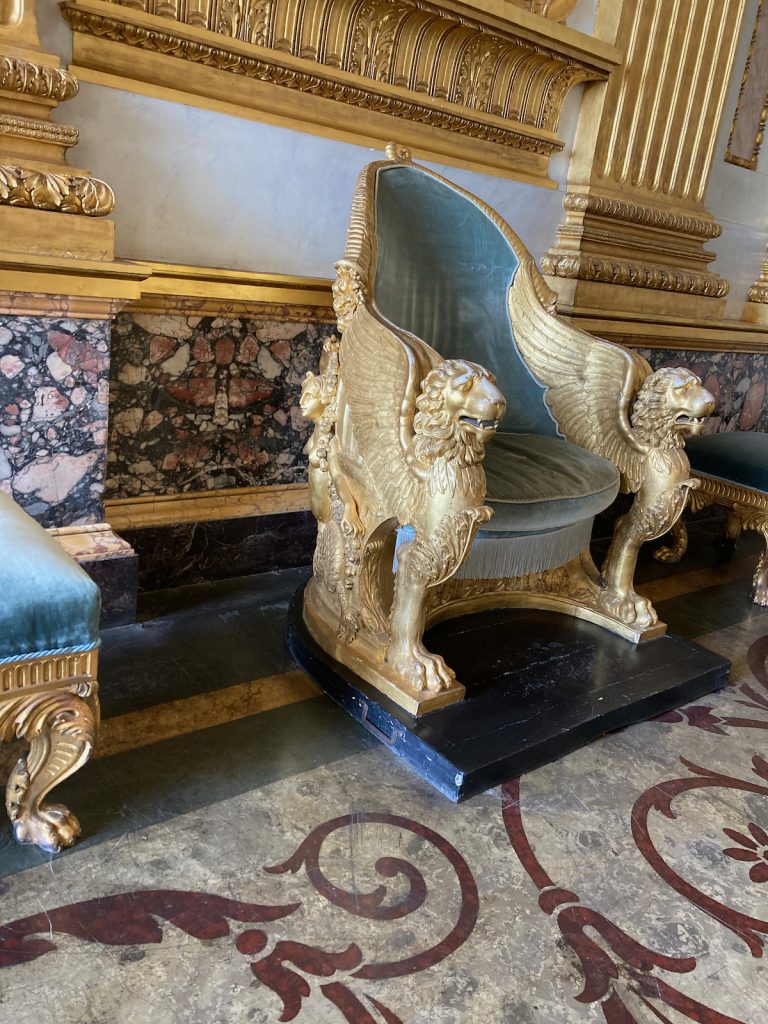
throne with mermaids and gryphons, Reggia Caserte

———

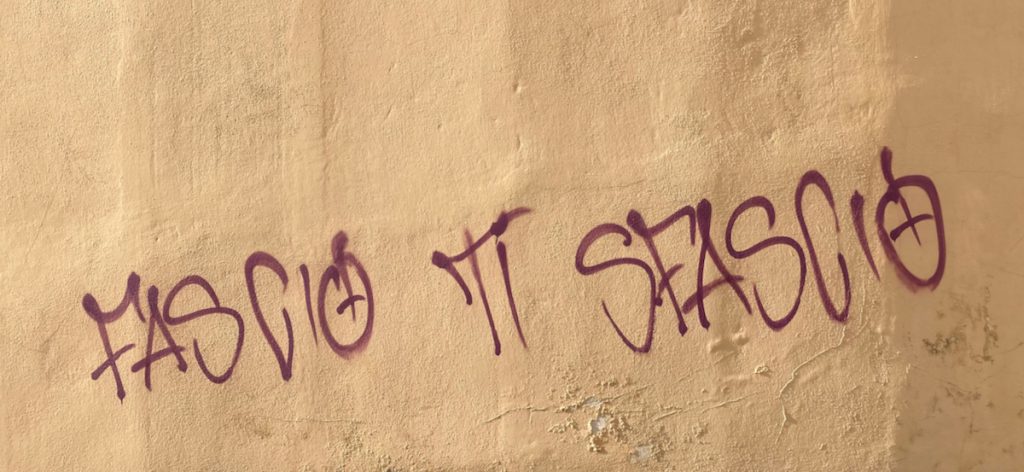
fascio ti sfascio, graffiti, Salerno

fascio ti sfascio : the writing on the wall, Salerno

———

recent reading (march through august 2022)

current reading :

— Marcel Proust. La Prisonnière [1923]. À la recherche du temps perdu III. Bibliothèque de la Pléiade. [still climbing the mountain].

— R.B. Russell. Fifty Forgotten Books. Sheffield : And Other Stories, [forthcoming, 13 September 2022].

recent reading :

— Marcel Proust. Sodome et Gomorrhe [1921-2]. À la recherche du temps perdu III. Bibliothèque de la Pléiade.
This was tough going at times, but there was always a remarkable passage or narrative surprise to quicken interest — and what a crack of the whip at end, rooted in earliest beginnings. 
Deep in volume III of the Pléiade edition, an aside points ahead to something I should perhaps have inferred and now the full arc of this whiny wallowing hilarious satiric narration comes clear. Proust is sufficient argument against fleeting worries over “spoilers”. He gives the game away himself a few times (from the outset, in fact); but more importantly, reading Proust affirms that literature is experiential. The dance of words performs itself upon the page and in the reader’s awareness, each time new, or else it’s nothing.
— — —
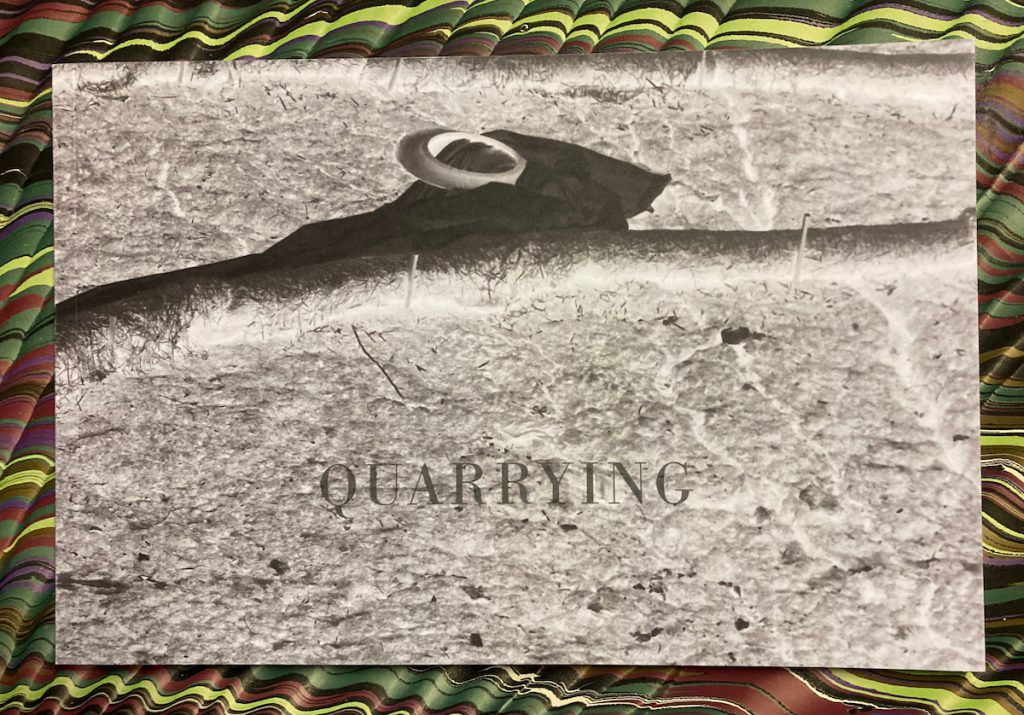
— Tom Lecky. Quarrying [Cover title]. One story and fifteen photographs. Understory Books, [2021]. Edition of 100 copies.
The story, “A Walk”, is subtle and minimalist, oblique and suggestive of the long consequences of family traumas.
— — —
— Ivy Compton-Burnett. Manservant and Maidservant. Gollancz, [1947]. Late Victorian household drama, in the conversations of a family and their servants, on the surface a very small world but the novel presents, unspoken but apparent, a dispassionate and clear-eyed indictment of the British class system and economic structure. An unexpected pleasure.
— The Herman Melville Collection of William S. Reese. Christie’s, [August 2022]. Illustrated auction catalogue, 100 lots, including many rarities, up at auction on 14 September.

— Ngaio Marsh. Night at the Vulcan [1951]. Pyramid Books, [Second printing, December 1974].

— — —

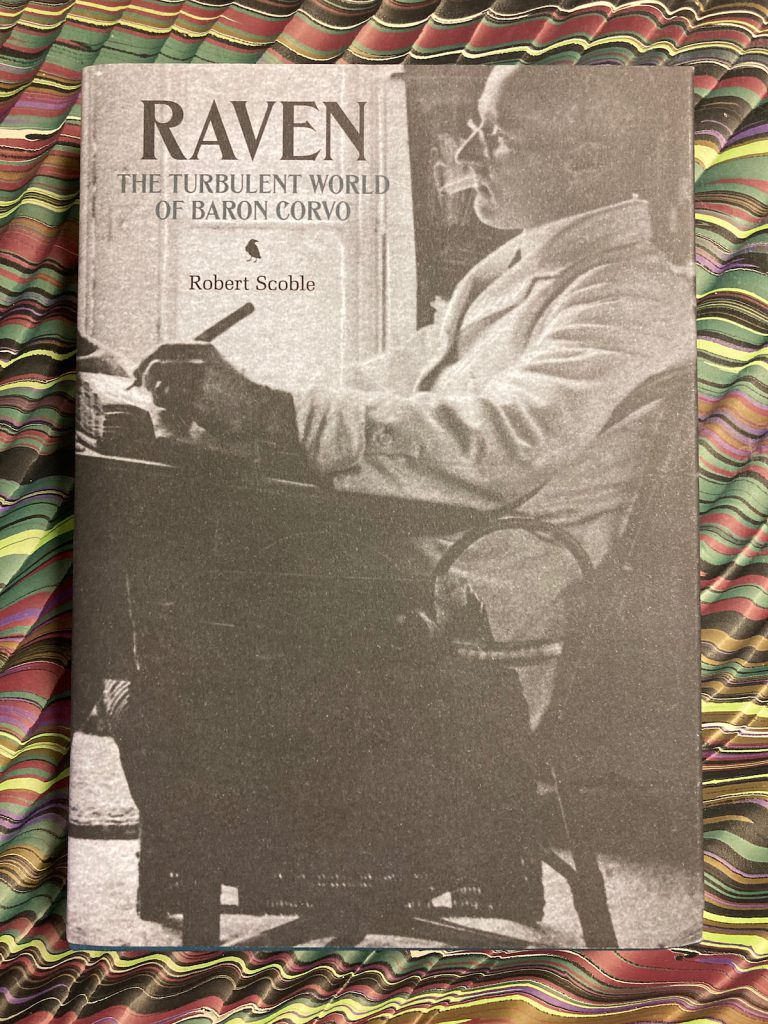
— Robert Scoble. Raven. The Turbulent World of Baron Corvo. Strange Attractor Press, 2013.
— —. The Corvo Cult. The History of an Obsession. Strange Attractor Press, 2014.
Two well written, engaging, and thoroughly documented overviews of the Frederick Rolfe phenomenon: the people surrounding him and the evolution of the cult of the author.
— Guy Davenport. The Resurrection in Cookham Churchyard [1967]. [Jordan Davies, 1982].
.  .  . and everyone is there, in this kinetic Blakean procession, to be animated from Stanley Spencer’s giant painting .
— — —
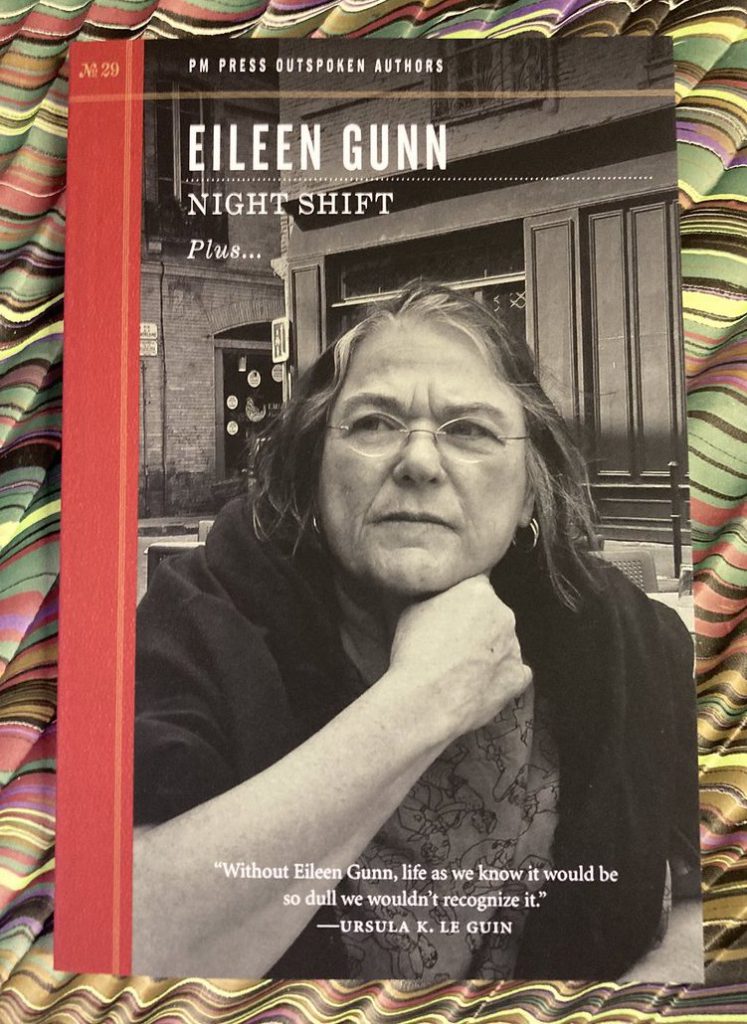
— Eileen Gunn. Night Shift plus Usual and the Author plus Promised Land and much more. PM Press, [2022].
A volume in the excellent Outspoken Authors series, with Terry Bisson’s  interview of Eileen Gunn, “I Did, and I Didn’t, and I Won’t”, including this observation about an early job as a advertising copywriter :
“They taught me how to understand subjects I’d never studied and how to work with capitalists without becoming one.”
— Julian Symons. The Immaterial Murder Case [1945]. Penguin Books, [1954].
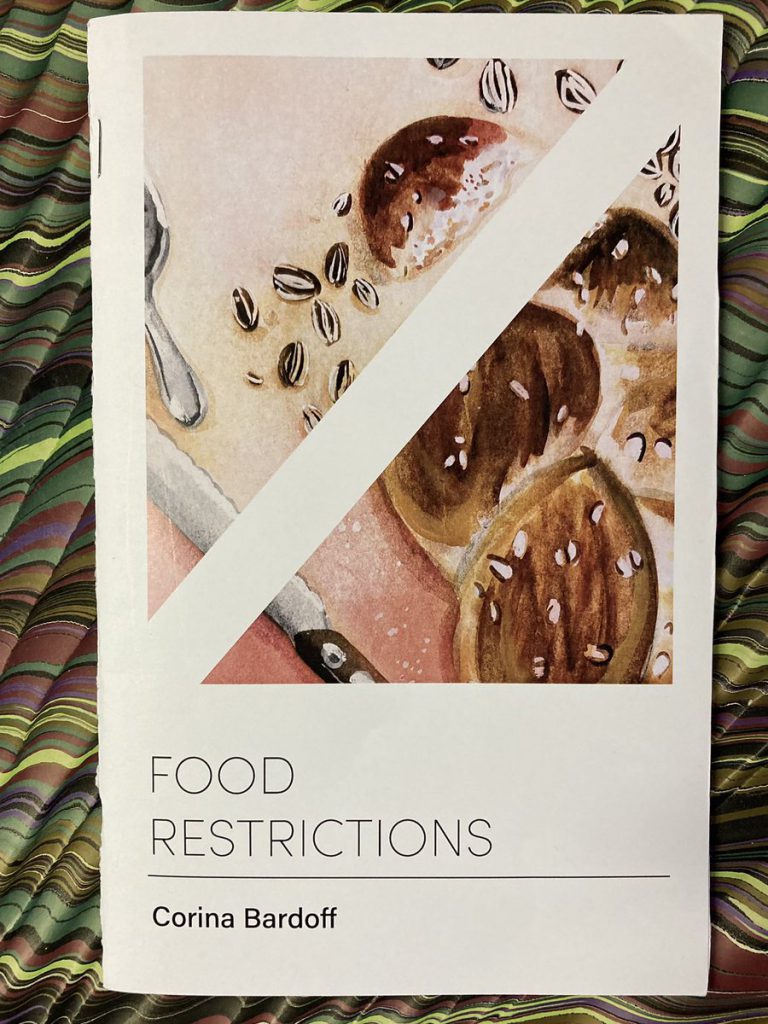
— Corina Bardoff. Food Restrictions. 2020.
Nimble, funny, literate Oulipian explorations of food and words. [Gift of WW].
— — —
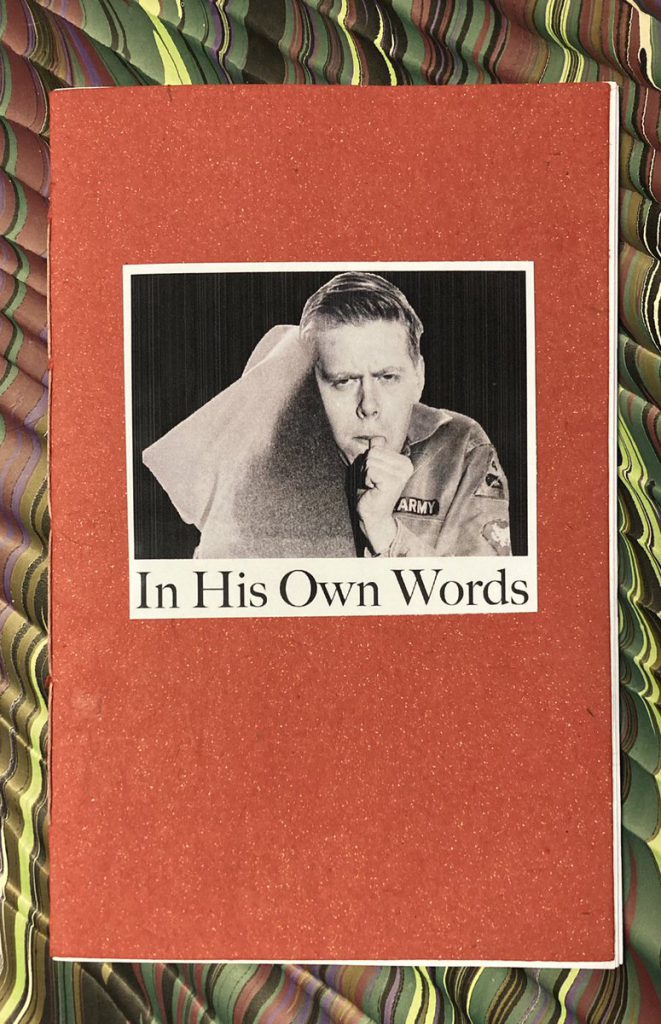
— Michael Swanwick and Gardner Dozois. In His Own Words. Dragonstairs, [2022].  Edition of 60 copies.

Legendary editor Gardner Dozois interviewed by his friend.
— — —

— Elizabeth Hand. Hokuloa Road. Mulholland Books. Little, Brown, [2022]. Another unsettling and gripping book, and a new place in our psychic geography (just maybe you can get there from Kamensic). This reader trusts Elizabeth Hand with his life and readerly attention, and is always rewarded Wherever her books lead, the narrative path is fascinating and the destination is beautiful and often frightening : that is to say, the classical elements of the sublime. Also notable for having a decent working class guy as protagonist.
— Undefined Boundary. The Journal of Psychick Albion. Volume One / Issue One. Edited by Cormac Pentecost. Temporal Boundary Press, 2022.
Reading this, one has the sense that somehow England will find a way through the present mess.
— — —

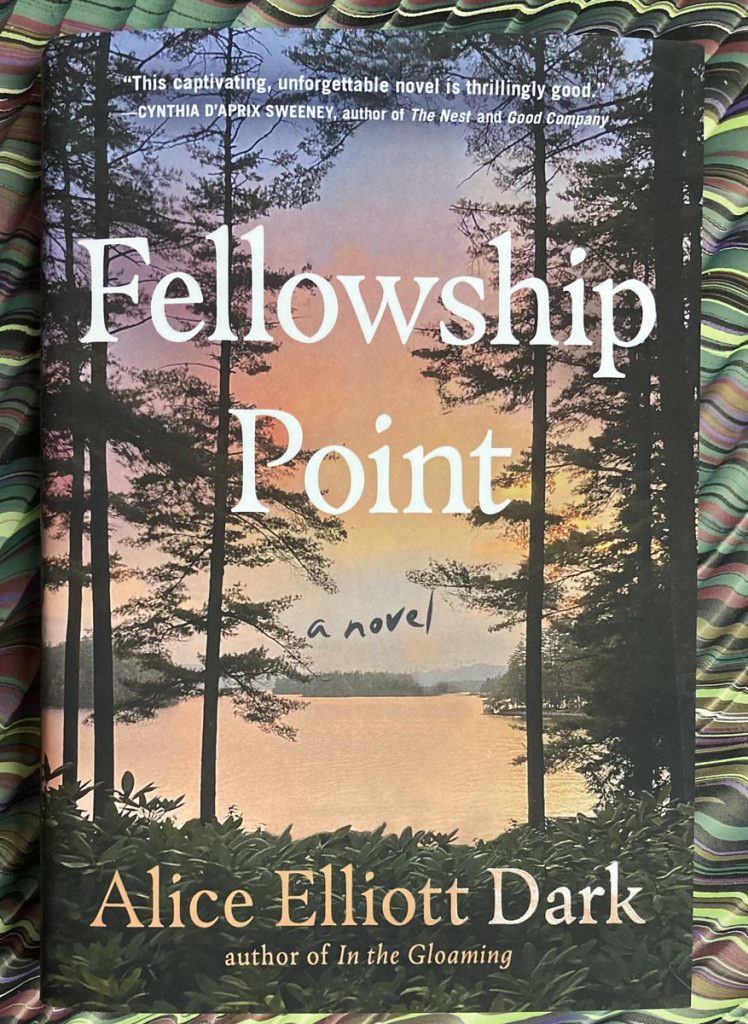
— Alice Elliott Dark. Fellowship Point. A Novel. Mary Sue Rucci Books | Scribner, [2022].
Rich, beautiful exploration of friendship, place, and time (the Maine setting is  deeply rooted), with turns and surprises worthy of Dickens ; a notable feminist interrogation of privilege and expectations.
— — —
— John Clute. Sticking to the End. Beccon, 2022.
Essays and addresses, with book reviews from Strange Horizons and New York Review of Science Fiction; memorials of Gene Wolfe, David G Hartwell; and more.
— Hervé Le Tellier. L’Anomalie. Roman. NRF Gallimard, [2020].
Science fiction à l’Oulipo, witty and nimble.
— — —
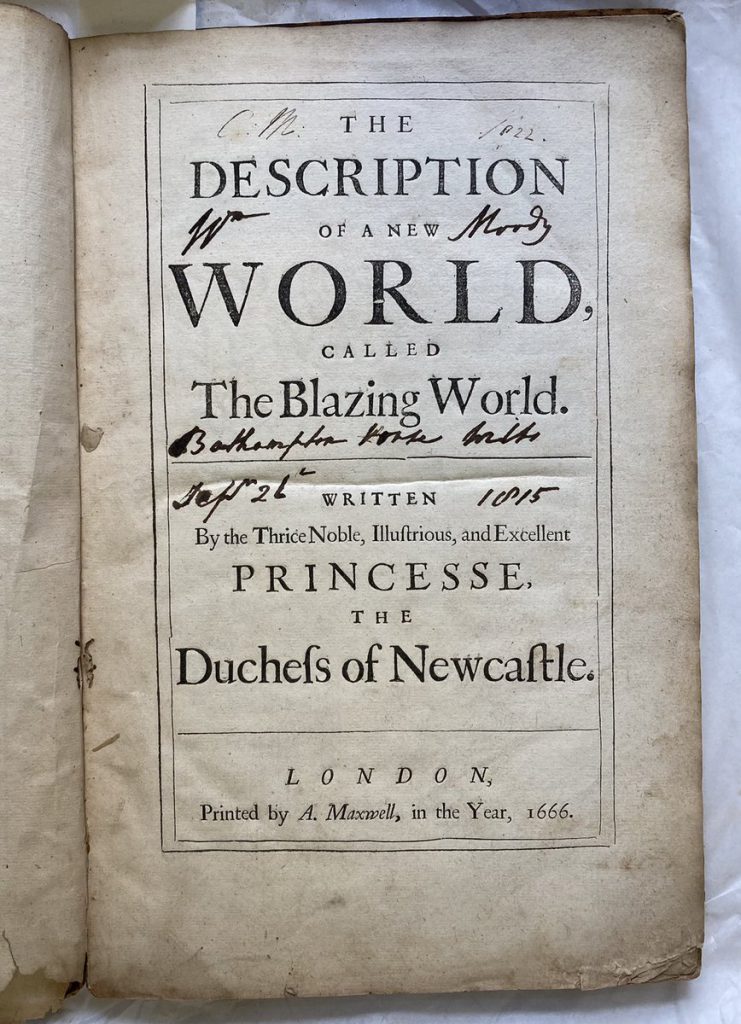
—[Margaret Cavendish,] Duchess of Newcastle. The Description of a New World called the Blazing World. 1666.
— — —
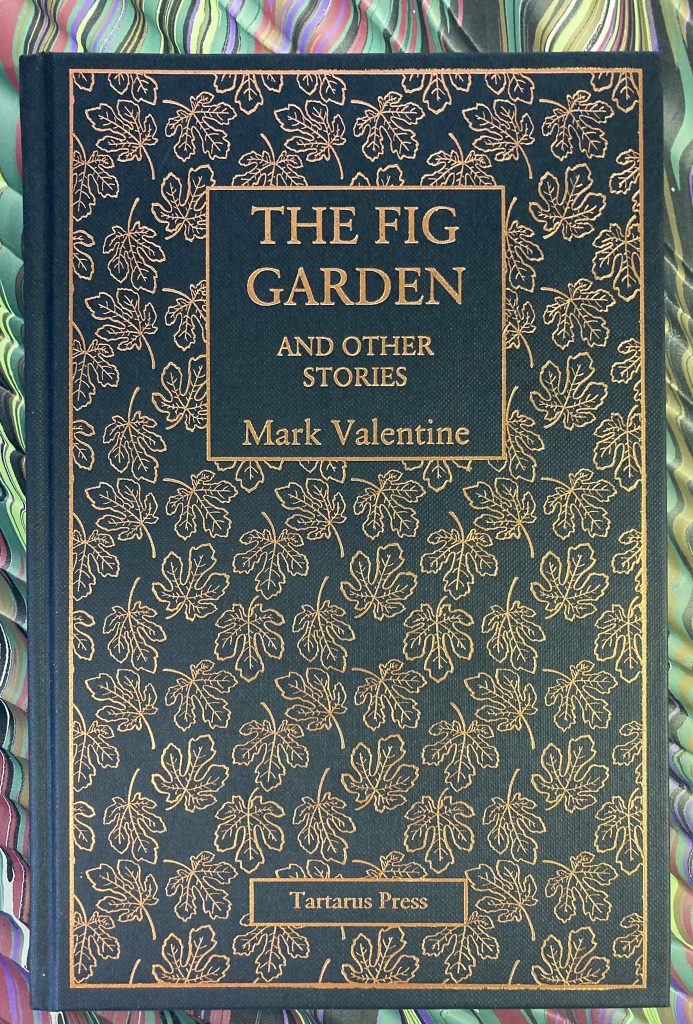
— Mark Valentine. The Fig Garden and other stories. Tartarus, [2022].
Excellent new collection, with several original stories.
— — —
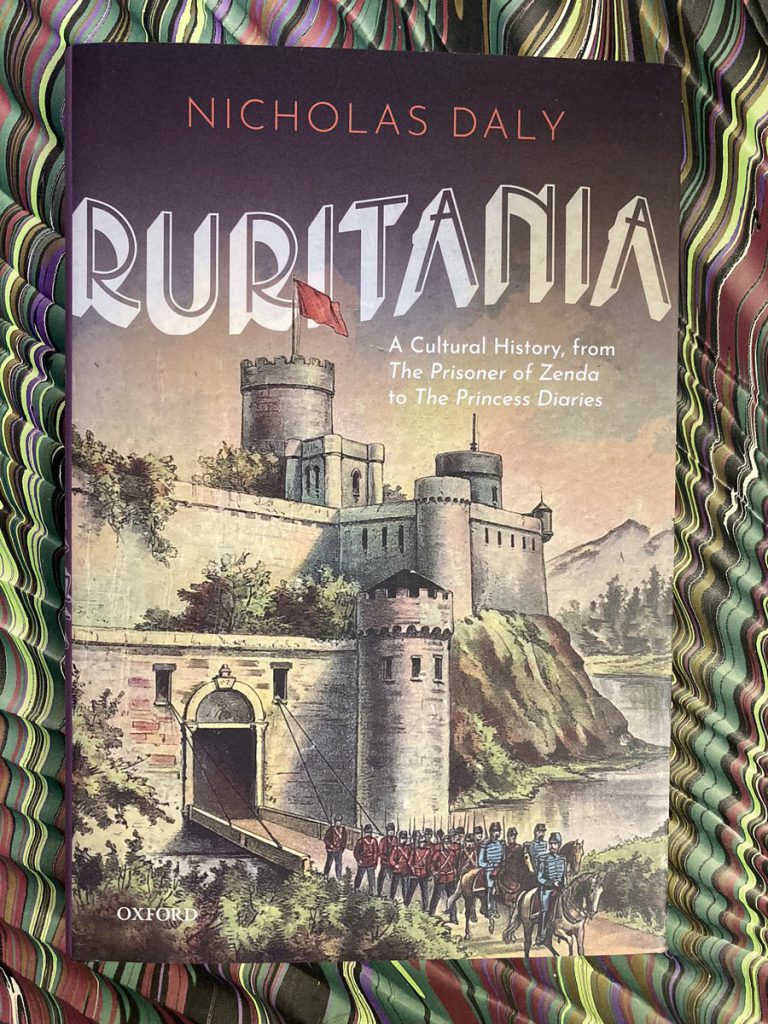
— Nicholas Daly. Ruritania. A Cultural History, from The Prisoner of Zenda to The Princess Diaries. Oxford University Press, [2020].
Interesting fun, with some odd gaps or omissions (such as John Buchan’s The House of the Four Winds and Avram Davidson’s Doctor Eszterhazy stories).
— — —
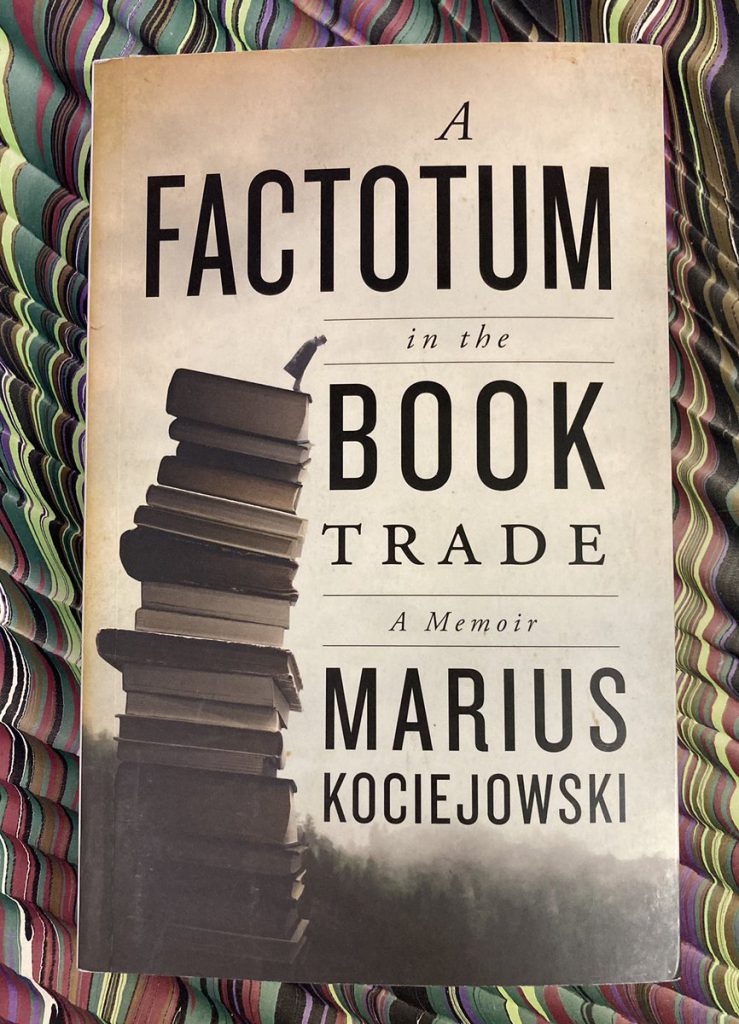
— Marius Kociejowski. A Factotum in the Book Trade. A Memoir. Biblioasis, [2022].
When the Romanian singer started in on « Un dimanche après la fin du monde » I was engaged ; and then the first pages of Chapter 13, The Man Collecting Names is a remarkable sequence of reflections. [Gift of DS].
— — —
— Eric G. Wilson. Dream Child. A Life of Charles Lamb. Yale University Press, [2022].
Read with great interest, Wilson is excellent on Lamb’s connections to the main literary figures of the day (Coleridge, Wordsworth, and others), and on the tragedies of his life.
[Bought in March but misshelved and only found in early June.]
— — —
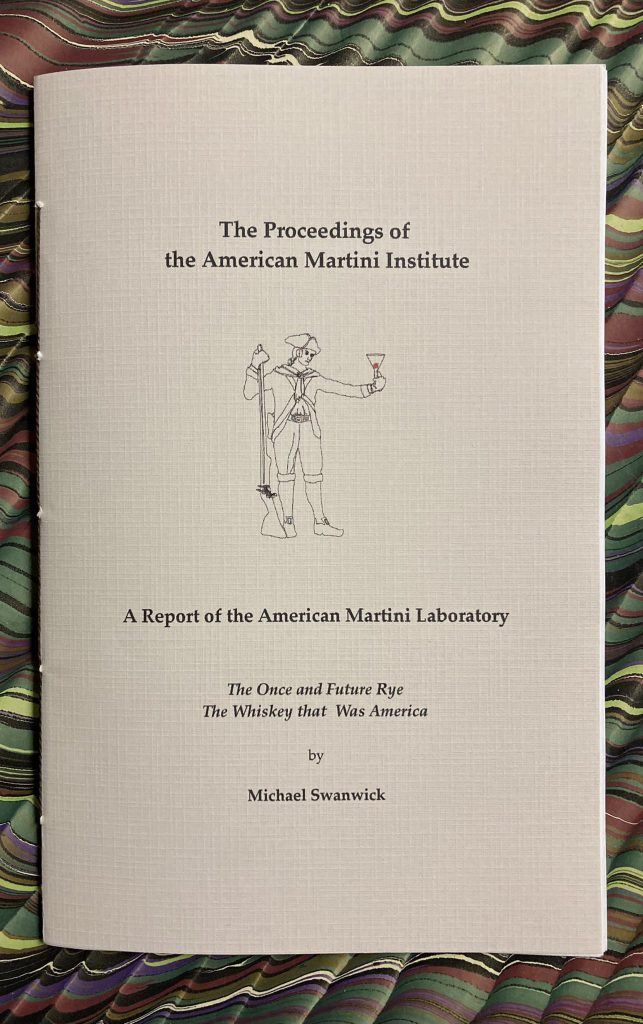
— Michael Swanwick. The Once and Future Rye. The Whiskey That Was America. [At head of title:] The Proceedings of the American Martini Institute. A Report of the American Martini Laboratory. [Dragonstairs, 21 May 2022]. Edition of 80 copies.
— — —
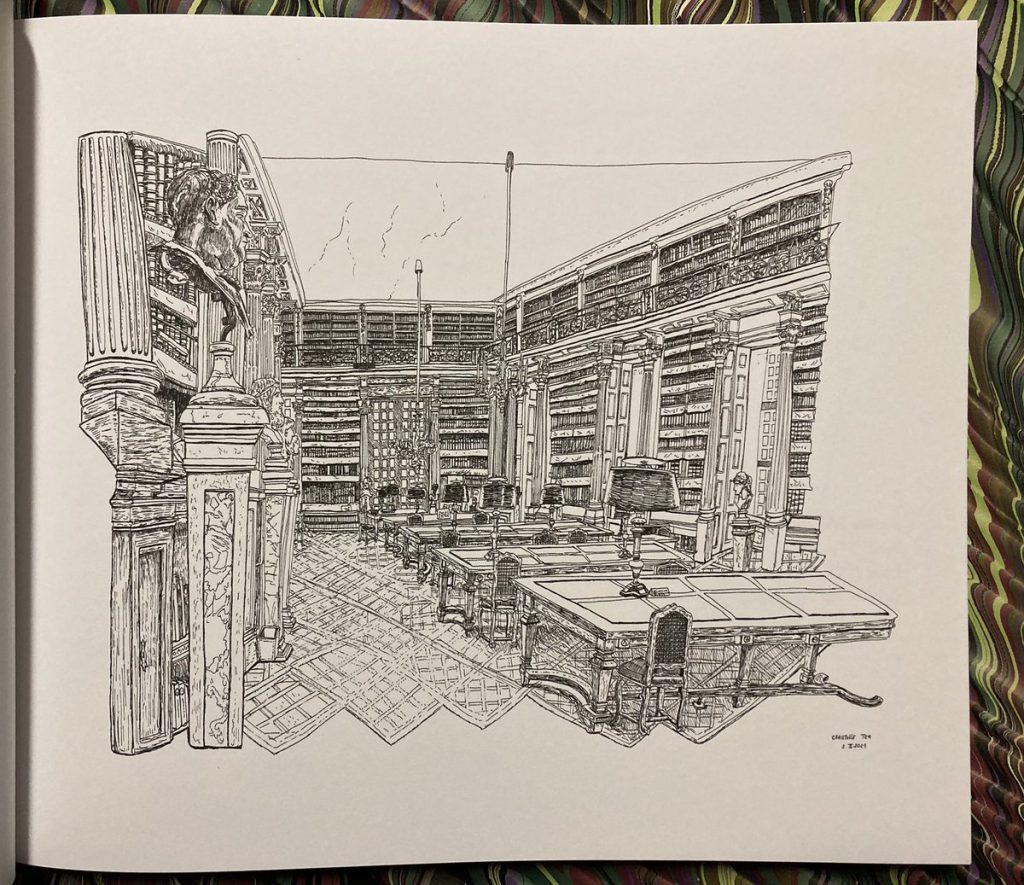
— Christelle Téa. Bibliothèques. Dessins 2018-2021. Librarie Métamorphoses, [2022]. Exhibition catalogue, with introduction by Michel Scognamillo, “Christelle Téa, ou la stratégie de l’araignée”.
/ above : in the Bibliothèque Mazarine
— — —
— This World and That Other. [Stories by] John Howard [and] Mark Valentine. Sarob Press, 2022.
— Algernon Blackwood. The Lure of the Unknown. Essays on the Strange. [Edited with an introduction by Mike Ashley]. Swan River Press, 2022.
Collection of nearly two dozen essays, talks, and vignettes about the uncanny, spanning almost the entire career of supernatural writer Algernon Blackwood (1869-1951). The earliest, “The Psychology of Places” (Westminster Gazette, 30 April 1910), seems almost a gloss on his story “The Willows”; the majority of the pieces are from the late 1940s and were often delivered as radio or television broadcasts. Ashley notes Blackwood’s general reticence about any of his own psychic experiences. The essays “collected here reveal his views on the world and the occult, show his diverse reading and experiences, and his appreciation of the experiences of others.”
— Bruce Barker-Benfield. The Glossed Luke with the Letter A. A manuscript from St. Augustine’s Abbey Canterbury with an essay on the binding by Andrew Honey  and an introduction by William Zachs. Blackie House, 2020.
Illustrated history of a notable twelfth-century manuscript Gospel which survives in its original binding.
— — —

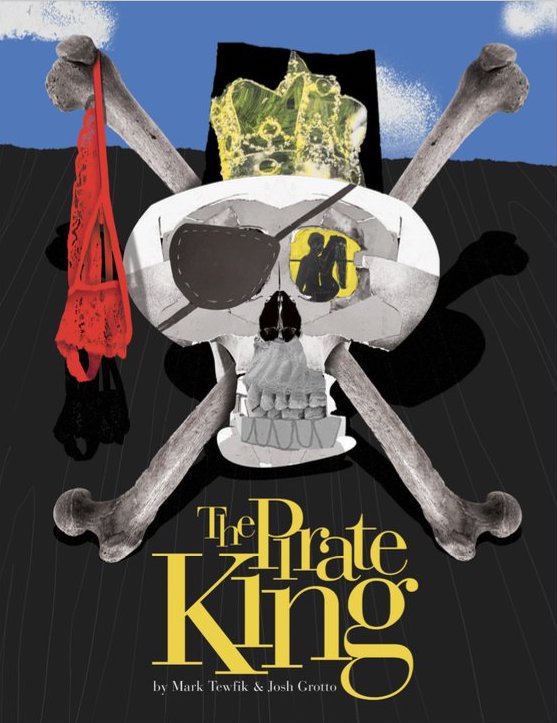
— Mark Tewfik. The Pirate King. Illustrated by Josh Grotto. Full color illustrations throughout. [40] pp. Chicago : Lanterne Rouge Press, 2022. Edition of 100 copies.
The text of The Pirate King resembles a children’s bedtime tale, while the collage illustrations suggest a very different story. A remarkable tension arises between the visual and verbal references.