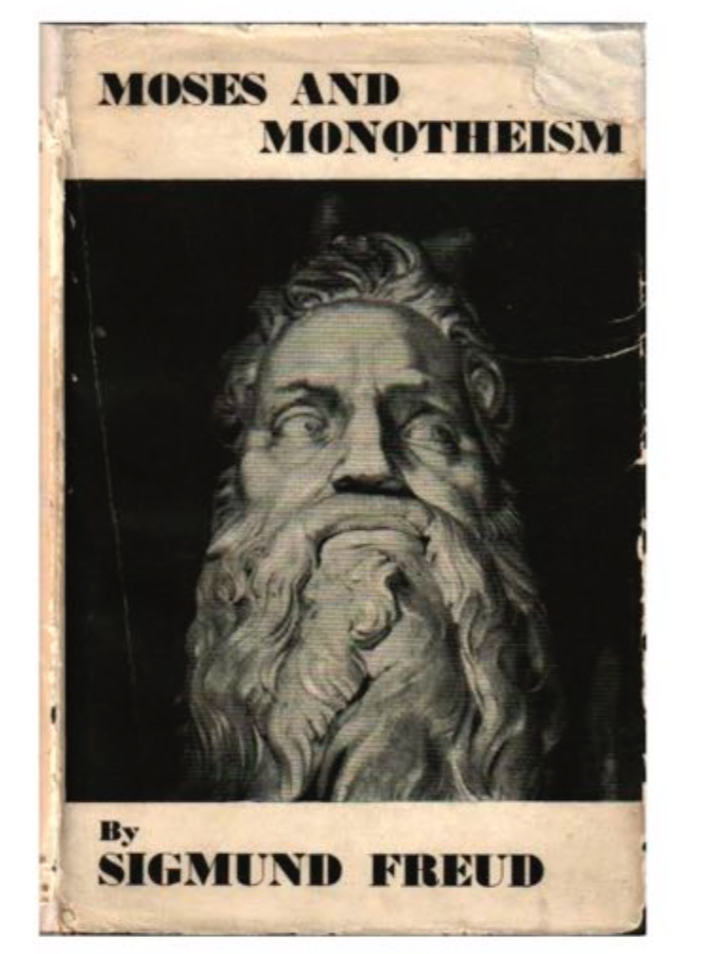
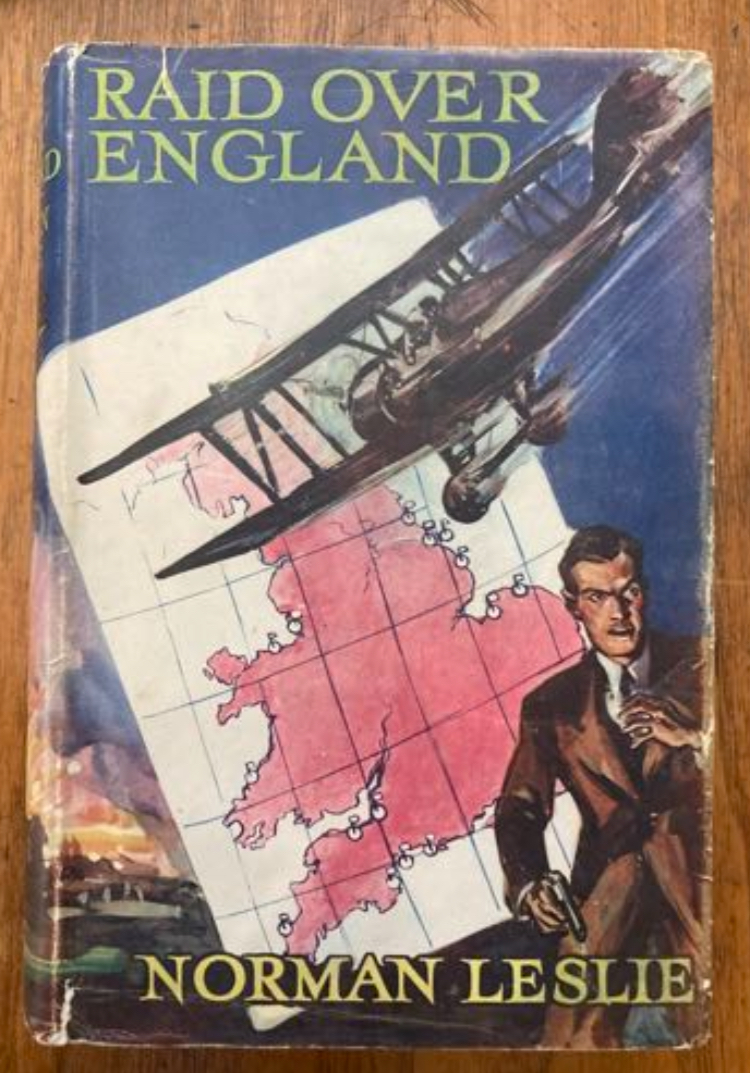
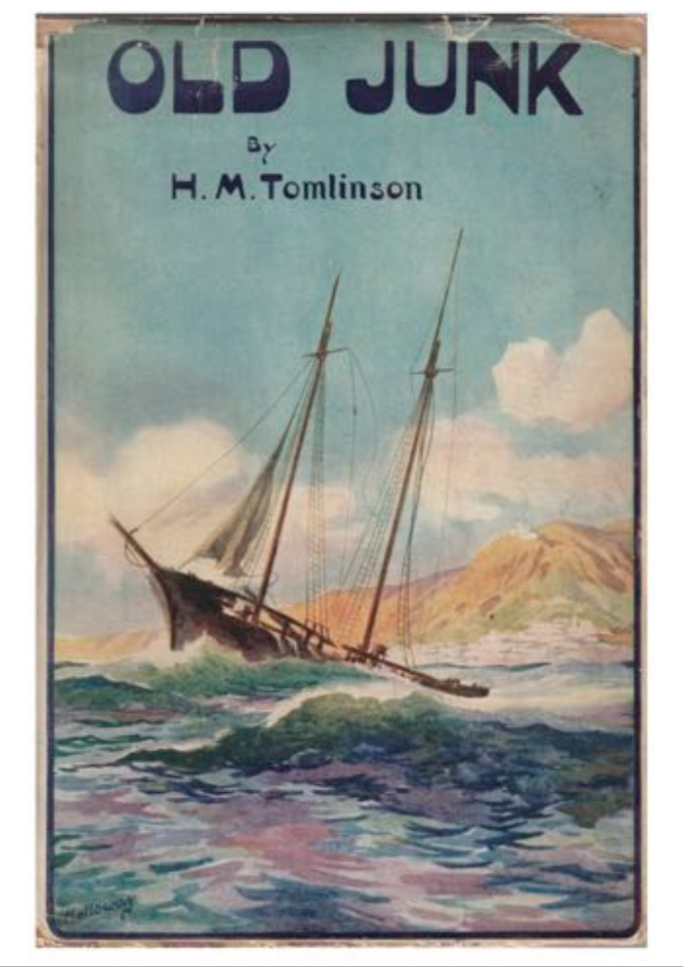
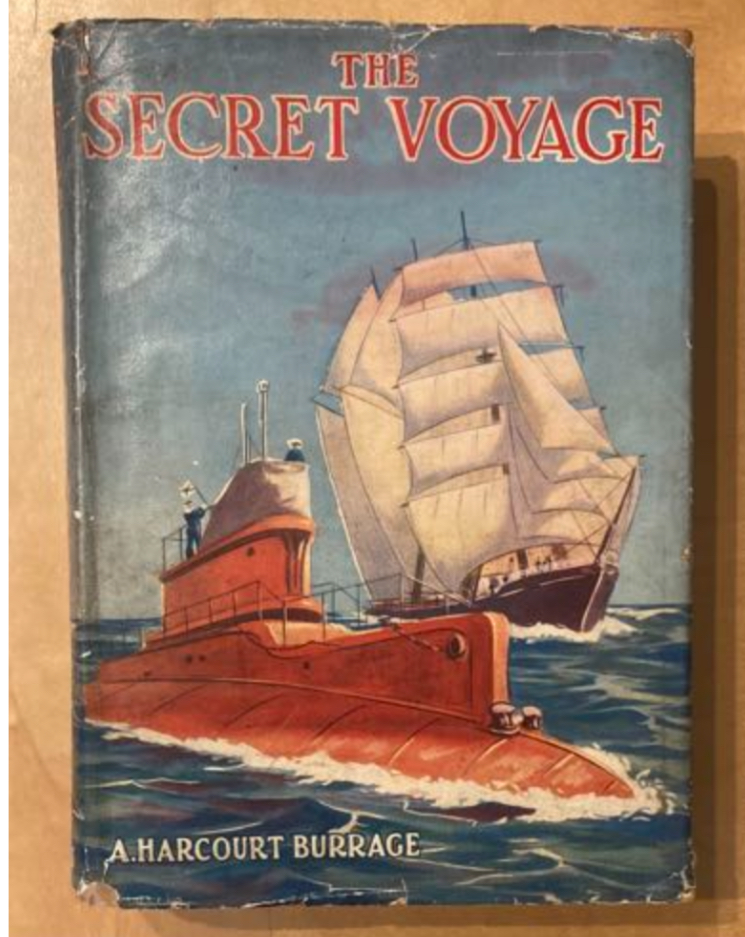
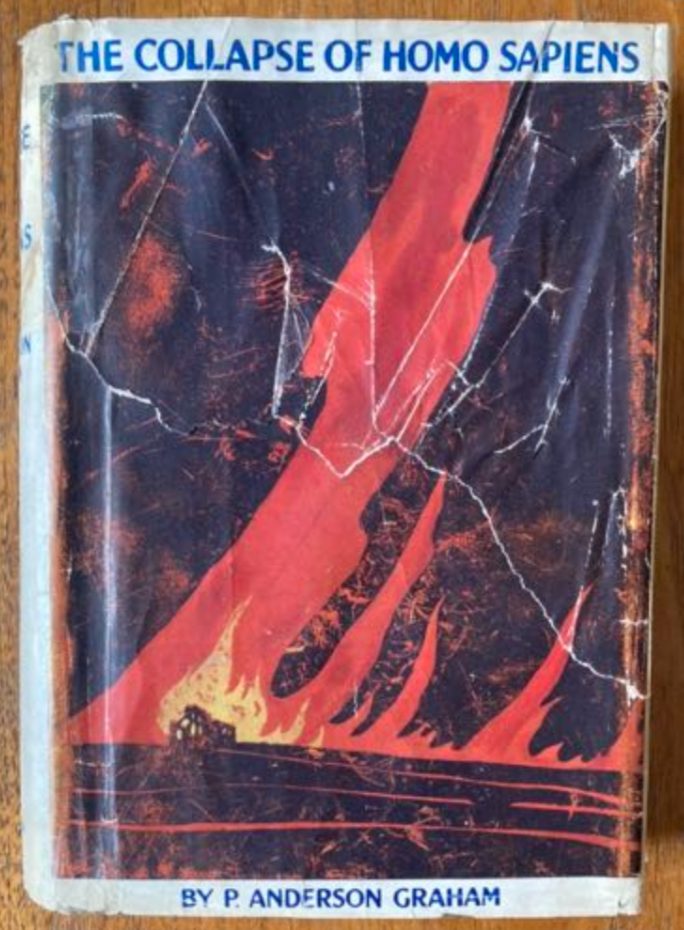
At Readercon in mid-July, the great delight was the panel / conversation with John Clute about dust jackets and the information they encode (in and out of science fiction), with examples from The Book Blinders (2024), my own collection, and the Clute Library at the Telluride Institute [click on things to see bigger pictures].
Moses and Monotheism by Sigmund Freud (dust jacket from the Clute collection, Telluride)Raid over England by Norman Leslie (dust jacket from the Clute collection, Telluride)Old Junk by H. M. Tomlinson (dust jacket from the Clute collection, Telluride)
Clute also talked about the Scientific Romance in interwar British publishing, with Michael Dirda, a good chat. His thesis in progress is outlined at the SFE, lots of interesting titles (most of them in the Telluride hoard), details here : https://sf-encyclopedia.com/entry/scientific_romance
The World Ends by William Lamb [Storm Jameson] (dust jacket from the Clute collection, Telluride)The Secret Voyage by A. Harcourt Burrage (dust jacket from the Clute collection, Telluride)The Collapse of Homo Sapiens by P. Anderson Graham (dust jacket from the Clute collection, Telluride)
Readercon 34 Schedule
at the Boston Marriott Burlington in Burlington, Mass. https://readercon.org
Saturday 19 July 10:00 a.m., at the autographer’s table Autograph Session : Henry Wessells
Sunday 20 July 10:00 to 11:00 a.m., in : Create / Collaborate The Art of the SF Book Cover
John Clute & Henry Wessells
Panel description : Since its inception, the British Library, the national library of the UK, has stripped dust jackets off books in its holding and discarded the unwanted wrappers, losing an essential piece of their cultural and artistic significance. In The Book Blinders, science fiction historian and theorist John Clute details the “annals of vandalism” at the British Library, with a focus on works lost (and found). John Clute and antiquarian bookseller Henry Wessells give a joint presentation on this subject, with numerous illustrations, and with extra time for Q&A.
11:00 to 11:30 a.m., in : Empower / Embrace Reading : Henry Wessells
Henry Wessells reads from The Elfland Prepositions and from Another Green World (both newly published in 2025).
12:00 noon to 1:00 p.m., in : Create / Collaborate The Art of the SF Book Cover
John Clute & Michael Dirda
Panel description : The early divergence of American and British science fiction may best be witnessed in the works of UK authors in the 1930s and ’40s that have been called “scientific romances.” Unlike their pulp cousins in the US, these works lack the optimistic outlook of young square-jawed heroes out to conquer the galaxy. Instead, they offer anxiety about rogue scientists armed with Ultimate Weapons out to blackmail the world to either peace or servitude. In this presentation, famed fantastika theorist John Clute and Michael Dirda will discuss this less-recognized strand of SF.
[N.B. I will be running a slide show not dissimilar to the one for dust jackets.]
I should arrive at Readercon by midday on Friday. Temporary Culture will have a table in the book room on Friday and Saturday, and copies of A Conversation larger than the Universe, The Private Life of Books, The Elfland Prepositions, and Another Green World (advance copies of the Zagava paperback), the publications of the Avram Davidson Society, Sexual Stealing by Wendy Walker, and a variety of other books will be available for sale (cash, cheque, or paypal). If you see me, come say hello. There is always plenty of time for conversation.
— Conjunctions 83. Revenants : The Ghost Issue. Edited by Bradford Morrow and Joyce Carol Oates. Bard College, 2024.
a big issue, with “An Incident in Monte Carlo”, a fragment or outtake from the forthcoming Wreckage by Peter Straub, new work by Elizabeth Hand, James Morrow, Timothy J. Jarvis, Mark Valentine, Reggie Oliver, and many others.
“Fern’s Room” by Liz Hand is pitch perfect, deftly moving from a gentle rom-com American anglophile country house idyll to a very dark endgame, with clues scattered all along the way.
“Plunged in the Years” by Jeffrey Ford, with a few steps off the path in the woods, gets right to the heart of the American ghost story : time and memory (and childhood).
— — —
recent reading
— Len Deighton. Faith [1994]. Grove Press, [2024].
— Nathan Ballingrud. Crypt of the Moon Spider. Nightfire, [2024].
— Avram Davidson. The Adventures of Doctor Eszterhazy. Owlswick Press, 1990.
— — —
books wait for their readers
All antiquarian booksellers have a shelf of what Bill Reese called ‘intractables’ : things that sit on a shelf and seem unsaleable, or just beyond the grasp of one’s understanding, or, indeed, actively resist the efforts of the cataloguer with what M. R. James called the ‘malice of inanimate objects’. And then, suddenly, one finds a new perspective, or works with someone who has the key, and the door unlocks. I am fortunate to have experienced this a few times in my career. To watch this phenomenon in real time is one of the delights of the profession.
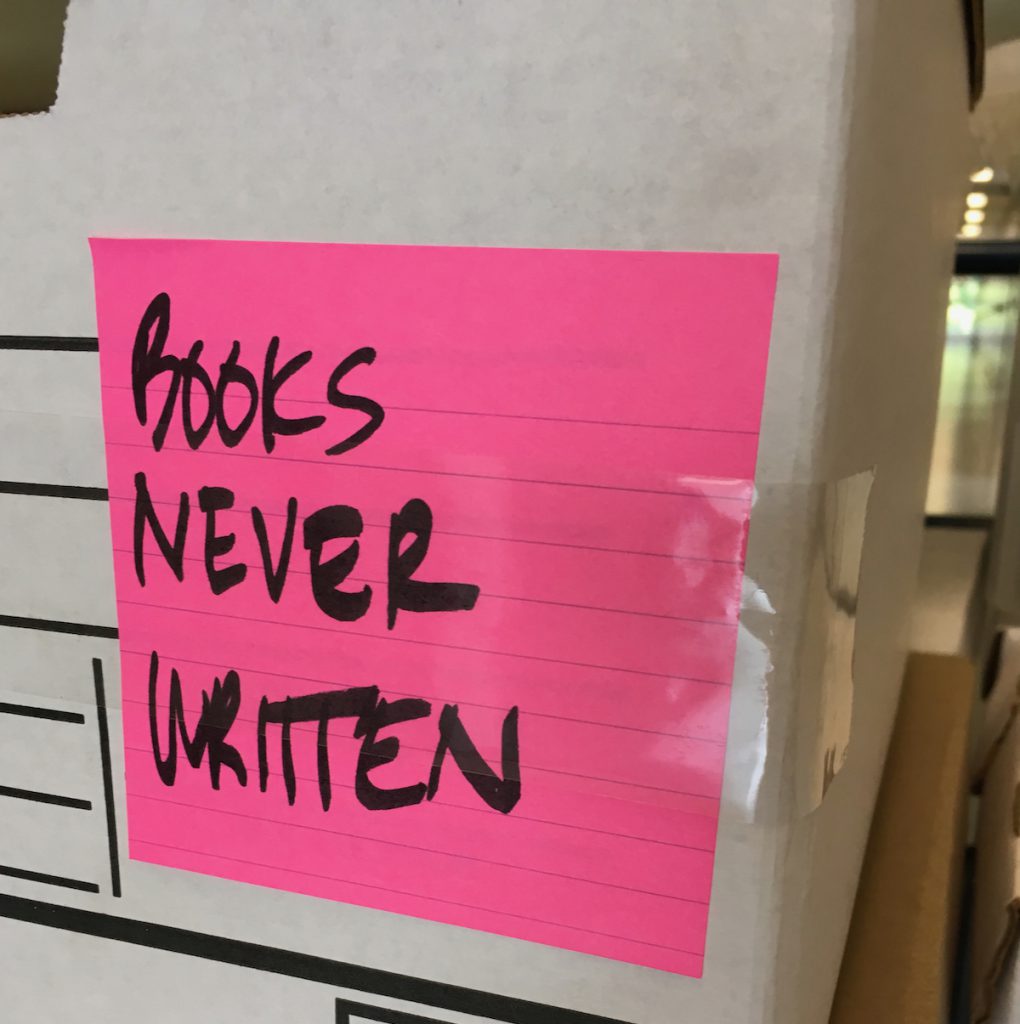
The question of whether or not books wait for their writers is trickier to answer. This is a question of a different order. I would say yes, on balance, but one feels the clock ticking, and the list of books not written is very long.
Books Never Written, label on a box from the literary archive of George Plimpton.
— — —
‘to escape the straitjacket that had been science fiction’ — Paul Kincaid
an excellent essay by a clear-eyed critic ringing the changes on Harlan Ellison’s Dangerous Visions anthologies then and now :
Last week marked eighteen years of ‘simply messing around in books’ and reporting the pleasures on this website. It is still fun and so I will continue to note interesting books, curious passages, announcements, occasional snapshots, and digressions.
— — —
an Endless Bookshelf quiz
Who is the Widmerpool ?
— from your year(s) at school or university
— of your chosen field or profession
— observed recurringly elsewhere
/ wrong answers accepted
/ bonus points for naming your favorite book in ‘A Dance to the Music of Time’
— — —
4 January 2025
early in January, and it is already a good year in books, having just received two long-awaited titles in this week’s mailbag
Billy Budd at 100 (continued)
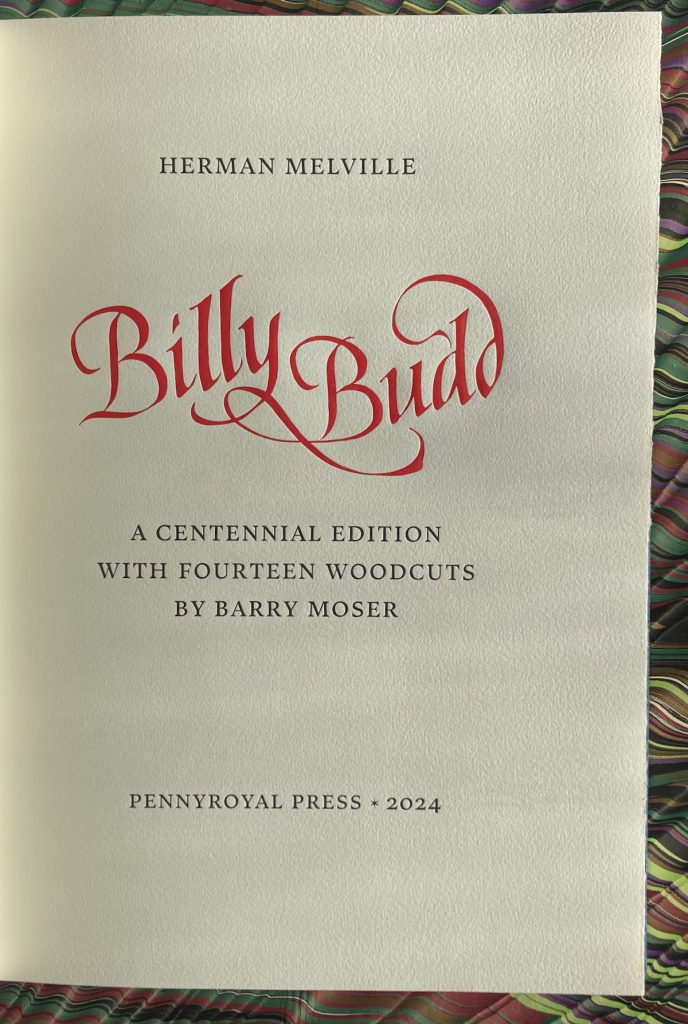
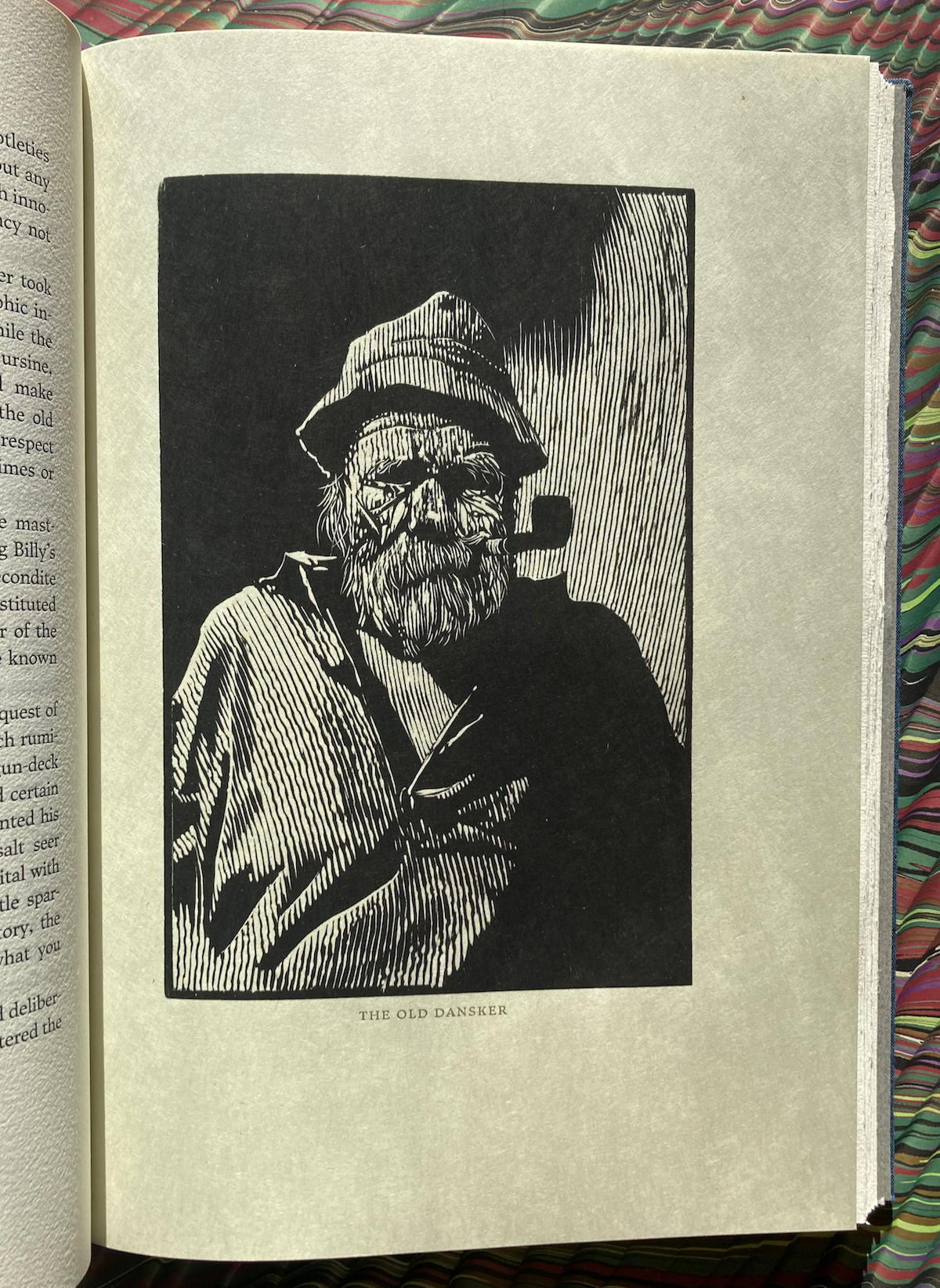
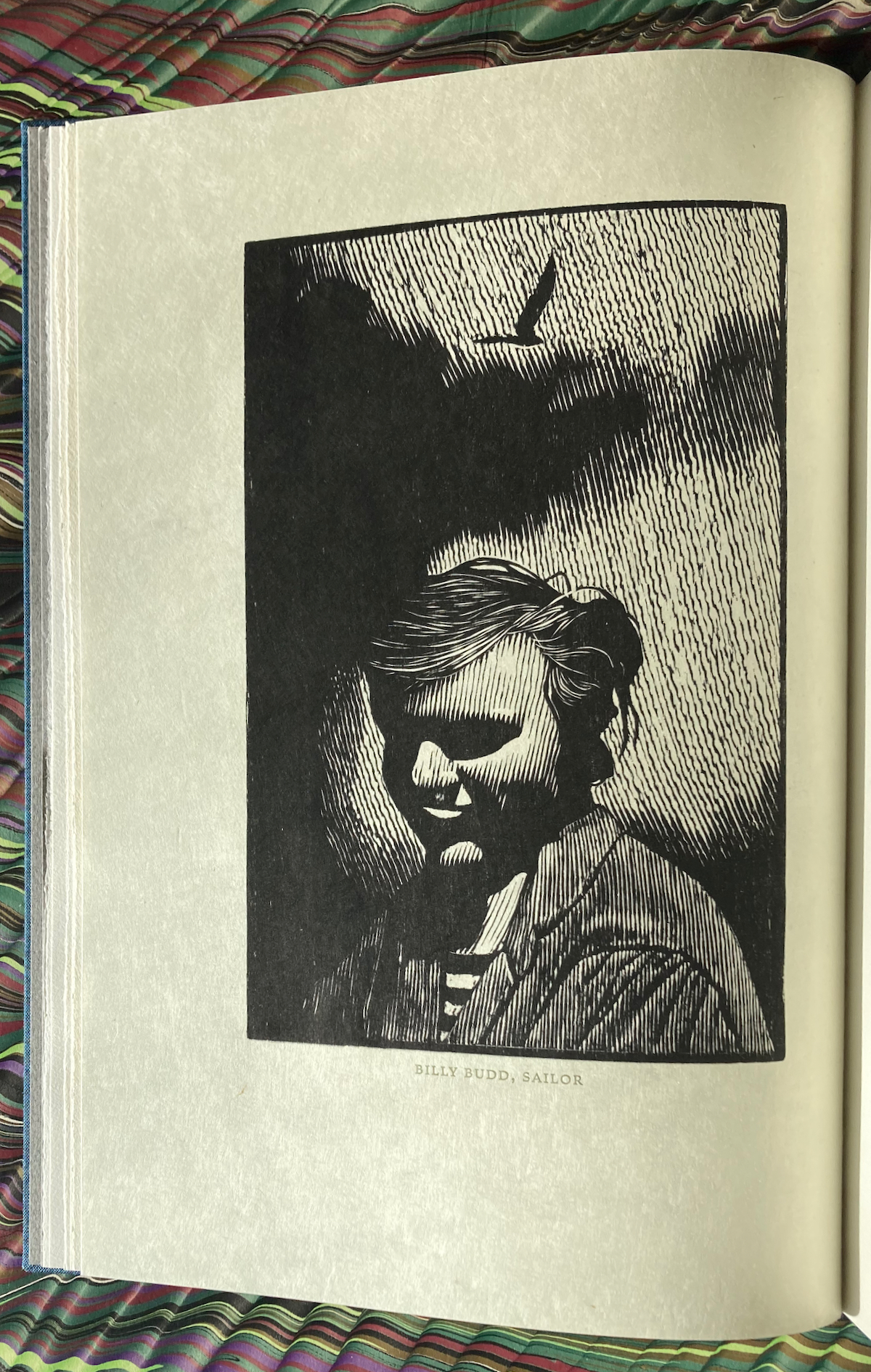
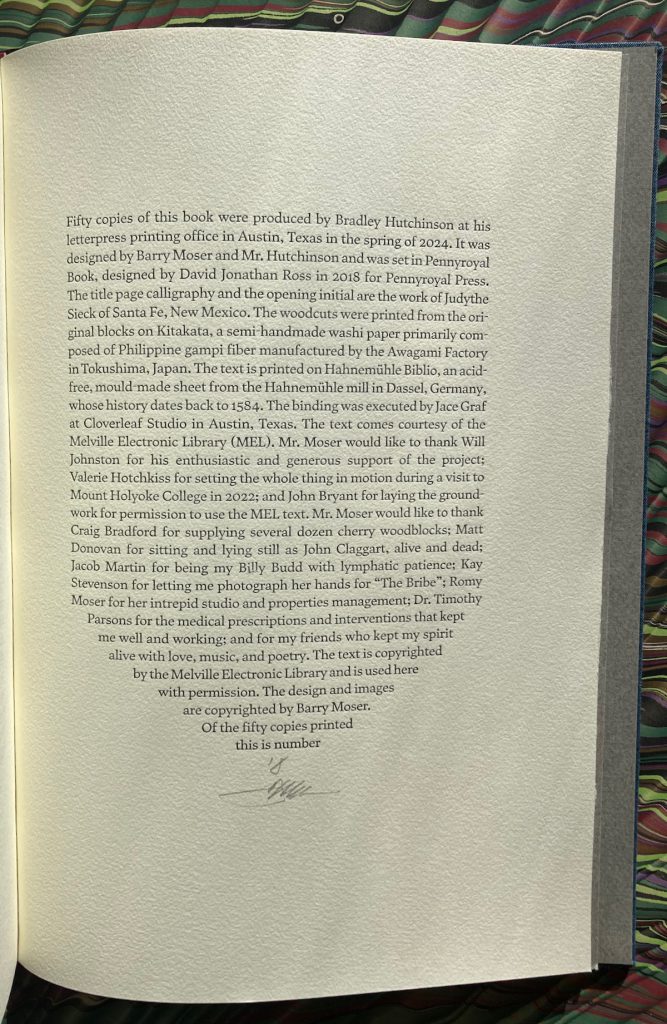
— Herman Melville. Billy Budd. A Centennial Edition with Fourteen Illustrations Cut in Wood by Barry Moser. Pennyroyal Press, 2024. Edition of 50 copies signed by the artist.
A spectacular new large format edition of Billy Budd Sailor (An Inside Narrative) — as the half-title names the book. The text of the novella is set from the Melville Electronic Library, with original woodcuts by American master Barry Moser.
— — —
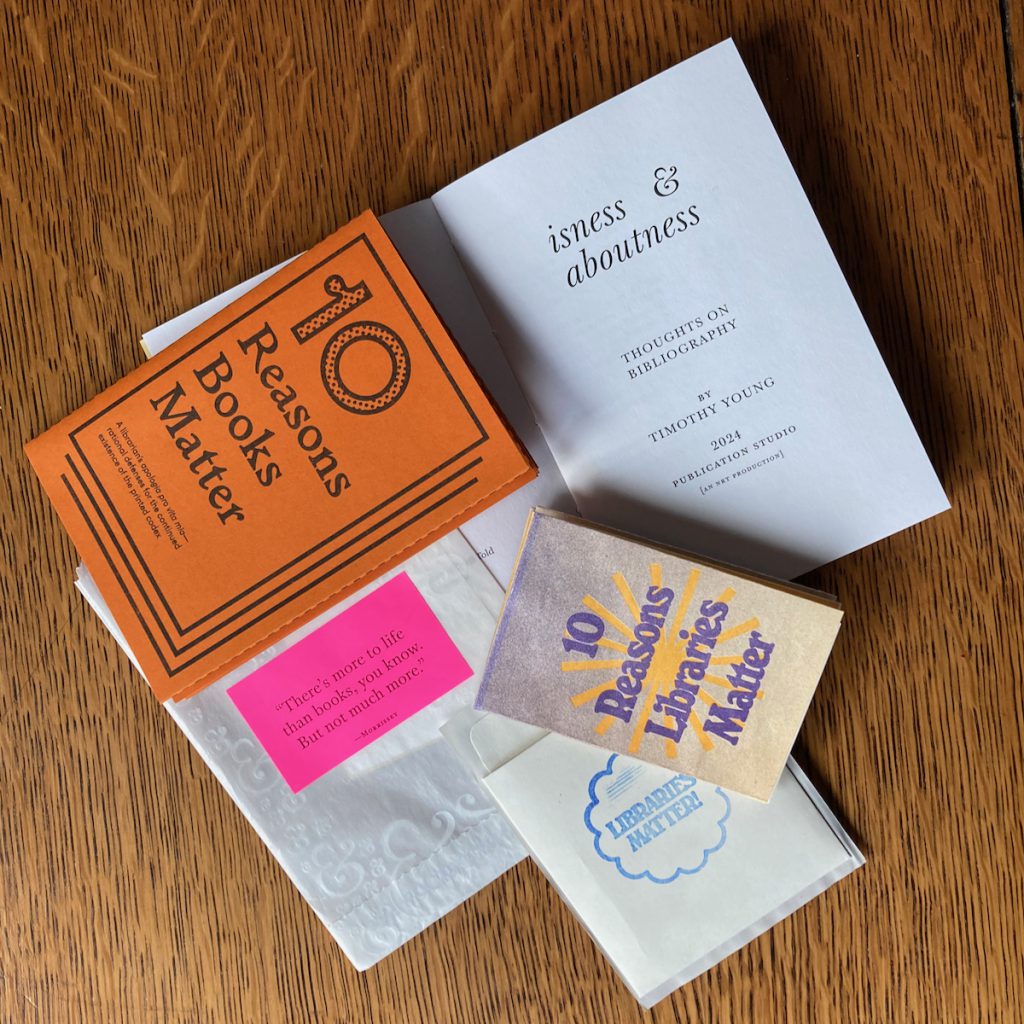
a Tim Young trifecta
— Timothy Young. Isness & Aboutness. Thoughts on Bibliography. Publication Studio, 2024.
With two single sheet ’zines, printed rectos only :
— 10 Reasons Libraries Matter, 2021.
— 10 Reasons Books Matter, [2015].
Isness & Aboutness is a really great essay on thinking about books and thinking about the world (it is the text of Tim’s Sandars lecture at Cambridge University in November). He cites Donald McKenzie to good effect, on bibliography as
the only discipline which has consistently studied the composition, formal design, and transmission of texts by writers, printers, and publishers; their distribution through different communities by wholesalers, retailers, and teachers; their collection and classification by librarians; their meaning for, and — I must add — their creative regeneration by, readers [. . .] no part of that series of human and institutional interactions is alien to bibliography
His essay moves beyond McKenzie’s assertion to identify new modes of bibliography and to assert the primacy of bibliography as a means of uncovering what books are and what they do in the world. Highly recommended.
— — —
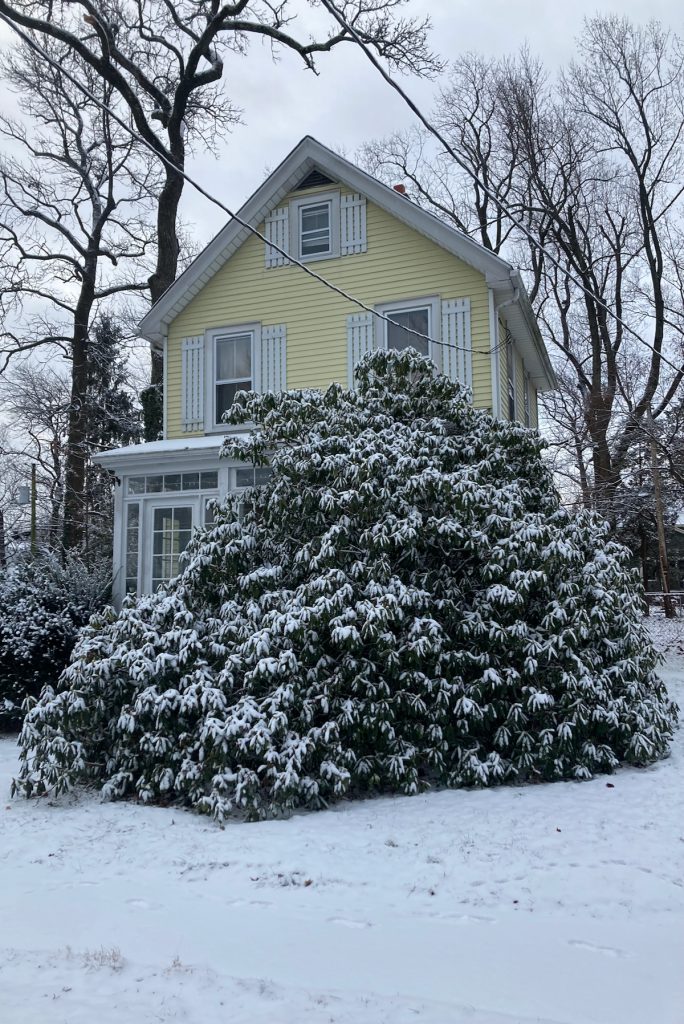
snow day, 11 January 2025
— — —
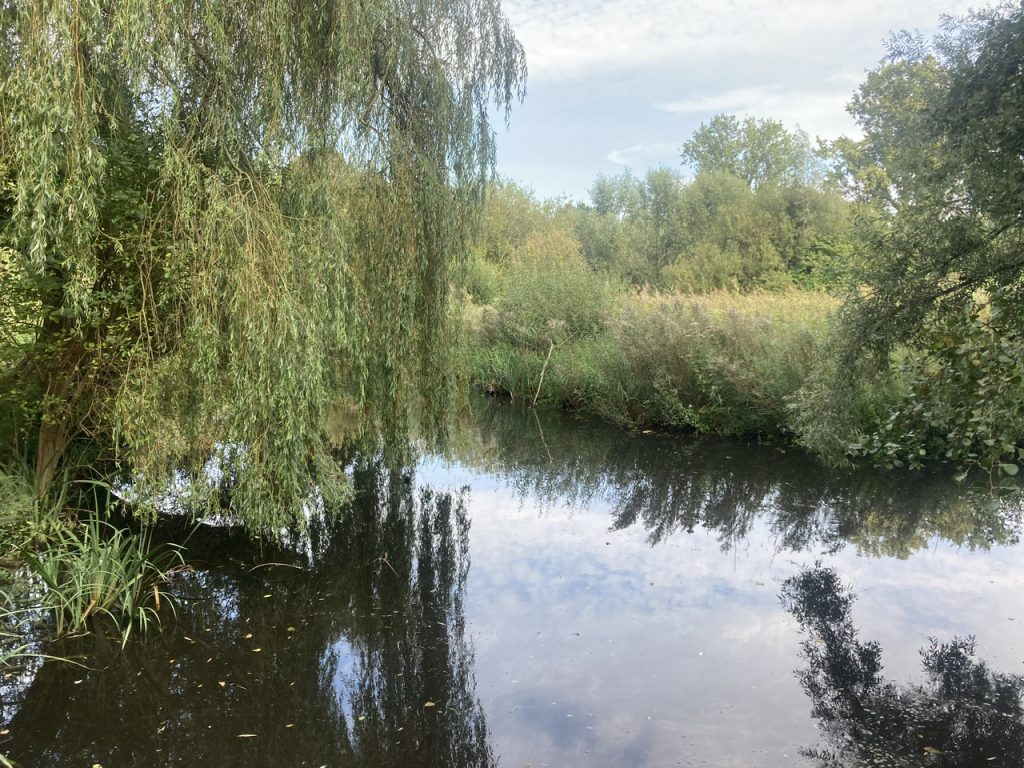
great blue heron flying low over the silvered mere
alighting on the ice beside a stand of reeds
in the distance, the pulaski skyway
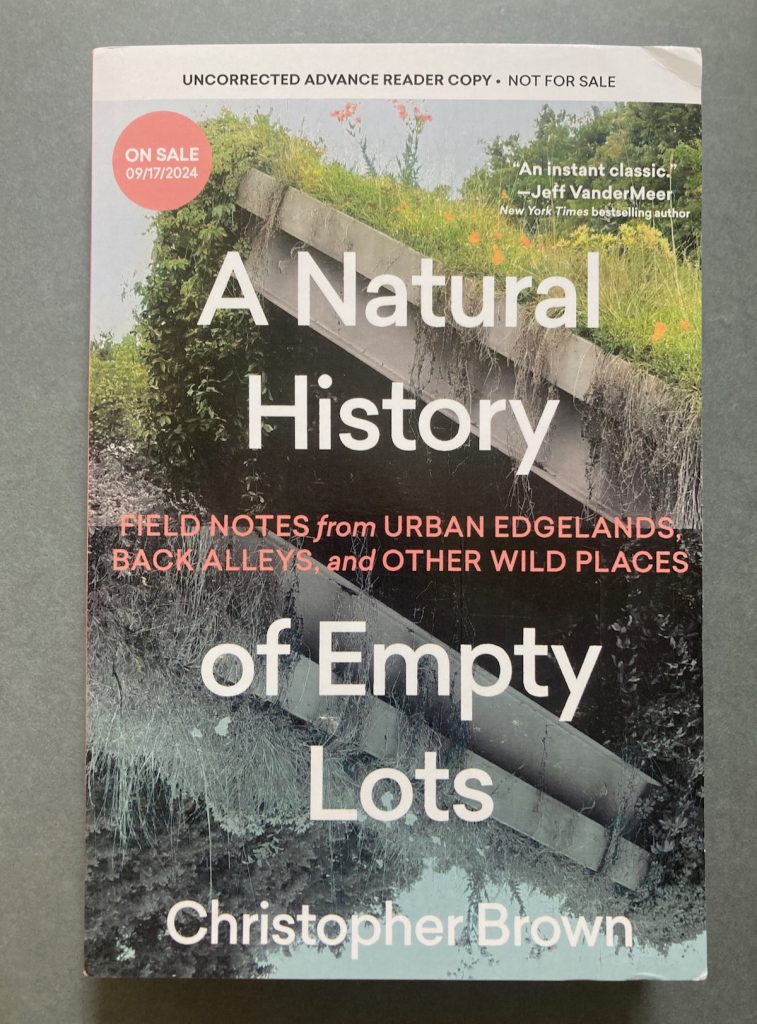
— Christopher Brown. A Natural History of Empty Lots. Timber Press, [September 2024].
This was one of the most interesting books I read this year. Chris has written three novels of near future dystopias where characters are finding their way through an America reshaped by climate change (and political turmoil). The first of them, Tropic of Kansas, was the best book I read in 2015. In A Natural History of Empty Lots, Chris looked at the world around him and questioned his own assumptions and prejudices (as Thoreau suggests in Walden), and tries to see how we humans might find a way to live in the world that does not involve devouring it. The fact they that I appear in the book and our friendship of many years, obliged me to exclude Empty Lots from the running for the book of the year. This is a book that traces its origins to the excellent Field Notes Chris has been publishing online ; he has entirely transformed them and has written a beautiful and thoughtful book. https://endlessbookshelf.net/2024/09/03/singular-interview-christopher-brown/
— — —
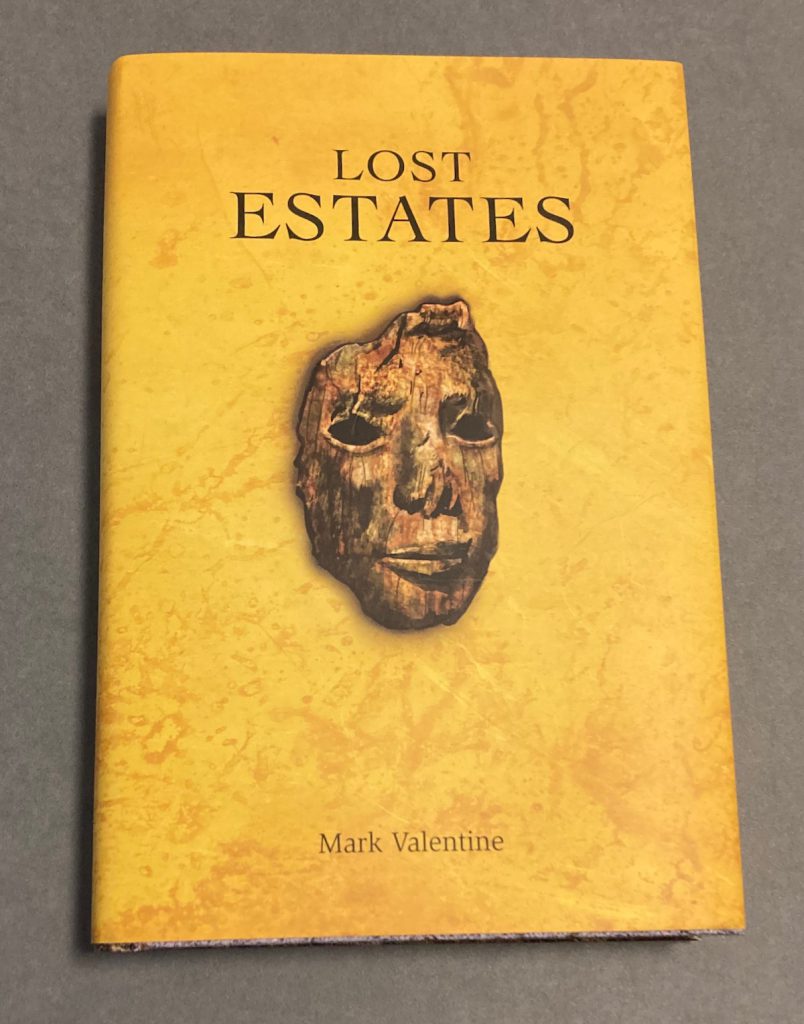
— Mark Valentine. Lost Estates. Swan River Press, 2024.
Collection of a dozen stories, four unpublished, including the excellent title story.
——. The Thunderstorm Collectors. Tartarus Press, [2024].
Collection of twenty-nine essays and vignettes, including pieces on Arthur Machen, A. J. A. Symons, M. R. James, and lesser known figures from the “curious alleys and byways” of literature and folklore. Fifth volume in his series of collected essays.
— — —
On afternoons my heart / feels like an out-of-season hotel
— Adrian Dannatt. Capacity for Loss. [Opium Books, 2024]. Edition of 300. Yellow cloth, dust jacket with illustration, Gaia, from the painting by Danny Moynihan.
Collection of poems.
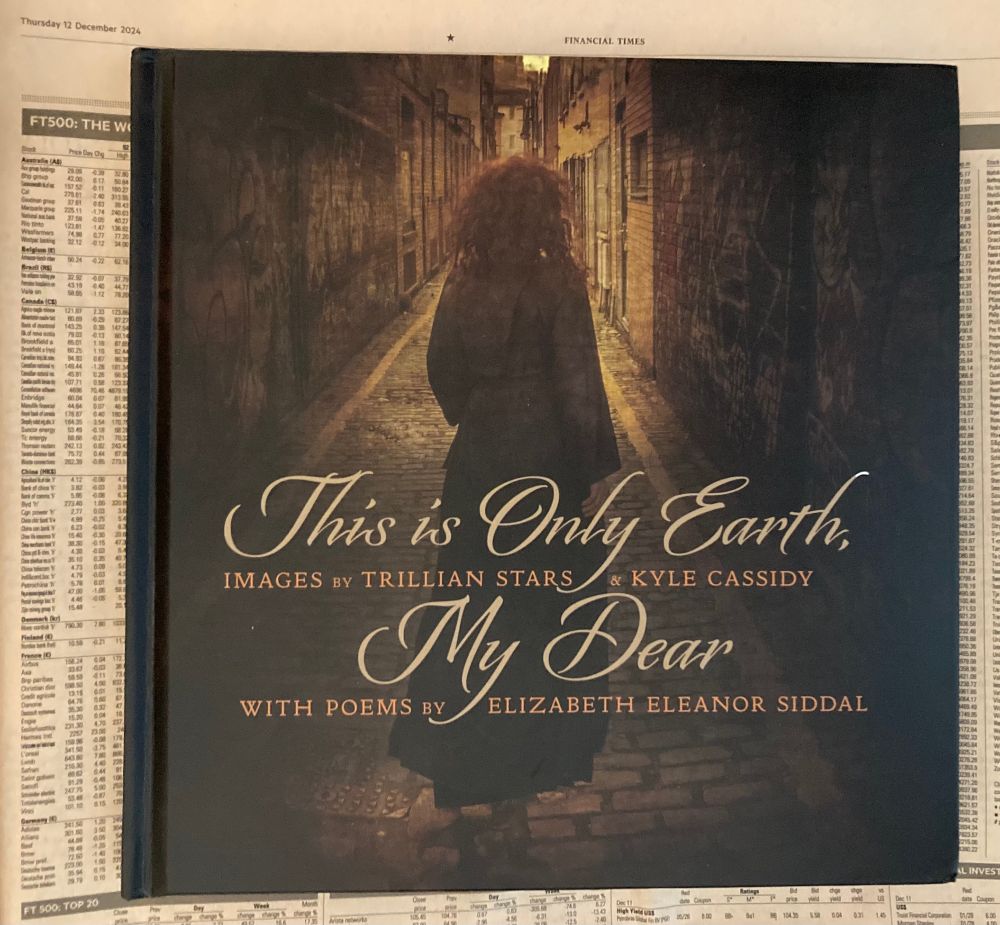
— This Is Only Earth, My Dear. Images by Trillian Stars & Kyle Cassidy with poems by Elizabeth Eleanor Siddal. Laurel Tree Press, [2024].
Selection of poems by artist Lizzie Siddal (1829-1862) and photographs in and around east London by Kyle Cassidy, with a smouldering Victorian palette. A delightful pre-Raphaelite counterfactual : what fun !
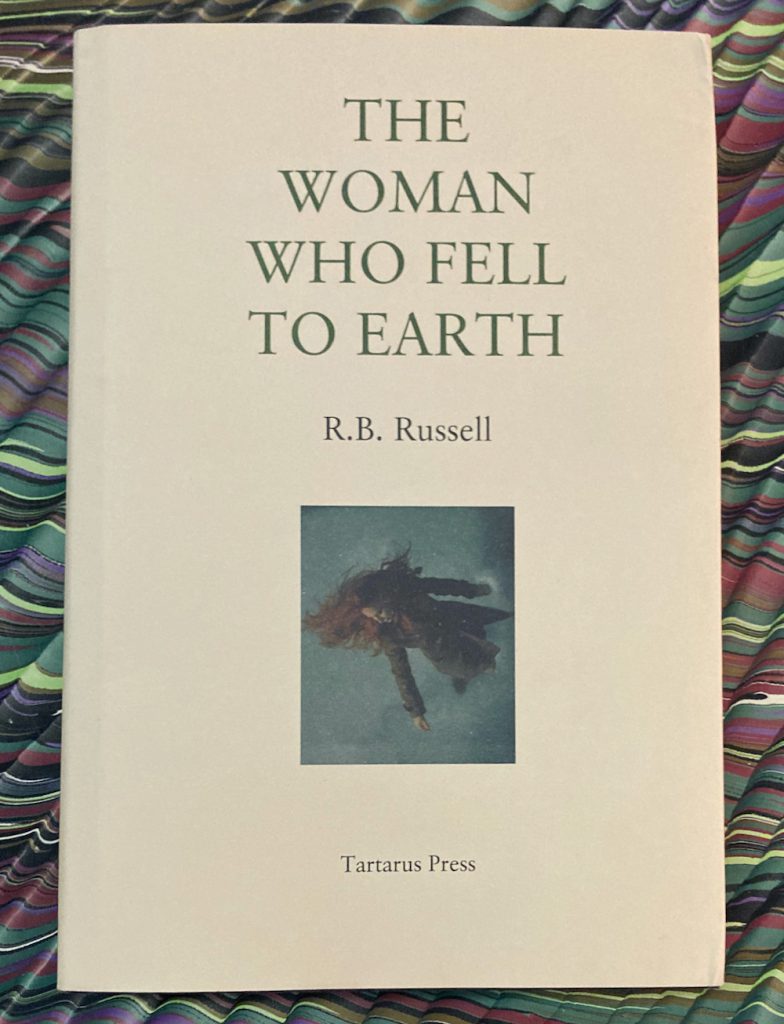
— Ray Russell. The Woman Who Fell to Earth. Tartarus Press, [2024].
A wild short novel of doublings, tricks of memory, serious ontological ambiguities, and the perils of close involvement in the life and writings of a neglected author. Tanya and Caroline were friends from university days, though Caroline had become reclusive after her husband’s death. Caroline, literary executor of one hit wonder and horror novelist Cyril Heldman, had resurrected his name and formed an online community of readers (we see a bit too much of the hostile behavior that such small stakes games can provoke). Caroline gets back in Tanya’s life when she lands on Tanya’s roof: a corpse fallen from the empty sky. At the heart of the novel is and a house in Wales where time stands still, and the the Sixtystone, the object from Arthur Machen’s “Novel of the Black Seal”, which confers dangerous powers upon those in proximity. The resolution is deeply shocking, sudden and unexpected and seamlessly integrated into the narrative, even if some of the interesting implications are not fully explored. The ending is restorative and curiously cozy, almost pastoral.
— — —
(MELVILLE, HERMAN). Melville’s Billy Budd at 100. A Centennial Exhibition at the Grolier Club and Oberlin College Libraries. Introduction and Descriptions by William Palmer Johnston. Frontispiece portrait of Melville by Barry Moser, color plates. The Grolier Club, 2024.
— Herman Melville. Billy Budd and Other Prose Pieces. Constable, 1924.
——. John Marr and other Sailors with some Sea Pieces. DeVinne Press, 1888.
2024 is the centenary of Melville’s Billy Budd, and there have been many phases in the year-long celebration. The catalogue of the Grolier Club show is well worth looking for. I was delighted to be a panelist on the symposium organized in connection with the exhibition. These events prompted me to publish A Melville Census, a bibliographical work looking at the last two books published in Melville’s lifetime : https://temporary-culture.com/product/henry-wessells-melville-census/#310899
It also prompted me to go back to primary sources, and so, on a recent visit to the Lilly Library, I re-read John Marr, a book of ghosts and roll-call of the dead. The whole book speaks to Billy Budd, especially the quip of Captain Turret, “submission is enough”. De Vere was not so sensible an officer. There are other things I noticed which will require more time to contemplate ; these thoughts will show up in an essay sometime.
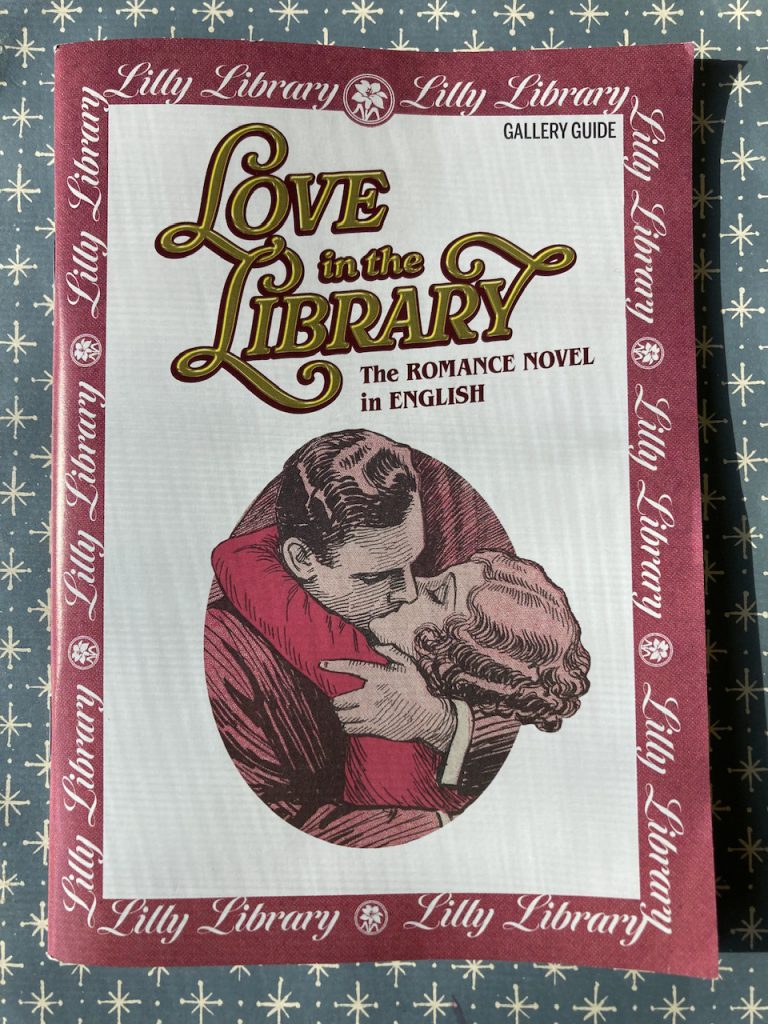
— Romance in the Library. The Romance Novel in English. Gallery Guide. [Cover title]. Illustrated. [64] pp. The Lilly Library, [2024].
Curated by Rebecca Baumann, this remarkable exhibition, Romance in the Library, likely the first of its kind, charts a revisionist history of English literature, with emphasis on women as readers of novels from the eighteenth century to the present, and claims an oft-scorned modern-day marketing genre construct — the romance novel — as a badge of honor. In the heyday of the gothic, which included the sentimental as well as the historical and supernatural, writing novels was an economic activity open to women even while the reading of them by women (especially young women) was viewed as unsuitable. Baumann’s retrospective claim is an assertion that works pretty well, but one has to abandon one’s preconceptions to find more than superficial kinship between The Wild Irish Girl or Pride and Prejudice and modern formula fiction. The shift from novels aimed at a genteel readership to a vast popular appetite for novels of romantic entertainment is rooted in greater educational opportunities for women at all economic levels and the nineteenth-century achievement of near universal literacy. A welcome and provocative exhibition.
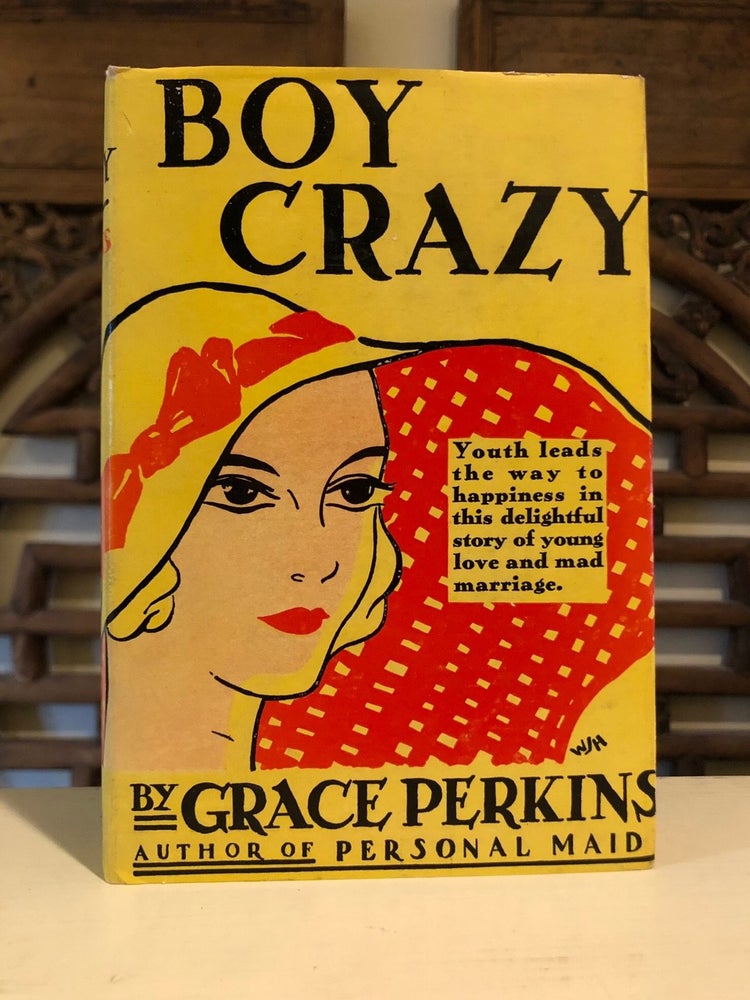
Jane Austen’s Pride and Prejudice (1813) is in original boards, untrimmed. The stylish yellow and red dust jacket* for Boy Crazy by Grace Perkins (1931) is spectacular (and it’s inscribed to Upton Sinclair)! I wish I had taken a picture.
[lightly edited for clarity 16 Nov.]
* here’s an image of another copy of the book :
Grace Perkins. Boy Crazy, 1931. Dust jacket by WJH. Courtesy of Long Bros., Seattle.
— — —
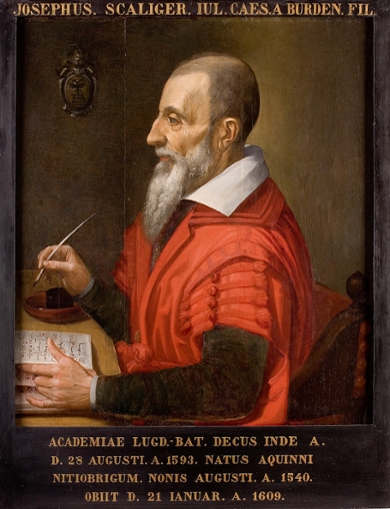
— Kasper van Ommen. Joseph Scaliger. His Oriental library, and the meaning of scholarship. [Cover title]. Illustrated. Brill, [n.d.].
——. Josephus Justus Scaliger. Sieerad van de Academie. Ornament of the Academy. [Cover title]. Text in Dutch and English. Illustrated. [Universiteit Leiden, 2020].
Two illustrated monographs on the great sixteenth-century polyglot and polymath Joseph Scaliger (1540-1609).
— — —
— The Dagon Collection. Auction Catalogue of Items Recovered in the Federal Raid on Innsmouth, Mass. Edited by Nate Pedersen. Cataloguing by Rebecca Baumann, with assistance from Jonathan Kearns. Illustrations by Liv Rainey-Smith and Eduardo Valdés-Hevia. Layout and Design by Andrew Leman. [PS Publishing, January 2024].
A catalogue of imaginary objects, rigorously described, with their history in vignettes by a wide variety post-Lovecraftian authors. Lot 13, The Geometry of Nowhere, is a dizzying book ; and lot 33, the Tiffany Lamp, is an unsettling piece.
— — —
— Michael Connelly. City of Bones. Dennis McMillan, 2002.
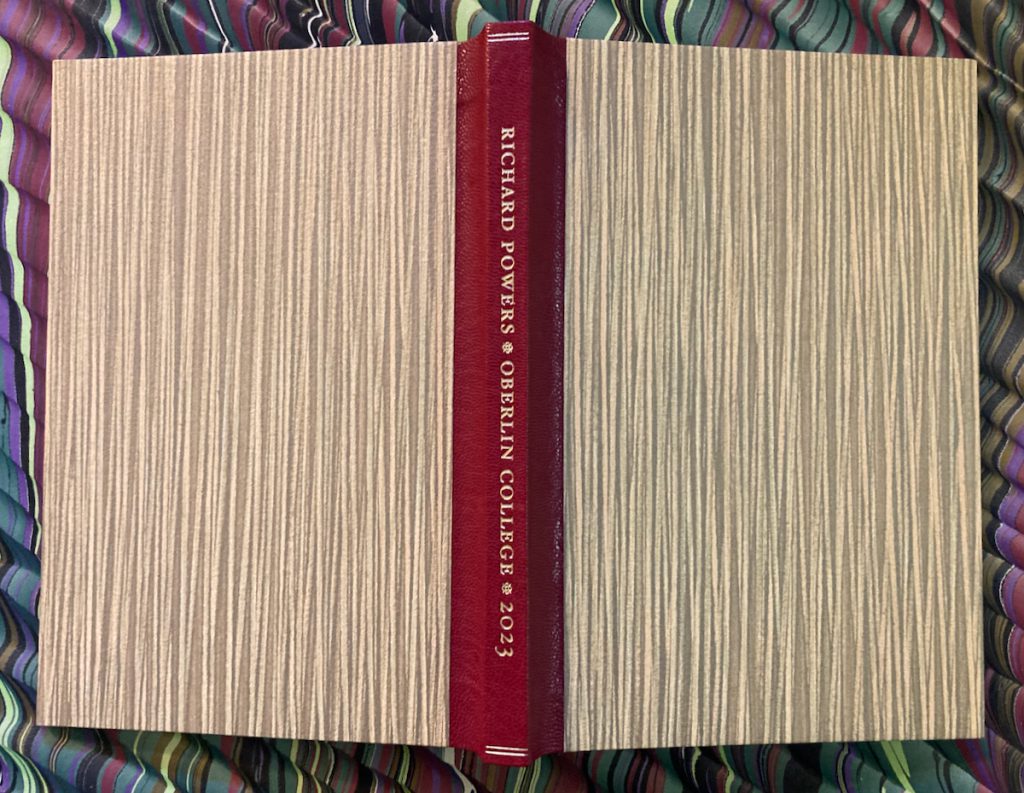
— Richard Powers. The Future Is behind You. Oberlin Commencement Address 2023. The Letterpress at Oberlin, 2023. One of 14 copies, specially bound (edition of 105, all signed by the author). [Gift of VH].
“It may feel like a catastrophe. And yet it may also be the most clarifying thing, if you can step back and read it as part of a story that is much more than yours.”
— — —
‘stealthy book killers’
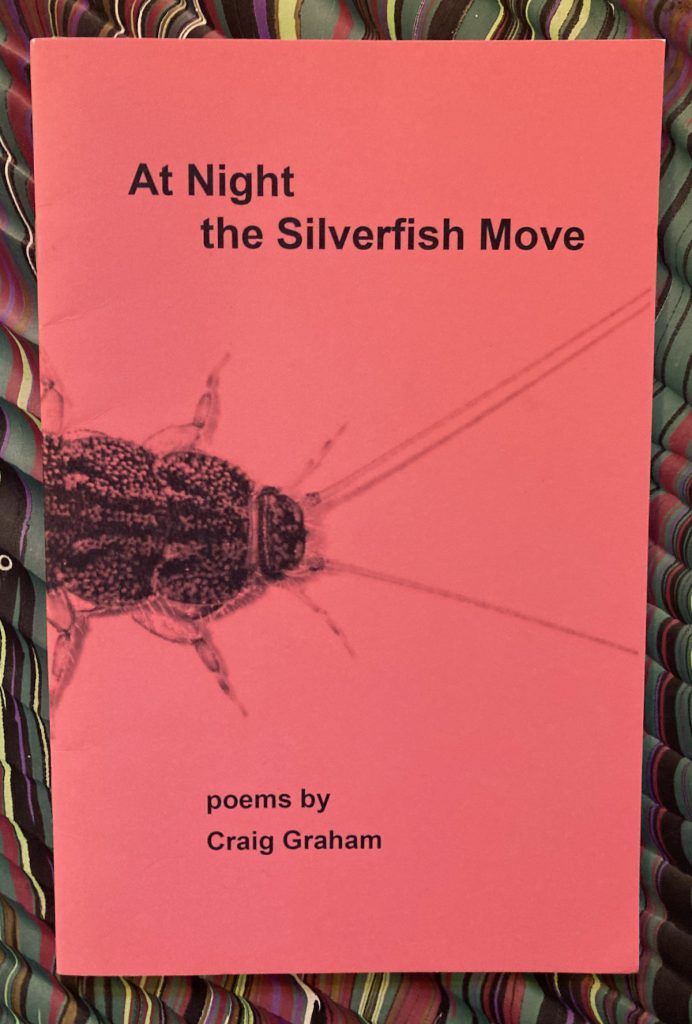
— Craig Graham. At Night the Silverfish Move. Vagabond Books, 2023.
Snappy collection of three poems by bookseller Craig Graham: the title poem, “At Night the Silverfish Move (For Raymond Carver In Memoriam)”, dark, lethal, and funny; the predatory “Waiting for You”; and ending on the wistful optimism of “Juneteenth”. Graham is also author of Phantom Pain (2014). [Gift of the author].
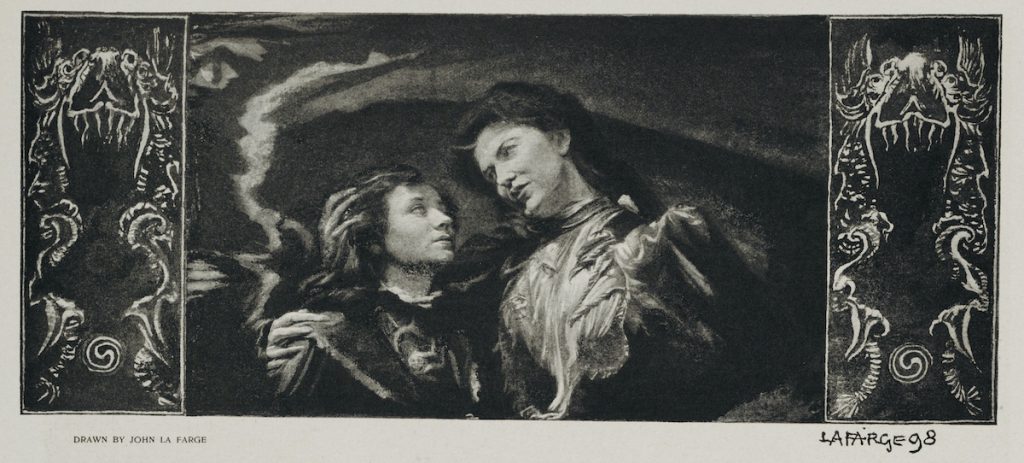
— Henry James. The Turn of the Screw [1898]. Edited with an introduction and notes by David Bromwich. Penguin Books pbk.
The original serial publication, in Collier’s Weekly, had illustrations by John La Farge :
John La Farge for Collier’s, via Beinecke Library
— — —
— Walter Klinefelter. The Fortsas Bibliohoax [1941]. Revised and Newly Annotated. Press of Ward Schori, 1986.
Anatomy of a celebrated and supremely successful hoax, a book auction catalogue from Belgium, 1840 : the collector, the books, the auction, entirely fictitious ; the original catalogue is now itself a rare book.
— Kasper van Ommen. “The Einstein of the sixteenth century”, in : Books That Made History. 26 Books from Leiden That Changed the World. Edited by Kasper van Ommen and Geert Verhoeven. [Translated by Claire and Mike Wilkinson]. Brill, 2022.
Excellent essay on J. J. Scaliger (1540-1609), polyglot scholar of classical and near eastern languages, whose Opus de emendatione temporum (1598) integrated astronomy and history from Jewish, Babylonian, Persian and Egyptian sources as well as Greek and Roman works ; “he also incorporated the latest astronomical understandings of Nicolaus Copernicus (1473-1543) and Tycho Brahe (1546-1601)”. Scaliger came to Leiden University with his library in 1593; it soon grew, and has been kept there ever since. Your correspondent is the lowest amateur polyglot in the presence of such erudition; there were some remarkable books on view during a visit last week (including a presentation inscribed from Brahe to Scaliger).
A summary note on Scaliger’s career by van Ommen on the University website (Dutch for ‘grouch’ is brompot), Josephus Scaliger : famous scholar and grouch
— — —
— Janwillem van de Wetering. Hard Rain [1986]. Soho paperback, [1997].
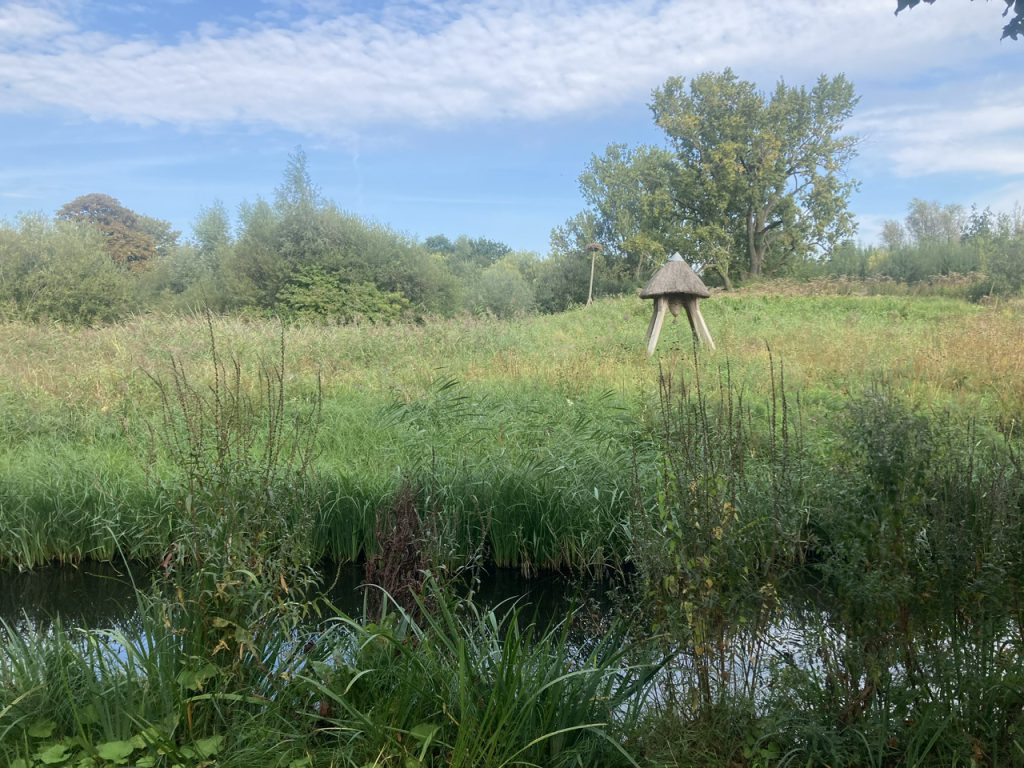
Had to pick this one up again, an old favorite by an old friend, for a re-read now that I have been to Amsterdam, and have walked and bicycled along the canals and into the Amsterdamse Bos. It was a Depression-era landscaping project around the Olympic rowing basin of 1928 and is now a mature city forest and a green lung in the midst of a densely populated zone.
— — —
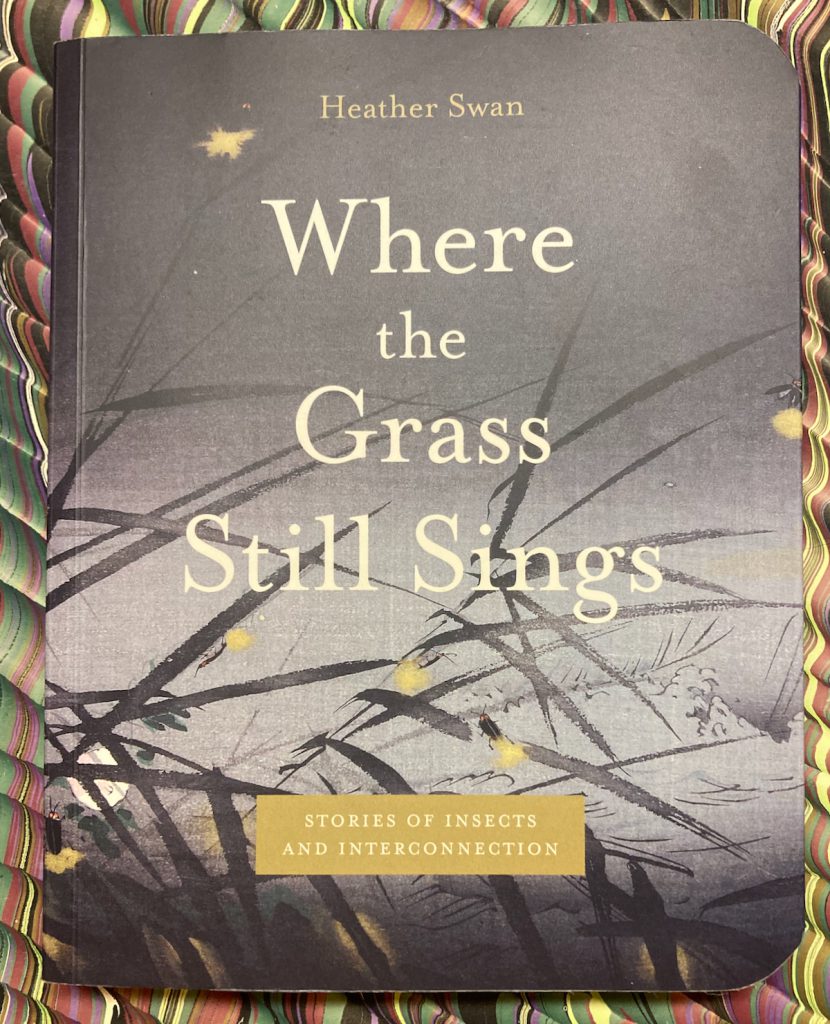
— Heather Swan. Where the Grass Still Signs. Stories of Insects and Interconnection. Pennsylvania State University Press, [2024].
Memoir and travelogue on insects and landscapes from the rural midwest to Colombia and Ecuador, richly illustrated with works by contemporary artists. Seen in the window of Architectura & Natura, an inviting bookshop on Leliegracht in Amsterdam.
— Christian de Pange. Le Bréviare du Quintivir. Une enquête bibliographique en Franche-Comté. [Lusove: Imprimerie de Bacchus] Pour la Société des Bibliophiles Francois, 2022.
Bibliographical account of a private social club in Vesoul in rural France at the turn of the nineteenth century, and their festive book, printed circa 1813 for the five members. The bibliographer has traced three copies to the present day; a fourth copy was last seen in 1896. Edition of 100 copies, from the author.
— Choosing Vincent. From family collection to Van Gogh Museum. Lisa Smith and Hans Luijten (eds.). Van Gogh Museum / Thoth Publishers, [2023].
— Emile Schriver and Heide Warncke. 18 highlights from Ets Haim, the oldest Jewish library in the world. Walburg Pers, [2016].
Illustrated selection of books and manuscripts from the Portuguese Synagogue in Amsterdam (founded 1616).
— — —
— Avram Davidson and Grania Davis. A Goat for Azazel. [Afterword by Michael Swanwick]. Dragonstairs Press, forthcoming 5 September 2024. Edition of 80 copies, stitched in mourning lacework paper wrappers, signed by Swanwick.
Reproduces the text of a proposal for an Eszterhazy “ghost novel” (circa 1993 or 1994), with a note by Michael Swanwick, whose friendship back then encouraged my researches and the formation of the Avram Davidson website.
— Nancy Isenberg. White Trash. The 400-Year Untold History of Class in America. [With a new preface to the paperback edition]. Penguin, [2017].
The persistence of early modern English hierarchies and economic structures from the earliest beginnings of the enterprise. Dispossession, servitude, and the upward concentration of wealth.
The Endless Bookshelf will be filing despatches from Amsterdam and environs during the week of the A.I.B congress (words and images dropped in here as found).
— — —
things are symbols of themselves / semiotics of Amsterdam
— — —
vegan potato truffle cappuccino
[surprise innovation offered during the medley of the Daalder experience, vegan mode]
— — —
Vondelpark
— — —
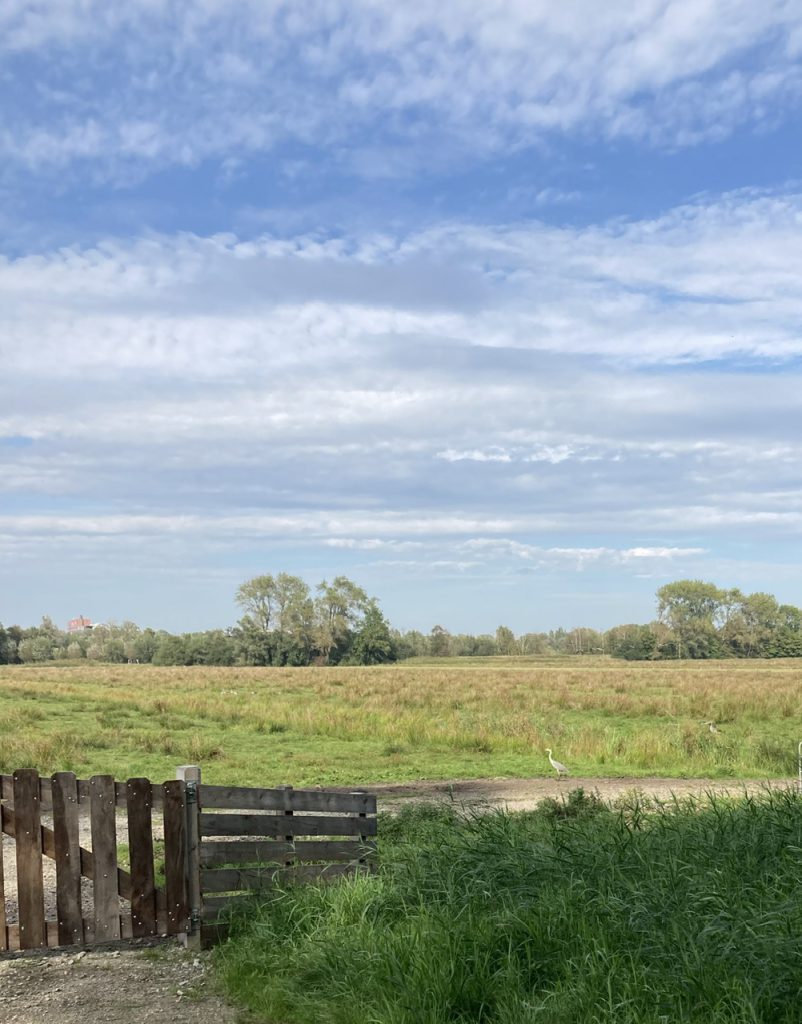
Watcher at the edge of the cow pasture, in the Amsterdamse Bos.
— — —
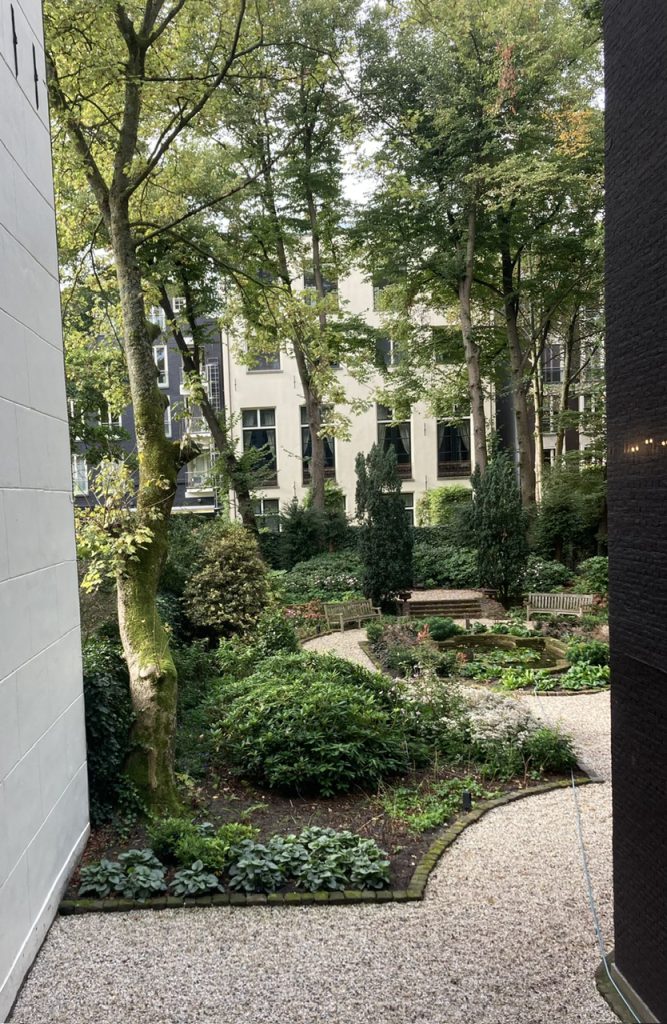
Herengracht
— — —
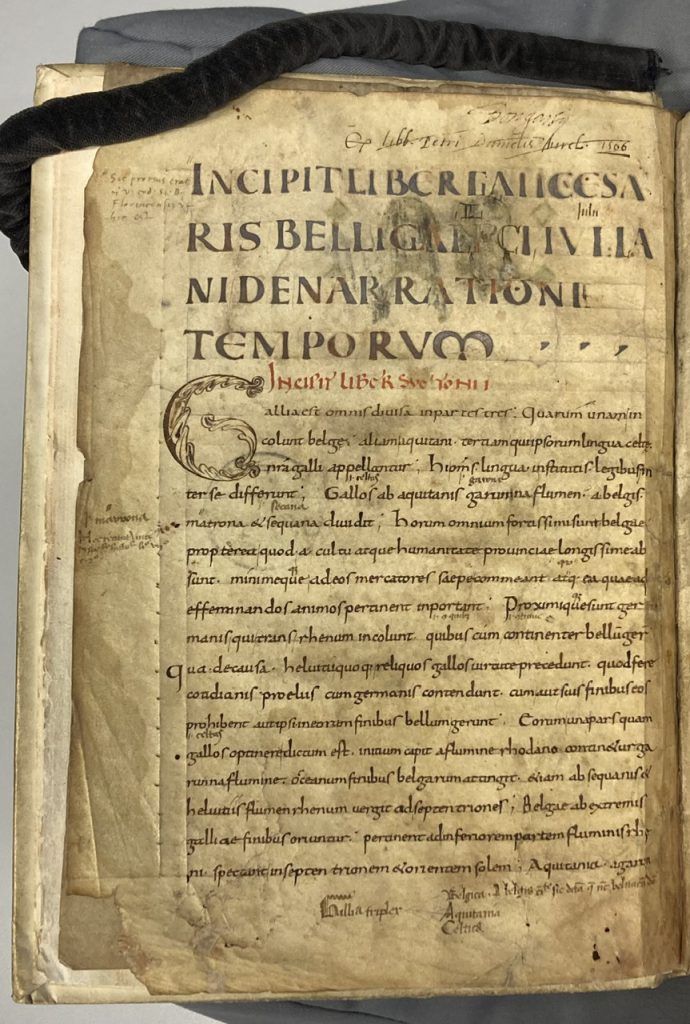
‘Gallia est omnis divisa in partes tres’
The earliest surviving manuscript of Caesar’s De bello gallico (On the Gallic War), ca. ninth century CE, at the Allard Pierson collection, University of Amsterdam.
At the other end of the table, a stack of more than 80 ‘feuilles volantes’ (1916-28) of Kaváfis (Cavafy), scattered leaves of his self-published Poems.
— — —
Breestraat, Leiden
— — —
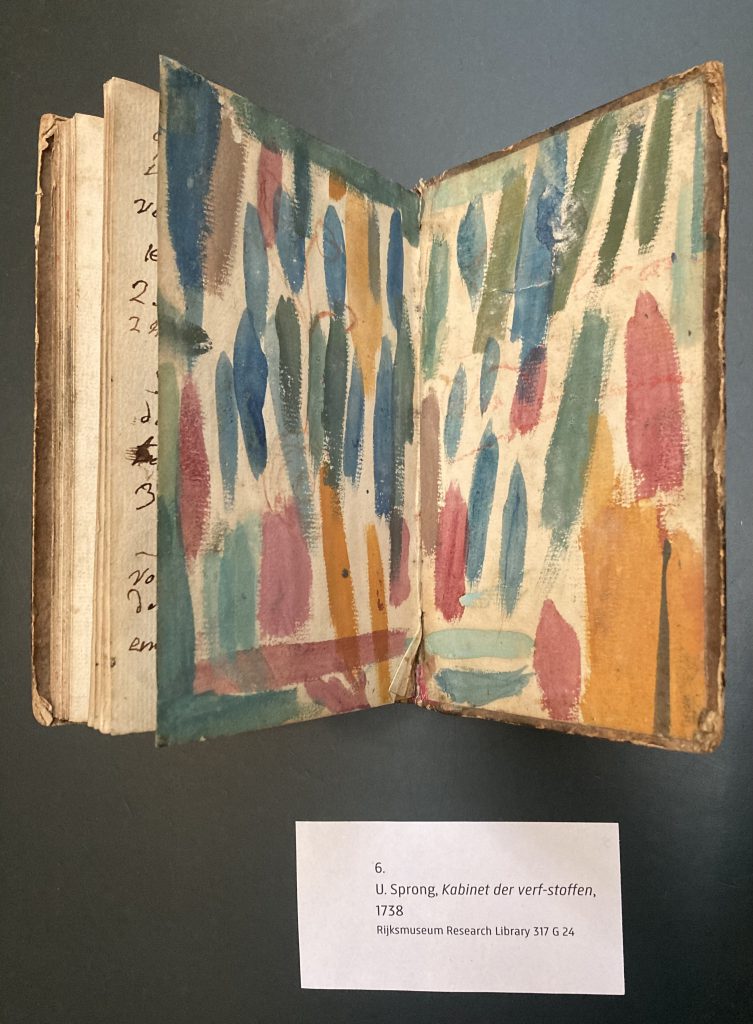
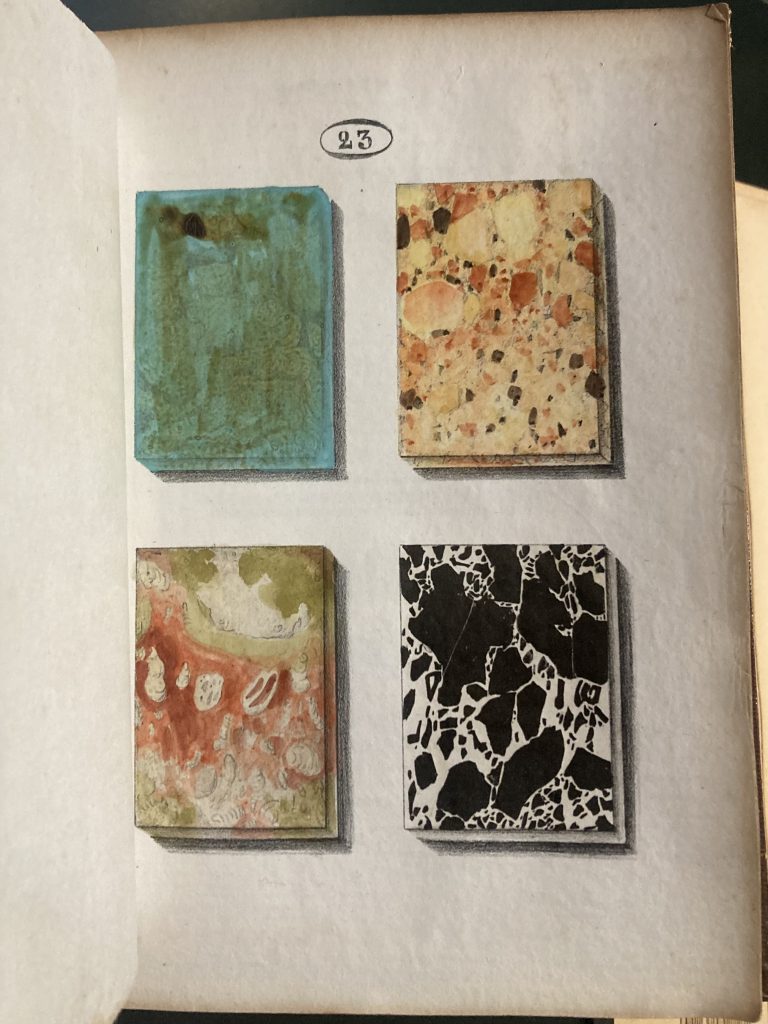
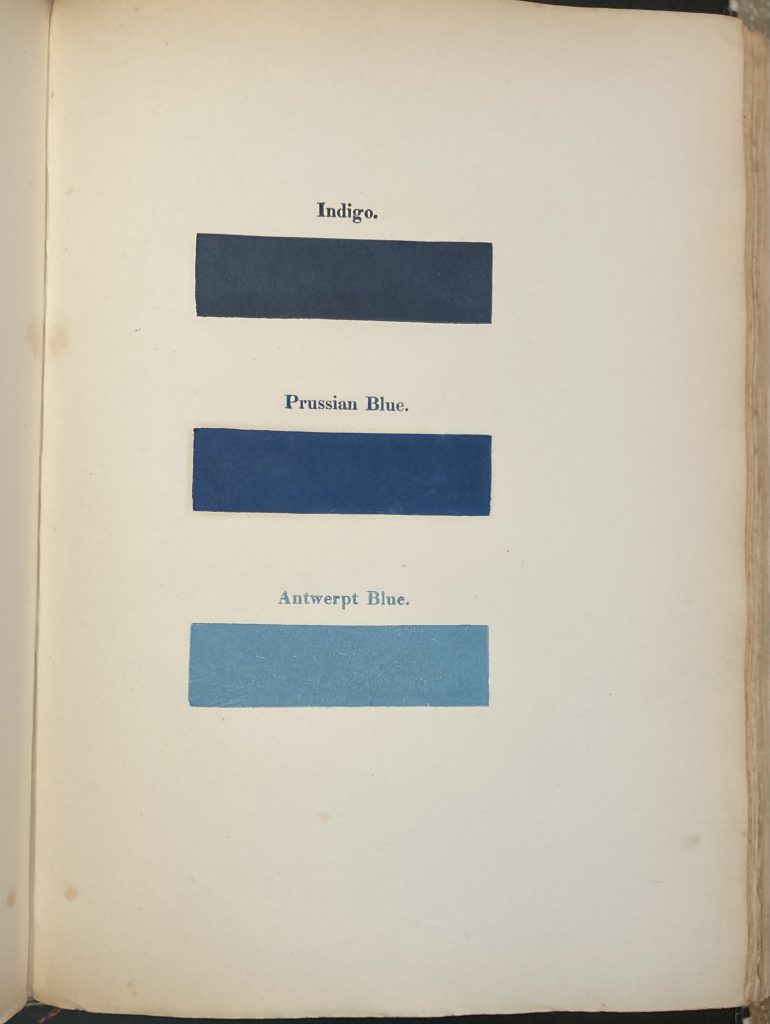
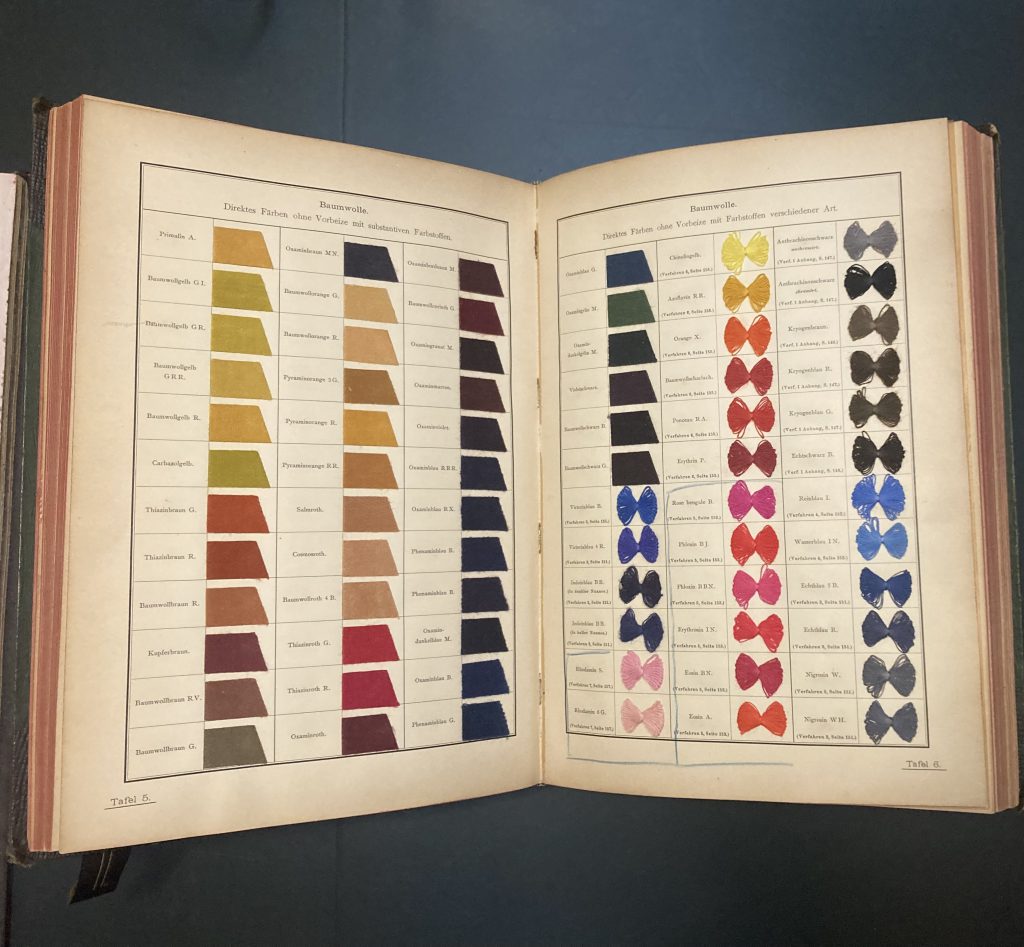
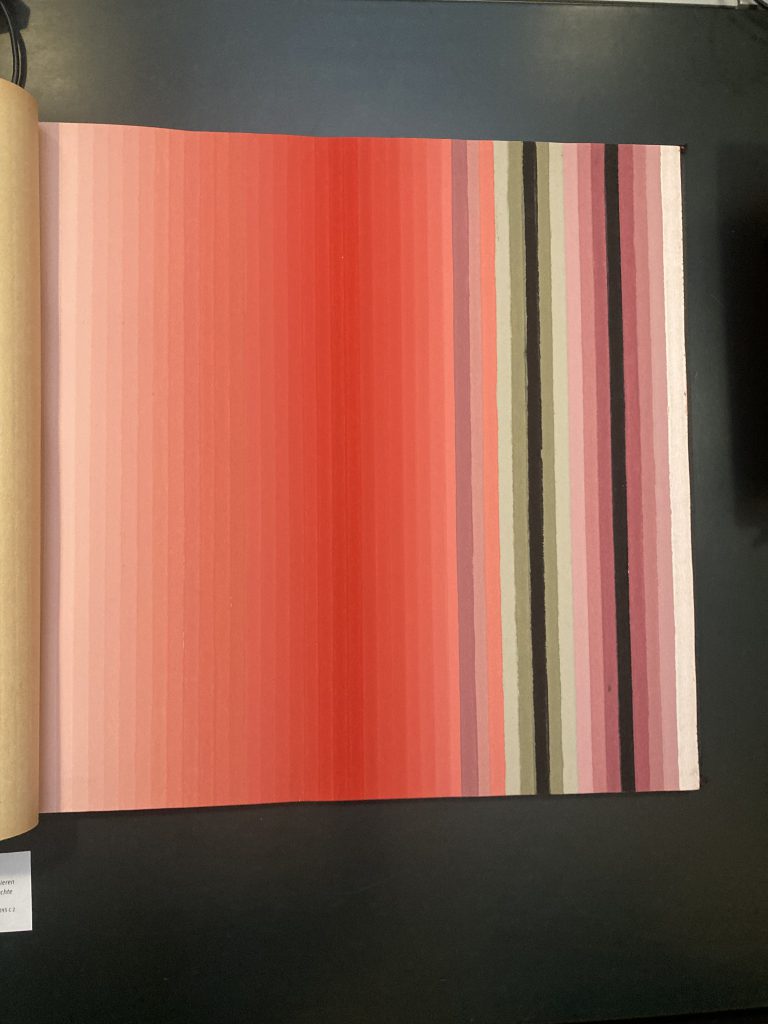
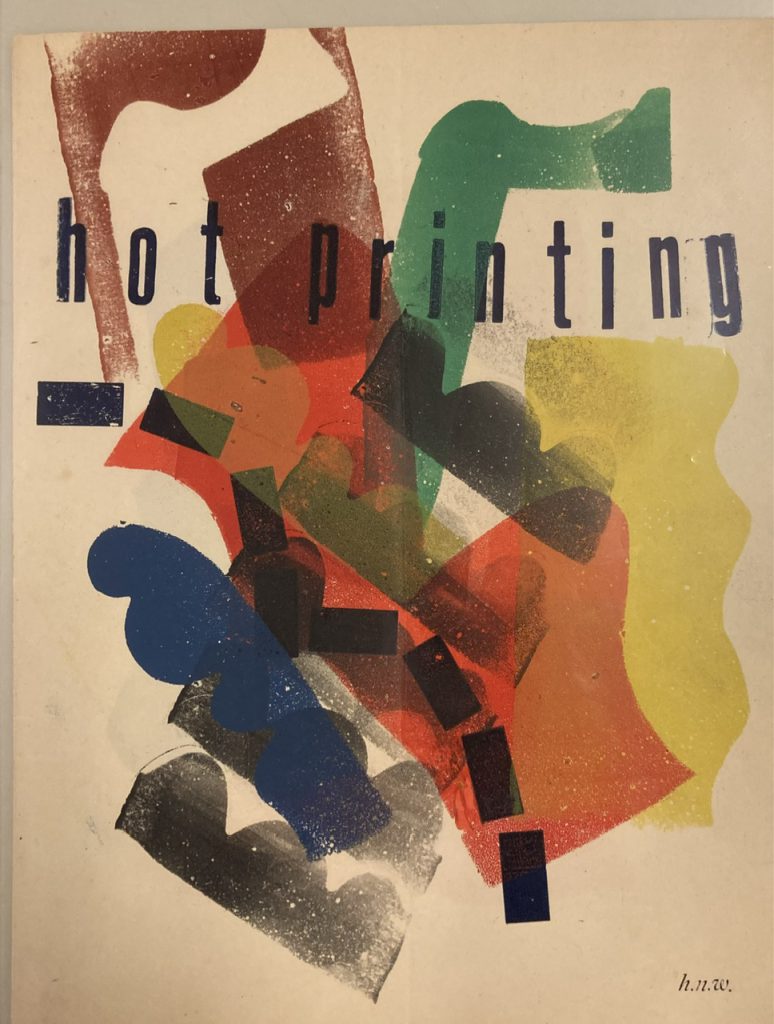
color in the Rijksmuseum library
— — —
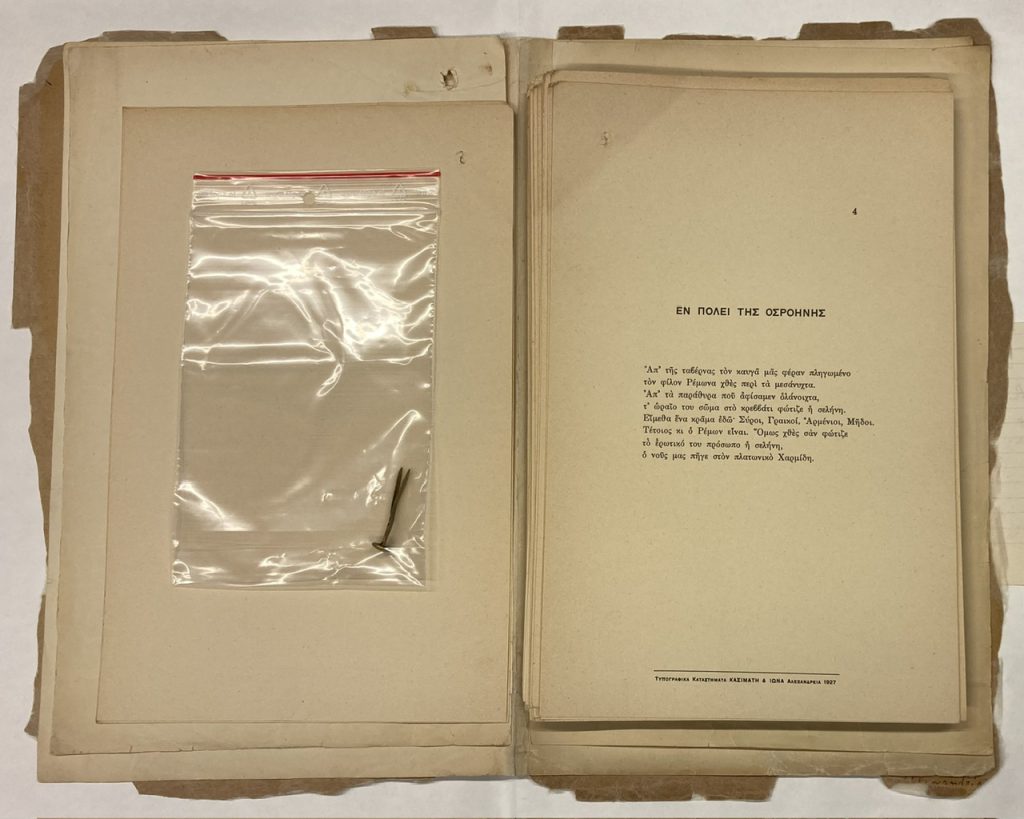
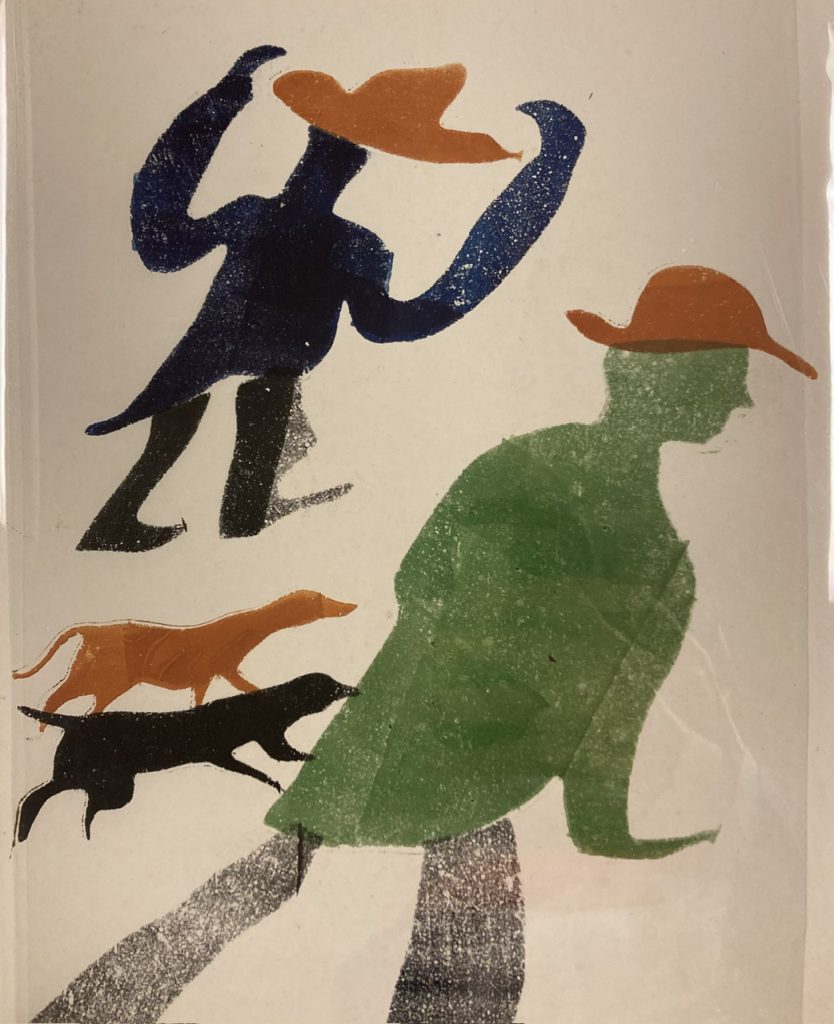
— H. N. Werkman. Hot Printing. [Groningen, ca. 1936]. One of three known copies of a portfolio of prints and poems.
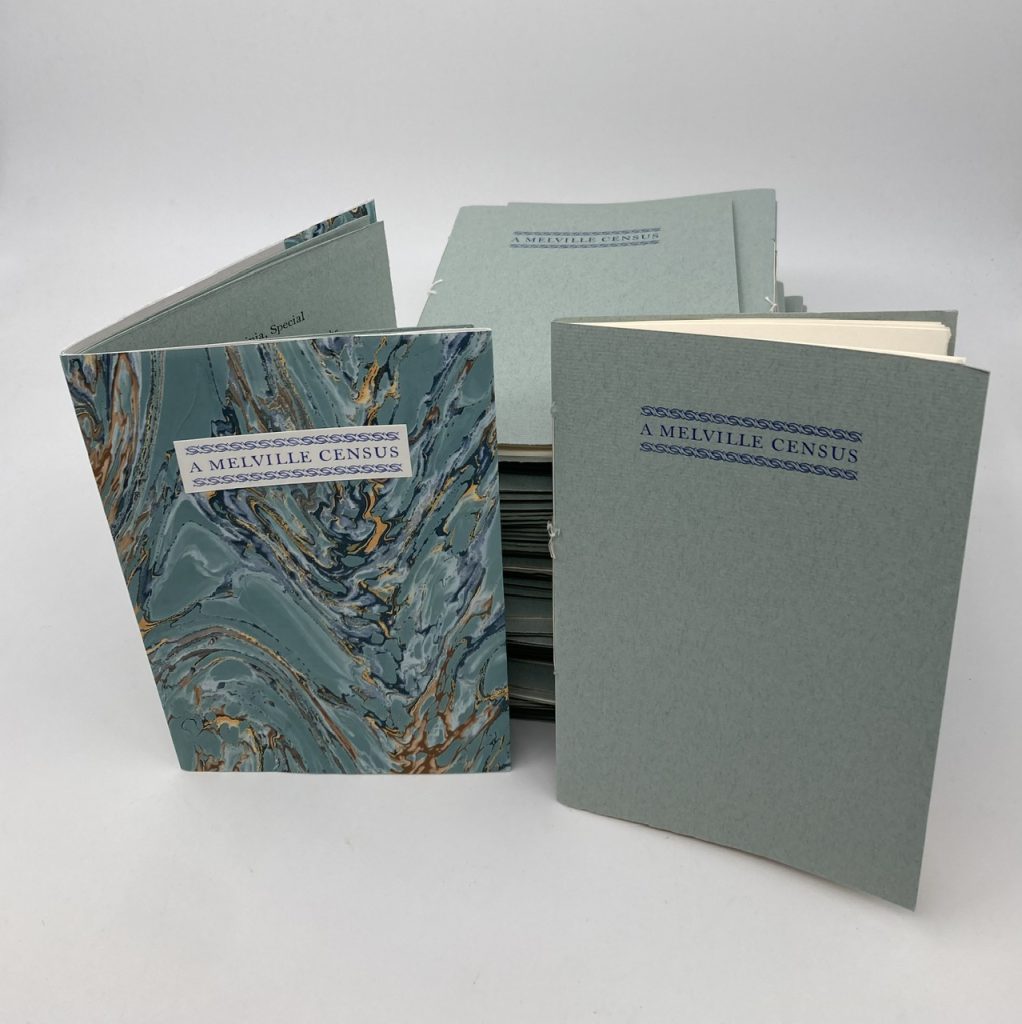
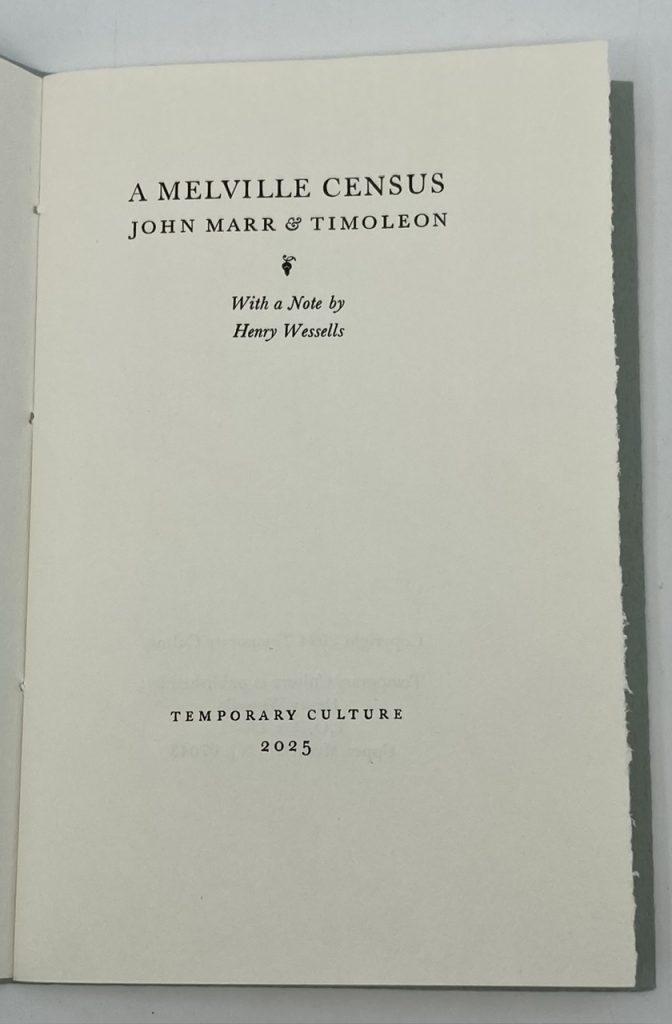
A Melville Census. John Marr & Timoleon. With a note by Henry Wessells.
Edition of 52 copies, designed and printed by hand by Jerry Kelly.
Published 8 January 2025. Sold out (updated 6 March 2025).
This is just what it sounds like : a report on the location of all known copies of Herman Melville’s John Marr (1888) and Timoleon (1891), the two last books of poems (each printed in editions of 25 copies), with a note about Maurice Sendak, Bill Reese, and others. Of the 52 copies printed, 26 lettered copies were reserved for presentation (one copy for the author, printed on blue paper, can be glimpsed at left above). Bibliographical details here.
Your correspondent will be attending Armadillocon in Austin this weekend (6-9 September). I will be at the Howard Waldrop memorial on Saturday afternoon, and at other events. Say hello if you see me.
— — —
Tartarus Press have announced publication of a fifth collection of essays by Mark Valentine, The Thunderstorm Collectors, 29 recent pieces, some previously unpublished, on authors of the supernatural, book collecting, and some lesser-known byways of English life and letters. I look forward to seeing it.
— — —
“Melville’s Billy Budd at 100”, a new exhibition, opens next week at the Grolier Club in New York City. It will be worth a look.