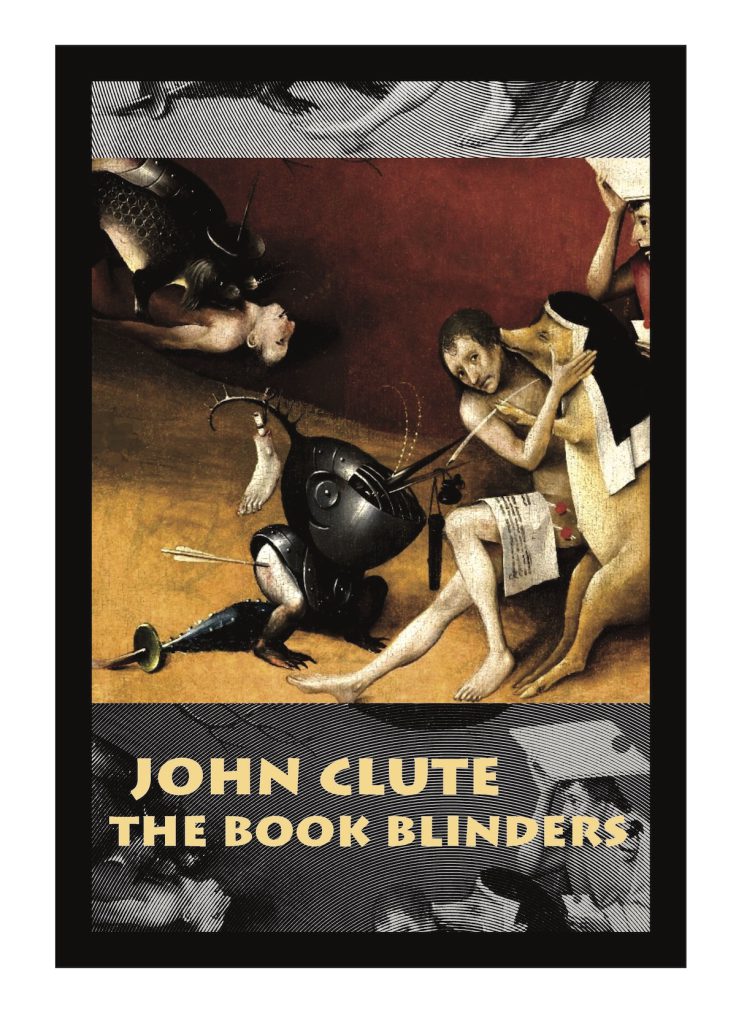
— John Clute. The Book Blinders. Annals of Vandalism at the British Library: A Necrology. Illustrated throughout. 499, [1, errata] pp. Norstrilia Press, [2024].
There has been a steady production of scholarship on the history of the publisher’s dust jacket in the past fifty years. These ephemeral pieces of paper encode all manner of information about the moment in time and both how publishers perceived their wares and how they wanted the reading and book-buying public to receive the newly published books. Much emphasis has been on nineteenth-century jackets in recent research, including in G. Thomas Tanselle’s Book-Jackets: Their History, Forms, and Use (2011), which updates work he first published in 1971, and Mark Godburn’s Nineteenth-Century Dust-Jackets (2016). And yet it is really in the early twentieth century that jackets proliferate and assume the form and function we now understand. Vast conceptual leaps in design and presentation of information occur in the interval between The Wind in the Willows (1908) and What Not (1918/1919) or In Our Time and The Great Gatsby (both 1925). And yet this is not solely the province of literary high spots. Across all types of literature, the dust jacket functions as the outer face of the book. Clute’s title, The Book Blinders, is descriptive of the practical effect for the reader of a long-standing institutional policy of discarding dust jackets or separating the jacket from the book and storing them elsewhere, uncatalogued. This policy prevailed at the British Museum (later British Library) and at other depository libraries from the emergence of the dust jacket and continued for most of the twentieth century. With more than 100 examples of dust jackets not in BL (from the years of the first world war through 1990), John Clute documents the importance of the dust jacket and considers the implications of this vandalism from within. How about these three or four: Rose Macaulay, What Not (1918), a tale of eugenics and privilege, suppression of a libellous passage delaying actual publication until 1919 (Clute’s copy is Michael Sadleir’s own, saved from the memory hole); C. E. M. Joad, Priscilla and Charybdis (1924), “undeterred by the gruelling wordplay of the title, [I] took a look, and found found this this on pages 206-207; a seductive Joad-like protagonist is addressing a young woman on a train ride they are sharing: ‘Darling [he purrs], have you ever travelled without a ticket?’” (this one alone is worth the price of admission); or Ezra Pound, Make It New (1934):
Faber (which is to say Eliot) clearly thought it sagacious to wrap in sheep’s clothing the already notorious Ezra Pound’s new publication with its incendiary title: a ticking bomb that needed no bush. But the underlying message cannot be missed: Pound’s title, a modernist wake-up slogan he’d been using offhandedly since 1928, is manifestly inflammatory, once grasped; a challenge to his various enemies who (he maintains) clog the literature pews: an up-yours bombination clearly audible through the enfant-sauvage mask Pound wore until it was too late. This bomb needed to slip through the gates before exploding.
or Robert Graves, The White Goddess (1948), Tom Eliot again; or Lawrence Leonard, The Horn of Mortal Danger (1980); or London Tales (1983), edited by Julian Evans. Clute’s selections are fascinating testimony to the breadth of his reading and collecting and his critical range; the text sparkles with his crunchy and apt vocabulary. It seems almost a homoeopathic distillation: “I’d reckon that out of every 8,000 or so books to arrive at the British Library complete with dust-jacket, I’ve commented here on a maximum of one”. (Excessive candor moment: John Clute is a friend of more than twenty-five years; I am the source for the images of the only jacket not from his own collection.) This is an important book.
———
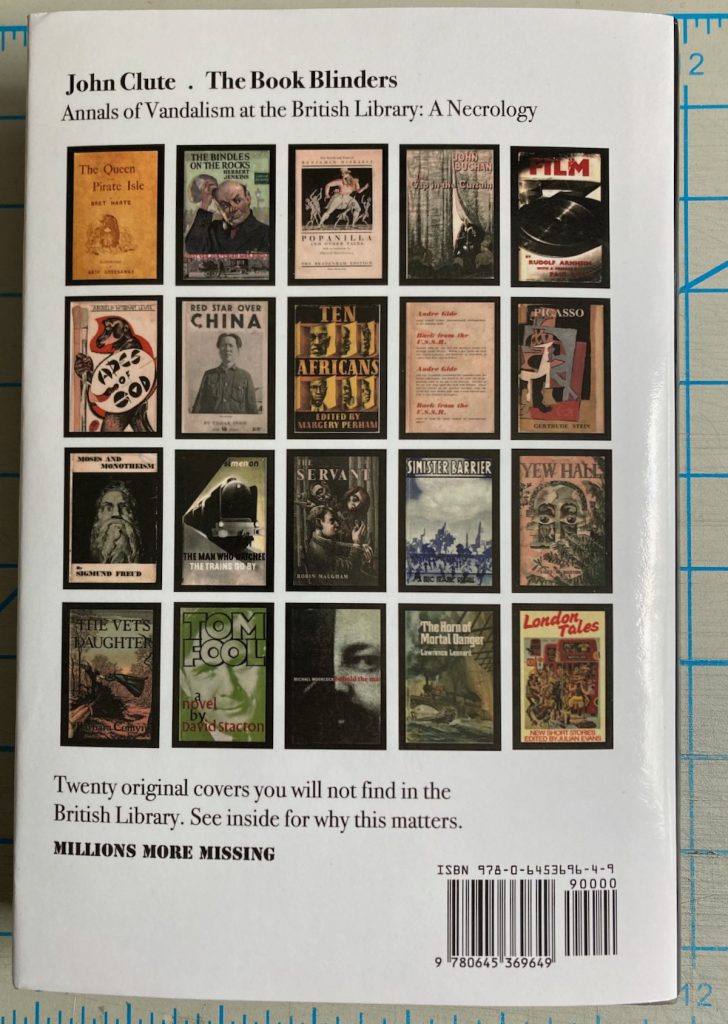
Addendum (3 May): I wrote the notice above after reading digital proofs of the book. Today I have a copy in hand (a print on demand product manufactured in Tennessee on 19 April), and it is nice to see the book in the wild. In the U.S. the book is available from bookshop.org and elsewhere. Oh, yes : The Book Blinders is issued with a dust jacket (designed by Judith Clute). Here is the back panel :
a few snapshots of Paris and a very, very restrained selection of objects seen
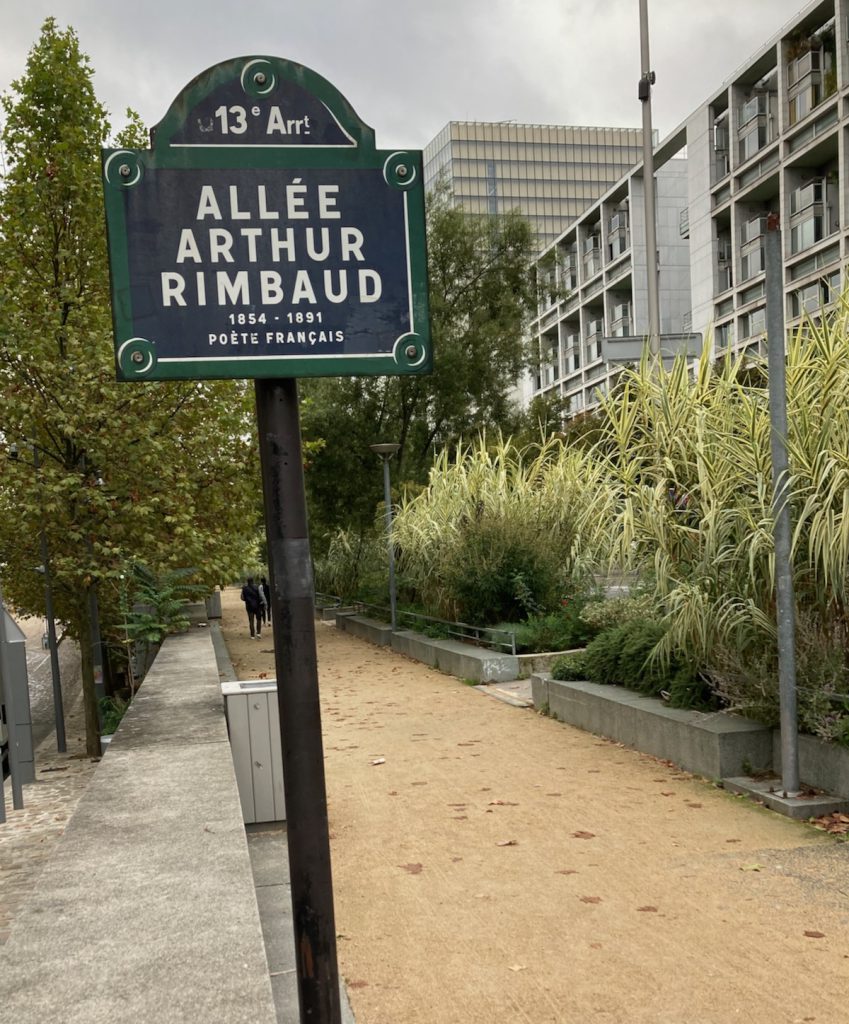
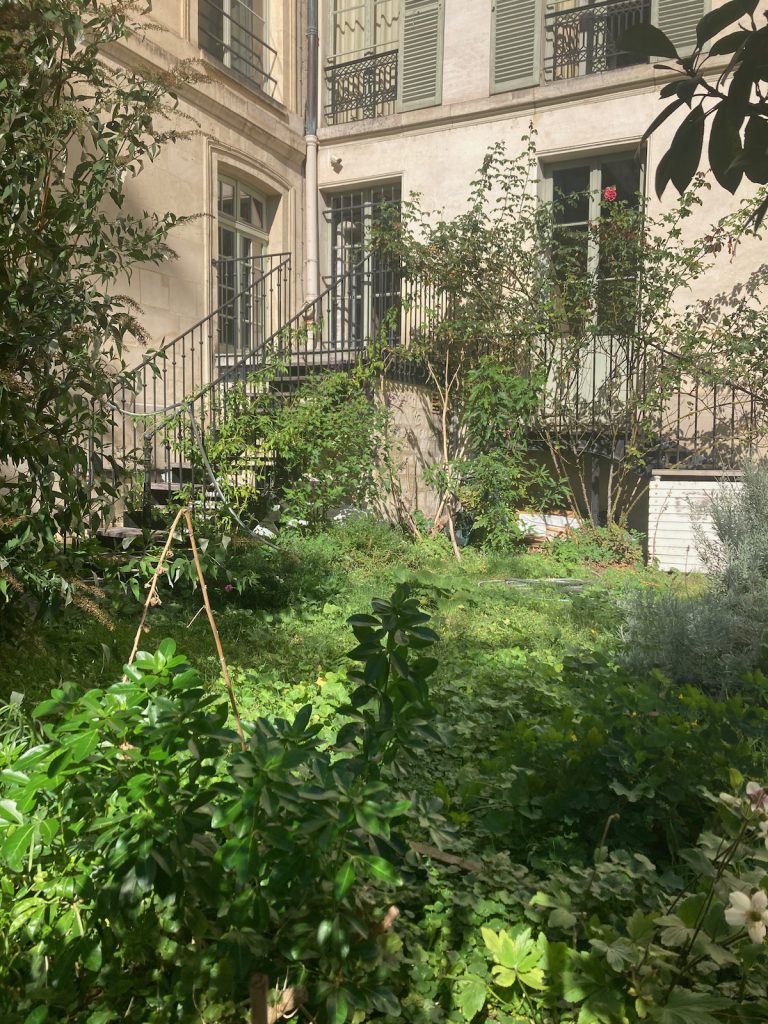
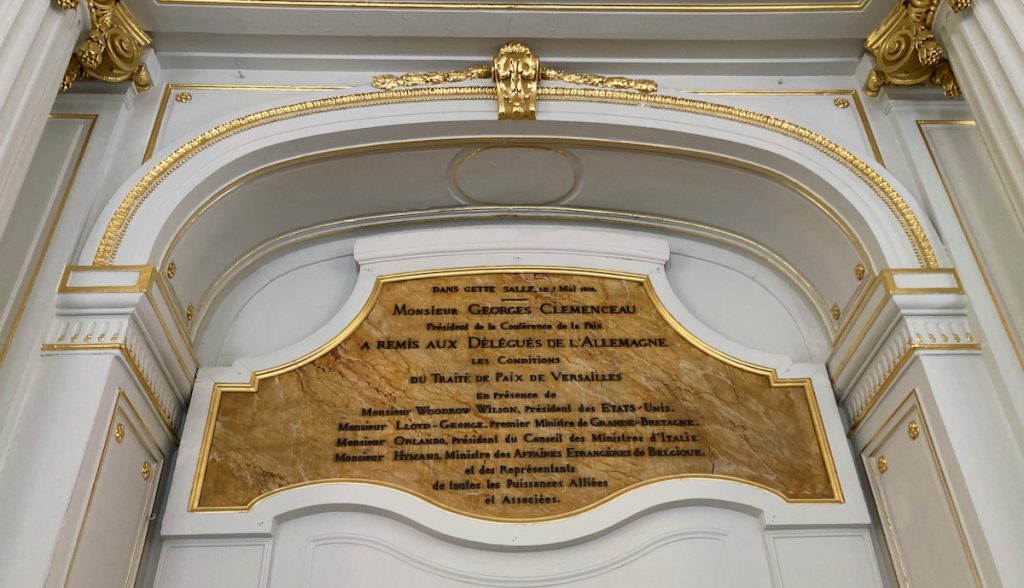
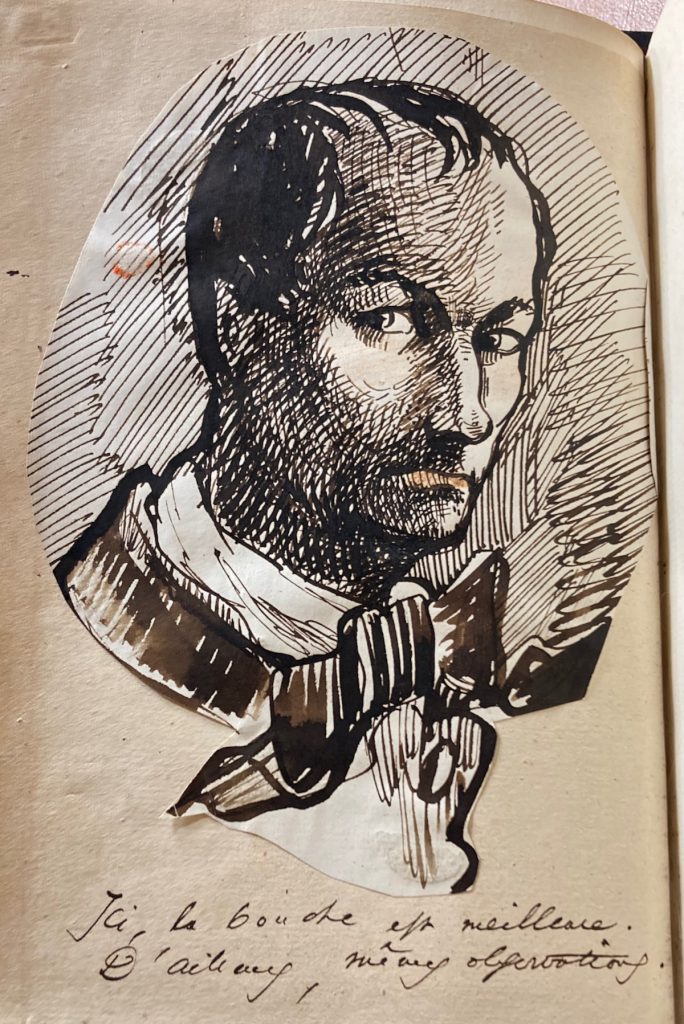
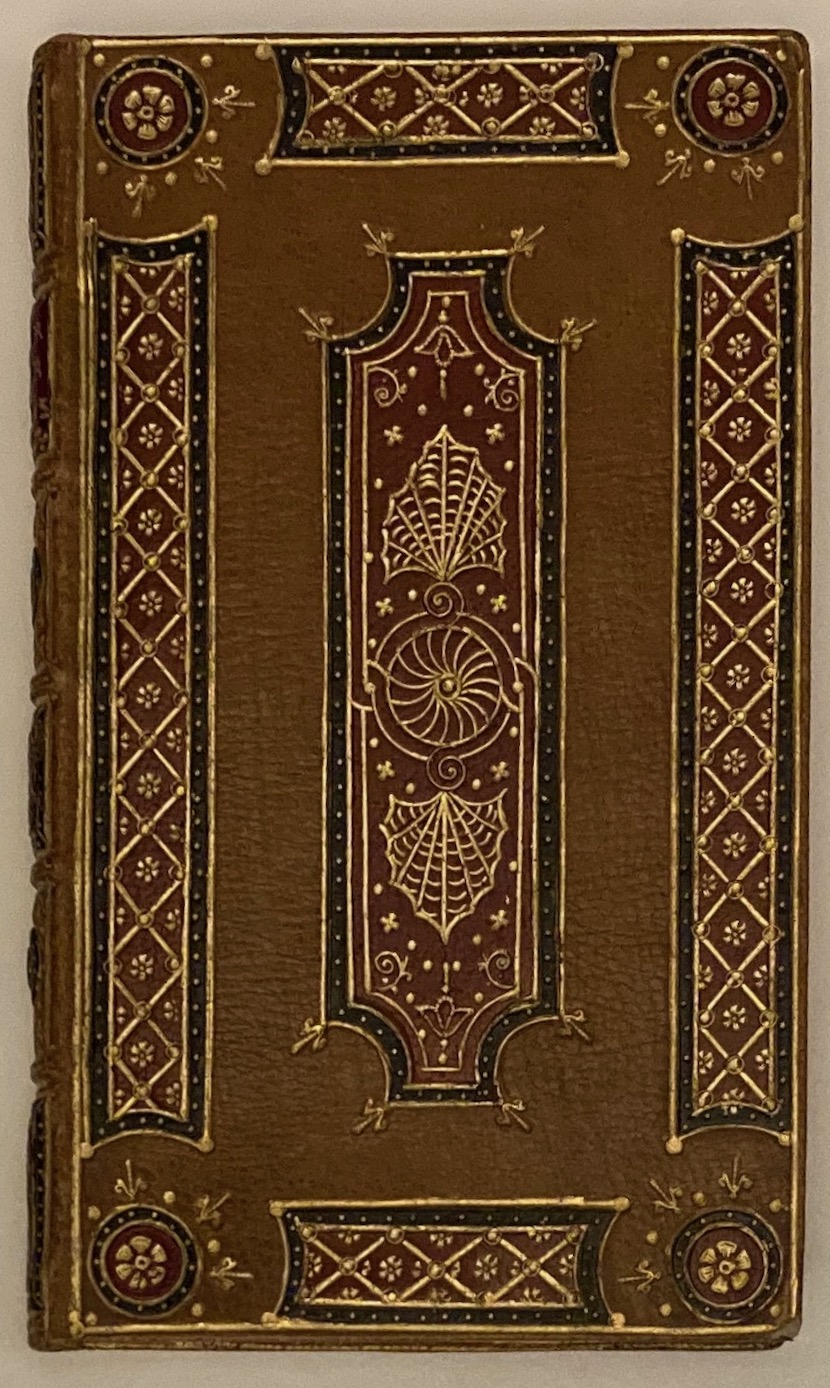
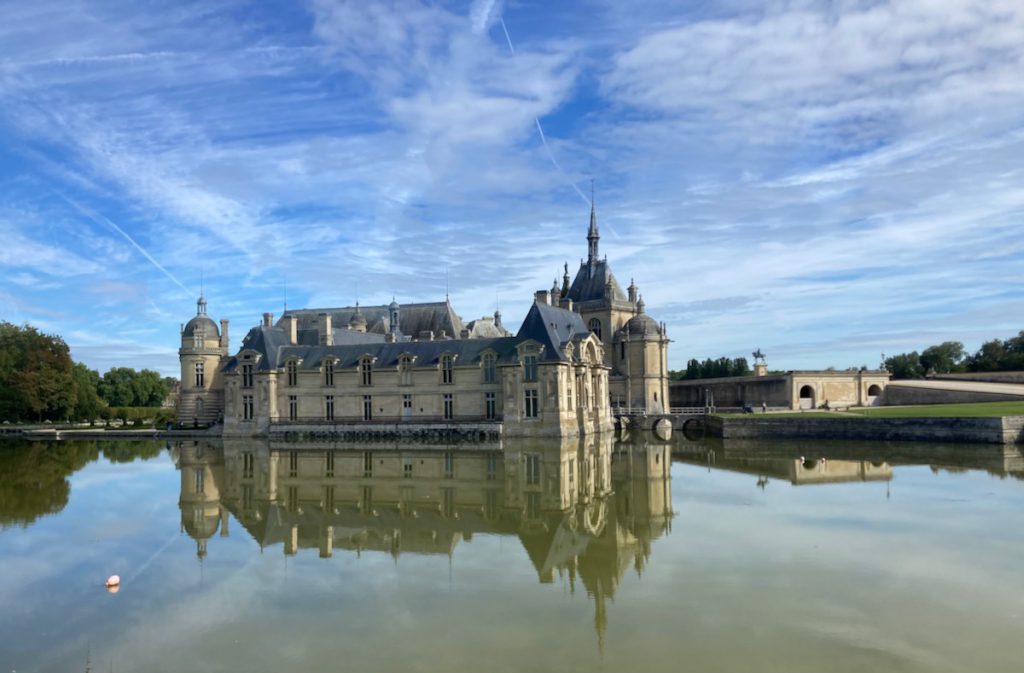
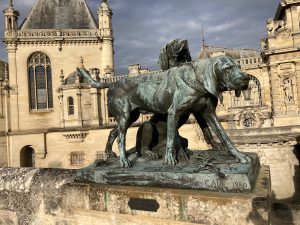
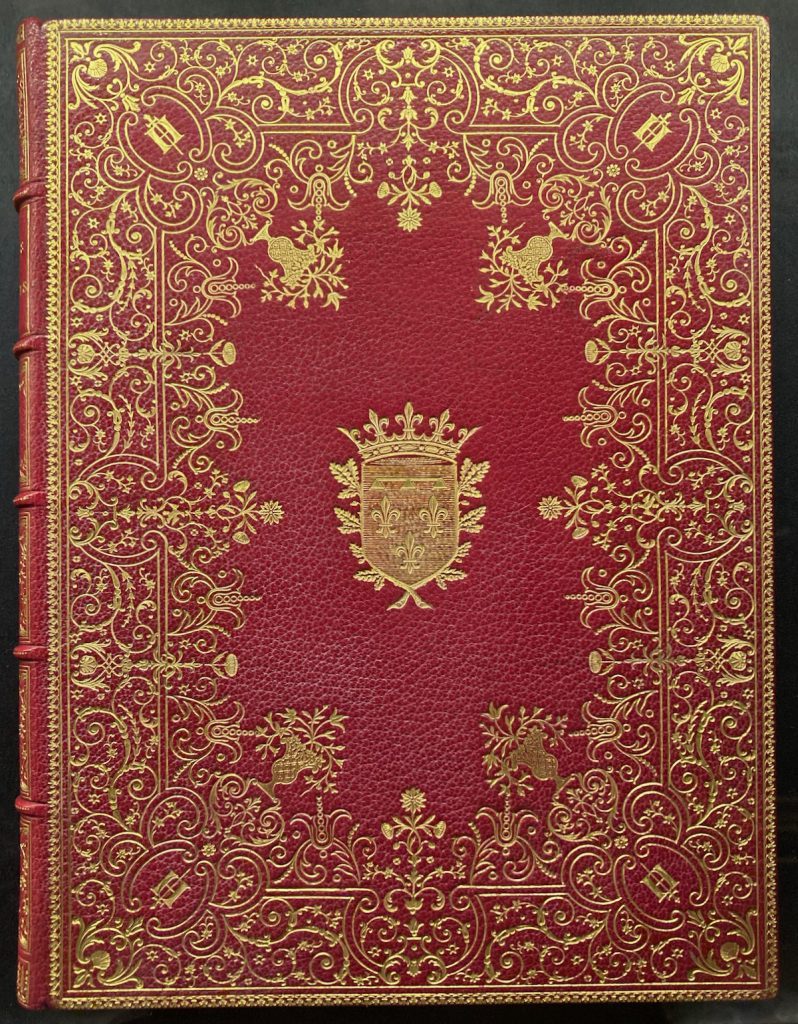
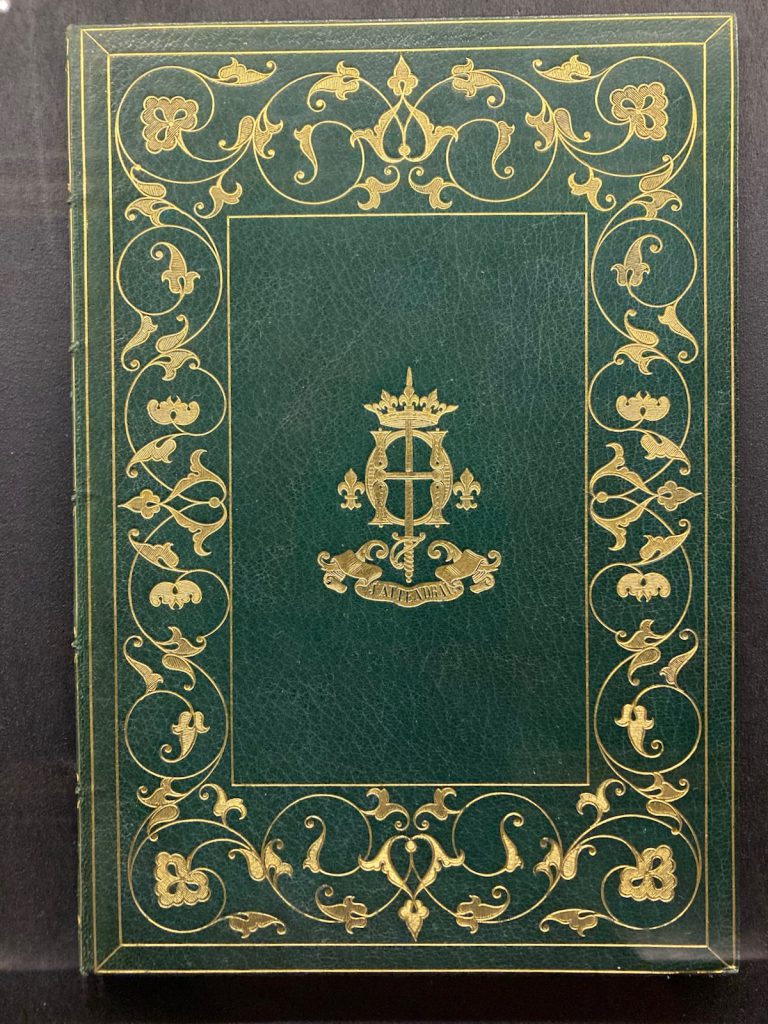
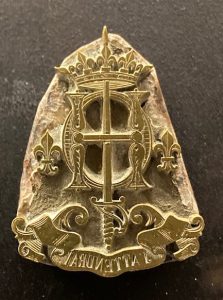
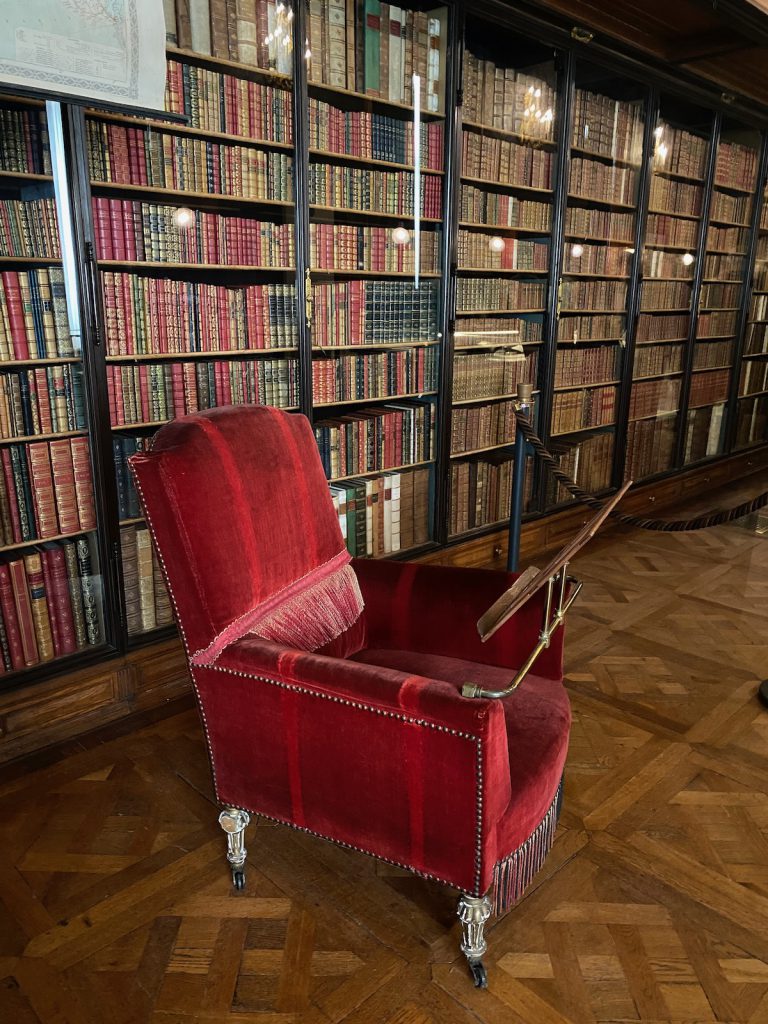
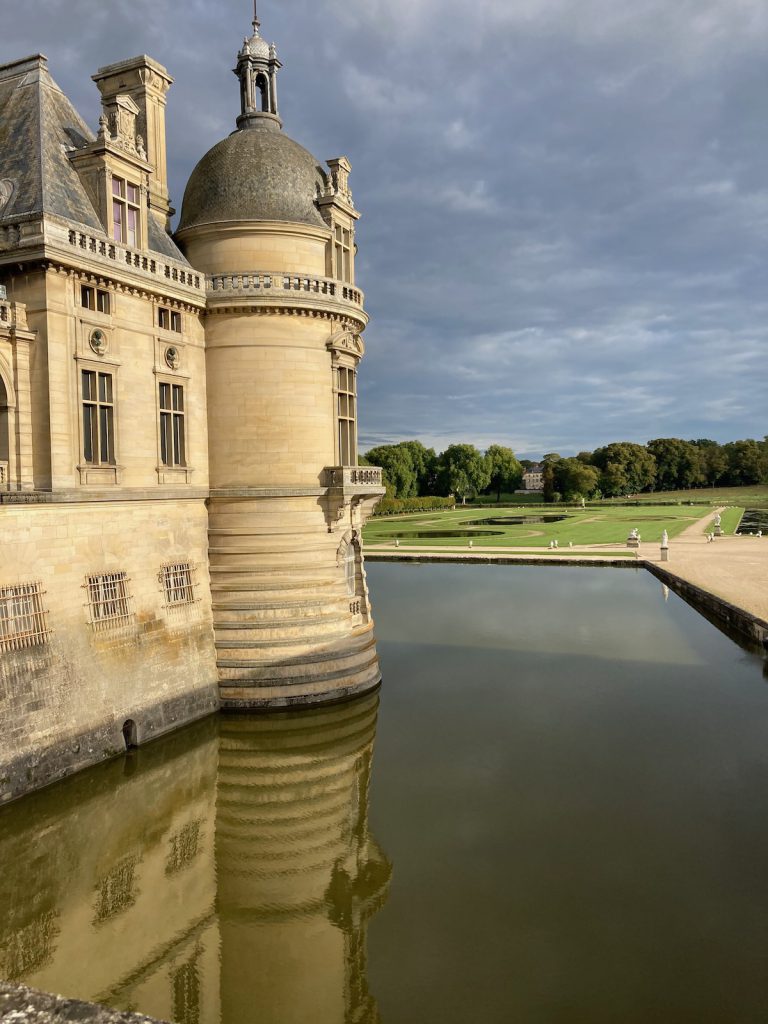
Allée Arthur Rimbaud (13e), near the BnF François Mitterandgarden beside the Bibliothèque de l’Arsenal (4e)in the Salle Clemenceau, where the Treaty of Versailles was signed (1919)self-portrait of Baudelaire, in Poulet-Malassis’ extra-illustrated copy of Souvenirs (1872), Bibl. de l’Institut, ms. Lov. D 655 bisPadeloup binding (before 1727), Petit Palais, coll. Dutuit, LDUT 544château de Chantillyhounds at the château de Chantillystag at the château de Chantillybinding by Capé for the duc d’Aumalebinding by Duru for the duc d’Aumalebindery stamp, arms of the duc d’Aumalereader’s chair, in the library of the duc d’Aumale at Chantillychâteau de Chantilly
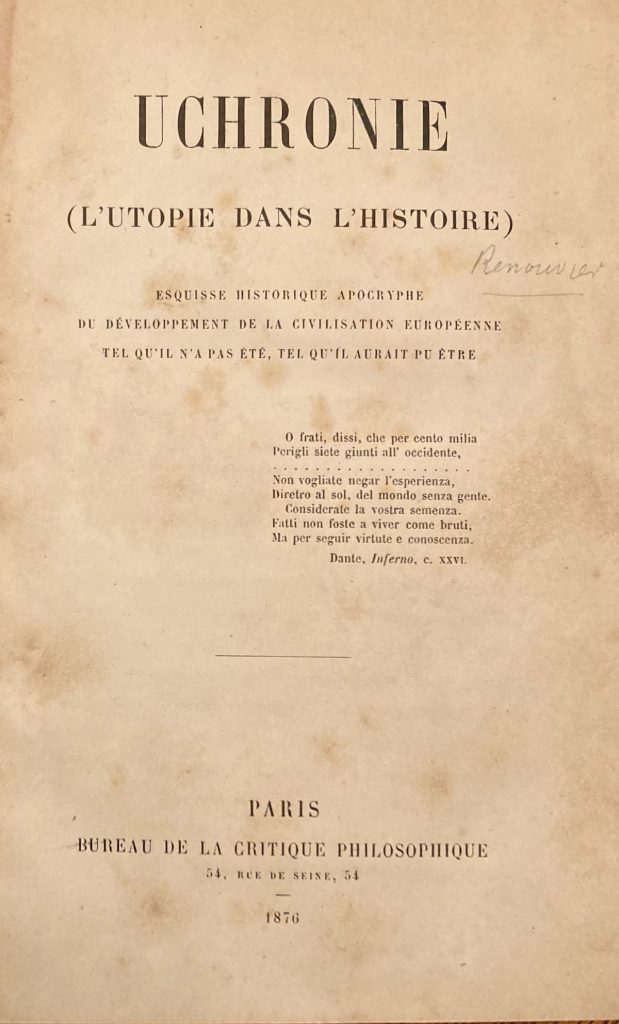
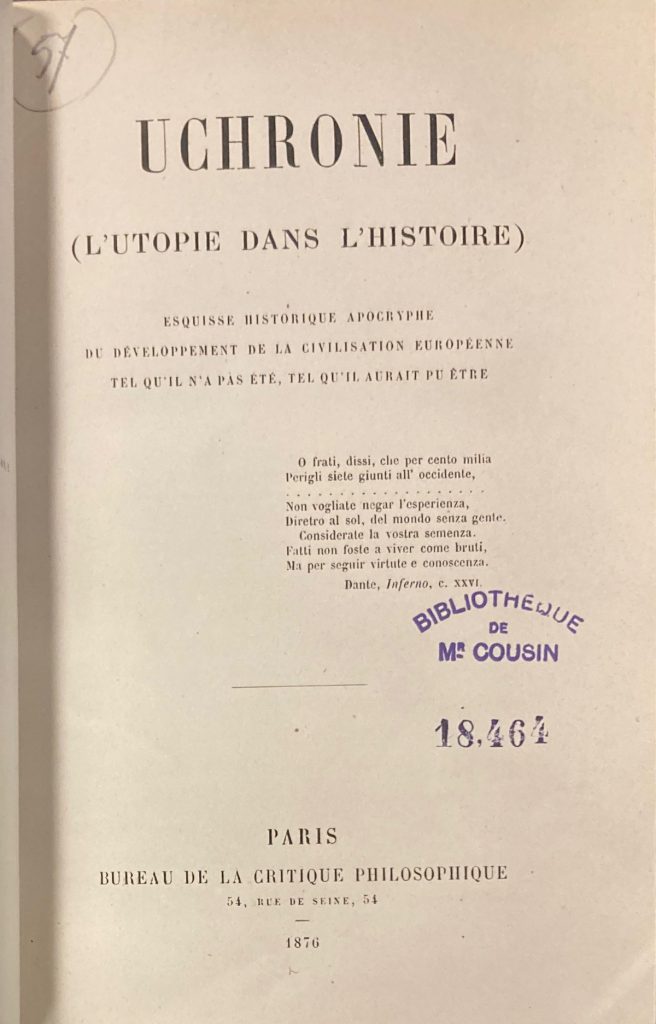
— [Charles Renouvier]. Uchronie (L’Utopie dans l’Histoire). Esquisse historique apocryphe du développement de la civilisation européenne tel qu’il n’a pas été, tel qu’il aurait pu être. Paris : Bureau de la Critique philosophique, 1876.
A recent glimpse of a copy of Uchronie prompted me to start reading this landmark of speculative history. It’s a tricky book, a work of ideas that employs several layers of apparent estrangement devices (somewhat like the original Castle Rackrent). I will report further.
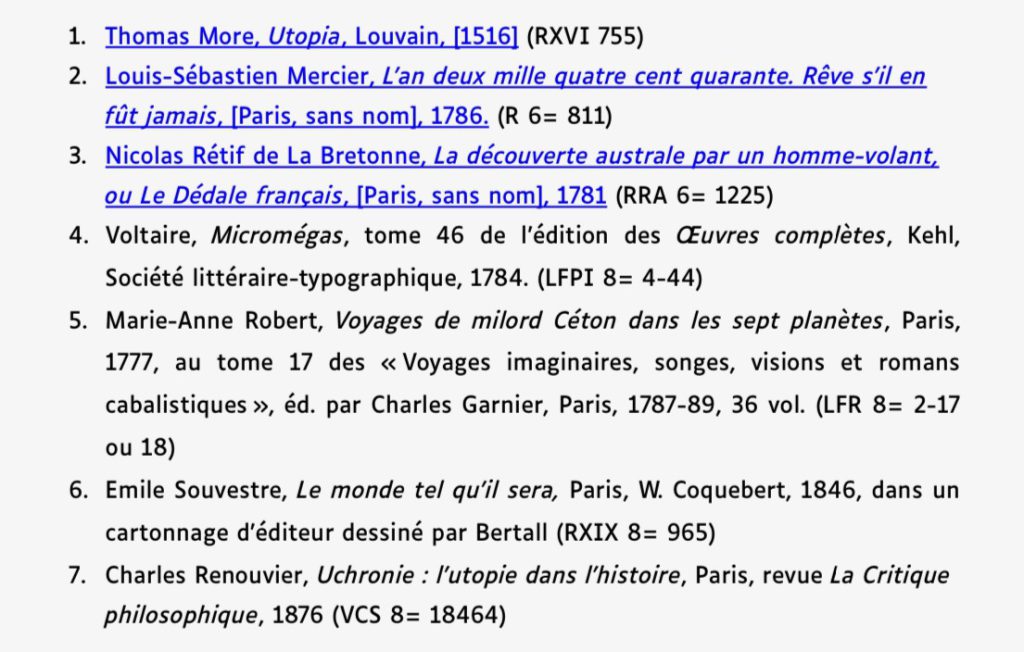
I saw Uchronie in a display case not far from a nice copy of Utopia (Louvain, 1516) in La science-fiction à la Sorbonne, an exhibition at the Bibliothèque interuniversitaire de la Sorbonne. Truth be told, the BIS copy of Uchronie is a little nicer than the one I’m reading :
The exhibition, which had just opened, is part of an ongoing Année de la science-fiction and is on view in the salle Jacqueline-de-Romilly (BIS, 17 rue de la Sorbonne, 75005 Paris) through 20 December. Non-university folks must register to visit, details here : http://www.bis-sorbonne.fr/biu/spip.php?rubrique537 . There are author events announced through March 2024 and joint initiatives with the scholarly journal ReS Futurae.
The exhibition, which includes books from More’s Utopia through contemporary paperbacks of French science fiction and works in translation, with an interesting visual component. The case of early works contains these:
Also of note was a bibliographical item : Régis Messac. Esquisse d’une chrono-bibliographie des utopies. Lausanne : Club Futopia, 2962 (sic). The title page carries an epigraph from Leconte de Lisle : “Ton coeur est dévoré d’un songe indestructible”.
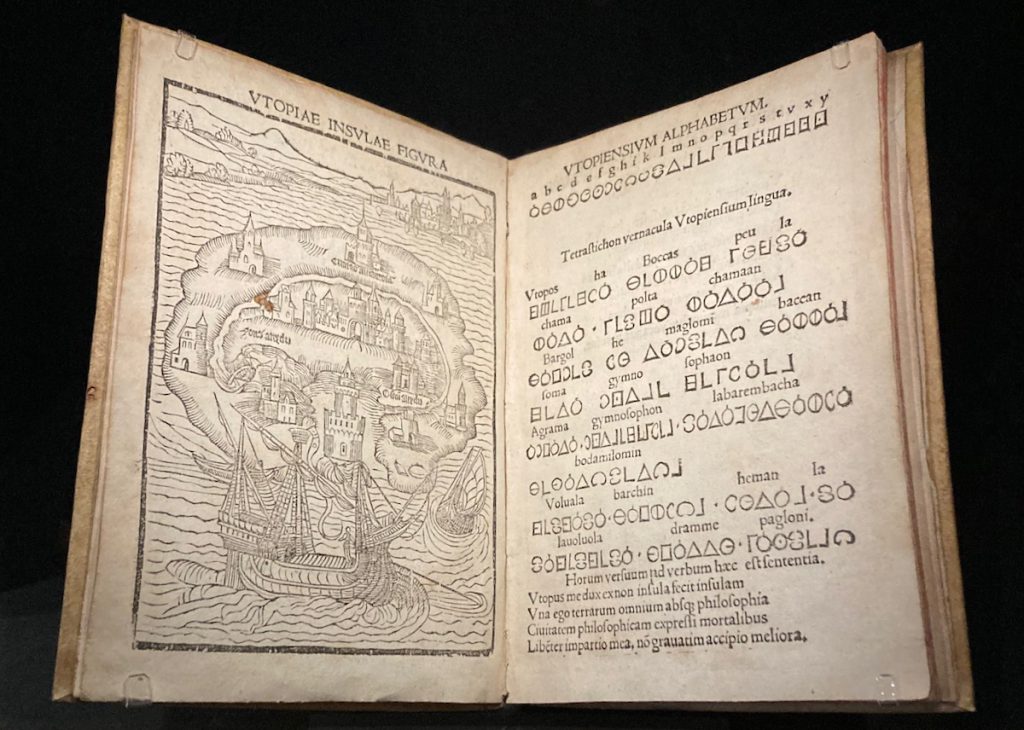
P.S. Glare from the overhead lights meant I couldn’t take a picture of the BIS Utopia, but here is a snapshot of the copy at the Bibliothèque de l’Arsenal :
The work of Jorge Luis Borges has always been a touchstone for me: the concision and entanglement of his fictions and artifices and inquisitions are a source of great pleasure and inspiration. I am pleased to report that James Cummins Bookseller catalogue 145, Jorge Luis Borges, is ready, describing more than 400 items from the private collection of Gary Oleson, proprietor with Franny Ness of Waiting for Godot Books in Hadley, Massachusetts. Waiting for Godot were long- time specialists in twentieth century literature (among many other fields), including Latin American authors, and Oleson began buying Borges material in the late 1980s and early 1990s.
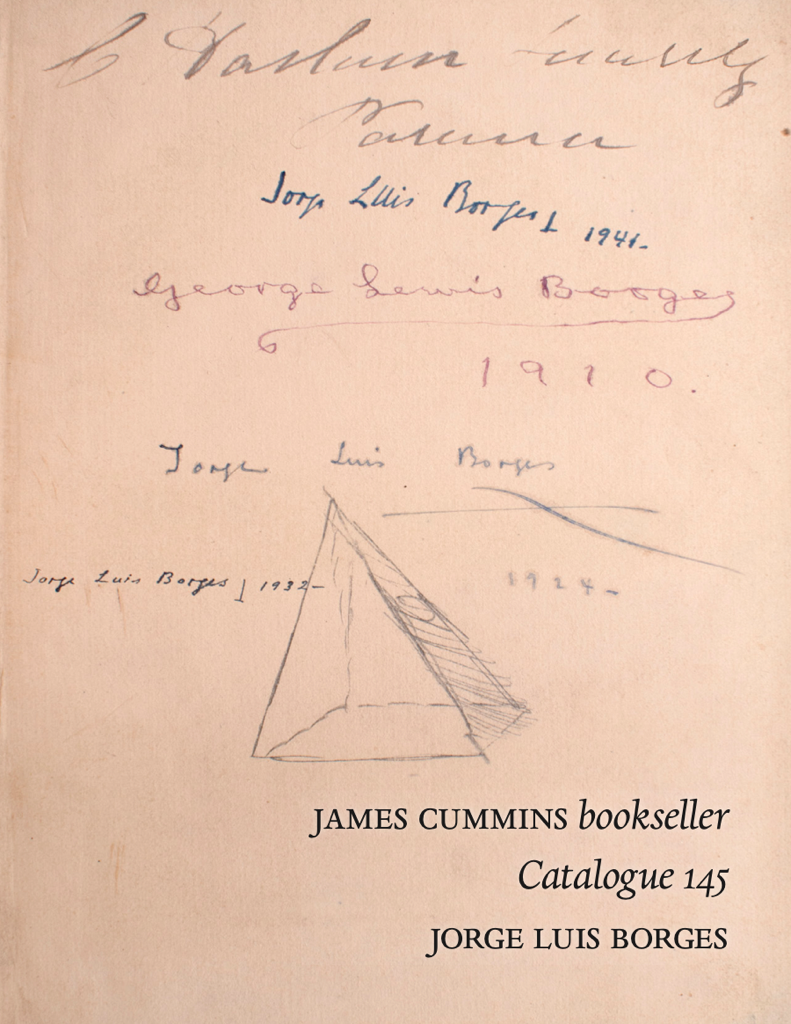
The collection includes books owned by Borges, manuscripts of essays and stories, autograph notes, photographs, inscribed books, and a comprehensive group of books, periodical appearances, ephemera, and secondary literature. The cover illustrates a book by Capt. Marryat, signed by Borges at age 11, 25, 33, and 42, and with the ownership signature of his English-born great aunt, who taught him English
As with the writings of Borges, patterns and connections reveal themselves across the pages of the catalogue, which is published on the occasion of a Borges centenary, the hundredth anniversary of the publication of his first book of poems, Fervor de Buenos Aires (1923). [HWW]
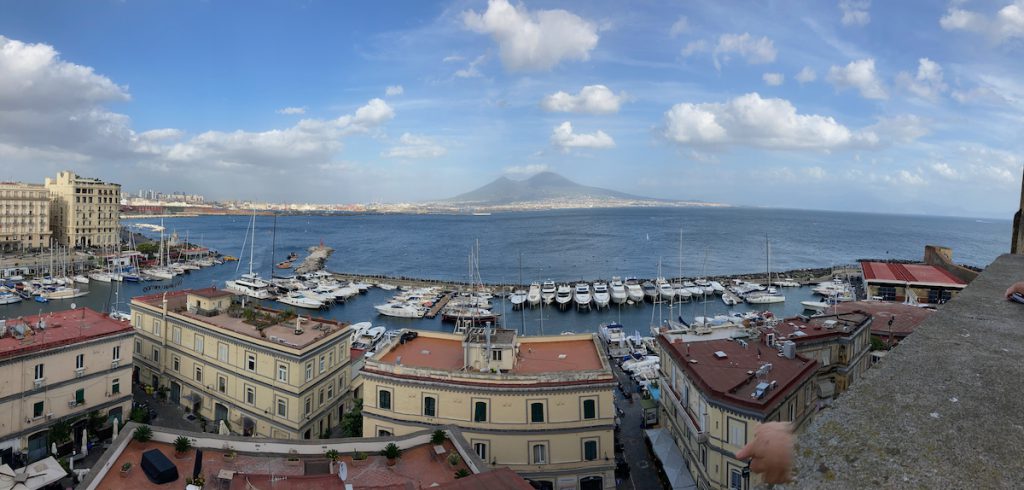
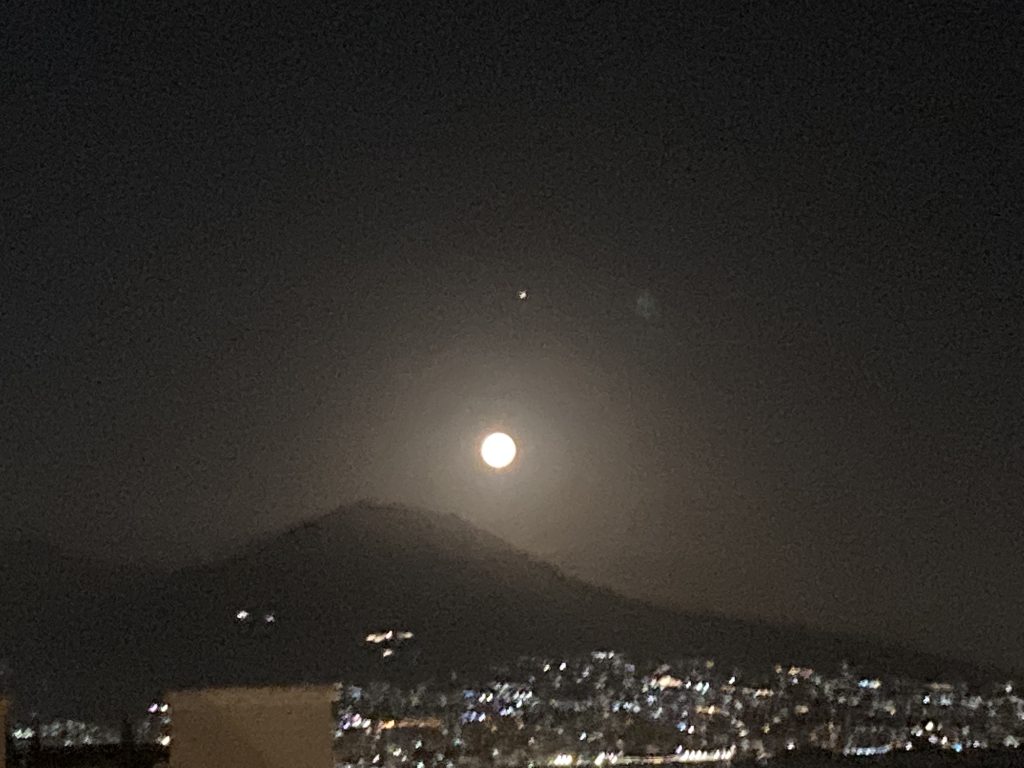
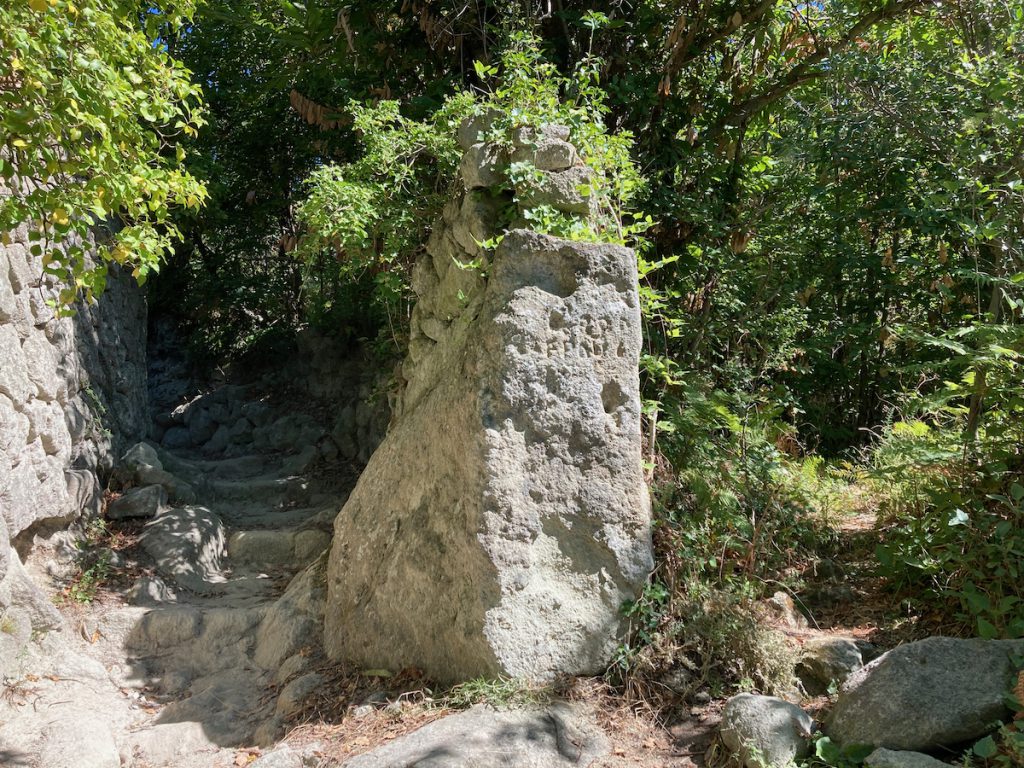
on the way up Monte Epomeo, Ischiathe view from the top : Vesuvius at far left horizon, Sorrento uplands, Capri (click for larger image)
———
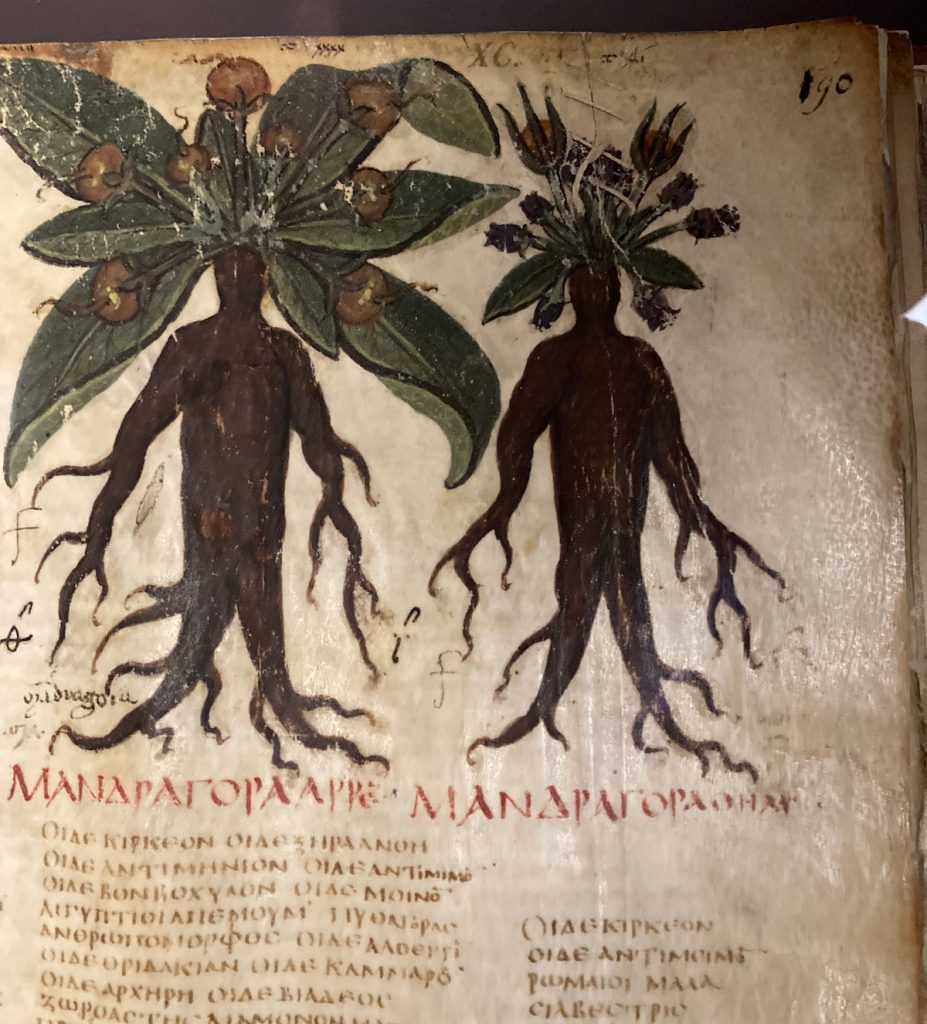
Mandrakes, in Dioscorides (ca. 590), Biblioteca Nazionale di Napoli, Ms. Vind. Gr. 1
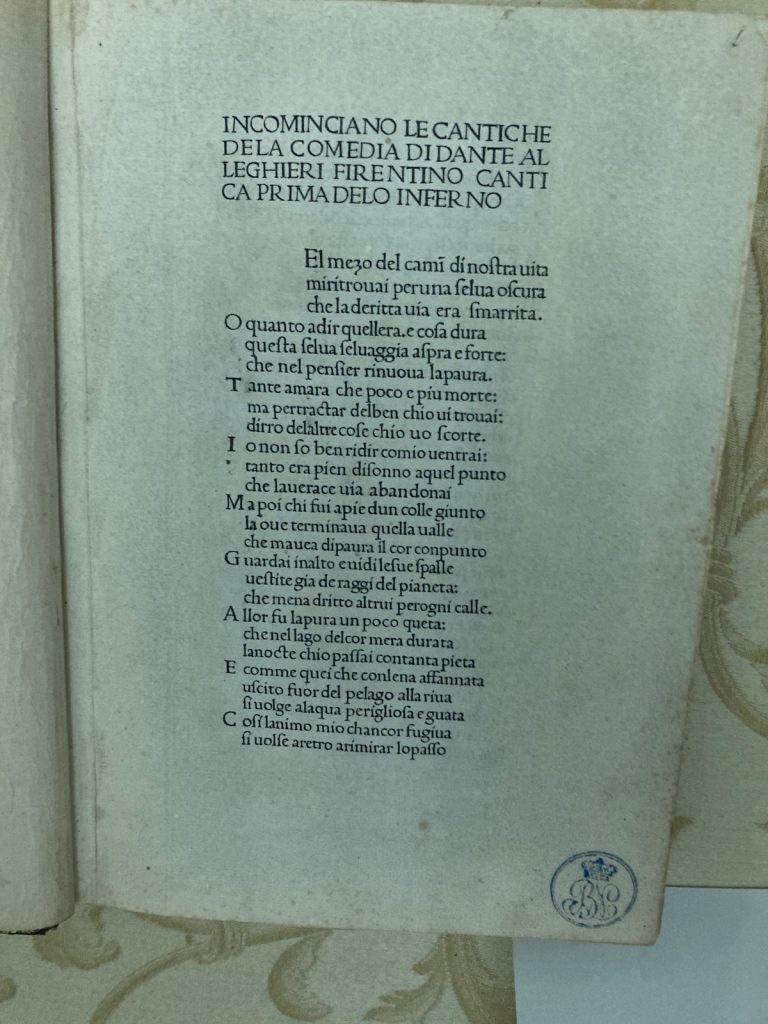
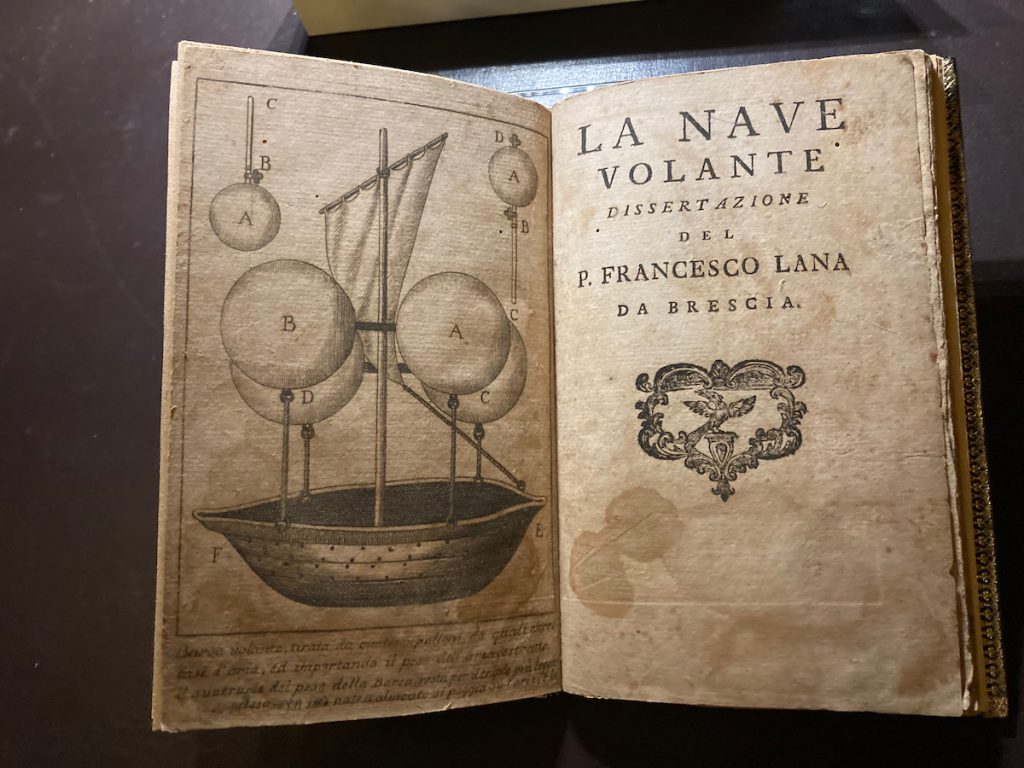
Dante Alighieri, La Commedia, [Napoli 12 IV 1477], Biblioteca Nazionale di NapoliP. Francesco Lana, La Nave volante, dissertazione, [S.l., s.d., post 1470], Biblioteca dei Girolamini Coll. C F 3 19
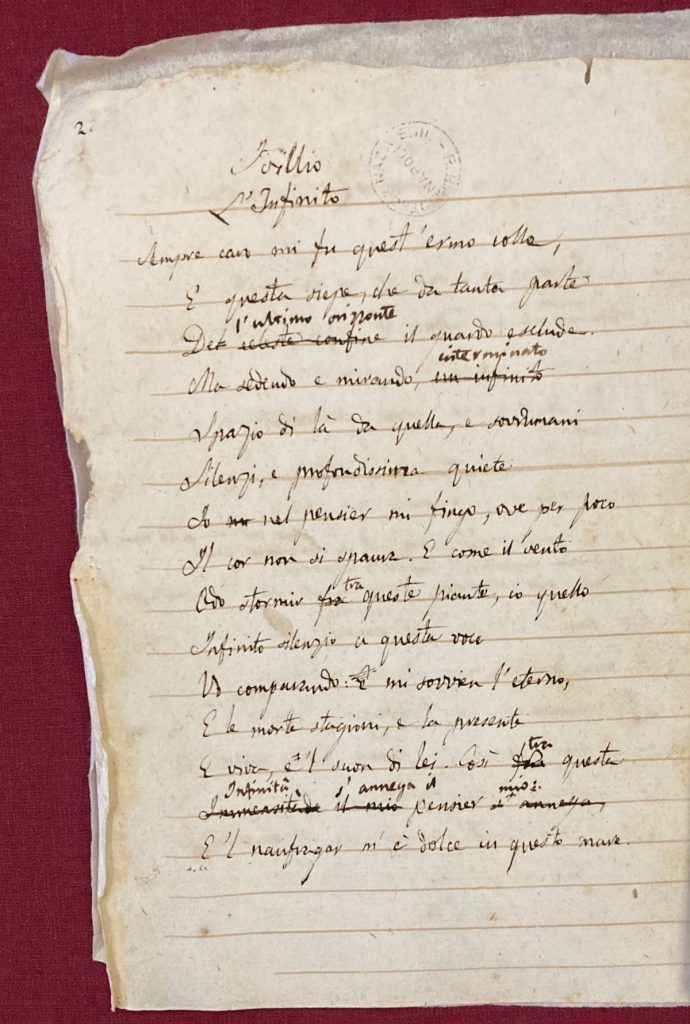
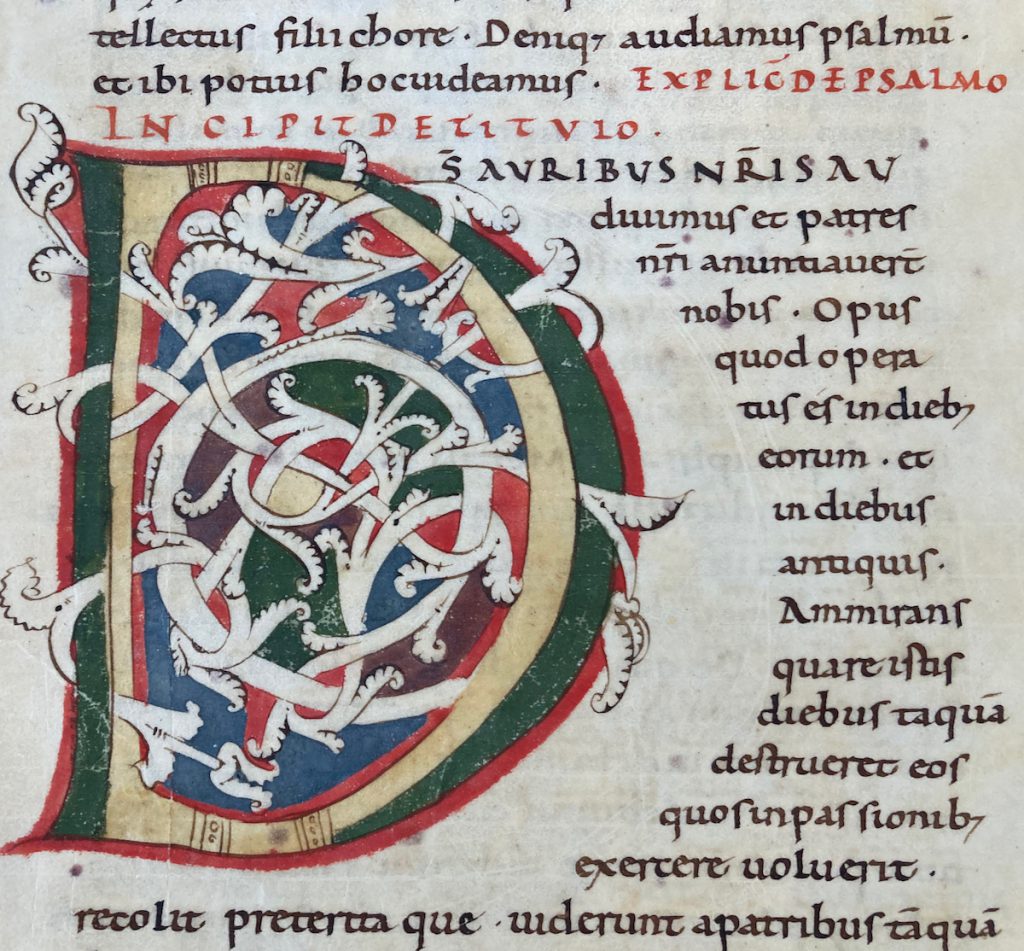
Giacomo Leopardi, manuscript poem, L’Infinito, (1819), Biblioteca Nazionale di Napoli, M.S. C.L. XIII.22decorative initial (white vine), in Museo Diocesano Salerno MS.9
———
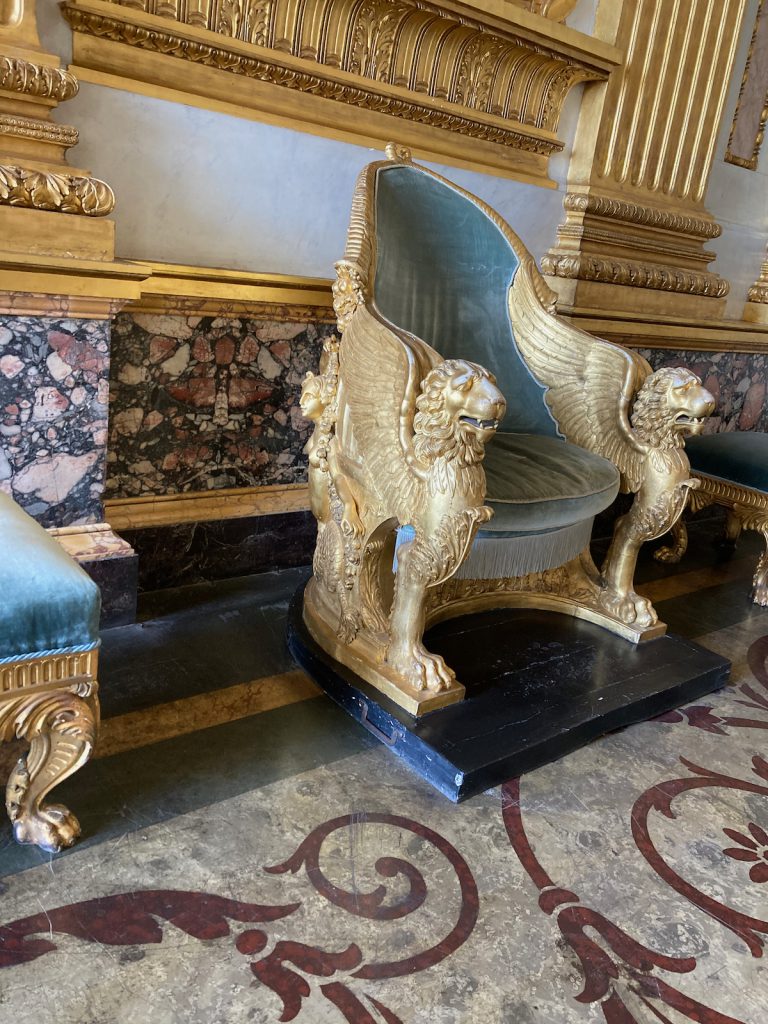
Vico room, Biblioteca dei Girolaminithrone with mermaids and gryphons, Reggia Caserte
———
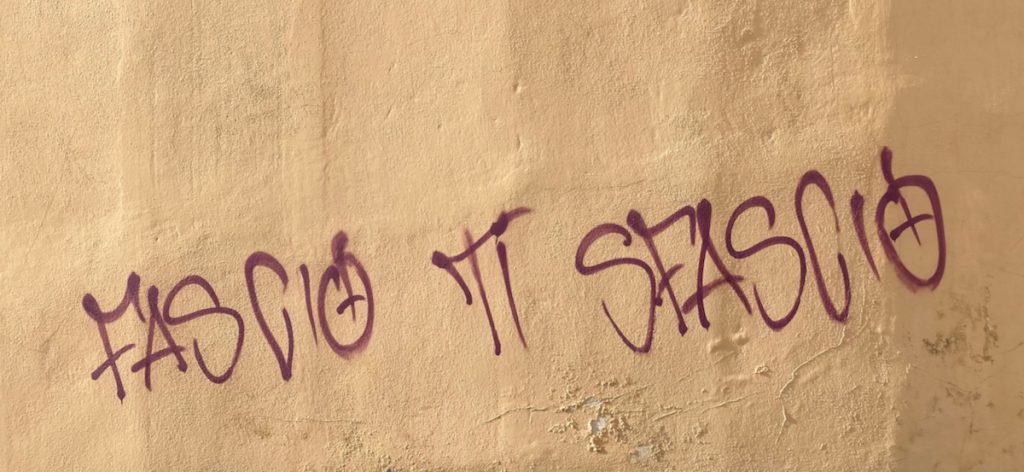
fascio ti sfascio : the writing on the wall, Salerno
— Marcel Proust. La Prisonnière [1923]. À la recherche du temps perdu III. Bibliothèque de la Pléiade. [still climbing the mountain].
— R.B. Russell. Fifty Forgotten Books. Sheffield : And Other Stories, [forthcoming, 13 September 2022].
recent reading :
— Marcel Proust. Sodome et Gomorrhe [1921-2]. À la recherche du temps perdu III. Bibliothèque de la Pléiade.
This was tough going at times, but there was always a remarkable passage or narrative surprise to quicken interest — and what a crack of the whip at end, rooted in earliest beginnings.
Deep in volume III of the Pléiade edition, an aside points ahead to something I should perhaps have inferred and now the full arc of this whiny wallowing hilarious satiric narration comes clear. Proust is sufficient argument against fleeting worries over “spoilers”. He gives the game away himself a few times (from the outset, in fact); but more importantly, reading Proust affirms that literature is experiential. The dance of words performs itself upon the page and in the reader’s awareness, each time new, or else it’s nothing.
— — —
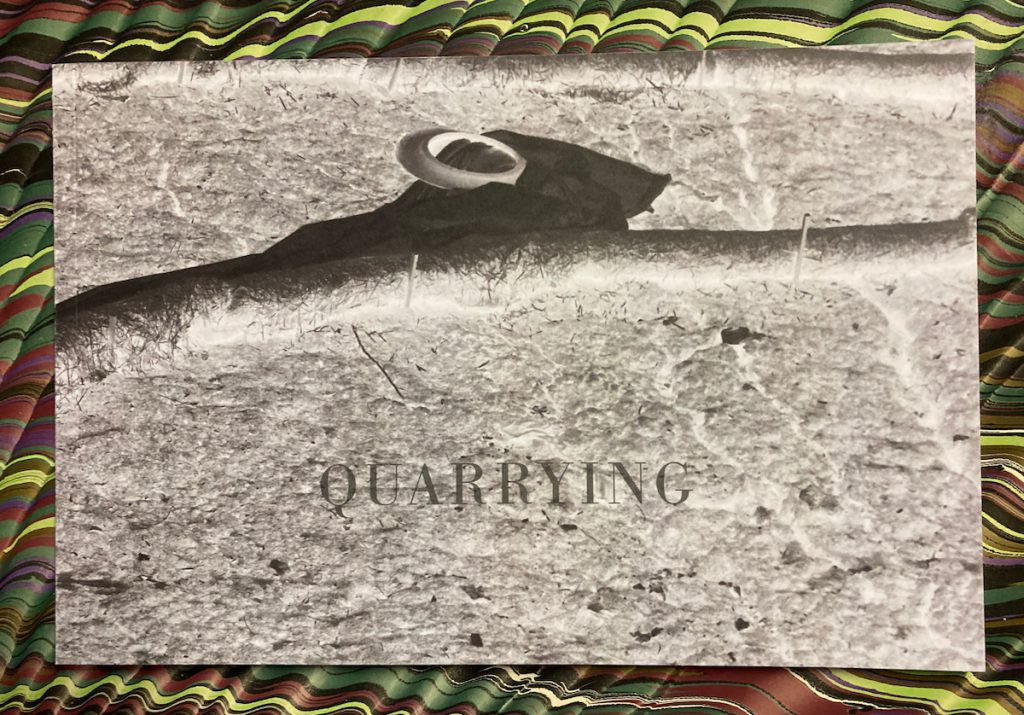
— Tom Lecky. Quarrying [Cover title]. One story and fifteen photographs. Understory Books, [2021]. Edition of 100 copies.
The story, “A Walk”, is subtle and minimalist, oblique and suggestive of the long consequences of family traumas.
— — —
— Ivy Compton-Burnett. Manservant and Maidservant. Gollancz, [1947]. Late Victorian household drama, in the conversations of a family and their servants, on the surface a very small world but the novel presents, unspoken but apparent, a dispassionate and clear-eyed indictment of the British class system and economic structure. An unexpected pleasure.
— The Herman Melville Collection of William S. Reese. Christie’s, [August 2022]. Illustrated auction catalogue, 100 lots, including many rarities, up at auction on 14 September.
— Ngaio Marsh. Night at the Vulcan [1951]. Pyramid Books, [Second printing, December 1974].
— — —
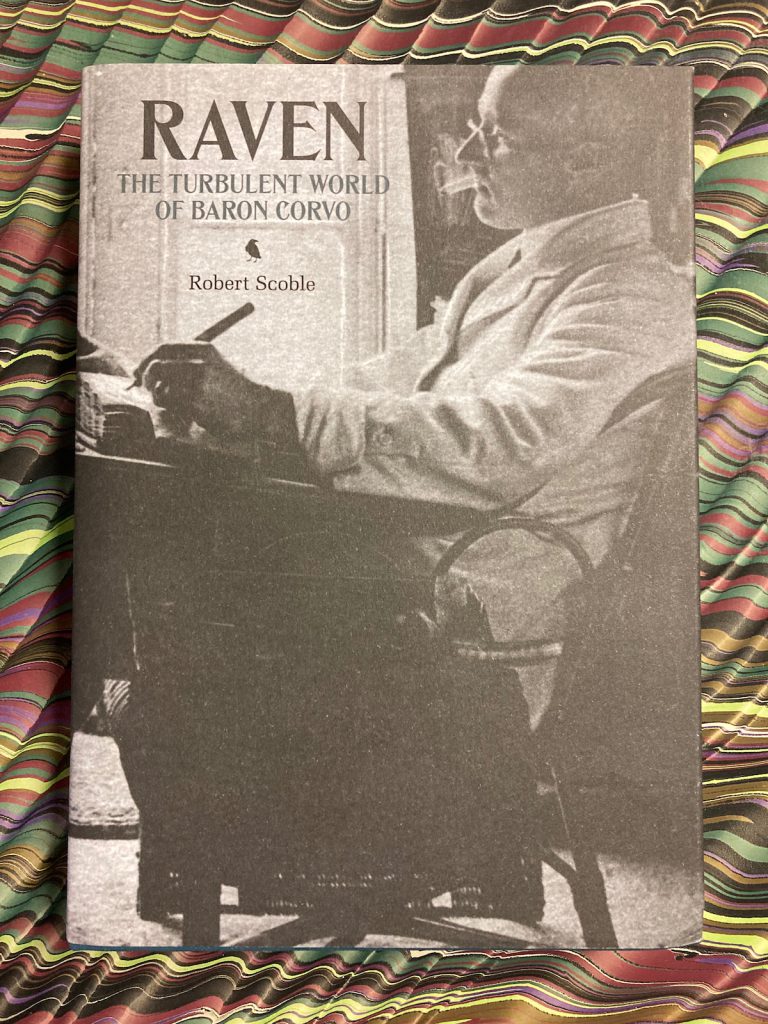
— Robert Scoble. Raven. The Turbulent World of Baron Corvo. Strange Attractor Press, 2013.
— —. The Corvo Cult. The History of an Obsession. Strange Attractor Press, 2014.
Two well written, engaging, and thoroughly documented overviews of the Frederick Rolfe phenomenon: the people surrounding him and the evolution of the cult of the author.
— Guy Davenport. The Resurrection in Cookham Churchyard [1967]. [Jordan Davies, 1982].
. . . and everyone is there, in this kinetic Blakean procession, to be animated from Stanley Spencer’s giant painting .
— — —
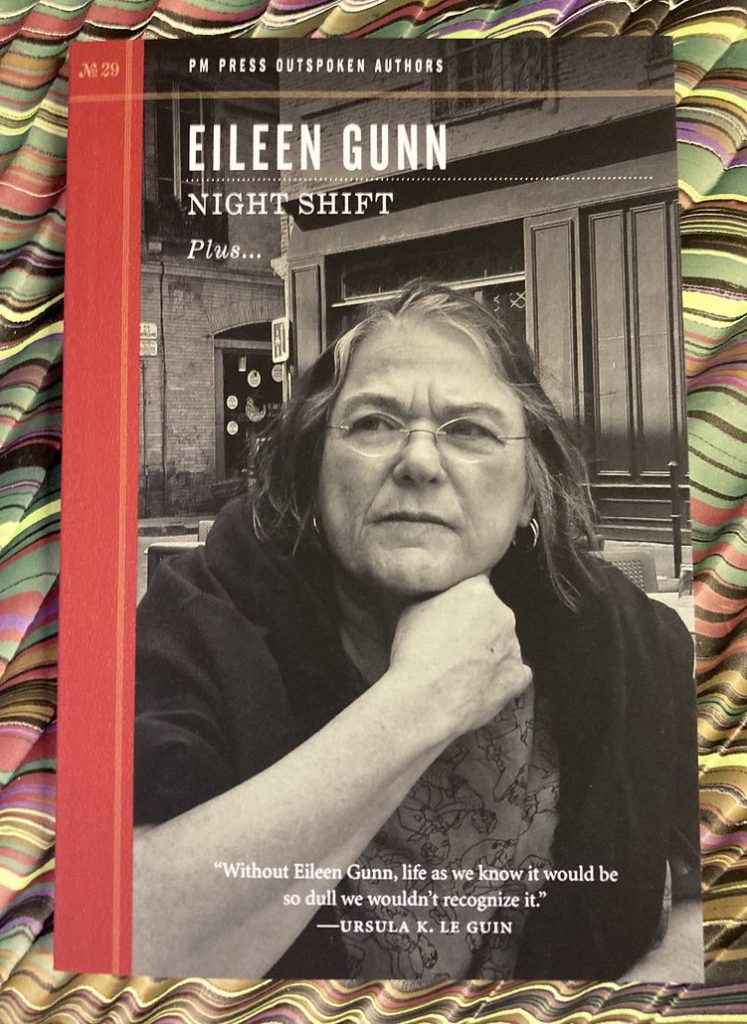
— Eileen Gunn. Night Shift plus Usual and the Author plus Promised Land and much more. PM Press, [2022].
A volume in the excellent Outspoken Authors series, with Terry Bisson’s interview of Eileen Gunn, “I Did, and I Didn’t, and I Won’t”, including this observation about an early job as a advertising copywriter :
“They taught me how to understand subjects I’d never studied and how to work with capitalists without becoming one.”
— Julian Symons. The Immaterial Murder Case [1945]. Penguin Books, [1954].
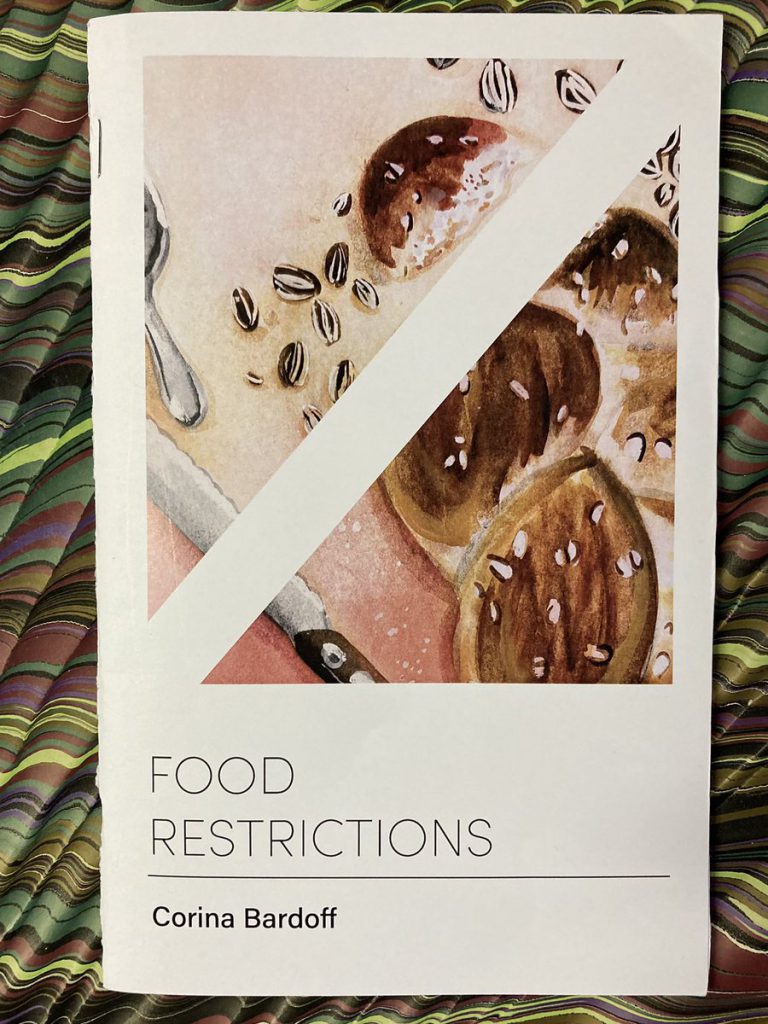
— Corina Bardoff. Food Restrictions. 2020.
Nimble, funny, literate Oulipian explorations of food and words. [Gift of WW].
— — —
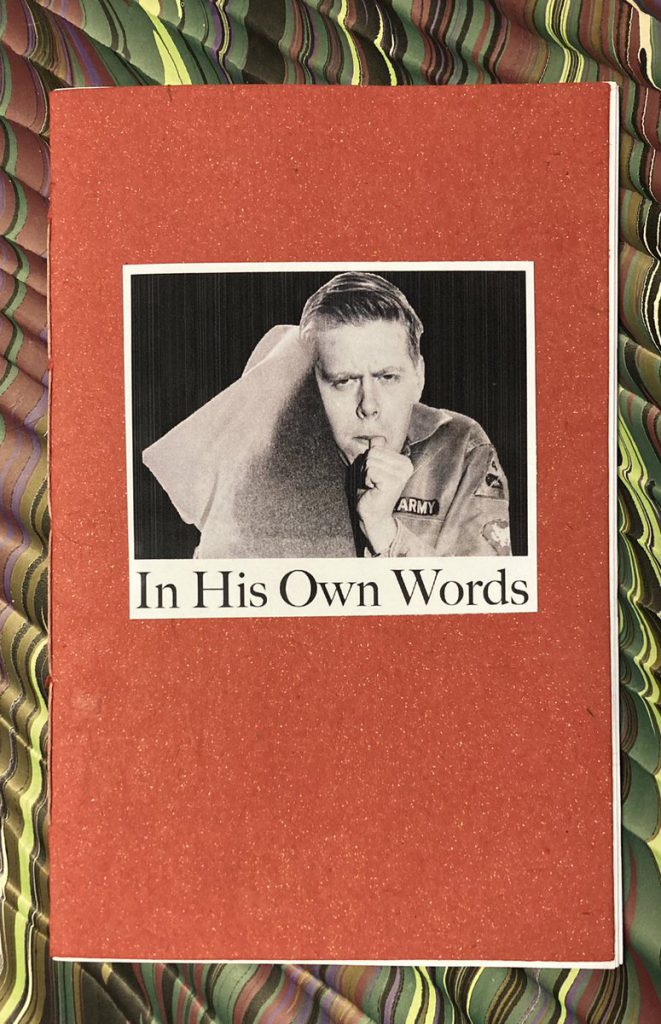
— Michael Swanwick and Gardner Dozois. In His Own Words. Dragonstairs, [2022]. Edition of 60 copies.
Legendary editor Gardner Dozois interviewed by his friend.
— — —
— Elizabeth Hand. Hokuloa Road. Mulholland Books. Little, Brown, [2022]. Another unsettling and gripping book, and a new place in our psychic geography (just maybe you can get there from Kamensic). This reader trusts Elizabeth Hand with his life and readerly attention, and is always rewarded Wherever her books lead, the narrative path is fascinating and the destination is beautiful and often frightening : that is to say, the classical elements of the sublime. Also notable for having a decent working class guy as protagonist.
— Undefined Boundary. The Journal of Psychick Albion. Volume One / Issue One. Edited by Cormac Pentecost. Temporal Boundary Press, 2022.
Reading this, one has the sense that somehow England will find a way through the present mess.
— — —
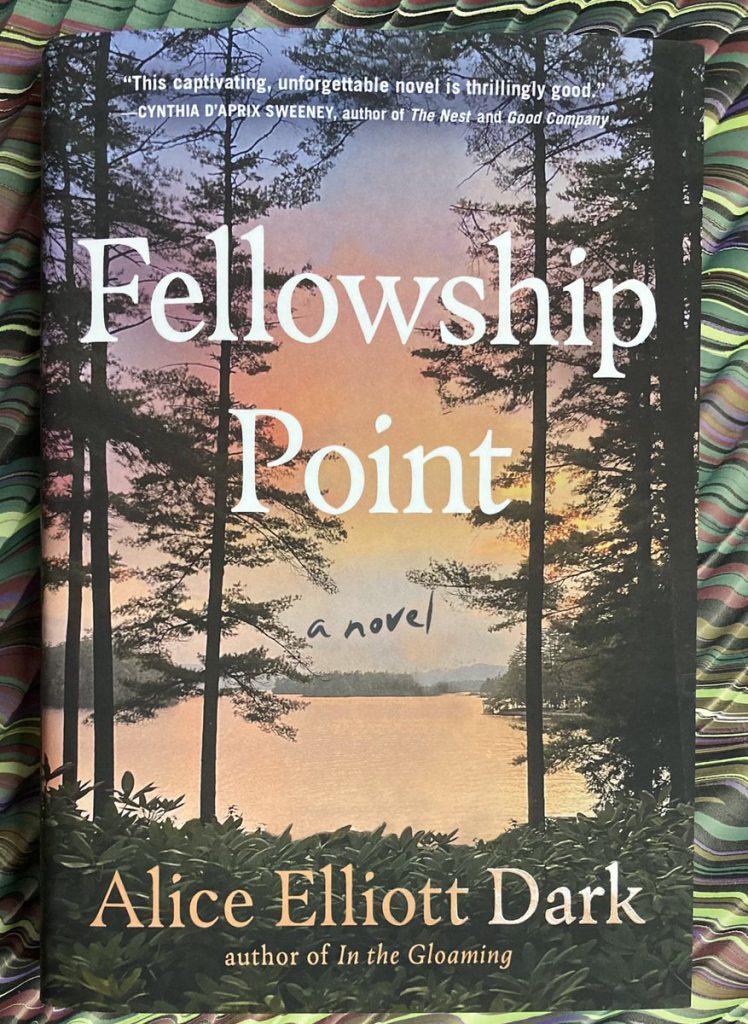
— Alice Elliott Dark. Fellowship Point. A Novel. Mary Sue Rucci Books | Scribner, [2022].
Rich, beautiful exploration of friendship, place, and time (the Maine setting is deeply rooted), with turns and surprises worthy of Dickens ; a notable feminist interrogation of privilege and expectations.
Essays and addresses, with book reviews from Strange Horizons and New York Review of Science Fiction; memorials of Gene Wolfe, David G Hartwell; and more.
— Hervé Le Tellier. L’Anomalie. Roman. NRF Gallimard, [2020].
Science fiction à l’Oulipo, witty and nimble.
— — —
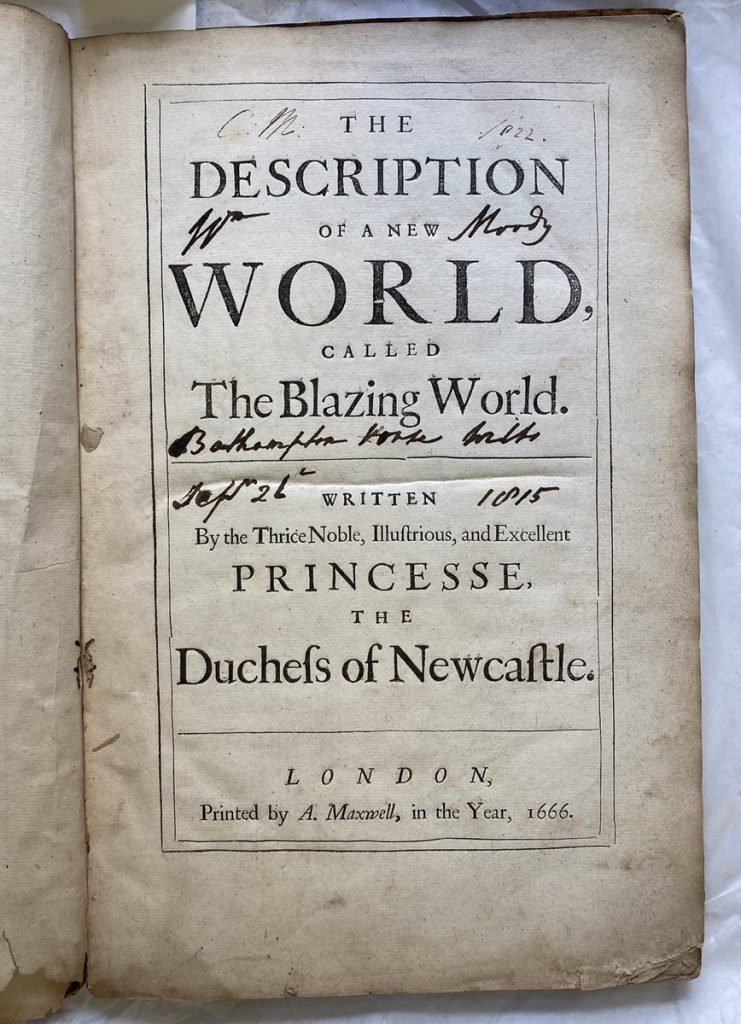
—[Margaret Cavendish,] Duchess of Newcastle. The Description of a New World called the Blazing World. 1666.
— — —
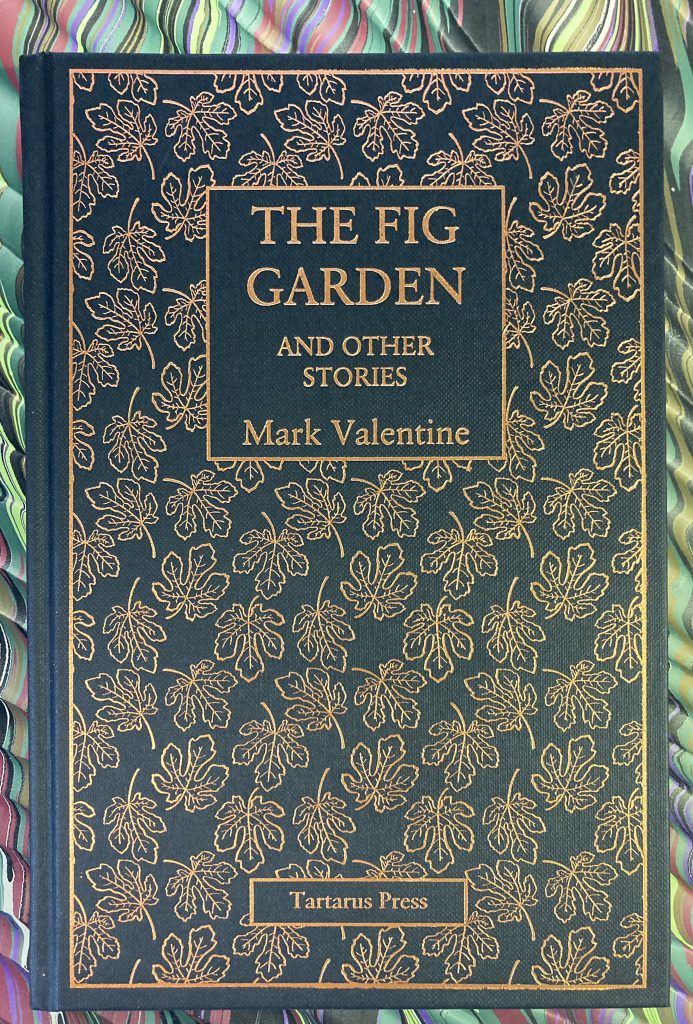
— Mark Valentine. The Fig Garden and other stories. Tartarus, [2022].
Excellent new collection, with several original stories.
— — —
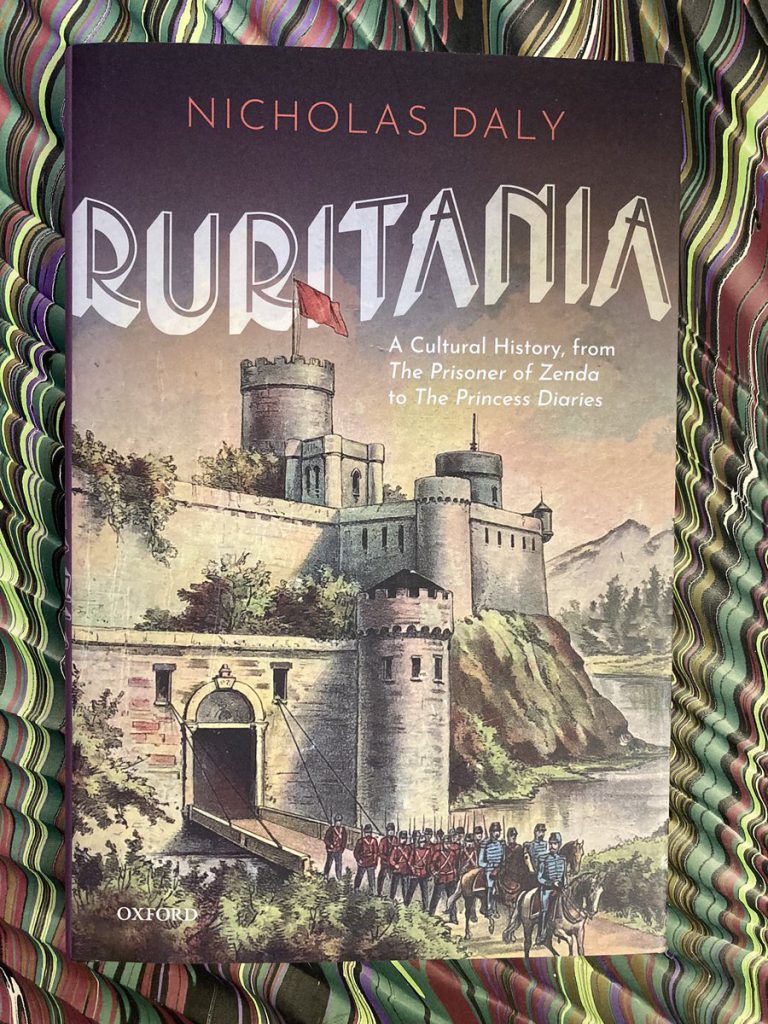
— Nicholas Daly. Ruritania. A Cultural History, from The Prisoner of Zenda to The Princess Diaries. Oxford University Press, [2020].
Interesting fun, with some odd gaps or omissions (such as John Buchan’s The House of the Four Winds and Avram Davidson’s Doctor Eszterhazy stories).
— — —
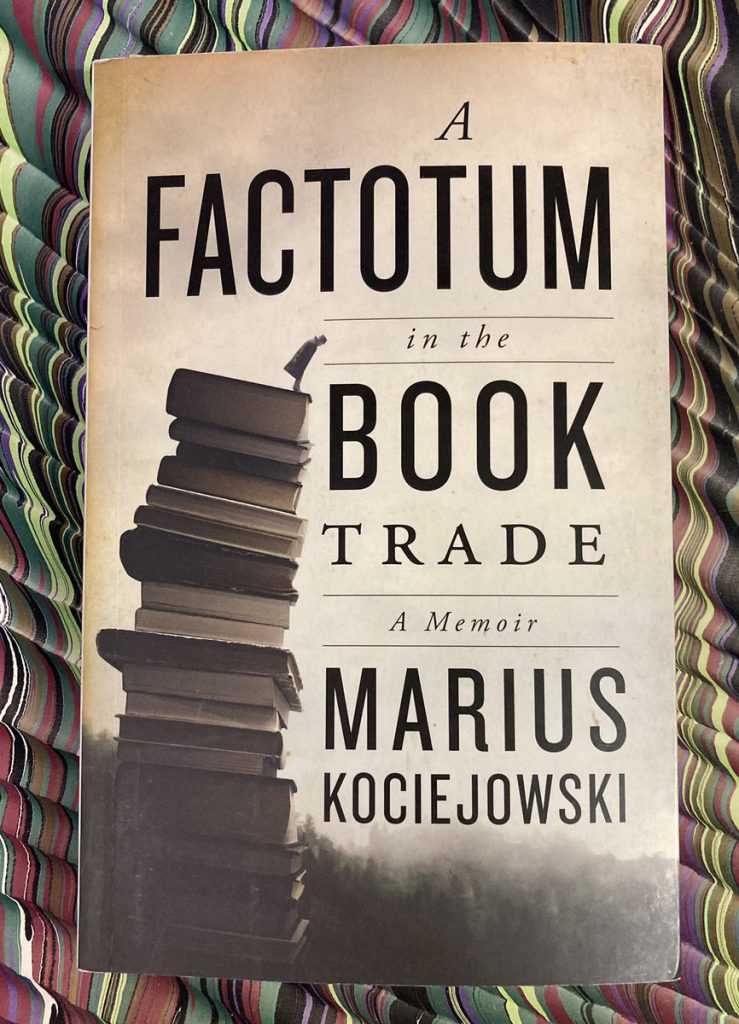
— Marius Kociejowski. A Factotum in the Book Trade. A Memoir. Biblioasis, [2022].
When the Romanian singer started in on « Un dimanche après la fin du monde » I was engaged ; and then the first pages of Chapter 13, The Man Collecting Names is a remarkable sequence of reflections. [Gift of DS].
— — —
— Eric G. Wilson. Dream Child. A Life of Charles Lamb. Yale University Press, [2022].
Read with great interest, Wilson is excellent on Lamb’s connections to the main literary figures of the day (Coleridge, Wordsworth, and others), and on the tragedies of his life.
[Bought in March but misshelved and only found in early June.]
— — —
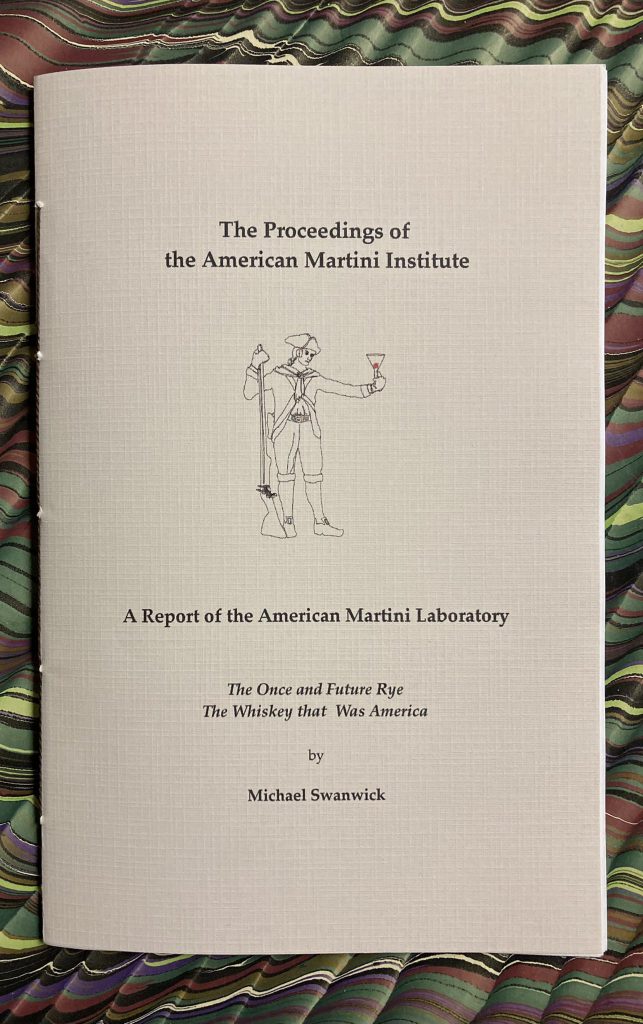
— Michael Swanwick. The Once and Future Rye. The Whiskey That Was America. [At head of title:] The Proceedings of the American Martini Institute. A Report of the American Martini Laboratory. [Dragonstairs, 21 May 2022]. Edition of 80 copies.
— — —
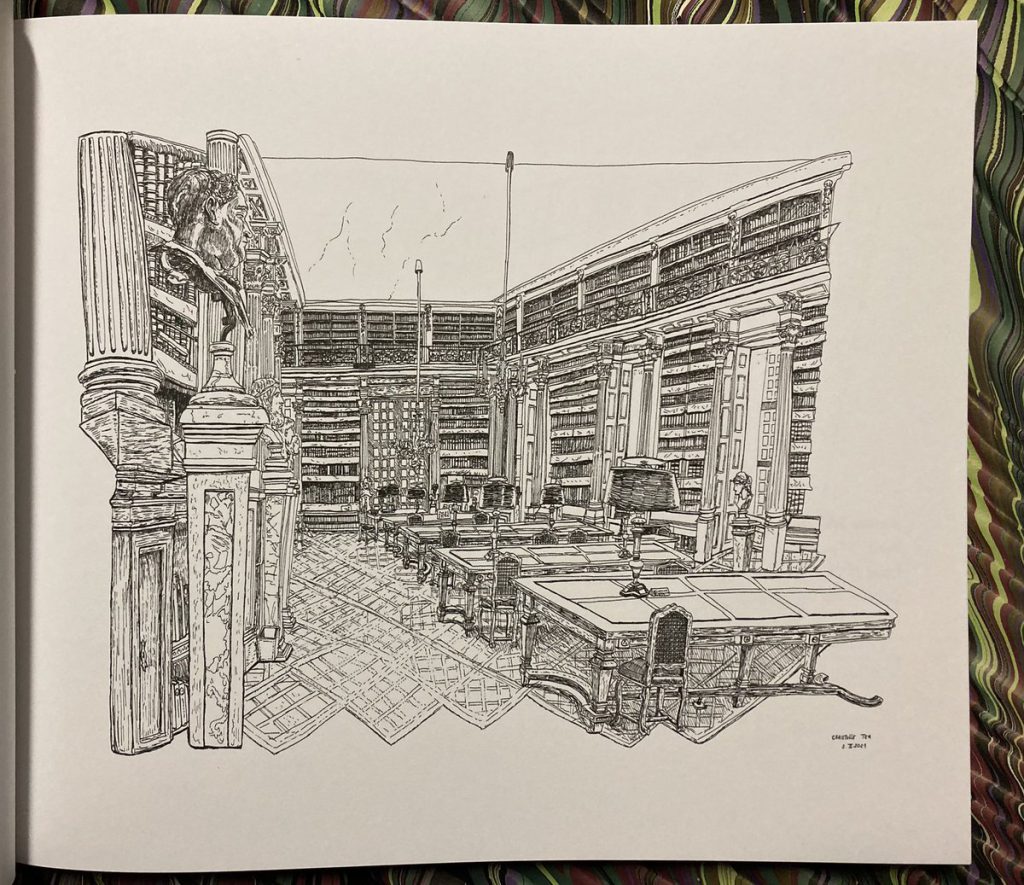
— Christelle Téa. Bibliothèques. Dessins 2018-2021. Librarie Métamorphoses, [2022]. Exhibition catalogue, with introduction by Michel Scognamillo, “Christelle Téa, ou la stratégie de l’araignée”.
/ above : in the Bibliothèque Mazarine
— — —
— This World and That Other. [Stories by] John Howard [and] Mark Valentine. Sarob Press, 2022.
— Algernon Blackwood. The Lure of the Unknown. Essays on the Strange. [Edited with an introduction by Mike Ashley]. Swan River Press, 2022.
Collection of nearly two dozen essays, talks, and vignettes about the uncanny, spanning almost the entire career of supernatural writer Algernon Blackwood (1869-1951). The earliest, “The Psychology of Places” (Westminster Gazette, 30 April 1910), seems almost a gloss on his story “The Willows”; the majority of the pieces are from the late 1940s and were often delivered as radio or television broadcasts. Ashley notes Blackwood’s general reticence about any of his own psychic experiences. The essays “collected here reveal his views on the world and the occult, show his diverse reading and experiences, and his appreciation of the experiences of others.”
— Bruce Barker-Benfield. The Glossed Luke with the Letter A. A manuscript from St. Augustine’s Abbey Canterbury with an essay on the binding by Andrew Honey and an introduction by William Zachs. Blackie House, 2020.
Illustrated history of a notable twelfth-century manuscript Gospel which survives in its original binding.
— — —
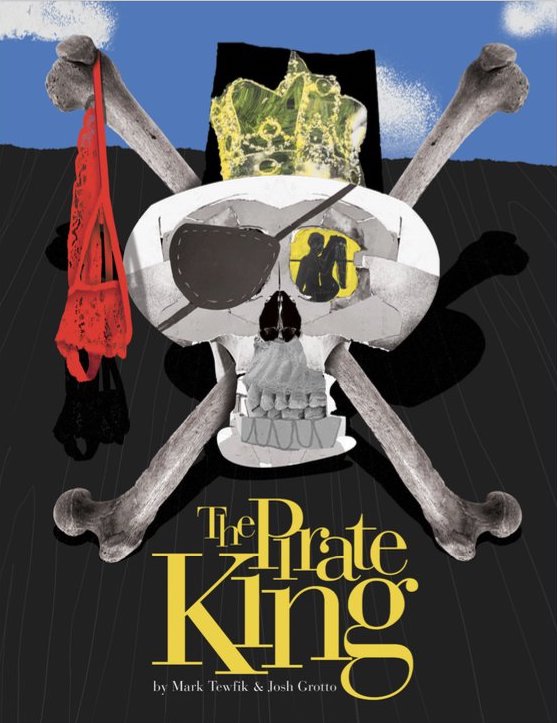
— Mark Tewfik. The Pirate King. Illustrated by Josh Grotto. Full color illustrations throughout. [40] pp. Chicago : Lanterne Rouge Press, 2022. Edition of 100 copies.
The text of The Pirate King resembles a children’s bedtime tale, while the collage illustrations suggest a very different story. A remarkable tension arises between the visual and verbal references.
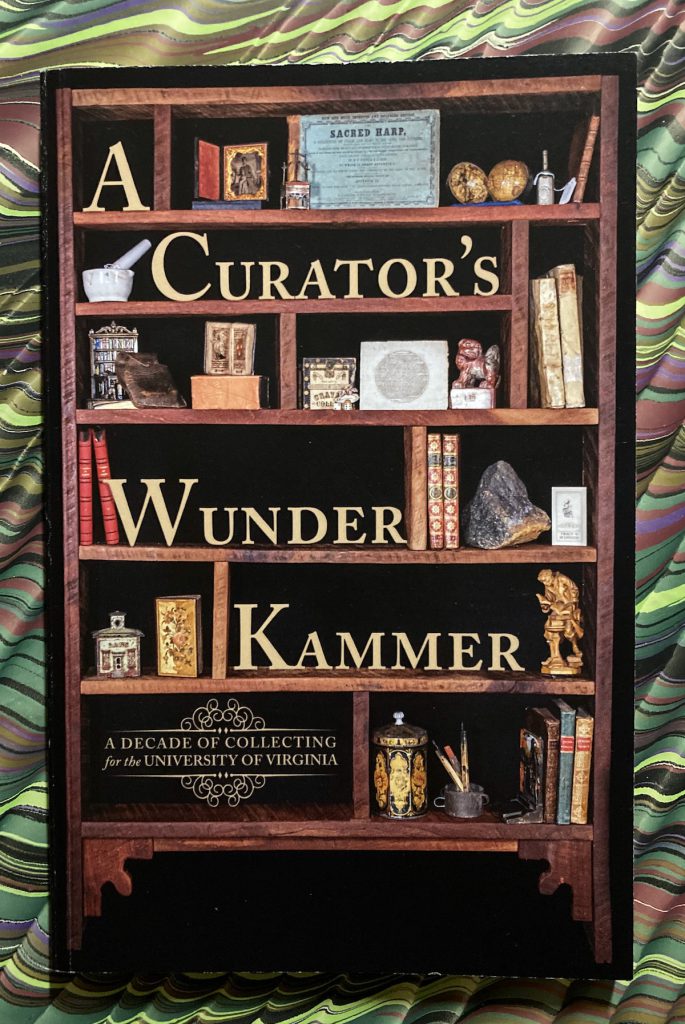
— David R. Whitesell. A Curator’s Wunderkammer. A Decade of Collecting for the University of Virginia. Exhibition Catalog. [Charlottesville: University of Virginia Library], 2022. Illustrated throughout. [iv], 105 pp. Edition of 500 copies [in fact, 310]. $25.00.
David Whitesell’s Wunderkammer exhibition is a retirement party in material form, a late career greatest hits selection of sixty-four books, manuscripts, and ephemera he bought for Special Collections at the University of Virginia Library during a decade at as curator at the Small Special Collections Library at the University of Virginia (previously he was at the American Antiquarian Society for many years). The exhibition runs through July but information seems meager on the UVa website, so I will treat this catalogue as my invitation to the party (complete with a transcript of all the speeches!) and write about it.
A Curator’s Wunderkammer includes is divided into five broad categories: Jefferson, Virginia, & American History (23 items); English Literature (5 items); American Literature (7 items); Printing, Publishing & Book Arts (19 items); and Omnium Gatherum (10 items). Boundaries are usually a lot fuzzier than people think, and here, too: many of the items in the Omnium Gatherum have an Americana flavor. This is only a tiny selection from some 15,000 items Whitesell purchased, but they document the curator’s energies and the range of materials that he has seen. The items include a Jefferson manuscript and the diary of a young lady growing up in Virginia during the Civil War (this is after all, Jefferson’s university); the first novel by an American-born author; a rare Boston imprint of Meat out of the Eater and Day of Doom; the decorative wrapper for a ream of paper from a Hartford Mill; a memoir of a Bavarian soldier in the first world war; a private manuscript anthology of the poet Chatterton; and a fragment of Washington Irving letter, just before his career took off with The Sketch Book.
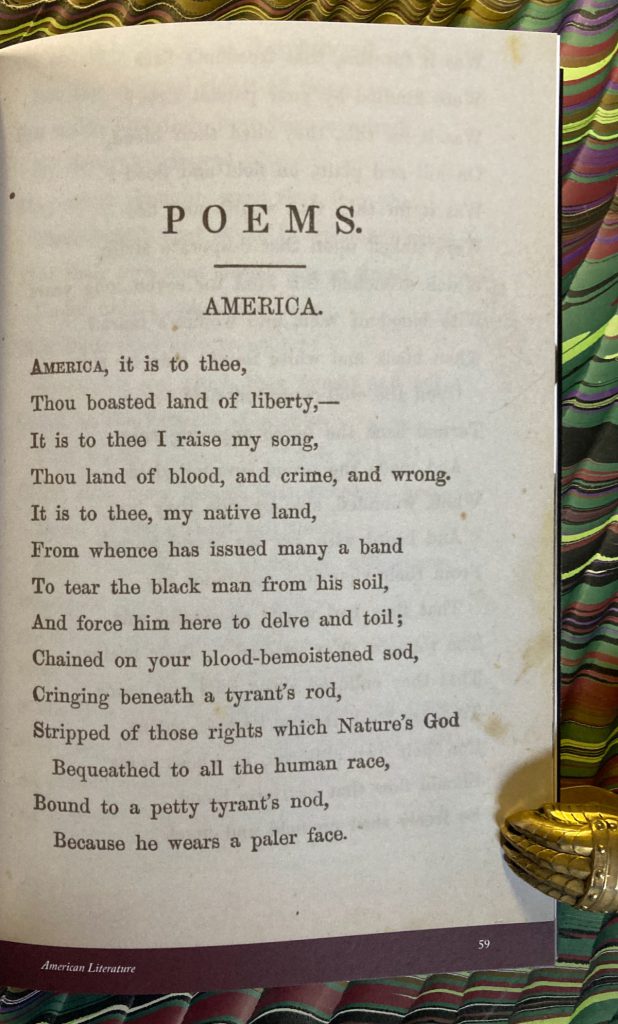
Whitesell pays attention to poetry (he was editor of Roger Stoddard’s monumental Bibliographical Description of Books and Pamphlets of American Verse Printed from 1610 through 1820). Notable here are a family copy of an early American utopia in verse, The United Worlds (1834), which conclusively identifies the author, and The Eucleia (ca. 1865), a nonce collection of the works of William Cook, mendicant poet and self-publisher in Salem, Mass., reflecting Whitesell’s interest in “nineteenth-century non-canonical verse”. And then there is the rare and remarkable and potent America and other poems by James Monroe Whitfield (Buffalo, 1853).
The last item in the catalogue is the manuscript of an essay, “La biblioteca total”, written by Jorge Luis Borges for Sur (August 1939), which is identified as a precursor of the story, “La biblioteca de Babel” (The Library of Babel), published two years later in El jardín de senderos que se bifurcan. No wonder he describes this as “the prize, and if I must choose, my favorite UVA acquisition”.
In this catalogue Whitesell names the booksellers from whom he purchased materials (this aspect of the history of the object is usually omitted); and so this catalogue becomes a an account of relationships between the antiquarian trade and a knowledgeable institutional buyer. He writes discursively on his selection process and the constantly changing nature of the book trade. This is a fun catalogue.
[Note: Some copies were issued with an added presentation leaf (inscribed to the individual booksellers identified as sources). The colophon states 500 copies printed, but due to paper shortages only 310 were in fact printed. If you want one, best to act soon. Details: https://at.virginia.edu/wunderkammer]
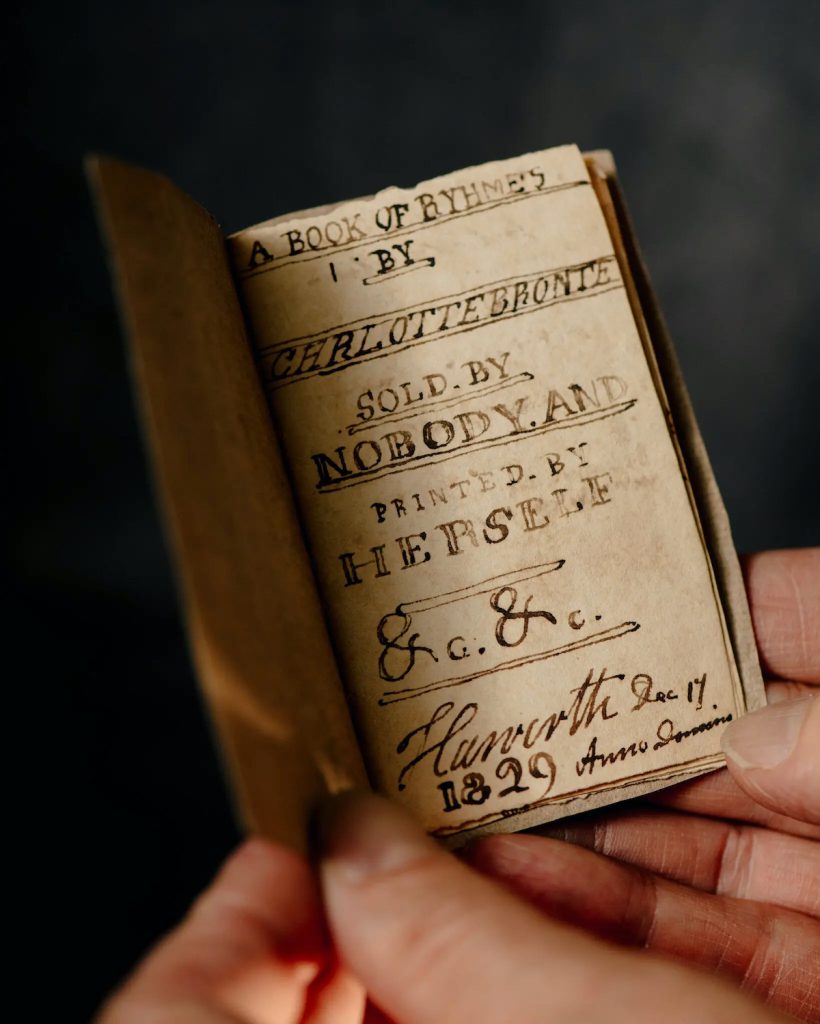
The news is out. A BOOK OF RYHMES, a miniature manuscript book created by Charlotte Brontë in 1829 and unseen for more than a century, will be displayed and offered for sale by James Cummins Bookseller and Maggs Bros. Ltd. on 21 April at the New York Antiquarian Book Fair, at the Cummins booth (A4). Sometimes the best stories in the antiquarian book trade can never be told, so it is a delight to see this one become part of the public history of world literature.
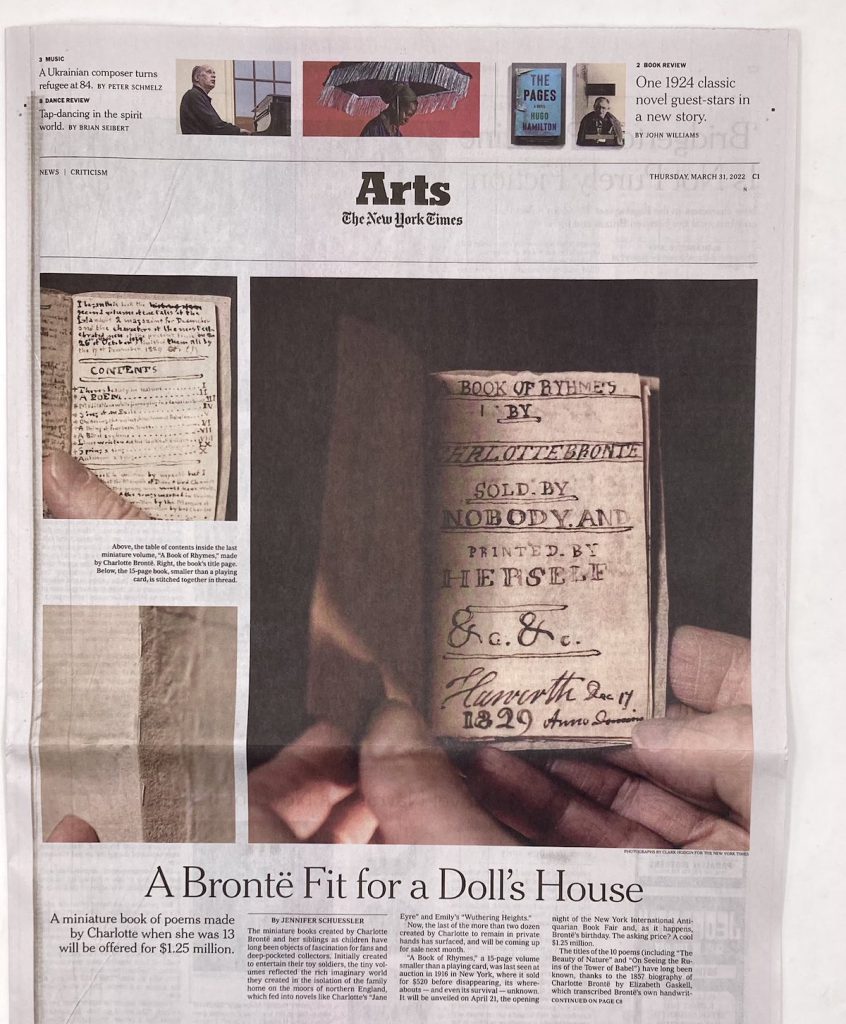
Jenny Schuessler wrote an excellent piece for the New York Times, A Brontë Fit for a Doll’s House, or, A Tiny Brontë Book, Lost for a Century, Resurfaces, discussing the intense private world of the Brontë children and the persistent interest in their manuscripts. Schuessler elicited a beautiful response from biographer Claire Harman on looking into this unpublished manuscript (Harman’s observation also demonstrates that bringing Alice in Wonderland into descriptions of subjective experience always makes the world a brighter place). The first time I saw one of the Brontë manuscripts was more than a decade ago at the British Library, when the exhibition Out of This World. Science Fiction but not as you know it (2011) presented Branwell’s map of Glasstown and surrounding lands and The History of the Young Men (Ashley MS 2468), as well as writings by Charlotte and Emily.
It’s a nice to have a brief role in the long history of this manuscript, and to be part of this joyous chapter in the history of the book trade. See you at the book fair.
Photograph by Clark Hodgin for the New York Times
A description of the manuscript follows:
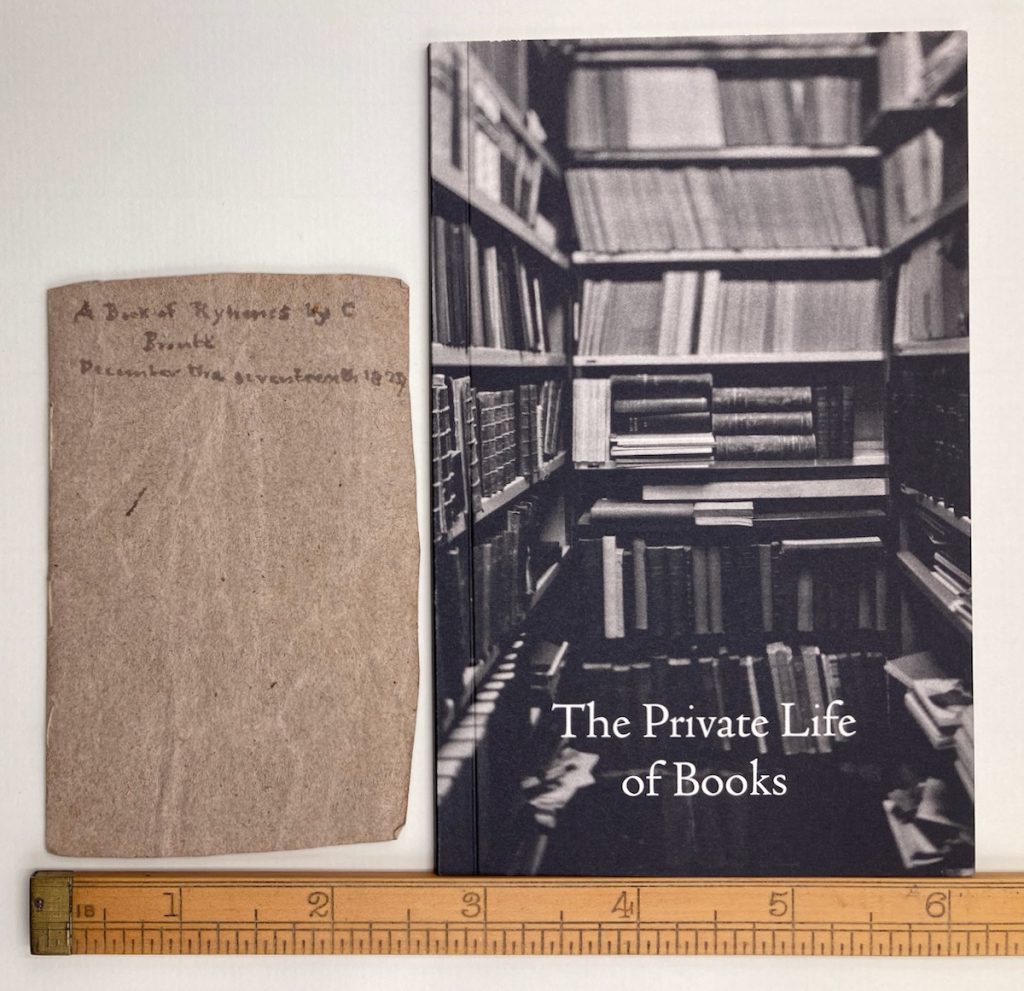
BRONTË, Charlotte. A BOOK OF RYHMES. By Ch[a]rlotte Bronte. Sold by Nobody. And Printed by Herself, &c., &c. Haworth, Dec. 17, 1829, Anno Domino. 15, [1, blank] pp. 32mo (4 x 2-1/2 inches). Haworth: October to December 1829. Stitched in brown “sugar paper” wrappers, titled in ink on upper cover. Some toning to leaves. Alexander 8. Provenance: Charlotte Brontë; Rev. A. B. Nicholls; sold at Sotheby’s 19 June 1914, lot 193, “Property of Mrs. A. B. Nicholls, Widow of the late Rev. A. B. Nicholls, whose first wife was Charlotte Bronte”; Walpole Gallleries, 17 November 1916, lot 32.
This beautiful miniature manuscript book of poem by Charlotte Brontë, aged 13, is known from the transcript of CB’s own catalogue of her books in Mrs. Gaskell’s Life of Charlotte Brontë and was sold at the dispersal of the effects of the second wife of Rev. Nicholls, whose first wife was Charlotte Brontë. The manuscript was last seen in public in November 1916 when it sold at auction at Walpole Galleries in New York.
A Book of Ryhmes comprises : i). The Beauty of Nature; ii). A Short Poem; iii). Meditations while Journeying in a Canadian Forest; iv). Song of an Exile; v). On Seeing the Ruins of the Tower of Babel; vi). A Thing of fourteen lines; vii). A Bit of a rhyme; viii). Lines written on the Bank of a River one fine Summer Evening; ix). Spring, a Song; x). Autumn, a Song. xi). Contents.
On the verso of her title page, Charlotte writes: “The following are attempts at rhyming of an inferior nature it must be acknowledged but they are nevertheless my best.” At the end of this Book of “Ryhmes” she refers to the secondary world created by the Brontë children amongst themselves but clearly asserting her authorship and creative control over that world:
“This book is written by myself but I pretend that the Marquis of Duro & Lord Charles Wellesley in the Young Men’s World have written one like it, & the Songs marked in the Index so * are written by the Marquis of Duro and those marked so † are written by Lord Charles Wellesley.” At the head of the page she also alludes to one of her best known early productions, Tales of the Islanders: “I began this book, the second volume of the Tales of the Islanders, 2 magazines for December, and the Characters of the most Celebrated Men of the Present time on the 26th of October, 1829, & finished them all by the 17 of December, 1829”. She has signed the small book no less than twelve times during its composition.





 —
—  — Michael Swanwick and Gardner Dozois. In His Own Words. Dragonstairs, [2022]. Edition of 60 copies.
 — David R. Whitesell. A Curator’s Wunderkammer. A Decade of Collecting for the University of Virginia. Exhibition Catalog. [Charlottesville: University of Virginia Library], 2022. Illustrated throughout. [iv], 105 pp. Edition of 500 copies [in fact, 310]. $25.00.